

The landscape of B2B marketing has undergone a fundamental transformation as decision-makers increasingly reject traditional advertising in favor of high-value, intent-driven content that demonstrates genuine expertise. In an era defined by information saturation, the shift toward thought leadership has become a critical requirement for organizations seeking to attract high-intent customers and convert them into long-term strategic partners. This evolution is driven by a growing skepticism toward traditional promotional materials; research indicates that approximately 73% of B2B decision-makers consider thought leadership content more trustworthy than standard marketing collateral when evaluating a vendor’s capabilities. Consequently, the ability to project authority through insight-driven narratives is no longer a peripheral branding exercise but a core growth lever that directly influences purchasing confidence long before a formal sales conversation begins.
The Paradigm Shift: From Promotional Ads to Expert Authority
The modern B2B buying cycle is characterized by its length, complexity, and the involvement of diverse stakeholder groups, often referred to as the "buying committee." These committees are primarily motivated by risk reduction. Because enterprise-level investments involve significant capital and operational shifts, stakeholders prioritize vendors who can prove their reliability through consistent, validated insights. Traditional advertising, which often focuses on surface-level features and benefits, fails to address the deep-seated concerns regarding implementation complexity, return on investment (ROI), and long-term scalability that dominate executive discussions.
Thought leadership fills this gap by positioning senior executives and subject matter experts as strategic interpreters of industry trends rather than mere company spokespeople. By providing clarity in complex environments, organizations can build internal alignment among their prospects. When a vendor’s ideas are repeatedly consumed and validated by various members of a buying committee, it reduces the perceived risk of the transaction. Data suggests that 52% of C-suite executives dedicate at least one hour per week to consuming thought leadership, highlighting its integration into the standard executive workflow.
A Chronology of B2B Marketing Evolution
To understand the current dominance of thought leadership, it is necessary to examine the chronological progression of B2B outreach strategies over the last two decades. In the early 2000s, the "Outbound Era" prevailed, where cold calling and direct mail were the primary drivers of lead generation. As digital channels matured in the 2010s, the "Inbound Era" took hold, focusing on SEO and generic content production to capture search traffic.

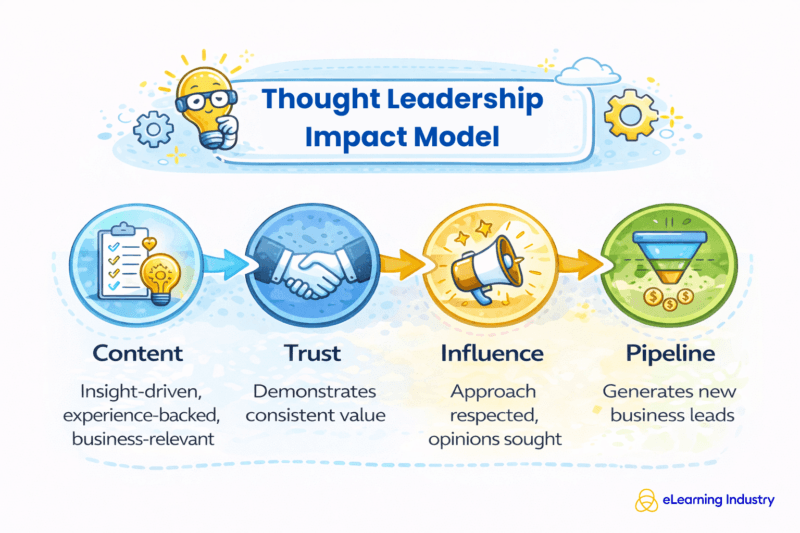
However, by 2020, the market reached a saturation point. The sheer volume of low-quality "content for the sake of content" led to diminishing returns. This birthed the current "Authority Era," where the focus has shifted from quantity to the quality of the perspective offered. In this current stage, visibility alone is insufficient; commercial success is dictated by the ability to turn visibility into trust and trust into a measurable pipeline. This transition marks the point where content marketing evolved into a sophisticated system of executive-led influence.
The Pillars of Influential Content: What Drives Decision-Making?
Not all content categorized as thought leadership achieves its intended goal. High-performing organizations distinguish themselves by adhering to specific criteria that ensure their output is actually influential.
Originality and Industry Insight
Effective thought leadership avoids regurgitating known facts. Instead, it offers original perspectives on market shifts and operational challenges. By providing a unique framework for understanding industry changes, a brand becomes a source of market intelligence. This differentiation is vital in long evaluation cycles where buyers are actively comparing the "thinking" of multiple competing vendors.
Evidence-Based Narratives
Decision-makers respond most favorably to content grounded in real-world execution. Abstract opinions are secondary to case-derived insights and lessons learned from actual implementations. When an organization can tie its ideas to lived outcomes, particularly in complex enterprise environments, it gains a level of credibility that theoretical advice cannot match.
Strategic Relevance to Revenue and Risk
For content to be shared internally among stakeholders, it must align with high-level business pressures. This includes addressing revenue growth, operational efficiency, and risk management. If a piece of content speaks directly to the constraints an enterprise team faces—such as budget approval cycles or integration hurdles—it transitions from a passive read to a functional tool used in decision-making meetings.
High-Impact Formats and Their Role in the Sales Funnel
The delivery mechanism of thought leadership is as important as the message itself. Different formats serve different psychological needs at various stages of the buyer journey.
1. Case Studies as Tangible Proof
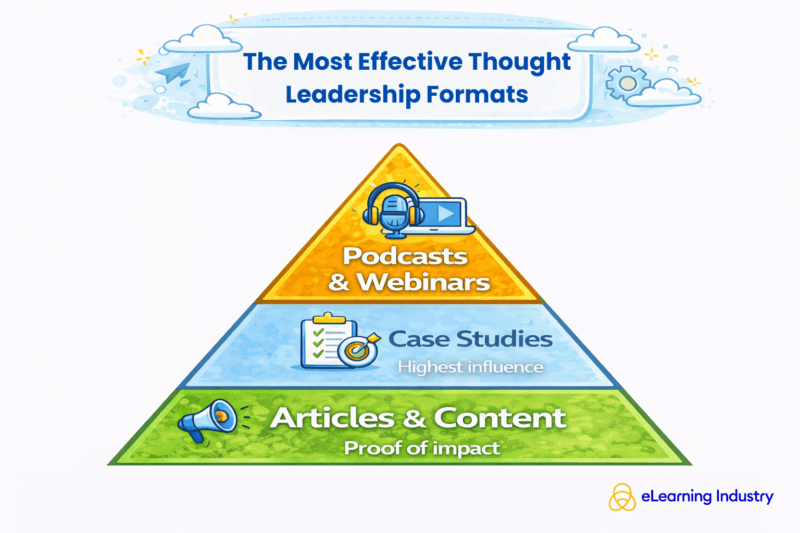
Case studies remain the gold standard for validation. In the B2B context, they demonstrate how a solution performs under the pressure of limited resources, regulatory requirements, and cross-functional dependencies. By focusing on measurable outcomes—such as cost reduction or faster time-to-value—case studies convert abstract value propositions into verifiable evidence. They allow multiple stakeholders to align on what success looks like before any formal commitment is made.
2. Webinars as Consultative Education
Webinars provide a structured environment for dialogue and deep-dives into complex frameworks. Unlike static reports, webinars allow for real-time interaction, which builds trust faster among both technical and non-technical audiences. They essentially replicate the consultative selling process at scale, allowing buyers to evaluate the "brain trust" of a company.
3. Executive Podcasts and the Human Element
Podcasts have emerged as a core B2B growth channel due to their intimacy and convenience. Senior leaders often consume podcasts during "low-distraction" moments, such as commuting or exercising. This format allows for an unfiltered expression of thinking, which creates a more human and credible layer of communication. Whether hosting a podcast to control the industry narrative or appearing as a guest to leverage existing audiences, this medium is becoming essential for building executive credibility.
Developing a Systematic Thought Leadership Strategy
For thought leadership to drive commercial outcomes, it must be treated as a rigorous business system rather than a series of isolated creative acts.
- Audience Identification: Organizations must define the specific layers of the buying committee they intend to influence, from procurement officers to the CEO, acknowledging that each group has different success metrics.
- Topic Selection: Themes must be chosen based on their intersection with market demand and the vendor’s unique category expertise.
- Consistency of Output: Influence is a compounding asset. Sporadic publishing weakens authority, whereas a consistent cadence reinforces brand recall and positioning.
- Strategic Distribution: Content must be placed where decision-makers already spend their time. This includes industry-specific communities, curated newsletters, and professional networks like LinkedIn.
- Alignment with Demand Signals: High-performing vendors track how prospects interact with their thought leadership, using these engagement patterns as intent signals to inform sales outreach.
Broader Implications for the B2B Landscape
The rise of thought leadership has significant implications for the internal structure of B2B organizations. It necessitates a closer alignment between marketing, sales, and executive leadership. When these departments operate in silos, the messaging becomes fragmented, and the "authority" of the brand is diluted. Conversely, when a unified strategy is in place, the entire organization benefits from increased pipeline velocity.
Leads generated through high-quality thought leadership are often better informed and more aligned with the vendor’s methodology, which reduces friction during the sales process and shortens the time to close. Furthermore, this approach acts as a natural filter; it attracts prospects whose problems align with the vendor’s solutions while deterring those who are a poor fit, thereby improving the overall quality of the sales pipeline.
Analysis of the Trust Economy in Professional Services
As we look toward the future of B2B engagement, the "trust economy" will continue to expand. In sectors like Learning Tech and HR Tech, where the pace of change is rapid, the role of the vendor is shifting from a provider of software to a provider of strategic guidance. Organizations that fail to invest in their intellectual capital and its public expression risk being commoditized.
The data is clear: influence in modern buying journeys is built through structured credibility. By focusing on depth, consistency, and relevance, B2B vendors can move beyond surface-level engagement to create a predictable system for revenue growth. The organizations that will dominate their respective categories are those that understand that in a world of infinite information, the most valuable currency is the trust of a well-informed decision-maker.
In conclusion, the transition to a thought-leadership-first model is a response to the changing psychological and operational realities of the B2B buyer. By prioritizing value over promotion and expertise over visibility, companies can navigate the complexities of modern enterprise sales and establish themselves as the default choice in an increasingly competitive global market.






