
The modern corporate landscape is characterized by a persistent tension between the urgent demands of business operations and the evolving needs of employees. Human Resources (HR) leaders find themselves at the nexus of these competing forces, often struggling to reconcile the drive for speed and efficiency with the human desire for clarity, growth, and recognition. This article delves into the structural challenges HR faces and proposes a strategic framework for fostering environments where both business objectives and employee well-being can thrive concurrently, moving beyond traditional conflict resolution to a proactive, condition-building approach.
At the heart of this challenge lies a fundamental dichotomy: the business requires agility and future-ready talent to maintain sustained performance, while employees seek meaningful growth, clear direction, and recognition for their contributions. Historically, HR strategies have often been perceived as optimizing for one of these imperatives at the expense of the other, leading to stalled initiatives and organizational inertia. The prevailing question for HR professionals is no longer how to resolve these inherent tensions, but rather how to create the underlying conditions that make both business success and employee fulfillment simultaneously achievable. This reframing signifies a fundamental shift in the role and function of HR, moving from a reactive problem-solver to a proactive architect of organizational health.
Understanding the Pillars of a Thriving Team
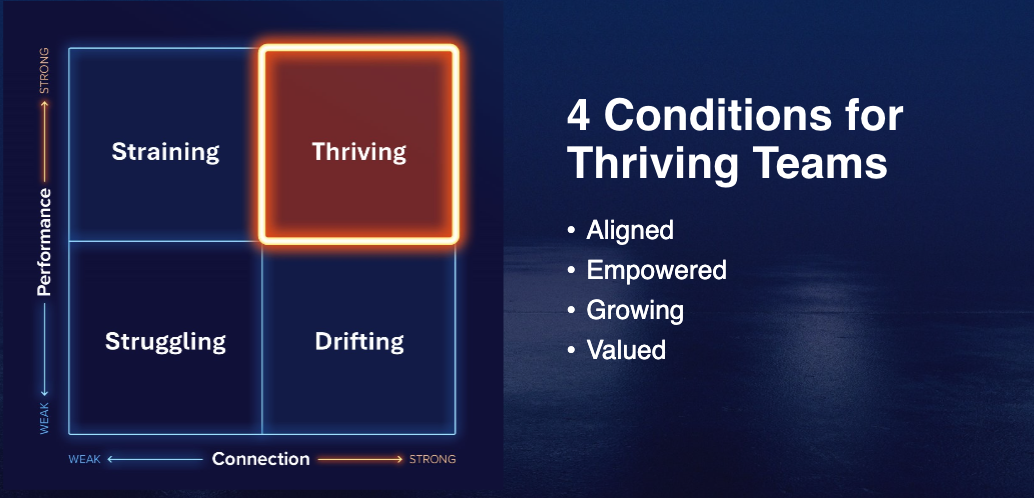
A truly thriving team is not a compromise between performance and connection, but rather a synergistic fusion of both. Organizations that excel in performance without fostering strong interpersonal connections often experience burnout and strain among their workforce. Conversely, teams that prioritize connection without a clear focus on results can drift into inefficiency and a lack of tangible output. Sustainable success, therefore, hinges on achieving a delicate equilibrium.

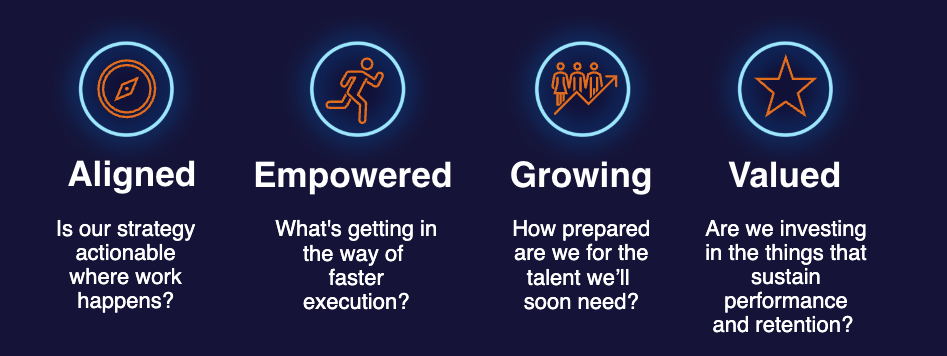
Quantum Workplace, a leader in employee engagement solutions, posits that a thriving team is built upon four critical conditions: Aligned, Empowered, Growing, and Valued. Each of these conditions directly addresses a prevalent tension that HR leaders are currently navigating. By honestly assessing these areas, organizations can unlock new pathways for strategic action.
The Four Pillars: Diagnostic Questions for HR Leaders
To effectively address the persistent challenges, HR leaders must move beyond surface-level observations and engage with diagnostic questions that reveal underlying systemic issues.
1. Aligned: Is Our Strategy Actionable Where Work Happens?
The Tension: Organizations demand speed, while employees require clarity.
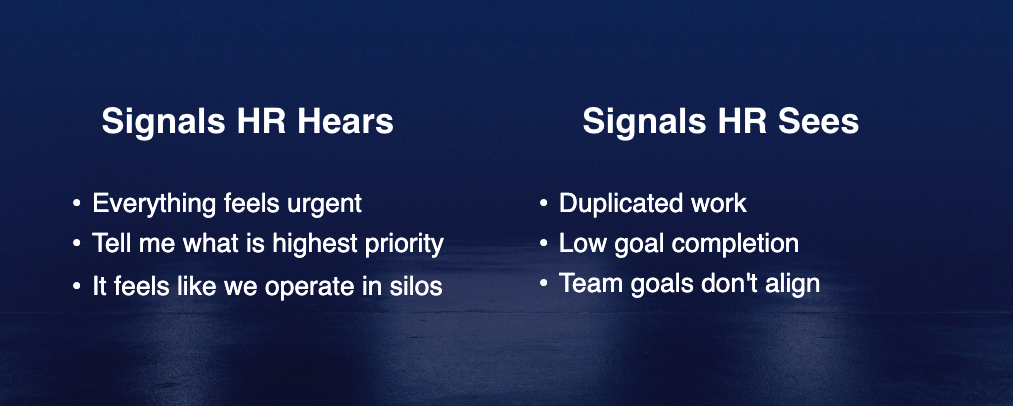
The pursuit of organizational speed often clashes with the need for clear communication and direction for individual employees. HR leaders frequently observe duplicated efforts, siloed operations, and a general lack of clarity regarding priorities. Data often reflects low goal completion rates and a disconnect between team-level objectives and overarching business strategies.
The critical diagnostic question here is not merely whether employees are aware of the company’s strategy, but whether this clarity varies significantly based on performance levels. When solid performers lack strategic clarity, it often presents a manageable coaching opportunity for their direct managers. However, when top performers are also unclear about strategic direction, it signals a pervasive organizational problem that transcends individual management efforts. This indicates a need for a broader strategic communication and alignment initiative.
A deeper probe involves assessing whether employees feel genuine accountability for the strategy or perceive it as an externally imposed mandate. Survey responses can offer nuanced insights into this dynamic, distinguishing between genuine alignment and passive disconnection. Furthermore, these insights can be segmented by other critical outcomes, such as engagement scores and turnover risk, allowing HR to quantify the tangible costs associated with strategic misalignment.
What Action Looks Like:
- Cascading Strategy: Implementing mechanisms to translate high-level business objectives into specific, actionable goals at the team and individual levels. This involves ensuring that strategic priorities are not just communicated but understood in the context of daily work.
- Cross-Functional Alignment: Fostering collaboration and communication channels between departments to break down silos and ensure a unified approach to strategic execution. This might involve regular interdepartmental strategy reviews or shared project management platforms.
- Performance Metrics Integration: Linking individual and team performance metrics directly to strategic KPIs, making the connection between daily tasks and organizational success explicit. This can involve the use of OKRs (Objectives and Key Results) or similar frameworks that emphasize measurable outcomes aligned with strategy.
- Feedback Loops: Establishing robust feedback mechanisms that allow employees to voice concerns about strategic clarity and provide input on its execution, ensuring that the strategy remains dynamic and responsive to on-the-ground realities.
2. Empowered: What’s Hindering Faster Execution?
The Tension: Organizations require accelerated execution, while employees need fewer barriers.
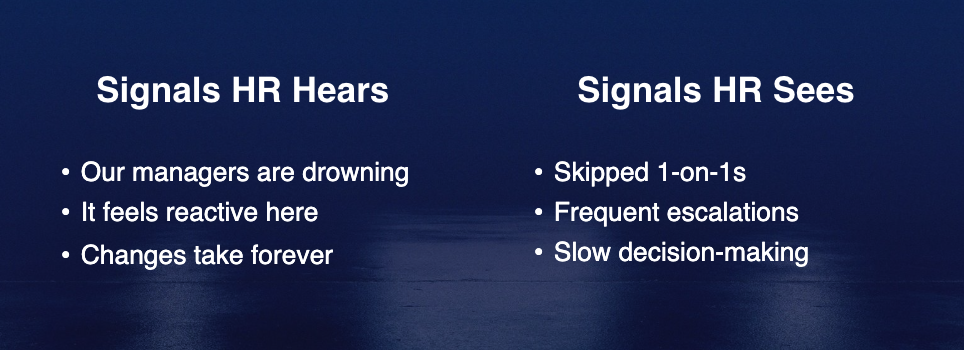
The demand for rapid execution often creates an environment where employees, particularly managers, feel overwhelmed and reactive. This can manifest as skipped one-on-one meetings, frequent escalations, and protracted decision-making processes that should ideally be resolved much faster.
Connecting business Key Performance Indicators (KPIs), such as on-time delivery rates, with employee feedback can illuminate unexpected barriers to execution. For instance, one organization discovered that the primary impediment to on-time delivery was not a lack of materials or equipment, but rather the slow adoption of new AI tools. Such counterintuitive insights are only possible when data from disparate systems is integrated and analyzed holistically.
A particularly concerning trend identified in organizational data is the "manager experience gap." In one notable study, managers reported significantly lower scores than non-managers across several critical areas:
- Recognition: Only 57% of managers felt their contributions to organizational success would be recognized, compared to 87% of non-managers, a gap of 30 percentage points.
- Performance Clarity: Merely 57% of managers clearly understood how their performance was measured, versus 83% of non-managers, a 26-point deficit.
- Future Alignment: A mere 50% of managers felt they knew how they fit into the organization’s future plans, compared to 73% of non-managers, a 23-point difference.
- Development Opportunities: Only 57% of managers reported having opportunities to learn new skills, while 80% of non-managers did, a 23-point gap.
- Retention Intent: While 87% of non-managers indicated it would take a lot to get them to leave, only 71% of managers felt the same, a 16-point gap.
This data underscores a critical point: managers cannot effectively empower their teams if they themselves do not feel empowered. This is a systemic issue, not a reflection of individual managerial shortcomings.
What Action Looks Like:
- Managerial Support Systems: Developing robust support structures for managers, including dedicated training on delegation, effective feedback, and decision-making processes. This can also involve providing them with enhanced resources and tools to streamline their work.
- Process Optimization: Regularly reviewing and streamlining operational processes to identify and eliminate bottlenecks that impede execution. This could involve implementing agile methodologies or adopting technology solutions that automate repetitive tasks.
- Empowerment Frameworks: Creating clear frameworks for decision-making authority at different levels of the organization, empowering employees and managers to take ownership of their work and make timely decisions without excessive bureaucratic hurdles.
- Addressing the Manager Experience Gap: Implementing targeted initiatives to improve the experience of managers, ensuring they receive adequate recognition, clarity on their roles and performance expectations, and opportunities for growth. This might involve dedicated manager feedback surveys and action planning.
3. Growing: How Prepared Are We for Future Talent Needs?
The Tension: Organizations require future-ready talent, while employees seek meaningful growth.
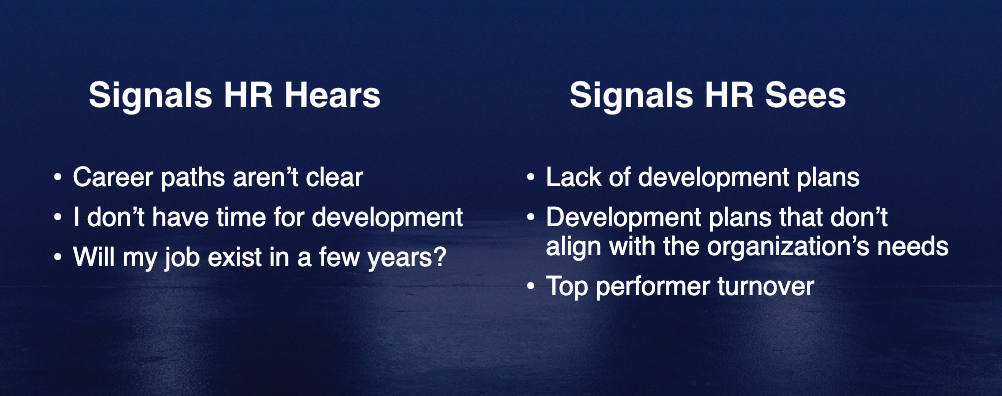
The rapid pace of technological and market evolution has made career paths increasingly opaque and development opportunities feel stagnant. Employees are vocalizing concerns about job security and the relevance of their skills in the coming years.
A key diagnostic question in this domain is whether development plans are merely documented exercises or active, integrated components of an employee’s daily experience. An employee with a static growth plan that is rarely revisited is unlikely to realize actual professional development. In contrast, an employee engaged in stretch projects that build skills critical for the company’s future is on a path of genuine growth.
Leveraging succession planning data in conjunction with employee feedback can provide a more accurate picture of talent readiness. By connecting candidate status with survey insights, organizations can ascertain whether they are intentionally cultivating the talent essential for their future or simply assuming it will materialize. Conversely, feedback from a candidate’s team can offer valuable insights into their actual leadership effectiveness.
The strategic imperative is to shift growth from a periodic process to an everyday experience embedded in work, utilizing projects, challenges, and real priorities as the primary vehicles for development.
What Action Looks Like:
- Integrated Development Planning: Embedding development goals directly into performance management processes and daily work assignments. This means growth is not an add-on but an integral part of how employees contribute and evolve.
- Skills-Based Development: Identifying future skill requirements based on strategic business objectives and then proactively developing programs and opportunities to build those competencies within the existing workforce. This can involve reskilling and upskilling initiatives.
- Internal Mobility and Career Pathing: Creating clear pathways for internal career progression and promoting internal mobility to ensure employees can leverage their developing skills within the organization. This requires transparent communication about available roles and required competencies.
- Mentorship and Coaching Programs: Establishing formal and informal mentorship and coaching programs that connect employees with experienced colleagues and leaders, facilitating knowledge transfer and skill development in a structured manner.
4. Valued: Are We Reinforcing What Matters Most?
The Tension: Organizations need sustained performance, while employees desire to feel valued.
A common sentiment expressed by employees is the feeling of being expected to perform at higher levels without commensurate increases in compensation or recognition. There’s also a perception that certain roles are inherently more valued than others, and that leadership’s primary focus is solely on profit. Data often reveals significant disparities in recognition across different teams and a high turnover rate among valuable employees.
Reframing the conversation around recognition as a financial imperative, rather than solely a cultural one, is crucial. When employee turnover is directly linked to a lack of feeling valued, recognition programs become a strategic investment in retention. Quantifying the cost of feeling undervalued allows organizations to demonstrate the ROI of effective recognition strategies.
Furthermore, the perception of value is not exclusive to high performers. Solid contributors, who often constitute the largest segment of the workforce, also need to feel that their impact is acknowledged and appreciated. Recognition programs that exclusively target top performers miss a significant portion of the employee base. By correlating talent reviews or performance ratings with employee feedback, patterns of perceived value across different employee segments can be clearly identified.
What Action Looks Like:
- Holistic Recognition Programs: Designing recognition programs that acknowledge contributions across all levels and performance tiers, not just exceptional achievements. This includes celebrating consistent effort and incremental progress.
- Fair Compensation and Total Rewards: Ensuring that compensation structures are competitive and reflect the value employees bring to the organization. This also encompasses a comprehensive approach to total rewards, including benefits, development opportunities, and work-life balance initiatives.
- Transparent Performance Management: Implementing transparent and equitable performance management systems that clearly define expectations, provide regular feedback, and ensure that recognition is tied to demonstrable contributions and alignment with organizational values.
- Leadership Accountability for Value: Equipping leaders with the skills and tools to effectively recognize and appreciate their team members. This involves holding leaders accountable for fostering an environment where employees feel genuinely valued, not just for their output, but for their commitment and contributions.
Conclusion: HR as an Architect of Thriving Conditions
While these four tensions may appear distinct, they share a common structural root: a perceived conflict between business needs and employee expectations, with HR often caught in the middle. The conventional instinct to prioritize one over the other is ultimately unsustainable. The more effective approach, championed by forward-thinking HR leaders, is to proactively cultivate the conditions where both business success and employee fulfillment can coexist and flourish.
Teams that are aligned, empowered, growing, and valued are not a compromise; they represent the very foundation of sustainable and resilient business performance. HR’s evolving role is not to personally resolve every individual tension, but to empower the organization to ask and answer more intelligent questions that drive systemic improvement.
A comprehensive talent platform, such as that offered by Quantum Workplace, can be instrumental in this endeavor. By integrating insights from engagement, performance, development, and recognition into a unified view, these platforms provide leaders at all levels with the clarity and confidence needed to act decisively on what truly matters. This unified perspective transcends the HR department, equipping every manager to foster a more thriving work environment. The data necessary to answer the diagnostic questions outlined above already exists within most organizations; the challenge lies in connecting it and leveraging it for strategic advantage. By embracing this proactive, condition-building approach, HR can transform from a reactive function into a strategic partner, driving sustainable growth and employee well-being in tandem.