
Enterprise talent acquisition teams are grappling with a formidable trifecta of pressures: the imperative to hire with unprecedented speed, the mandate to reduce operational costs, and the challenge of achieving these goals with existing headcount. In this demanding landscape, Artificial Intelligence (AI) interview assistants have emerged not merely as a technological novelty, but as a strategic investment with one of the highest demonstrable returns in the modern recruitment stack. However, the true measure of this return, particularly at an enterprise scale, often remains a subject of detailed analysis. This comprehensive guide delves into the concrete financial implications of deploying an AI interview assistant across enterprise recruitment operations. It meticulously breaks down the critical metrics that define success, provides a framework for calculating an organization’s unique ROI, and highlights the practical, real-world outcomes being achieved by organizations that have integrated solutions like the Eightfold AI Interviewer into their talent acquisition strategies.
Understanding the Core Financial Impact and Measurable ROI of Enterprise AI Recruitment
At its heart, the ROI of an AI interview assistant for enterprise recruitment quantifies the tangible financial gains an organization realizes by either replacing or significantly augmenting manual screening and initial interviewing processes with an autonomous AI system. This return is not a singular benefit but rather a compounding advantage that manifests across three distinct, yet interconnected, dimensions within large-scale hiring operations.
Unlike more rudimentary HR technology solutions that might automate scheduling or dispatch automated reminders, a true AI interview assistant transcends these basic functions. It is engineered to conduct actual interviews, posing role-specific questions, meticulously evaluating candidate responses, actively detecting potential fraud, and delivering scored, actionable summaries directly to recruiters. The financial impact and the resulting ROI calculation are, therefore, substantially more significant and far-reaching than those generated by traditional, narrowly focused HR tech tools. This distinction is critical for enterprises seeking to leverage AI for transformative rather than incremental improvements in their hiring processes.
Addressing Large-Scale Hiring Challenges and Delivering Measurable Financial Impact Through Enterprise AI Recruitment
For organizations operating at an enterprise scale, the challenges of high-volume hiring are often acute. These include managing an overwhelming influx of applications, ensuring a consistent and high-quality candidate experience, minimizing costly delays in filling critical roles, and maintaining compliance and fairness across diverse candidate pools. AI interview assistants offer a potent solution to these multifaceted issues, translating directly into significant financial benefits.
Internal analyses and early adopter data for solutions like the Eightfold AI Interviewer reveal headline metrics that underscore this impact. These typically include dramatic reductions in time-to-fill, significant increases in recruiter productivity, and a marked improvement in the quality of hires. For companies engaged in extensive hiring campaigns, these improvements translate directly into substantial, often seven-figure, annual savings. The ability to accurately model these savings, based on specific organizational parameters such as annual hire volume, recruiter cost, and current time-to-fill benchmarks, empowers leadership to make data-driven investment decisions.
Calculating the Return on Investment for Enterprise AI Interview Assistants
The calculation of ROI for an AI interview assistant in an enterprise recruitment context is a structured process that hinges on four key components:
-
Cost Savings from Reduced Time-to-Fill: A primary driver of ROI is the reduction in the duration it takes to fill a position. Each day a role remains vacant represents a direct cost, whether it’s lost productivity, missed revenue opportunities, or increased workload on existing staff. AI interview assistants significantly accelerate the initial stages of the hiring process, leading to faster offer extensions and faster onboarding. For instance, early adopters of AI Interviewer solutions have reported compressing hiring cycles from an average of 42 days to under a week, with the time dedicated to initial candidate interviews reduced by up to 90%. This rapid acceleration directly impacts the bottom line by minimizing vacancy costs.
-
Increased Recruiter Efficiency and Productivity: Enterprise recruiters often spend a disproportionate amount of time on administrative tasks and initial screening, rather than on high-value activities like strategic sourcing, candidate engagement, and closing negotiations. AI interview assistants automate these time-consuming, often repetitive, tasks. By offloading initial interviews and evaluations, recruiters are freed to focus on more critical aspects of the hiring process, thereby increasing their capacity to manage a larger volume of roles or dedicate more time to strategic talent management initiatives. This reallocation of human capital leads to substantial savings in labor costs and a more engaged, effective recruiting team.
-
Reduction in Cost-Per-Hire: The overall cost of hiring an employee encompasses various expenses, including advertising, agency fees, background checks, and the internal resources dedicated to the process. By streamlining the initial stages, reducing the need for extensive manual screening, and potentially decreasing reliance on external recruitment agencies, AI interview assistants can significantly lower the cost-per-hire. This is particularly impactful in high-volume hiring scenarios where even marginal reductions in cost per hire can amount to millions of dollars annually.
-
Improved Quality of Hire and Reduced Turnover: While harder to quantify directly in immediate financial terms, the impact of improved hire quality on long-term financial performance is profound. AI interview assistants can be programmed to assess candidates against precise job requirements and organizational competencies, leading to better-matched hires. These well-suited employees are more likely to be productive, engaged, and retained longer. Reduced employee turnover, especially in critical or high-cost-to-replace roles, yields substantial savings in recruitment and training expenses, as well as the costs associated with lost productivity and knowledge. Furthermore, advanced AI interview tools incorporate sophisticated fraud detection mechanisms, safeguarding against the significant financial and operational risks associated with hiring unqualified or fraudulent candidates.
Key Drivers of Financial Impact at Enterprise Scale
The substantial financial impact of AI interview software at the enterprise level is driven by several interconnected factors, each contributing to a more efficient, cost-effective, and robust talent acquisition function.
Faster Speed-to-Candidate Drives Measurable Enterprise AI Recruitment Financial Impact
In sectors characterized by high-volume and hourly hiring, the race to connect with qualified candidates is paramount. The first recruiter to engage a promising applicant often secures them. In competitive labor markets, top-tier candidates may be off the market within days, if not hours, of their application. An AI interview assistant that can initiate engagement with candidates minutes after they apply, rather than days, provides a critical competitive edge. This speed-to-candidate advantage means enterprises can present their opportunities and begin the evaluation process before their rivals, significantly increasing the likelihood of securing top talent and reducing the window of unfilled positions.
Reallocating Recruiter Time from Busywork to Hiring Decisions Drives Measurable Enterprise AI Recruitment ROI
The highest-leverage activities for recruiters are those that require human discernment and strategic thinking: persuasion, in-depth assessment of soft skills, and the finalization of offers. AI interview assistants adeptly handle the administrative burden and initial evaluation layers of the recruitment funnel. This liberation of recruiter time allows them to concentrate on the tasks that truly drive hiring success and require human judgment. Consequently, the same recruiting headcount can manage a greater volume of hires without succumbing to burnout, thereby optimizing human resource allocation and maximizing output.
AI Elasticity Reduces the Financial Impact of Enterprise Recruitment During Hiring Surges
One of the most significant, yet often underappreciated, drivers of ROI from AI interview assistants is their inherent elasticity. During periods of peak demand – such as the busy holiday retail seasons, financial services open enrollment periods, or manufacturing ramp-ups – AI interview assistants can simultaneously conduct interviews with hundreds or even thousands of candidates. As demand normalizes, the AI’s capacity scales back down automatically. This stands in stark contrast to the traditional approach, which often necessitates the costly and inefficient hiring of temporary recruiters, incurring substantial agency fees, or enduring prolonged hiring delays. These conventional solutions are invariably expensive and disruptive.
AI Recruitment Fraud Detection Safeguards the Financial Impact of Every Hire
Enterprise hiring fraud represents a growing and insidious threat, capable of inflicting significant financial and operational damage, particularly in sensitive or regulated industries. AI Interviewer platforms integrate sophisticated fraud detection capabilities, often encompassing over a dozen distinct systems. These can include monitoring for suspicious behaviors such as tab switching, camera manipulation, and voice duplication, and can be integrated with identity verification services like ID.me and CLEAR. The cost of a fraudulent hire, especially in roles requiring high levels of trust or specialized knowledge, can far exceed the investment in an AI interview assistant platform, making fraud prevention a critical component of ROI.
Eightfold AI Interviewer’s Financial Impact on Enterprise Recruitment ROI
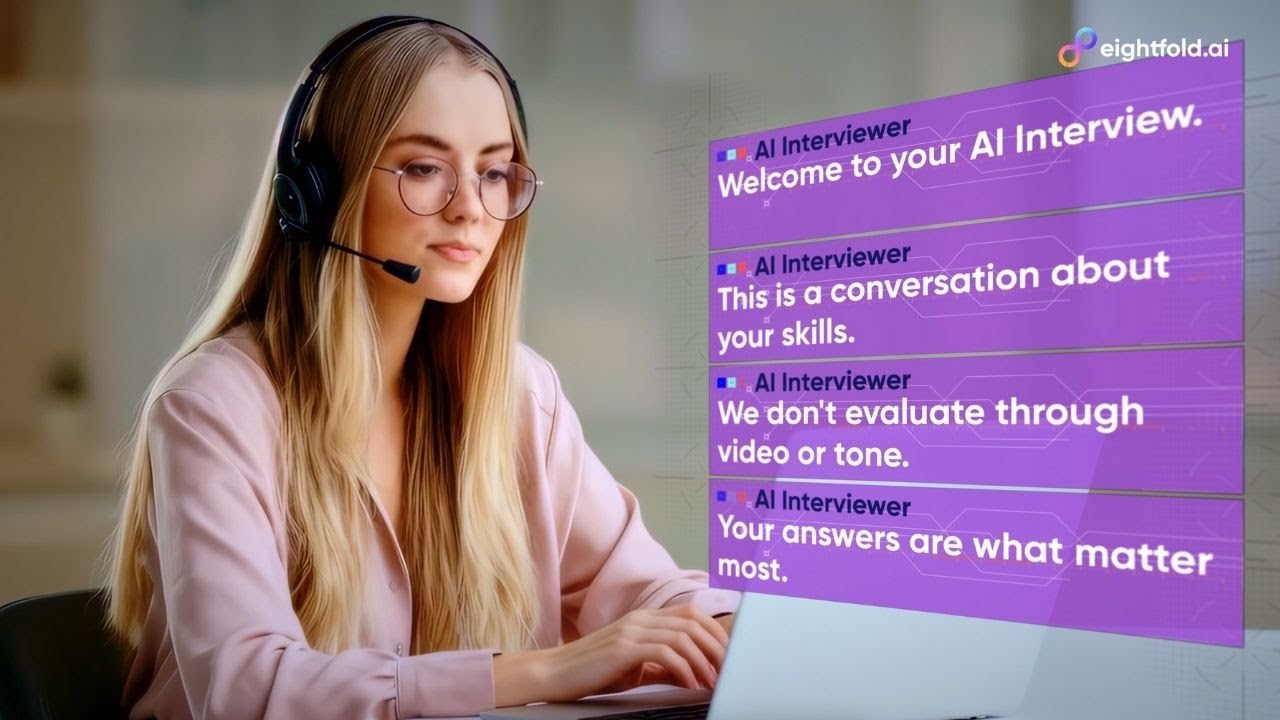
The Eightfold AI Interviewer is engineered as an autonomous AI digital worker, distinguishing itself from simple chatbots or scheduling assistants. It is designed to conduct comprehensive, adaptive interviews at scale, a capability recognized by industry accolades such as being named a Top HR Product of the Year by HR Executive and the HR Tech Conference in 2025.
Its key capabilities that directly contribute to enterprise-level ROI include:
- Autonomous Interviewing: Conducting full, adaptive interviews that tailor questions based on candidate responses, ensuring a dynamic and insightful evaluation.
- Fraud Detection: Employing advanced mechanisms to identify and flag fraudulent candidate behavior, protecting against costly bad hires.
- Scalability: The ability to handle millions of interviews concurrently, 24/7, across multiple languages, ensuring no candidate or hiring surge is left unattended.
- Bias Mitigation: Focusing evaluations solely on demonstrated skills and responses, adhering to consistent, role-specific criteria to promote fairness and compliance.
- Integration Capabilities: Seamless integration with existing Applicant Tracking Systems (ATS) and HRIS platforms, minimizing disruption and facilitating rapid deployment.
- Scored Summaries: Providing recruiters with concise, data-driven summaries and scores for each candidate, enabling faster and more informed decision-making.
Organizations leveraging the Eightfold AI Interviewer span a wide spectrum of enterprise clients, including many Fortune 500 companies and industry leaders like STMicroelectronics, underscoring its efficacy in diverse and demanding recruitment environments.
Financial Impact of AI Interview Automation for High-Volume and Hourly Hiring
The segment of high-volume and hourly hiring presents a particularly fertile ground for AI interview assistant ROI, where the impact is both immediate and dramatic. The inherent structural challenges within this segment—such as an overwhelming volume of applicants, recruiter burnout, protracted time-to-first-interview, high candidate drop-off rates, and pronounced seasonal spikes—are directly addressed by AI interview automation.
The quantitative results from high-volume use cases are compelling. These often include a significant reduction in the time it takes to move from application to interview, a drastic decrease in the cost associated with each hire, and a marked improvement in the efficiency of the recruiting team. For enterprise operations teams responsible for hiring thousands of frontline, warehouse, retail, or service workers annually, these metrics translate directly into enhanced operational resilience. This resilience means the ability to effectively staff up for peak seasons without the need to permanently expand recruiting headcount or incur premium agency fees, ensuring continuous operational capacity and minimizing revenue loss due to understaffing.
Comparing AI Interview Assistant ROI to Traditional Enterprise Recruitment Costs
Traditional enterprise recruitment processes, while seemingly straightforward, often carry significant hidden costs that are rarely itemized on a single budget line. These often-overlooked expenses include:
- Recruiter Overtime and Burnout: High hiring volumes and repetitive tasks can lead to extensive overtime for recruiters, increasing labor costs and contributing to burnout and turnover within the talent acquisition team.
- Agency Fees: Reliance on external recruitment agencies for high-volume or specialized roles can incur substantial fees, often a percentage of the new hire’s salary, which can become a significant operational expense.
- Vacancy Costs: Prolonged time-to-fill directly translates into lost productivity, missed revenue opportunities, and increased strain on existing employees. These costs, while not always directly tied to recruitment, are a direct consequence of inefficient hiring.
- Poor Hire Quality and Turnover: Hiring unqualified candidates leads to performance issues, increased training needs, and higher turnover rates, all of which represent significant financial drains due to repeated recruitment efforts and lost productivity.
- Candidate Experience Degradation: Slow response times and a disjointed application process can damage an organization’s employer brand, making it harder to attract top talent in the future and potentially leading to candidate drop-off.
AI interview assistants offer a strategic solution that compresses or eliminates each of these cost categories simultaneously. The platform’s cost becomes a single, predictable line item, while the savings are distributed across enhanced recruiter efficiency, reduced vacancy rates, and improved hire quality—all of which are measurable and quantifiable.
Addressing Key Enterprise Questions About AI Interview Assistant ROI and Recruiter Impact
As enterprises consider the adoption of AI interview assistants, several critical questions arise regarding their impact on the workforce and operational compliance.
-
Will this replace our recruiters? No. AI Interviewer is designed to augment, not replace, human recruiters. It handles the initial screening and evaluation layers, freeing recruiters to focus on higher-value tasks. Recruiters review scored summaries, make final decisions, and lead the critical offer and onboarding conversations. The platform empowers recruiting teams to manage more hires effectively with the same headcount, enhancing their capabilities rather than supplanting the essential human judgment required to secure top talent.
-
How does it handle compliance and bias? AI Interviewer is meticulously designed to evaluate candidates solely on demonstrated skills and responses relevant to the role. It consciously avoids assessing factors such as visual appearance, accent, or emotional expression, thereby mitigating unconscious bias. The system applies consistent, role-specific criteria to every candidate, ensuring fairness and providing enterprises with robust auditability and visibility into the evaluation logic, which is crucial for compliance with labor laws and diversity initiatives.
-
What does implementation actually look like? Implementation of AI Interviewer is streamlined for rapid deployment, typically achievable within one to two weeks. It is designed to integrate seamlessly with existing ATS and HRIS systems, requiring no significant workflow rebuild. The deployment strategy prioritizes high impact with a minimal lift for the implementation team, ensuring a quick return on investment.
-
Can it handle our scale? AI Interviewer has demonstrated the capacity to conduct over one million interviews in a single hour, operating 24/7 across more than 22 languages. Its architecture is built for extreme scalability, dynamically adjusting to meet hiring surges without requiring additional headcount or incurring incremental cost per additional interview. This inherent scalability ensures that organizations can confidently manage even their most demanding recruitment cycles.
Calculating the Financial Impact of Enterprise AI Recruitment on Your Hiring Process
To accurately assess the potential financial benefits, organizations can utilize specialized ROI calculators. These tools typically require input on:
- Annual Hire Volume: The total number of hires made per year.
- Recruiter Fully-Loaded Cost: The comprehensive cost of employing a recruiter, including salary, benefits, and overhead.
- Current Time-to-Fill: The average duration from job posting to offer acceptance.
- Average New Hire Salary: The typical starting salary for new employees.
- Platform Cost: The investment in the AI interview assistant solution.
By adjusting these parameters, organizations can generate personalized estimates of their potential three-year ROI, projected payback period, and the annual hours freed up for their recruiting teams.
The Bottom Line on AI Interview Assistant ROI for Enterprise Recruitment
Enterprise recruitment stands as one of the most operationally expensive functions within large organizations, yet it has historically been one of the least automated. AI interview assistants represent a transformative category of investment where the ROI is not speculative; it is demonstrably realized through measurable reductions in recruiter hours, improvements in time-to-fill metrics, and significant cost savings from vacancy reduction, often within weeks of deployment.
Organizations that achieve the highest returns from these solutions typically share three common characteristics: they operate with substantial hiring volumes, they are committed to data-driven decision-making, and they prioritize a superior candidate experience as a strategic imperative. For such organizations, the question shifts from "whether" an AI interview assistant delivers ROI to "how much" financial benefit can be realized, and "how quickly." The current landscape of talent acquisition demands efficiency, cost-effectiveness, and scalability, making AI interview assistants a pivotal technology for future-proofing enterprise recruitment strategies.







