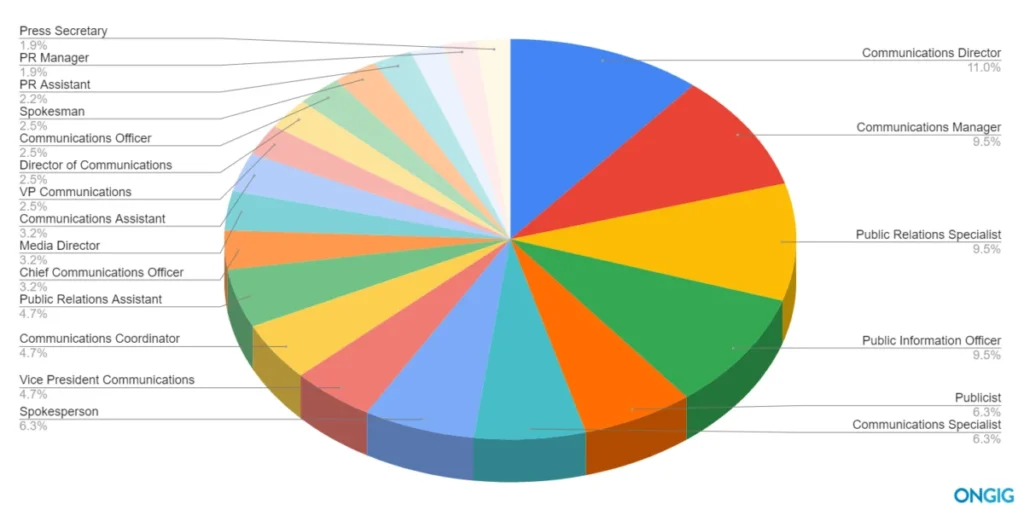
A recent comprehensive analysis by Ongig, a leader in optimizing job descriptions, sheds light on the most impactful job titles within the dynamic fields of Communications and Public Relations, offering critical insights for both employers striving to attract top talent and professionals charting their career paths. The study, detailed in the latest chapter of "Ongig’s Job Titles: The Definitive Guide," meticulously examined job titles that garner the most search traction from candidates on Google and are most frequently requested by employers for job descriptions. This deep dive comes at a crucial time, as the Bureau of Labor Statistics (BLS) projects a robust demand for public relations specialists, anticipating roughly 27,600 openings annually through 2034, reflecting a 5% growth from 2024, outpacing the average for all occupations.
The Evolving Landscape of Communications and Public Relations
The distinction between "Communications" and "Public Relations" has long been a subject of debate within the industry. While often used interchangeably, the Ongig analysis acknowledges a subtle yet significant difference: Public Relations (PR) traditionally focuses on external stakeholders and media relations, managing an organization’s public image. In contrast, "Communications" encompasses a broader scope, addressing both external audiences and critical internal communications within an organization. This nuance often dictates job titles, especially within larger enterprises that might feature distinct roles such as an "External Communications Director" (often a PR Director) and an "Internal Communications Director." Conversely, small to medium-sized businesses may condense these functions, often favoring "PR" in titles, with internal communications handled directly by leadership.
This definitional fluidity is further complicated by the organizational structure of companies, where communications functions may or may not be integrated into marketing departments. Historically, PR emerged as a distinct discipline focused on media engagement and reputation management, separate from advertising and sales-driven marketing efforts. However, with the advent of digital media and integrated campaigns, the lines have increasingly blurred. Large public-facing corporations often maintain a clear structural separation, evidenced by the presence of both a Chief Communications Officer (CCO) and a Chief Marketing Officer (CMO) at the C-level, each heading distinct departments. This separation underscores the strategic importance of independent communications and marketing functions in managing brand perception and market presence.
Strategic Mandates Expand for C-Suite Communications Leaders
A significant trend highlighted by Clipbook in 2026 indicates a clear shift towards broader titles and expanded mandates for communications leaders, particularly at the C-suite level. Roles like "Chief Corporate Affairs Officer" are gaining prominence, signifying an evolution where communications leaders are increasingly overseeing a wider array of functions, including analytics, operational strategies, and even the integration of artificial intelligence (AI) transformation efforts within their organizations. This transformation positions the most effective CCOs not merely as functional specialists but as strategic business leaders who align multiple organizational functions to achieve overarching corporate objectives. CEOs are actively seeking individuals who possess this holistic business acumen, rather than solely communications expertise. This trend reflects the growing complexity of corporate environments, where reputation, stakeholder engagement, and strategic messaging are intertwined with business performance and technological advancement.
Navigating the Communications Career Hierarchy
The communications field is structured into a discernible hierarchy, providing clear career progression paths for professionals. Ongig’s research identifies six major levels of communications positions, each with distinct responsibilities and an array of corresponding job titles. Understanding this hierarchy is crucial for both job seekers mapping their careers and employers designing effective organizational charts.
At the Executive Leadership level, the Chief Communications Officer (CCO) typically sits at the apex, reporting directly to the CEO. These roles are strategic, focusing on overall brand reputation, corporate messaging, and crisis management. Examples include Chief Communications Officer, Chief Public Affairs Officer, Chief Corporate Affairs Officer, and Chief Reputation Officer. The evolution towards titles like Chief Corporate Affairs Officer signifies a broader strategic remit, encompassing public affairs, government relations, and even sustainability initiatives.
Vice President level roles represent senior leadership, overseeing specific communications divisions or major strategic initiatives. These professionals are responsible for managing significant budgets, leading large teams, and developing high-level strategies. Titles include Vice President of Communications, VP of Public Relations, VP of Corporate Communications, VP of Global Communications, and VP of Internal Communications. These roles often involve significant public-facing responsibilities, including media engagement and stakeholder relations.
Director-level Communications Titles signify leadership over a specific department or major program within the communications function. Directors translate executive strategy into actionable plans and manage teams of managers and individual contributors. Examples include Director of Communications, Public Relations Director, Director of Corporate Communications, Director of Media Relations, Director of Internal Communications, and Director of Public Affairs. These roles often require extensive experience in media management, content creation, and team leadership.
Managers of Communications are responsible for the day-to-day execution of communications strategies, leading smaller teams, or overseeing specific projects. They ensure messaging consistency, manage campaigns, and often serve as a bridge between senior leadership and individual contributors. Common titles include Communications Manager, Public Relations Manager, Marketing Communications Manager, Media Relations Manager, Social Media Manager, and Internal Communications Manager. These roles demand strong organizational skills, content creation expertise, and the ability to manage multiple priorities.
Individual Contributor PR or Communications Job Titles represent the backbone of any communications team, focusing on specialized tasks and direct execution. These roles require specific skills in writing, editing, research, and outreach. Examples include Communications Specialist, Public Relations Specialist, Media Relations Specialist, Internal Communications Specialist, Social Media Specialist, Content Specialist, and Copywriter. These professionals are crucial for developing and disseminating communications materials across various channels.
Finally, Entry-Level Communications Job Titles serve as foundational roles for aspiring professionals, providing opportunities to learn the ropes of the industry. These positions often involve administrative support, research, and assisting in content creation or event coordination. Titles such as Communications Assistant, PR Assistant, Public Relations Trainee, Public Information Assistant, and Junior Communications Associate are common. A bachelor’s degree in public relations, communications, journalism, or a related field is typically a prerequisite for these roles.
Data-Driven Insights: What Candidates and Employers Seek
Ongig’s research offers dual perspectives: what job titles candidates search for and what job descriptions employers most frequently request. This reveals a convergence of interests but also highlights areas where understanding market demand is key.
Candidate Search Trends indicate that titles like "Communications Manager," "Public Relations Specialist," and "Communications Coordinator" consistently rank high, suggesting that job seekers are often looking for roles that offer a clear path to leadership or foundational experience. The popularity of "Public Information Officer" also points to a significant interest in government or public sector communications roles. The emphasis on "Public Relations" in many candidate searches underscores its enduring recognition as a core discipline, even as "Communications" expands its scope.
Employer Demand and Core Responsibilities reveal the practical needs of organizations. The top 20 employer-requested job descriptions provide a detailed look at the roles considered essential for modern communications teams:
- Communications Coordinator: A foundational role, responsible for promoting an organization or product through press releases, media coordination, research, and content distribution. They are often the hands-on support for broader communications initiatives.
- Communications Manager: This pivotal role develops and executes internal and external communication strategies, supervising content creation for diverse channels (press releases, social media, blogs). They manage communication channels and coordinate crisis responses to maintain a positive brand image.
- Public Information Officer (PIO): Primarily in government or large public sector organizations, PIOs bridge the gap between agencies and the public, crafting press releases, managing media inquiries, and running awareness campaigns. They are critical during crises, providing real-time updates to the public.
- Chief Communications Officer (CCO): The senior-most communications executive, the CCO directs all internal and external communications, shaping the company’s brand and reputation. They develop strategies, manage media relations, and oversee internal announcements, often acting as a key advisor to the CEO.
- Media Director: Leads the interaction between a company and the media, building relationships with external partners and directing strategic communications plans. They manage media outreach, press conferences, and ensure consistent messaging across all media engagements.
- Public Relations Specialist: Creates media releases, develops social media plans, and manages an organization’s public image. They respond to media requests, draft speeches, arrange interviews, and proactively maintain a positive corporate identity.
- Publicist: Focuses on managing publicity for companies, public figures, celebrities, or films. They craft and disseminate brand messages to target audiences through media outreach, event coordination, and managing public appearances.
- Marketing Communications Manager (MarCom Manager): Integrates marketing and communications efforts, leading market research, developing pricing and budget strategies, and ensuring consistent messaging across all marketing and communications collateral.
- PR Manager: Leads the public relations department or firm, coordinating external communications, overseeing PR teams, and acting as a liaison with media or external marketing agencies.
- Public Relations Director: Directs strategic PR initiatives for clients or organizations, overseeing media interviews, serving as a lead spokesperson, and managing teams responsible for press releases, media kits, and talking points.
- Communications Officer: Common in government, this role handles event planning, media relations, public affairs, and internal communications. They track communication effectiveness and recommend improvements to senior management.
- Communications Specialist: Supports the PR department by writing internal and external communications, including newsletters and press releases, under the direction of a PR leader. They may also coordinate press events.
- Spokesperson: Represents an organization or public figure, delivering critical messages to the public, media, and stakeholders. They conduct interviews, craft PR campaigns, and aim to shape a favorable public perception.
- Vice President of Communications: Manages all brand reputation messages, delivers public speeches, organizes promotional events, and develops comprehensive PR and marketing strategies, leading a communications team.
- Public Affairs Specialist: Advises senior management on communications, projecting a positive image for the organization’s identity and goals in the media. They often work with PR teams to manage external communications with media, partners, or government agencies.
- Public Relations Assistant: Provides administrative and clerical support to the PR team, assisting in marketing material creation, social media management, calendar scheduling, and organizing media kits and press releases.
- Press Secretary: Communicates with the public on behalf of a government official or organization, maintaining a positive image and ensuring messages align with goals. They write releases, speeches, answer media questions, and coordinate events.
- Director of Communications: Manages all aspects of an organization’s communications, publicity, and marketing. They develop and implement communication strategies, ensuring alignment with brand identity, and overseeing the creation and distribution of communication materials.
The Future of Communications Work: Growth and Flexibility
Robust Job Market Outlook: The demand for communications and PR professionals is not only strong but also diversifying. The BLS projection of a 5% growth for PR specialists from 2024 to 2034 is driven by several factors. The proliferation of digital media, the 24/7 news cycle, and the increasing importance of reputation management in a complex, often polarized, information environment necessitate skilled professionals. Organizations across all sectors require experts who can navigate social media, manage online presence, handle crises swiftly, and maintain stakeholder trust. This demand has led to a "fragmentation" of PR, where specialized communications roles are emerging within industries not traditionally associated with dedicated communications functions, such as healthcare systems, fintech companies, government agencies, and nonprofits. This means the talent pool for communications roles is broader than ever, encompassing professionals with varied titles like Earned Media Strategist or Corporate Affairs Associate, rather than just the traditional "Public Relations Specialist."
The Remote and Hybrid Revolution: The COVID-19 pandemic catalyzed a monumental shift towards remote and hybrid work models, and the communications sector has been at the forefront of this transformation. According to the FlexJobs Remote Work Index, marketing and communications remote roles expanded by 30% or more in Q1 2026, even amidst a broader push for return-to-office mandates in other functions. Communications professionals have retained significant flexibility, recognizing the efficacy of distributed teams in managing global campaigns, reaching diverse audiences, and leveraging talent irrespective of geographical location.
For employers, this shift carries several implications. It broadens the talent pool, allowing access to professionals beyond local markets, but it also necessitates a more precise approach to job titling and description. Vague titles like "Communications Specialist" can be misinterpreted in a remote context; employers must clearly define the scope and responsibilities of such roles, particularly when they involve managing executive communications across distributed teams or supporting a local PR agency from a distance. For job seekers, the remote and hybrid landscape offers unparalleled opportunities for flexibility and access to roles previously out of reach, but it also demands adaptability, strong digital communication skills, and the ability to thrive in autonomous or semi-autonomous work environments.
Implications for Talent Acquisition and Career Development
The dynamic nature of communications roles presents both opportunities and challenges. For employers, attracting the right talent requires a deep understanding of evolving job titles and responsibilities. Crafting clear, accurate, and appealing job descriptions is paramount, especially when recruiting for specialized or flexible roles. It also means looking beyond traditional titles to identify candidates with transferable skills from emerging areas of communications.
For job seekers, the evolving landscape emphasizes the need for continuous skill development. Beyond traditional media relations, modern communications professionals must be adept in data analytics, digital content creation, social media strategy, crisis management, and increasingly, understanding how AI can be leveraged in communication. Career paths are becoming less linear, with more opportunities for specialization and cross-functional roles. Understanding the nuances between "Communications" and "PR" and identifying where specific skills align with employer needs are crucial for successful career navigation.
In conclusion, the field of communications and public relations is undergoing a profound transformation, driven by technological advancements, evolving media landscapes, and shifting organizational structures. The Ongig analysis provides a vital compass, guiding both employers and job seekers through this complex terrain by illuminating the most impactful job titles and the critical skills required to thrive in a profession that is more strategic and indispensable than ever before.
July 1, 2026, by Rob Kelly, Ongig.