
The current landscape of artificial intelligence, while marked by the substantial valuations of companies like Anthropic and OpenAI, is increasingly demonstrating that the real return on investment for enterprises stems not from the foundational models themselves, but from their practical application and the unique data they process. This paradigm shift echoes a similar transformation witnessed in the relational database market during the 1990s, where the underlying technology became a commodity, and value accrued to the applications built upon it.
The proliferation of advanced "frontier" models from major players such as OpenAI, Anthropic, Google, and Microsoft (often referred to collectively as MAI), alongside a growing ecosystem of powerful open-source alternatives like GLM, Deepseek, Kimi, Mistral, and IBM’s Granite, signals a maturation of the AI technology stack. This abundance raises a critical question for businesses: are we moving beyond the initial excitement of simply "buying AI" due to its novelty, towards a more pragmatic integration as a sophisticated tool for building tangible solutions?
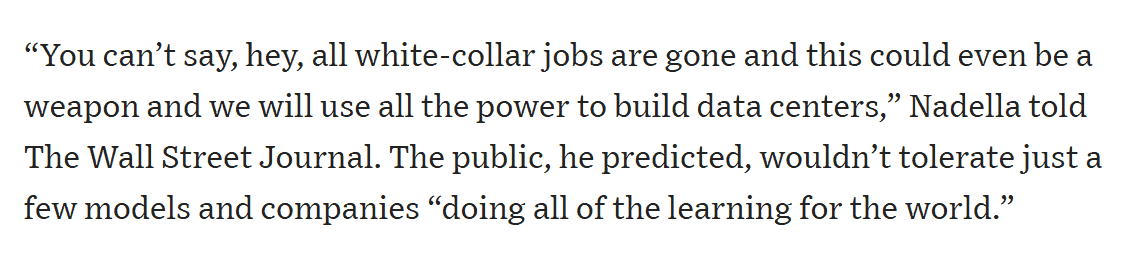
This sentiment is gaining significant traction. Microsoft CEO Satya Nadella, in a recent article published in The Wall Street Journal titled "We Can’t Let AI Giants Eat the Economy," articulated a similar perspective, underscoring the need for a balanced approach to AI’s integration into the economic fabric. His commentary suggests a recognition within major technology firms that the long-term value proposition of AI for the broader economy hinges on its accessibility and equitable distribution, rather than a concentration of power and profit among a few dominant players.
The Enterprise AI Landscape: Beyond the Hype
Research, including an ongoing analysis of over 200 companies focused on enterprise AI adoption, reveals that a relatively small percentage, approximately 8%, are actively developing and deploying "real" enterprise applications. A significant portion of current AI adoption appears to be driven by a less defined strategy, where companies purchase AI tools with an implicit hope that individual employees will organically discover valuable use cases. This approach, often likened to providing AI as an employee benefit, risks inefficient resource allocation and a lack of clear return on investment.

For instance, the experience with tools like Galileo, which leverages models such as Claude but is designed to work with a variety of LLMs, highlights this challenge. Without a sharp focus on specific domain problems and a defined objective, companies can find themselves spending considerable time and resources in unproductive experimentation. This contrasts sharply with the typical enterprise technology adoption lifecycle.
The Normalization of Enterprise Technology Adoption
In a conventional enterprise technology scenario, the procurement and implementation process is far more structured. Organizations typically identify a specific business need, develop a comprehensive business case, collaborate with IT departments to ensure security and data integration, and then invest in systems with clearly defined goals and measurable return on investment (ROI). This methodical approach is evident when companies adopt specialized AI-powered applications, such as those offered by Paradox, Eightfold, Radancy, or Sana, which are designed to address particular business functions. However, this rigorous process is often bypassed when organizations simply acquire access to foundational models like Claude and allow employees to explore their capabilities without a defined strategic framework.
The inherent capabilities of generative AI—its prowess in coding, image generation, data analysis, and information retrieval—while impressive, do not automatically translate into business value, especially when associated with significant consumption costs. The true payoff from AI emerges when it is integrated with an organization’s proprietary data, existing applications, and unique contextual understanding.
Economic Realities and Shifting Expectations
The initial surge of optimism surrounding AI’s transformative potential, particularly among economists, is beginning to temper as the practical challenges and economic realities of widespread deployment become clearer. The substantial investments—estimated in the trillions of dollars—made by forward-looking investors have fueled the development of the underlying infrastructure, including engineers, data centers, advanced processors like those from NVIDIA, and the necessary power generation. As this investment seeks tangible returns, the era of freely available AI experimentation is likely to wane, with increased costs associated with usage and deployment. This shift is already being reflected in pricing strategies, with some providers, such as Apple, implementing significant price increases for their AI-powered services.
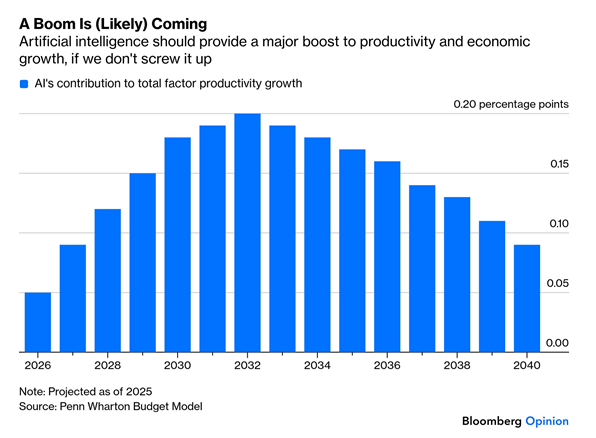
The emergence of what the Wall Street Journal has termed "AI price wars" among frontier vendors is a telling indicator of this market evolution. The intense competition between leading AI providers, such as OpenAI and Anthropic, and their willingness to engage in aggressive pricing strategies, are hallmarks of a maturing commodity market where switching costs are relatively low. This competitive dynamic is precisely what Microsoft CEO Satya Nadella has been anticipating. Microsoft’s own AI models, designed to be significantly more cost-effective than those offered by some competitors, are positioned to benefit from this trend. Nadella’s stated goal of ensuring that "Microsoft AI" models are a fraction of the cost of frontier offerings reflects a strategic move towards making AI more accessible and economically viable for a broader range of businesses.
The Analogous Shift: From Database Technology to Application Value
This trajectory strongly resembles the evolution of the relational database market in the late 1990s. At that time, companies like Oracle, Sybase, Informix, Ingres, and Postgres offered powerful database management systems with increasingly sophisticated features. However, as the underlying technology became more standardized and competitive, the distinct advantages of one relational database management system (RDBMS) over another diminished. The focus of innovation and value creation consequently shifted from the RDBMS itself to the applications built upon these databases. Businesses began prioritizing how these databases enabled complex business operations, customer relationship management, and enterprise resource planning, rather than debating the merits of specific indexing techniques or stored procedure implementations.
A similar transition is now underway in the AI domain. While the "magic" of large language models (LLMs) is undeniable, their intrinsic capabilities are becoming less of a differentiating factor for enterprises. The true competitive advantage and ROI will be derived from how effectively these models are integrated into specific business processes and workflows.
Re-engineering Enterprise Processes with AI
The path to realizing significant value from AI in the enterprise is not simply about adopting new technology; it is a profound re-engineering process. This is vividly illustrated by the HR 2030 model, which outlines high-value AI solutions within human resources. The model emphasizes that achieving substantial ROI requires strategic investment and a comprehensive approach that extends far beyond the mere deployment of an LLM.
For instance, transforming the hiring process involves more than just an AI chatbot. It necessitates the strategic integration of "agents" and "superagents" that work in conjunction with IT departments and require a fundamental redesign of talent acquisition workflows. Companies like Paradox, Maki, Radancy, and Smartrecruiters are at the forefront of this shift, offering solutions that address specific HR challenges and often lead to the redefinition of roles within talent acquisition teams.
Similarly, enhancing employee service centers with AI requires a concerted effort involving policy consolidation, robust data management, and cross-functional collaboration. Platforms like Microsoft Copilot, Workday’s Sana Core, and ServiceNow, along with specialized vendors like Leena.ai, can underpin these initiatives. However, the success of such projects hinges on meticulous planning, governance, and the integration of AI into existing operational frameworks, often leading to a reorganization of learning and development functions.
Building a high-performance onboarding program, as demonstrated by leading organizations like Rolls Royce and Lockheed Martin, further exemplifies this principle. These initiatives demand consensus-building on program elements, the development of globally relevant and role-specific use cases, and the establishment of governance models that effectively manage and update tactical and strategic content. In these scenarios, the LLM is a crucial component, but it represents only a fraction of the overall solution.
The HR 2030 blueprint identifies approximately 130 distinct "agents" that can be either purchased or custom-built. For organizations aiming to maximize the benefits of AI, the focus must shift towards prioritizing strategic implementation, collaborating closely with IT, and preparing their workforce for evolving roles and skill requirements. This involves a deliberate and structured approach to identifying high-value problems and applying AI solutions, rather than passively hoping for spontaneous value creation.
The Future of Enterprise AI: From Experimentation to Engineering
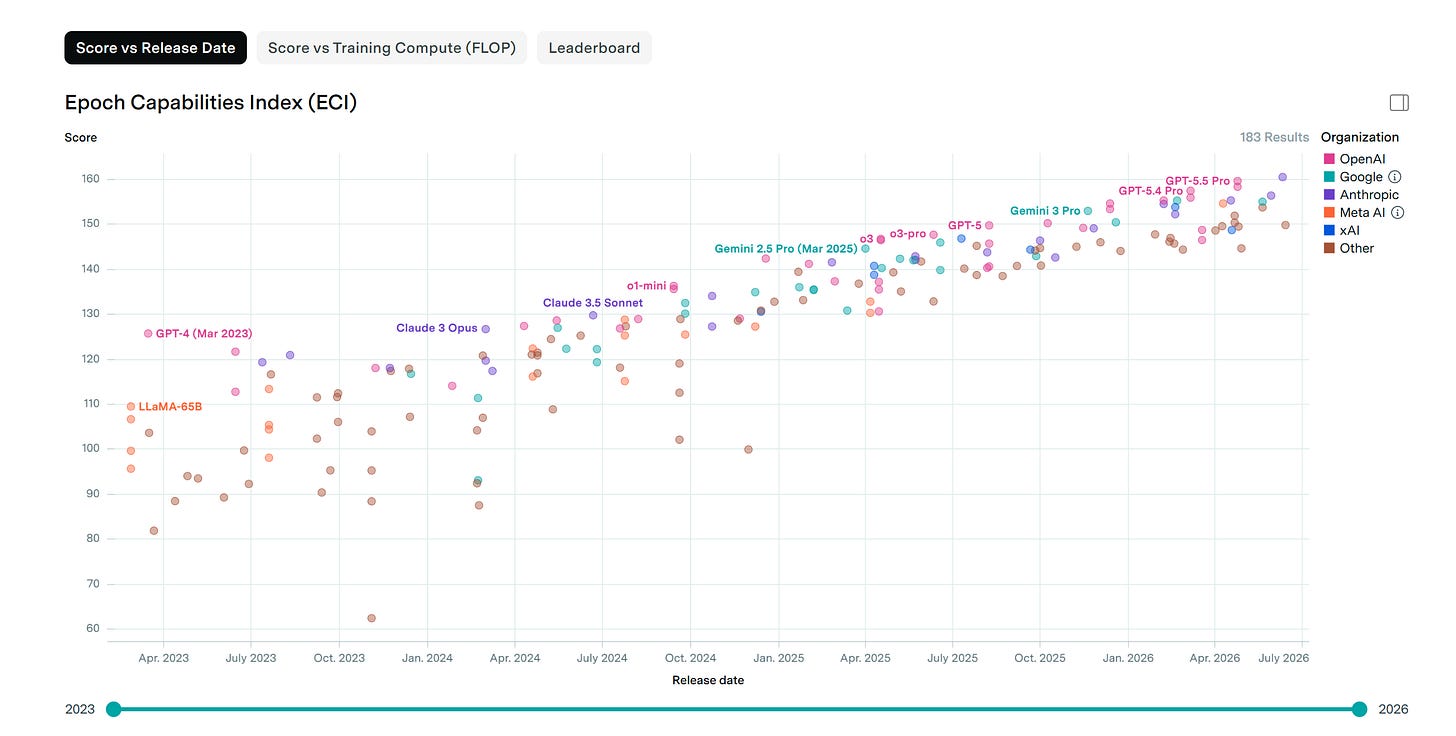
The substantial $1.5 trillion investment in AI is poised to demand a demonstrable return. Consequently, the emphasis for businesses is shifting from widespread experimentation to strategic architecture and engineering. This transition is crucial for unlocking the immense potential of AI. The current slowdown in the pace of LLM improvement, as indicated by capability evolution charts, is not necessarily a negative development. Instead, it provides enterprises with a valuable opportunity to concentrate on problem-solving and the strategic application of AI, moving away from a reactive stance of simply "buying tech and hoping for magic."
The journey of companies like the author’s own, which has invested nearly four years in developing Galileo, a system capable of modeling entire organizations and addressing complex challenges in reorganization, pay structures, and skills analytics, underscores this point. The system’s ability to deliver insights that previously took months of consulting work is a testament to the painstaking effort involved in training, workflow integration, and leveraging the underlying LLM’s features.
Ultimately, the future of enterprise AI lies in its practical application. As businesses navigate this evolving landscape, HR and IT professionals will be tasked with identifying high-value problems and strategically applying AI to build, buy, or customize solutions. The "magic" residing within the LLM itself is rapidly becoming less significant than the ingenuity and strategic planning employed in its deployment. This shift from experimentation to engineered solutions is not only inevitable but essential for realizing the substantial returns that investors anticipate and for embedding AI as a truly transformative force within the global economy. The path forward demands a focus on pragmatic implementation, data integration, and process re-engineering, ensuring that AI becomes a powerful engine for tangible business value.