Organizational culture, often described as the unspoken heartbeat of a company, is a dynamic and multifaceted force that profoundly influences every aspect of a business. Far from being a mere qualitative concept, it is a critical driver of employee retention, innovation, engagement, and ultimately, overall performance. In today’s competitive landscape, the ability to accurately measure and strategically shape this intangible asset is no longer optional but an essential imperative for leaders aiming to foster sustainable growth and achieve measurable business outcomes. This guide delves into the practical methodologies and strategic importance of understanding and leveraging organizational culture through robust metrics.
Defining the Core: What Constitutes Company Culture?
At its essence, company culture is the collective set of shared values, ingrained behaviors, and established expectations that guide how individuals within an organization interact and collaborate. It serves as an invisible framework, defining what actions are encouraged, what conduct is deemed acceptable, and what contributions are recognized and rewarded across all levels. This cultural fabric permeates everyday operations, dictating how decisions are approached, how communication flows, how leaders respond to adversity, and how employees engage with one another on a daily basis.
The Crucial Role of Culture Metrics
A culture metric is a quantifiable indicator that provides concrete insights into the health, engagement levels, and overall alignment of an organization’s culture. Moving beyond subjective impressions, these metrics track tangible elements such as employee engagement rates, the frequency and impact of recognition, levels of inter-departmental collaboration, employee turnover statistics, and overall job satisfaction. By aggregating and analyzing this data, leaders gain a clear understanding of how employees work, interact, and perceive their environment.
It is vital to acknowledge that the ideal cultural framework is not monolithic; it varies significantly across industries. A fast-paced tech startup will naturally prioritize different behaviors and success metrics than a large-scale manufacturing plant or a regulated insurance company. Therefore, the process of understanding and measuring culture must be nuanced, accounting for industry-specific realities rather than relying solely on universal ideals. The strategic application of culture metrics empowers leaders to identify areas of strength, pinpoint critical gaps, and make data-driven decisions to enhance performance, improve retention, and elevate the overall employee experience. In essence, culture metrics transform an abstract concept into actionable intelligence.
The Tangible Benefits of Measuring Culture
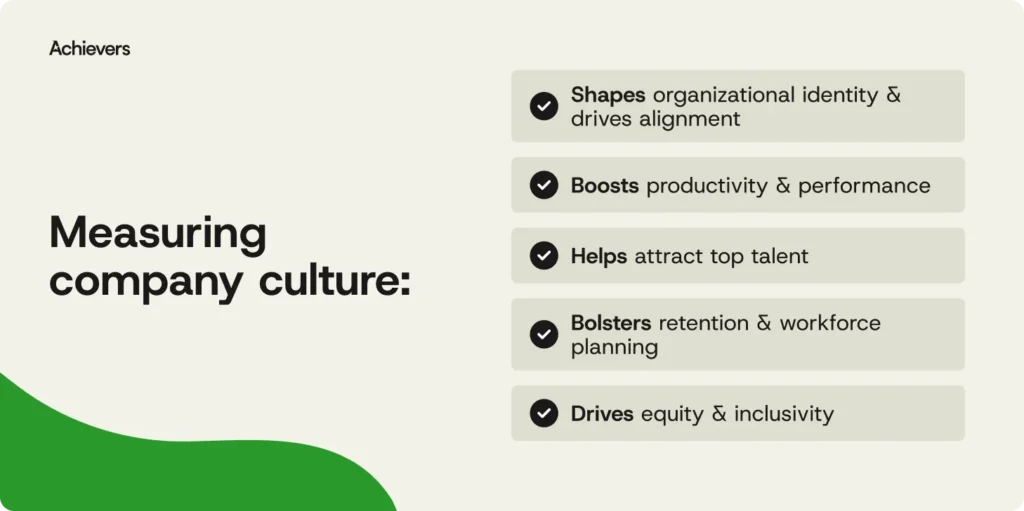
While a positive workplace environment is inherently desirable, the true strategic advantage emerges when organizational culture is systematically measured and leveraged. A vibrant and healthy culture does more than just boost morale; it directly contributes to increased productivity, enhanced performance, and a stronger bottom line. The tangible business benefits derived from measuring culture include:
Shaping Corporate Identity and Driving Alignment
A distinctive organizational culture imbues a company with its unique personality and ensures that all employees are working cohesively towards common objectives. When individuals share a clear sense of purpose and are guided by consistent values, this alignment becomes a powerful catalyst for improved productivity and overall performance. This shared understanding fosters a sense of collective responsibility and directs efforts toward strategic goals.
Amplifying Productivity and Performance
By precisely identifying cultural strengths and weaknesses, organizations can proactively address and eliminate productivity roadblocks. When employees feel that their contributions are acknowledged and valued, their engagement levels experience a significant and measurable uplift. This heightened engagement directly translates into more focused work, greater initiative, and improved output.
Attracting Top-Tier Talent
In the contemporary job market, company culture has emerged as a pivotal factor in candidate decision-making. A compelling culture can be the deciding element that persuades a top candidate to accept an offer, while a less attractive one may lead them to seek opportunities elsewhere. By actively measuring and cultivating a positive culture, organizations can create an environment that resonates with high-caliber talent, thereby strengthening their employer brand and streamlining the recruitment process.

Strengthening Retention and Workforce Planning
Employees who feel fulfilled and valued are far more likely to remain with an organization. Measuring culture allows leaders to identify potential flight risks early on, enabling proactive intervention and mitigation strategies. This approach is significantly more cost-effective, time-efficient, and less disruptive than navigating continuous hiring cycles, which are often necessitated by high turnover.
Fostering Equity and Inclusivity
Creating inclusive workplaces is not merely an ethical imperative; it is a strategic advantage that cultivates environments where every employee can reach their full potential. Measuring inclusivity ensures that all team members feel seen, heard, and valued, which in turn strengthens collaboration and sparks innovation. By actively promoting equity, organizations build a culture that not only supports individual growth but also drives engagement and long-term organizational success.
Key Culture Metrics for Workforce Optimization
Organizational culture can be likened to a company’s engine, with metrics serving as its comprehensive dashboard. These indicators reveal the engine’s operational status, flag potential issues before they escalate, and guide necessary improvements. The key lies in focusing on metrics that genuinely reflect the health and vitality of the workplace.
Future-Proofing Culture with Next-Generation Metrics
While traditional culture metrics provide a foundational understanding, the dynamic nature of today’s workplace demands more sophisticated, real-time insights. These next-generation indicators offer a deeper understanding of what truly drives a company’s culture:
- Real-time Feedback Loops: Moving beyond annual surveys, continuous feedback mechanisms capture immediate sentiments and trends, allowing for agile responses to emerging issues.
- Sentiment Analysis of Internal Communications: Analyzing the tone and language used in internal communication channels can reveal underlying employee attitudes and concerns.
- Network Analysis of Collaboration: Mapping communication patterns can highlight informal leaders, identify collaboration bottlenecks, and assess the diffusion of knowledge within the organization.
- Employee Net Promoter Score (eNPS) for Culture: Adapting the NPS framework to gauge employees’ likelihood to recommend the company’s culture as a place to work provides a direct measure of cultural advocacy.
- Skills and Development Tracking: Measuring participation in training and development programs, alongside the acquisition of new skills, can indicate a culture of learning and growth.
Beyond Surveys: Comprehensive Culture Measurement
Measuring culture is a complex endeavor that transcends a single methodology. While surveys offer valuable insights, they represent only one facet of a comprehensive cultural assessment. To truly grasp the nuances of a workplace, a multi-pronged approach is essential, integrating quantitative data with qualitative narratives, and objective findings with anecdotal evidence. This holistic approach, akin to a thorough cultural audit, involves gathering clues from every corner of the organization to uncover its unique operational dynamics. Effective methods for measuring company culture include:
- Pulse Surveys: Short, frequent surveys to gauge employee sentiment on specific topics or during periods of change.
- 360-Degree Feedback: Gathering performance and behavioral feedback from peers, subordinates, and supervisors to provide a well-rounded view.
- Focus Groups and Interviews: Facilitated discussions to delve deeper into specific issues and gather rich qualitative data.
- Observation of Workplace Interactions: Observing team dynamics, meeting conduct, and informal interactions can reveal underlying cultural norms.
- Analysis of Exit Interview Data: Systematically reviewing feedback from departing employees can highlight recurring cultural issues that contribute to turnover.
- Employee Resource Group (ERG) Feedback: Engaging with ERGs can provide valuable insights into the experiences of diverse employee populations.
Cultivating a Culture of Continuous Improvement
Organizational culture is a living, evolving entity. By embedding recognition into the daily fabric of the workplace, companies can positively impact several key aspects of the employee experience. Data from the Achievers Workforce Institute (AWI) consistently demonstrates the profound impact of appreciation and engagement. For instance, employees who feel appreciated and engaged are significantly more likely to:
- Report higher levels of job satisfaction.
- Exhibit increased loyalty and commitment to the organization.
- Be more willing to go above and beyond in their roles.
- Contribute more actively to team and company goals.
Continuous attention to company culture, coupled with effective recognition and feedback mechanisms, translates into measurable impact. However, the value of measurement is only fully realized when it inspires tangible action. Key actions that stem from culture measurement include:
- Developing targeted development programs: Addressing identified skill gaps or behavioral areas for improvement.
- Implementing new communication strategies: Enhancing transparency and feedback channels.
- Refining recognition programs: Ensuring they align with desired behaviors and values.
- Adjusting leadership development initiatives: Equipping managers with the skills to foster a positive culture.
- Reviewing policies and procedures: Ensuring they support the intended cultural norms.
Measuring the Effectiveness of Culture Change

Culture change effectiveness refers to the degree to which alterations in values, behaviors, and operational methods are genuinely experienced and adopted by employees over time. Measuring this effectiveness involves assessing several critical dimensions:
Fostering a Sense of Belonging
Culture change is most effective when employees feel a strong sense of belonging at work. This encompasses feeling accepted, valued, and an integral part of the organization. A robust sense of belonging also correlates with increased confidence and greater participation in organizational activities. Research from the Achievers Workforce Institute highlights this connection, with a significant percentage of employees reporting that a sense of belonging to the company culture builds their confidence, directly linking cultural integration with self-efficacy.
Strengthening Connection to Purpose and Values
Culture change can be effectively measured by observing whether employees comprehend and resonate with the organization’s overarching purpose and core values. When employees can articulate how their daily work contributes to broader company objectives, it signifies a stronger alignment and a shared vision, demonstrating that the cultural shift is taking root.
Reinforcing Desired Behaviors
Successful culture change manifests in the consistent demonstration of encouraged and reinforced behaviors. Tracking which actions are actively recognized or supported provides a clear metric for assessing whether the organization is effectively nurturing its intended culture, rather than relying solely on stated values.
Enhancing Employee Engagement and Confidence During Transitions
The successful implementation of culture change is closely tied to how employees navigate these transitions. Higher levels of engagement, coupled with a demonstrated confidence in managing change, indicate that employees feel adequately supported, well-informed, and empowered, rather than experiencing uncertainty or disconnection.
Ensuring Managerial Consistency
Culture change initiatives achieve greater success when managers consistently champion and reinforce the new cultural expectations. Measuring manager effectiveness across communication, recognition practices, and supportive behaviors helps ascertain whether cultural tenets are being applied equitably across all teams and departments.
Achieving Consistency Across Roles and Teams
A thorough review of engagement and participation levels across diverse roles, geographical locations, and work environments is crucial for identifying whether the desired culture is becoming increasingly standardized throughout the entire organization. Discrepancies can signal areas requiring targeted intervention and support.
Achievers: Empowering Measured and Meaningful Company Culture
Culture is the bedrock of employee engagement, productivity, and retention, and Achievers provides the tools to make this influence actionable. Our platform excels at capturing real-time feedback, meticulously tracking cultural health indicators, and uncovering critical trends, thereby enabling leaders to make informed, data-driven decisions.
Recognition serves as a powerful signal of a healthy culture. Every expression of gratitude, collaborative effort, and celebrated milestone becomes an integral part of a dynamic system that aligns individual behaviors with overarching business objectives. A measured approach to culture is not just beneficial; it is a strategic advantage. Achievers empowers organizations to cultivate workplaces where employees feel deeply connected, genuinely empowered, and motivated to perform at their highest level. By recognizing, rewarding, and driving results, Achievers helps build a culture that endures and thrives.