
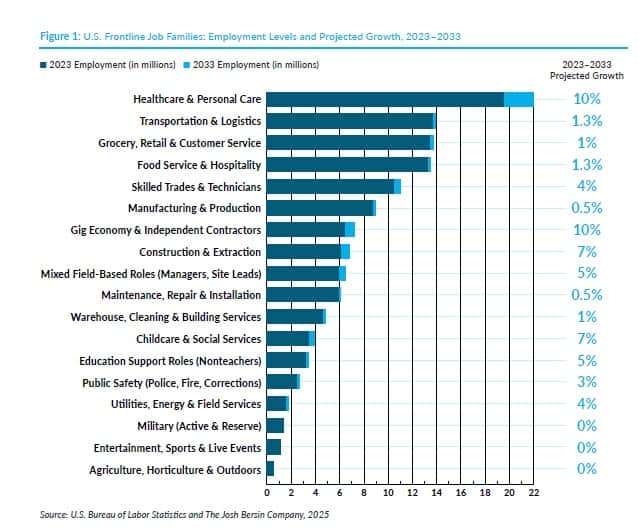
The global economy relies heavily on a vast and often overlooked segment of the workforce: the frontline employees. These are the nurses tending to our health, the drivers delivering essential goods, the hotel staff creating welcoming environments, the restaurant teams serving our meals, the airline professionals ensuring safe travel, the cleaners maintaining our spaces, the technicians keeping systems running, and the manufacturing workers producing the goods we consume. Research indicates that approximately 80% of all workers, by sheer numbers, occupy these roles, collectively earning an estimated $6.5 trillion in the United States alone. This critical demographic is not only large but is also experiencing growth at a significantly faster rate than white-collar professionals, largely because their work is inherently resistant to automation by artificial intelligence. For chief executive and financial officers, this population represents a strategic imperative. They are the direct conduits to customers, patients, and the delivery of products and services, forming the core value proposition of many organizations. Moreover, they constitute the largest, and often most controllable, cost center within any enterprise.
The Paradox of Underinvestment
Despite their indispensable contributions and strategic importance, frontline workers have historically received disproportionately low investment from their employers. Data reveals that spending on training, management development, and career advancement for this group is less than one-third of what is allocated to white-collar employees. While an average of over $1,500 per year is invested in white-collar workers, frontline employees typically receive around $400 annually. This disparity is often rationalized by the perception of higher turnover rates within frontline roles. The prevailing, albeit flawed, logic suggests: "If we are going to lose these individuals within a year or two, why invest in their long-term development?"
However, this rationale overlooks a crucial feedback loop. When organizations significantly increase their investment in frontline roles, employee tenure and productivity can experience dramatic improvements. A compelling example is Costco, which pays its retail employees an average of $26 per hour, substantially higher than the industry benchmark of $17 per hour. Furthermore, Costco provides comprehensive healthcare benefits and clear pathways for career advancement into management positions. The demonstrable outcome of this "good jobs" strategy is a remarkable annual turnover rate of less than 8%, starkly contrasting with industry averages exceeding 60%. This suggests that a strategic investment in the frontline can yield substantial returns in employee retention and operational efficiency.
Beyond mere compensation and benefits, frontline-first companies foster success through investments in effective communication channels, flexible scheduling, robust management support, and the allocation of valuable time for development. Research into companies that prioritize their frontline employees highlights several key areas of focus. These include addressing issues such as schedule unpredictability, the need for real-time pay visibility, and genuine opportunities for skill enhancement and career progression. Frontline workers often face demanding physical labor, hourly wage structures that incentivize shift changes and overtime, and a constant drive to acquire higher-paying skills.
The Complexities of Frontline Operations
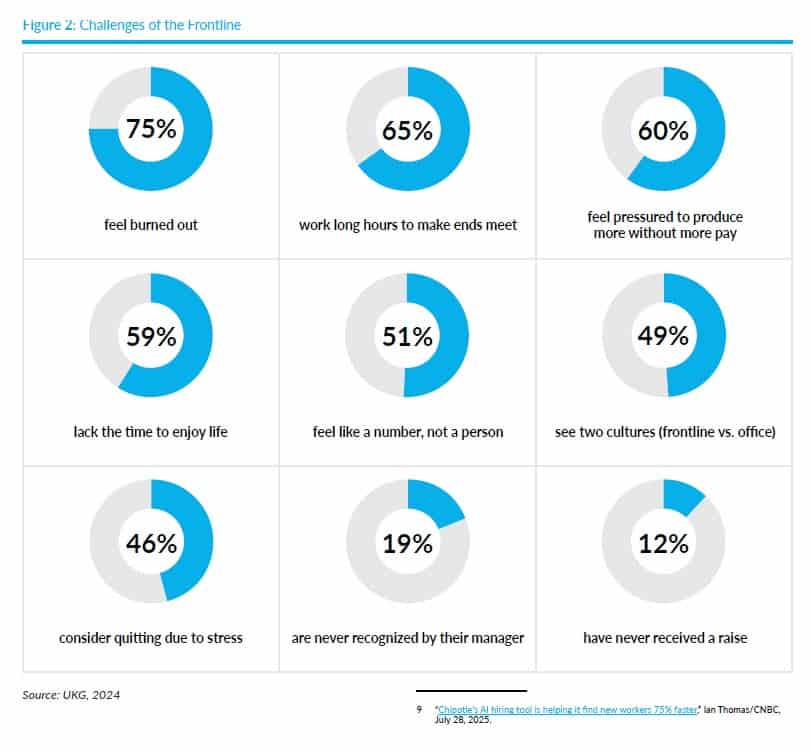
The challenges inherent in managing a frontline workforce are exceptionally complex, extending far beyond simple scheduling or compensation adjustments. Consider the scenario of a highly trained nurse needing to alter her shift due to childcare responsibilities, or a delivery driver experiencing back pain after a physically demanding week. These employees often engage in manual labor, are compensated hourly, and consequently seek schedule flexibility, opportunities for overtime, and skill development to improve their earning potential. Their desires for predictable schedules, transparent pay, and viable career trajectories are paramount. The physical risks, stress, long hours, and often a sense of detachment from the broader organizational mission can lead to dissatisfaction, ultimately impacting productivity and increasing turnover. This, in turn, creates significant operational and financial burdens for the company.
From a business perspective, optimizing frontline capacity directly translates to enhanced profitability. During periods of rapid demand fluctuations, supervisors and operations teams must efficiently reschedule shifts, expedite hiring processes, or rapidly upskill existing staff to fill critical gaps. Failure to do so can result in lost revenue and damage to brand reputation. Inconsistent or unpredictable work schedules can lead to underperformance or employees seeking opportunities elsewhere. Moreover, as labor forecasting becomes more dynamic, accurately predicting labor expenses can be challenging until timesheets are finalized, increasing the risk of budget overruns. Businesses such as gym chains or hair salons, for instance, directly lose revenue and brand value when they are understaffed. Chipotle, for example, recently highlighted its workforce automation as a key driver of its competitive advantage and positive sales results, a point acknowledged by financial analysts on CNBC.
The management of skills within frontline roles is also mission-critical. Frontline workers often require specialized technical expertise that directly impacts safety protocols and operational risk. Companies must meticulously track certifications, safety training, and skill proficiencies to ensure fair compensation for advanced capabilities. Many of these roles are physically demanding, necessitating employer-provided training in proper lifting techniques, ergonomic practices, and physical conditioning. Anecdotal evidence from a poultry manufacturer revealed the provision of fitness training to employees who handle heavy food products, underscoring the focus on physical well-being and injury prevention.
The Role of Human Resources and Technology
Surprisingly, Human Resources departments are not always deeply integrated into the management of frontline workforce issues. These responsibilities often fall to supervisors and operations managers, who may themselves lack adequate training. It is not uncommon for frontline staff to be promoted into management roles without formal training, creating a cascading effect of potential risks and inefficiencies.
When HR departments actively engage with frontline workforce challenges, the impact can be transformative. During the COVID-19 pandemic, when many Marriott hotels temporarily closed, the Chief Human Resources Officer and CEO initiated the development of an entirely new management training program designed to facilitate business recovery. This initiative proved remarkably successful, necessitating a global overhaul of leadership development strategies and establishing a new operating model that integrated HR functions with operational teams to empower employees.
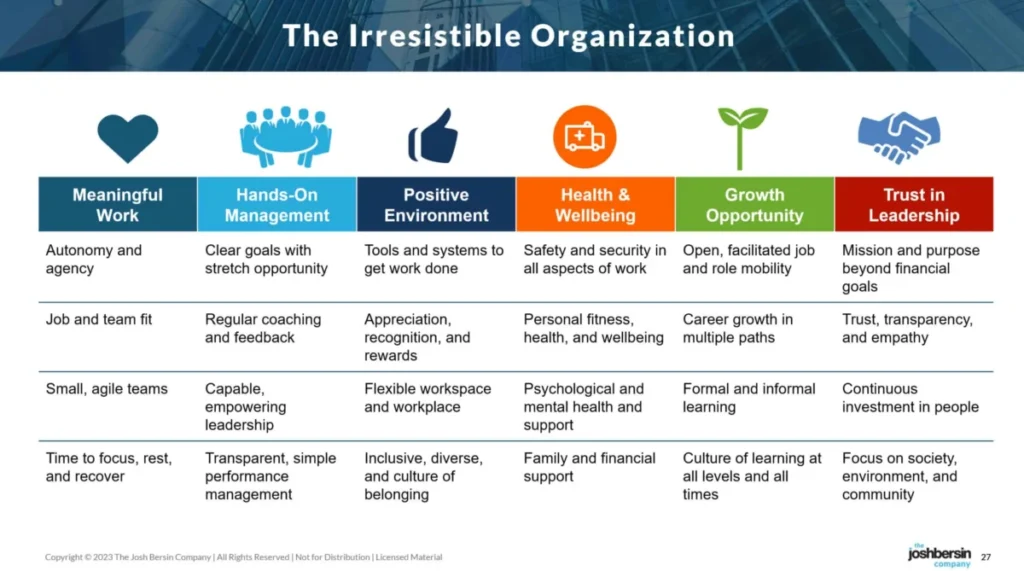
Within the framework of the "Irresistible" model, which examines 24 distinct areas of employee experience, each presents unique complexities for frontline staff. Many frontline employees lack consistent access to computers or email and are unable to use their personal devices during work hours. The need for immediate financial support, such as payday loans or access to real-time pay, highlights the importance of financial education and support services. Furthermore, a pervasive sense of disconnection necessitates robust communication and team-building programs.
The Evolving HR Technology Landscape
The HR technology market has made numerous attempts to address the needs of the frontline workforce, often through fragmented solutions. Many vendors offer workforce scheduling tools that have limited integration with core HRMS and payroll systems. This fragmentation leads to challenges in managing skills across disparate platforms, disassociating shift and work data from pay and tax information, and complicating the calculation of total labor costs.
Consider an employee who swaps shifts with a higher-paid colleague, potentially changing their work location or jurisdiction. Without seamless integration, HRMS and payroll systems may struggle to accurately account for tax implications and positional alignment. Similarly, employees may find it difficult to access consolidated pay statements if data across these systems is not unified.
Major HR technology providers are increasingly focusing on this market. Workday, for example, has strategically acquired companies like VNDLY and Paradox, signaling a renewed emphasis on the frontline segment. SAP, a significant player in industries with large frontline workforces such as energy, manufacturing, and telecommunications, launched its comprehensive Total Workforce Management platform in September. ADP, a dominant force in mid-market frontline industries, recently revamped its workforce platform to offer a more unified global solution.
UKG: A Pioneer in Frontline Workforce Management
Amidst this evolving landscape, UKG has emerged as a pioneer, having established its foundational expertise in time clocks, dynamic scheduling, and a fundamentally frontline-first approach to employee management from its inception. UKG, formerly Kronos, essentially invented modern workforce management three decades ago and has since grown into a $5 billion powerhouse. The company offers a comprehensive suite of solutions encompassing Human Capital Management (HCM), global payroll, pay optimization, dynamic labor optimization, high-volume hiring, employee communication tools, voice-driven employee applications, integrated surveys, recognition programs, and well-being initiatives, all augmented by a new generation of AI agents designed to streamline operations.
UKG refers to its integrated offering as the "Workforce Operating Platform," a unified system designed to meet the diverse needs of C-suite executives, operations leaders, managers, and frontline employees. As CEO Jen Morgan articulated, "UKG understands the needs of frontline industries, workers, and what’s important to them." This deep understanding stems from the company’s unique history and strategic vision.
UKG’s Integrated Approach and Strategic Acquisitions
The formation of UKG in 2020 through the merger of Ultimate Software and Kronos created a formidable entity. Kronos, a pioneer in time clocks and dynamic, optimized shift scheduling, brought deep expertise in workforce management. Ultimate Software, an early adopter of cloud-based solutions, offered a user-friendly and scalable HRMS and payroll system. Under new leadership, the combined company has developed an integrated platform, the Workforce Operating Platform, which unifies pay, scheduling, shift management, skills, and HR processes into a single, operationally cohesive system.
This integrated approach ensures that every shift change, pay adjustment, jurisdictional tax update, overtime calculation, and employee record modification flows seamlessly across payroll, HCM, and scheduling modules. Core HR functions, including onboarding, compliance management, training, and performance management, operate within the same environment as daily workforce operations. The result is a unified interface that simplifies the employee experience while providing managers and leaders with AI-powered tools for scheduling, employee engagement, operational oversight, and cost control.
UKG further solidified its commitment to understanding organizational culture by acquiring "Great Place To Work" (GPTW) in 2021. GPTW’s validated culture assessment methodologies are utilized by Fortune Magazine for its annual ranking of the top 100 Best Companies to Work For. UKG customers can leverage this data to gain industry-specific benchmarks and insights into building trust and enhancing management practices. Currently, UKG supports over 80,000 organizations, generating approximately $5 billion in annual revenue and onboarding 1,500 new clients this year alone.
Innovations Driving Frontline Empowerment
UKG’s unwavering focus on the frontline worker market has led to a series of significant product announcements and strategic acquisitions, each designed to address the urgent needs of frontline-first companies.
Workforce Intelligence Hub: From Insight to Action
A key innovation is the Workforce Intelligence Hub, which moves beyond traditional analytics to offer real-time planning and adjustment capabilities. This hub integrates workforce planning with operational insights, empowering managers with actionable tools. This development builds upon Kronos’s legacy in operational efficiency, a capability that few competitors have replicated.
AI-powered use cases within the Hub include:
- Predictive Scheduling: Utilizing AI to forecast demand and proactively adjust staffing levels, minimizing over- or under-staffing.
- Labor Cost Optimization: Analyzing real-time data to identify opportunities for cost savings without compromising service levels.
- Employee Engagement Insights: Identifying trends in employee sentiment and proactively addressing potential issues before they escalate.
- Risk Mitigation: Flagging potential compliance risks or safety concerns based on operational data.
These "Superagent" use cases are made possible by the integrated data platform, enabling a transition from mere insight to tangible action for operations leaders.
Dynamic Labor Management Coupled with Rapid Hire
Another pioneering initiative is the launch of "Dynamic Labor Management," which combines real-time labor insights with a streamlined hiring solution to rapidly scale capacity. In November, UKG acquired Chattr, a rapid-hiring platform that enables job seekers to quickly apply for and accept positions without the need for extensive profile creation or lengthy application processes. Founded in 2018, Chattr’s "one-click hire" solution is ideally suited for dynamic labor management scenarios.
Imagine a restaurant manager facing an unexpected surge in demand due to inclement weather or anticipating a busy holiday season. With Dynamic Labor Management integrated with Rapid Hire (the rebranded Chattr solution), managers can post open positions and fill them within hours. Potential employees can view job advertisements on their mobile devices, scan a QR code, and apply instantly through UKG’s digital hiring assistant. This creates another opportunity for a "Superagent" to support business growth.
Voice-Enabled Frontline Worker Support: Project Alto
UKG is also advancing voice-activated AI agents designed to connect an employee’s personal calendar and schedule with the entire UKG system for shift scheduling, pay, skills, and rewards. This initiative, codenamed "Project Alto," offers profound implications.
Consider a restaurant or transportation worker who uses a voice assistant to inquire about their November earnings and identifies a need for an additional $500 to fund Christmas shopping. Project Alto can interpret this request and leverage UKG’s integrated platform to suggest available shifts or even an opportunity to apply for a supervisory role. If the employee expresses interest in advancement, the system can recommend relevant training to prepare them for the position. This integrated experience, compatible with voice assistants like Siri, brings the power of UKG’s platform directly to frontline workers, regardless of their immediate access to other devices. This functionality is also poised to benefit white-collar workers.
UKG Frontline Worker Network
Further empowering frontline employees, UKG has established a partner network providing access to third-party services focused on health, wealth, and well-being. The initial offerings concentrate on financial wellness and support, addressing the needs of frontline workers who often manage their finances on a week-to-week basis. These services include partnerships with providers such as Chime, OnePay, and TurboTax, with plans to expand the network.
UKG Beacon: Enhancing Employee Recognition
In late November, UKG acquired Mo, a UK-based employee recognition solution designed for easy implementation. Employee recognition can range from simple verbal acknowledgments to more complex rewards like gift cards, delivered by peers or managers. Research conducted a decade ago indicated that companies with robust recognition programs experience a 70% lower voluntary turnover rate compared to their peers.
Within frontline-first organizations, where direct customer or patient interaction is constant, small acts of recognition can have a significant impact. Beacon, the integrated recognition system, appears as a seamless experience within the HR, payroll, and recruiting modules. It features a feed of "moments," boosts, and rewards that managers can extend to employees, celebrating milestones such as anniversaries, career achievements, or periods of exceptional performance. UKG tracks these recognition events, enabling managers and executives to monitor recognition trends across different stores or facilities. An AI agent could even prompt a manager to acknowledge high performance if their recognition activity falls below company benchmarks.
The Future of Frontline Workforce Technology
The market for frontline workforce technology is poised for rapid growth. UKG, under the leadership of Jennifer Morgan, is actively illuminating this sector and driving innovation. While many HR providers view the "frontline" as an incremental opportunity, UKG recognizes it as a distinct market with substantial potential for innovation. The integrated features within UKG’s platform are applicable across all employee segments within an organization, offering the company a strategic advantage in sectors with significant frontline workforces.
The current imperative lies in execution: closing long-standing gaps in employee experience, opportunity, and mobility for the 2.7 billion individuals who are the operational backbone of the global economy. With Jennifer Morgan at the helm and a dynamic executive team, UKG appears well-positioned to lead in this evolving era of AI-powered frontline support.







