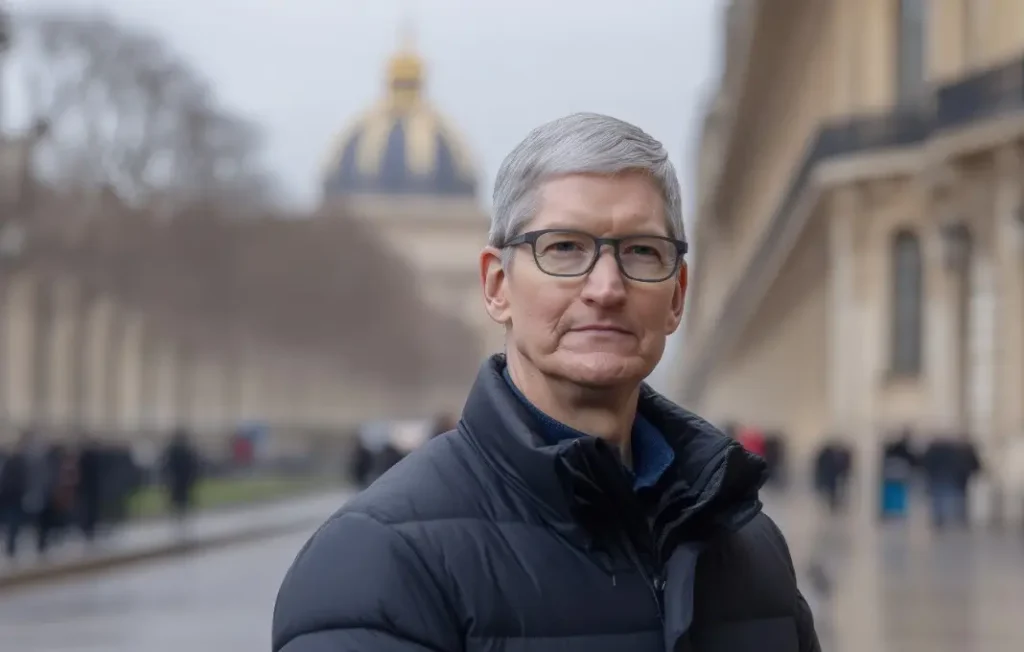
The recent announcement of Tim Cook’s impending departure as CEO of Apple marks the end of a transformative era for the technology giant, and a moment for profound reflection on his leadership. Stepping into the monumental shadow of Steve Jobs, a task many deemed nearly impossible, Cook not only preserved Apple’s legacy but propelled it to unprecedented heights, redefining what it means to lead in the modern corporate landscape. His tenure, characterized by strategic brilliance and an unwavering focus on core principles, offers a rich tapestry of lessons applicable far beyond Silicon Valley, providing a blueprint for aspiring leaders and established businesses alike. The sheer scale of Apple’s market capitalization, now exceeding $4 trillion, a significant leap from its initial $1 trillion milestone just a few years prior, stands as a testament to his profound impact.
The Unprecedented Challenge: Succeeding Steve Jobs
The transition from Steve Jobs to Tim Cook in August 2011 was a moment of intense scrutiny. Jobs, a visionary co-founder and the driving force behind Apple’s iconic products, had cultivated a unique brand identity synonymous with innovation, design, and a cult-like following. His departure left a void that many feared would be insurmountable. The prevailing sentiment was that Apple’s magic was intrinsically linked to Jobs’s singular genius, and that any successor would struggle to maintain its trajectory, let alone surpass it. The initial period under Cook’s leadership was thus a crucible, a test of his ability to navigate this daunting legacy.
Cook, known for his operational expertise and supply chain mastery rather than Jobs’s charismatic product evangelism, approached the challenge with a distinct, yet equally effective, leadership style. He did not attempt to replicate Jobs’s persona. Instead, he leaned into his own strengths, fostering a culture of meticulous execution, financial prudence, and an expansion of Apple’s ecosystem. This strategic divergence proved to be the key to his success, allowing him to build upon Jobs’s foundation without being constrained by it.
Three Pillars of Tim Cook’s Apple Masterclass
While Cook’s leadership encompasses a multitude of strategic decisions and operational triumphs, three core tenets emerge as particularly instructive for the broader business world: cultivating loyal fanbases, embracing long-term strategic patience, and maintaining a grounded, product-focused leadership persona.
Cultivating Fanatical Loyalty: Beyond Customer Satisfaction
One of the most significant achievements of Cook’s tenure has been the elevation of Apple’s customer base from mere consumers to devoted "fans." This transition is more than a semantic shift; it represents a fundamental redefinition of the relationship between a brand and its users. Building on the emotional connection forged in the early days of Apple products, Cook has meticulously nurtured a sense of belonging and shared identity. This is evident not only in the seamless integration of Apple’s hardware, software, and services – creating a cohesive ecosystem that users are reluctant to leave – but also in the company’s customer service, which is designed to reinforce the premium experience.
This strategy of creating "fans" has been a powerful engine for both horizontal and vertical growth. Internationally, it has fueled expansion into new markets, as the aspirational appeal of Apple products transcends cultural barriers. Vertically, it has enabled the introduction of new product categories and services, from the Apple Watch to Apple TV+, which are readily embraced by the existing loyal user base. The trust inherent in this fan relationship means that consumers anticipate quality and seamless integration, a perception that allows Apple to introduce diverse offerings with a high probability of success. This fanatical loyalty is a critical component of Apple’s sustained competitive advantage, ensuring consistent demand and a premium pricing power that few companies can match.
The ramifications of this fan-centric approach are profound. It allows Apple to command higher prices, as customers are willing to pay a premium for the perceived value, reliability, and emotional connection associated with the brand. Furthermore, it reduces customer acquisition costs over time, as the organic growth driven by word-of-mouth and the desire to be part of the Apple ecosystem becomes a significant driver of sales. This approach contrasts sharply with many businesses that focus solely on transactional relationships, missing the opportunity to build enduring brand affinity.
The Virtue of Patience: Nurturing Long-Term Investments
In an era often dominated by short-term financial results and immediate shareholder gratification, Tim Cook’s leadership has underscored the critical importance of strategic patience. Apple’s balance sheet, often cited as one of the most robust in corporate history, provides the financial fortitude necessary to invest in nascent technologies and product lines for years, even decades, before they achieve widespread market penetration. This financial strength is not merely a byproduct of success; it is a deliberate strategy that allows for experimentation and the nurturing of ideas that may not yield immediate returns.
A prime example of this patient approach is Apple Pay. Launched in 2014, the mobile payment service experienced a slow initial adoption rate. However, Apple’s unwavering commitment, coupled with its extensive user base and integration into its devices, has transformed it into a significant revenue generator. As of early 2026 data, Apple Pay boasts approximately 785 million users globally and is accepted at an estimated 90 percent of U.S. retailers. This service now generates an estimated $3-4 billion in annual revenue for Apple, demonstrating the long-term payoff of investing in services that enhance the user experience and integrate seamlessly into the Apple ecosystem.
This strategy of patience allows Apple to de-risk innovation. By not being solely dependent on the immediate success of a new product, the company can afford to iterate, refine, and wait for the market to mature. This is a stark contrast to companies that are forced to abandon promising ventures due to early, insufficient returns, thereby stifling potential long-term growth avenues. The ability to absorb initial stumbles and continue investing in the future is a hallmark of Cook’s strategic vision, a lesson in perseverance that resonates deeply in the fast-paced world of business.
The Power of Restraint: The Product-Centric CEO
In an age characterized by the rise of the celebrity CEO, epitomized by figures who actively cultivate public personas and engage in constant media pronouncements, Tim Cook’s leadership offers a refreshing counterpoint. He has maintained a remarkably low public profile, especially when compared to the larger-than-life persona of his predecessor and the highly visible, often provocative, CEOs of other major tech companies. Cook has consciously avoided the temptation to become the "king of Silicon Valley," instead opting for a more circumspect and competence-driven approach.
This deliberate choice to let the products speak for themselves is a form of profound ego discipline. Cook’s public appearances are rare and focused, and his pronouncements are measured. He operates with a quiet authority, projecting an image of overwhelming competence rather than flamboyant charisma. This has allowed Apple’s innovations and its user experience to remain the primary focus of public attention, rather than the personality of its chief executive. This strategy has proven remarkably effective, insulating the company from the volatility often associated with individual CEO personalities and ensuring that its brand narrative is consistently centered on its offerings.
The implications of this product-centric leadership are significant. It fosters a culture where execution and innovation are paramount, rather than the cultivation of a personal brand. It also provides a degree of stability and predictability for the company, as its success is not contingent on the ongoing public approval or pronouncements of its leader. In a world increasingly saturated with noise, Cook’s approach highlights the enduring power of substance over spectacle. His measured engagement with political and social issues, often described as akin to a savvy K-Street professional, further underscores his ability to navigate complex environments with strategic precision rather than overt activism.
Broader Impact and Implications
Tim Cook’s departure from Apple, while not an immediate event, marks a pivotal moment for the company and the business world. His leadership has demonstrated that it is possible to succeed, even thrive, in the wake of an iconic predecessor by embracing one’s own unique strengths. He has redefined the metrics of success, showcasing how sustained competitive advantage can be built not just on disruptive innovation, but also on operational excellence, unwavering customer loyalty, and strategic patience.
The lessons learned from his tenure are universally applicable. Businesses of all sizes can strive to cultivate deeper relationships with their customers, transforming them into loyal advocates. They can learn to balance the pressures of short-term performance with the imperative of long-term strategic investment. And leaders can choose to amplify the achievements of their teams and products, rather than their own personal narratives, fostering a more sustainable and resilient organizational culture.
As Apple navigates this transition, the enduring legacy of Tim Cook will undoubtedly serve as a guiding principle. His reign has been a masterclass in how to build and sustain value in the modern economy, proving that quiet competence, strategic foresight, and a profound understanding of human connection can be the most powerful forces for business success. The question now for Apple, and for the rest of us observing its trajectory, is how these foundational lessons will be carried forward into the next chapter. The opportunities for growth and innovation remain immense, and the principles Cook championed provide a robust framework for continued achievement.