
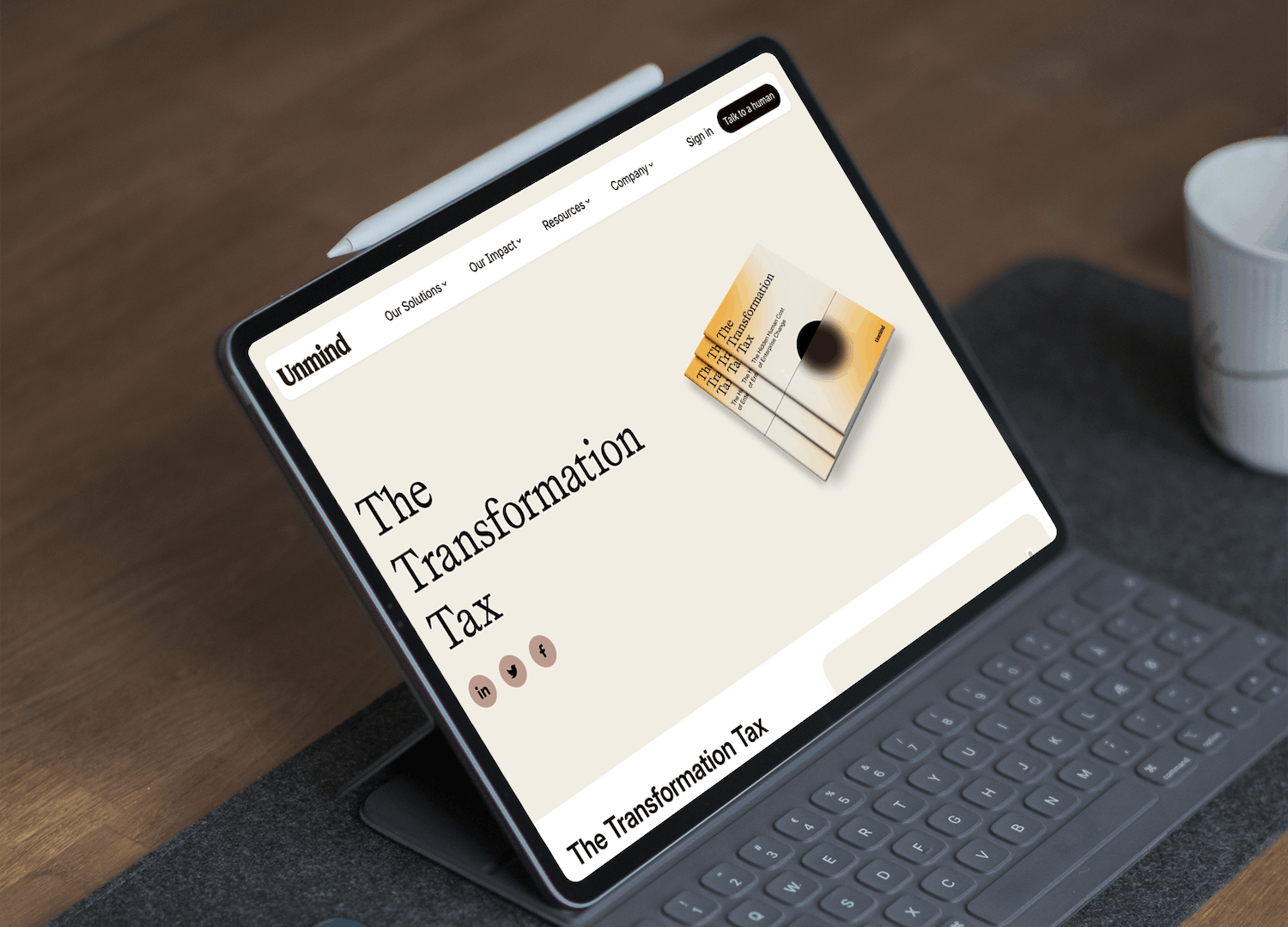
A groundbreaking report, "Transformation Tax: The Hidden Human Cost of Enterprise Change," released in partnership with Unmind, reveals a stark reality for modern businesses: continuous organizational change is no longer a temporary project but a perpetual state, and its unmanaged impact is exacting a significant toll on employees. The report, which synthesizes perspectives from Chief Human Resources Officers (CHROs), projects a critical need for a more human-centric approach to navigating the complexities of ongoing transformation. The findings underscore that without careful management, this constant flux can lead to detrimental effects on employee well-being, engagement, and ultimately, organizational performance.
The report’s central thesis posits that enterprises are increasingly operating in an environment of perpetual flux, where adaptability and agility are paramount. This constant state of evolution, while often driven by competitive pressures and technological advancements, carries an inherent "transformation tax" – a hidden human cost that can manifest as stress, disengagement, and burnout if not proactively addressed. The research indicates that many organizations are underestimating the cumulative psychological burden placed on their workforce during periods of significant change.
The Evolving Landscape of Enterprise Transformation
The past decade has witnessed an acceleration in the pace and scope of organizational change. Driven by factors such as digital disruption, evolving consumer demands, global economic shifts, and the imperative for sustainable practices, companies are continually restructuring, adopting new technologies, and redefining their operational models. This relentless pursuit of transformation, while necessary for survival and growth, has fundamentally altered the employee experience.
Historically, organizational change was often viewed as discrete projects with defined start and end dates. However, the current business environment demands a more fluid and continuous approach. This shift from project-based change to a state of permanent transformation means that employees are rarely afforded a period of stability. Instead, they are expected to constantly adapt to new strategies, processes, and team structures. This perpetual motion, according to the report, is a primary contributor to the "transformation tax."
Key Findings: Unpacking the "Transformation Tax"
Unmind’s report, drawing on insights from senior HR leaders, identifies several critical themes shaping workplace mental health in the projected landscape of 2026. These themes highlight the tangible consequences of poorly managed change and offer actionable pathways for HR professionals.
The Tangible Human Cost of Rapid Change:
A core revelation from the joint analysis by Unmind and its partners is that the human cost of transformation is often underestimated. Stress, disengagement, and burnout are not merely byproducts of change but can accumulate significantly when adequate support and transparent communication are absent. This accumulated "transformation tax" can have long-term repercussions, manifesting as diminished morale, reduced productivity, and a decline in employee loyalty. Without strategic intervention, these consequences can become deeply entrenched, impacting the organization’s ability to execute its strategic objectives.
Data from various studies corroborates this finding. For instance, a 2023 Gallup report indicated that actively disengaged employees cost the global economy trillions of dollars annually in lost productivity. The link between poorly managed change and disengagement is therefore a significant financial and operational concern for businesses.
The Pervasiveness of Change Fatigue:
The report highlights that a substantial majority of employees, exceeding 50%, report experiencing fatigue due to ongoing organizational changes. This pervasive "change fatigue" acts as a significant impediment to productivity and engagement. When employees feel overwhelmed and exhausted by constant flux, their capacity to embrace new initiatives and contribute effectively is severely compromised. Proactive support from leadership is identified as a crucial mitigating factor, underscoring the need for empathetic and strategic change management.
Research from organizations like McKinsey & Company has consistently shown that employee resistance and fatigue are among the primary reasons for change initiatives failing to achieve their intended outcomes. The report’s emphasis on change fatigue reinforces this long-standing challenge.
Communication as a Performance Lever:
Transparency in communication emerges as a critical determinant of employee trust and organizational alignment. The report indicates that employees are as much as 80% more likely to trust their organization when communication is consistently transparent. This heightened trust is not merely a matter of employee satisfaction; it is a fundamental requirement for effective change implementation. During periods of transformation, where uncertainty is inherent, clear, honest, and frequent communication builds a foundation of trust that is essential for gaining buy-in and ensuring coordinated action.
A lack of transparent communication can breed rumors, anxiety, and a sense of being out of the loop, all of which erode morale and hinder progress. Therefore, investing in robust communication strategies is not an optional add-on but a core performance driver.
The Impact of Recognition on Output:
The report underscores the profound influence of recognition on employee performance and morale. A significant 85% of employees report that feeling appreciated directly affects their productivity. Furthermore, 79% believe their relationship with their manager plays a crucial role. During times of change, when employees may be navigating unfamiliar territory and increased pressures, the manager-employee relationship and the provision of regular recognition become even more vital. Simple acts of appreciation can serve as powerful motivators, reinforcing positive behaviors and acknowledging the effort required to adapt.
Studies on employee motivation consistently point to recognition as a key factor in fostering a positive work environment and driving performance. The report’s emphasis on this aspect highlights its importance in the context of continuous change.
Wellbeing Outranking Compensation for Many:
A striking finding is that for a considerable portion of the workforce, prioritizing employer well-being now surpasses the allure of a salary increase. Half of employees surveyed expressed a preference for an employer that demonstrably cares about their well-being over a 10% pay raise. This preference is reportedly growing year over year, signaling a fundamental shift in employee expectations and priorities. As organizations grapple with the human cost of transformation, investing in comprehensive well-being programs is becoming not just a benefit but a strategic imperative for talent attraction and retention.
This trend aligns with broader societal shifts towards prioritizing mental health and work-life balance. Companies that fail to address these evolving employee values risk falling behind in the competitive talent market.
Actionable Strategies for HR: Mitigating the "Transformation Tax"
The report provides five practical recommendations for HR departments to actively reduce the "transformation tax" and foster a more resilient workforce:
-
Over-Communicate During Change – Transparently and Often:
Effective communication during transformation requires a multi-faceted approach. Organizations must commit to sharing all available information, acknowledging uncertainties, and reiterating key messages across various channels. Transparent updates serve to build and maintain trust, effectively countering the spread of rumors and misinformation that can destabilize a workforce. A critical component of this strategy involves equipping managers with consistent talking points and the skills to deliver these messages effectively in one-on-one interactions, ensuring that employees receive clear and unified guidance beyond general all-hands meetings. This approach fosters a sense of shared understanding and reduces anxiety associated with the unknown. -
Empower Managers as Force Multipliers:
Managers are on the front lines of change, directly influencing their teams’ experience. To maximize their impact, organizations must provide managers with the necessary time, resources, and training to effectively support their teams. This includes fostering regular check-ins, assisting in priority setting, and consistently recognizing progress. The manager-employee relationship is a significant predictor of both productivity and overall well-being. Integrating quick recognition habits into weekly team rhythms can normalize praise and the acknowledgment of achievements, reinforcing a positive and supportive team dynamic amidst ongoing change. -
Treat Mental Health as Core Infrastructure, Not a Peripheral Program:
The report advocates for integrating mental health support as a fundamental element of organizational infrastructure, rather than treating it as an isolated or optional program. Centralizing well-being resources ensures that employees can easily access help and support privately when needed. Encouraging leaders to openly share their own well-being journeys can significantly reduce stigma, creating a more open and supportive environment. It is crucial to recognize that burnout is often a systemic issue requiring organizational-level solutions, such as addressing workload, clarifying expectations, and ensuring adequate resourcing, rather than solely relying on individual resilience strategies. -
Align AI Acceleration with People Readiness:
As organizations increasingly adopt artificial intelligence (AI), it is imperative to simultaneously focus on upskilling the workforce and establishing clear governance frameworks. While the majority of employees report productivity gains through AI utilization, inherent risks such as algorithmic bias, errors, and the potential for oversharing sensitive data necessitate robust governance. The strategic aim should be to leverage AI to automate repetitive tasks, thereby freeing up employees to focus on higher-value, human-centered work that requires critical thinking, creativity, and interpersonal skills. This approach ensures that technological advancement complements, rather than displaces, human capital. -
Reinforce Belonging Through Recognition and Purpose:
Fostering a sense of belonging is paramount, especially during periods of change. Strategic, values-based recognition can effectively connect daily accomplishments to the organization’s overarching mission and purpose. Small, frequent moments of appreciation can significantly boost employee well-being and maintain team focus on what constitutes success amidst evolving priorities. Implementing systems that facilitate easy recognition across different locations and roles ensures that all employees feel seen, valued, and connected to the organization’s collective goals.
Implications for the Future of Work
The "Transformation Tax" report serves as a compelling call to action for businesses to re-evaluate their approach to organizational change. The findings suggest that sustainable transformation is inextricably linked to prioritizing people. When leaders cultivate open communication, empower their managers, acknowledge employee contributions, and make well-being a non-negotiable aspect of the workplace, performance and humanity can advance in tandem, rather than in opposition.
This integrated approach allows organizations to effectively reduce the "transformation tax" and cultivate a more resilient, high-performing culture capable of navigating the challenges and opportunities of 2026 and beyond. The report implicitly suggests that organizations that fail to address the human cost of change risk significant talent attrition, decreased innovation, and long-term competitive disadvantage.
The research from Unmind, in collaboration with leading CHROs, provides a critical framework for understanding the nuanced and often overlooked human dimension of enterprise transformation. By embracing the recommendations outlined in the report, organizations can move towards a future where change is not a source of attrition but a catalyst for growth, driven by a supported and engaged workforce.
For organizations looking to delve deeper into these insights, Unmind’s comprehensive "Transformation Tax" report is available for exploration. The insights gleaned from this report offer a roadmap for operationalizing these crucial strategies across communication, recognition, and well-being initiatives, potentially on a unified platform, to foster a more humane and effective approach to continuous organizational evolution.