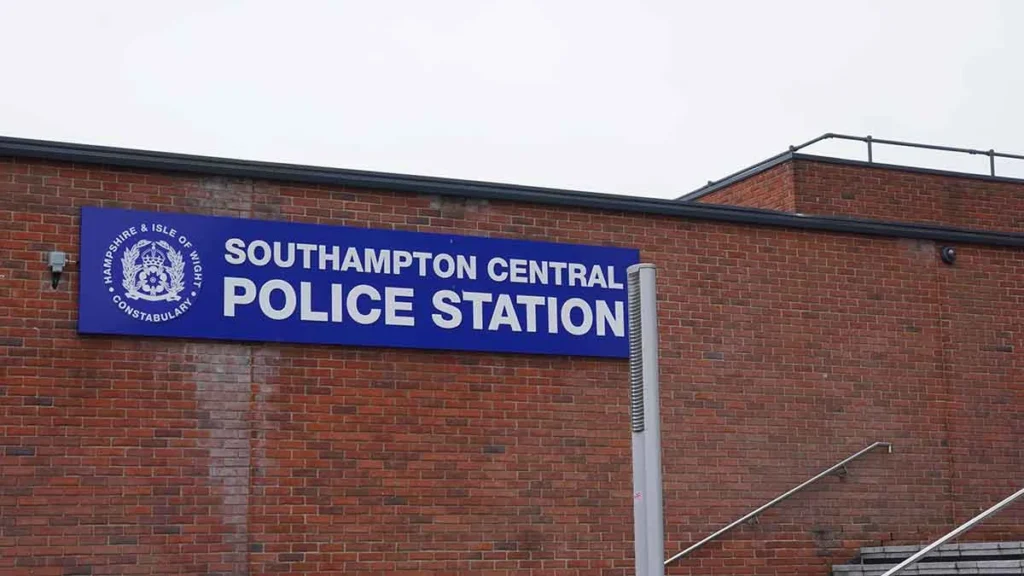
The Independent Office for Police Conduct (IOPC) has initiated a gross misconduct investigation into two police officers involved in the arrest of Henry Nowak, who later tragically died after being stabbed by Vickrum Digwa. The decision, announced on July 1, 2026, stems from a comprehensive review of evidence gathered during an ongoing inquiry into the incident that occurred late in the evening of December 3, 2025. The officers, who were the first responders to the scene, are being investigated for potential breaches of professional behaviour standards related to duties and responsibilities, use of force, and discreditable conduct.
Background to a Tragic Night
The incident unfolded on the evening of December 3, 2025, when Henry Nowak was found critically injured after being stabbed by Vickrum Digwa. The precise location and initial circumstances leading to the stabbing have been subject to intense scrutiny, but it is understood that emergency services were alerted to a serious assault. Upon arrival, two officers from the Hampshire and Isle of Wight Constabulary were the first on the scene. It was during their interaction with the injured Nowak that the alleged failures in policing conduct occurred, which are now at the heart of the IOPC’s investigation.
According to the IOPC, evidence indicates a series of concerning actions by the officers. Despite Nowak explicitly stating he had been stabbed and couldn’t breathe, and clearly being in urgent need of medical attention, the officers allegedly failed to recognise the severity of his condition or to act immediately to provide first aid. Instead, the decision was made to arrest and handcuff Henry Nowak, a move that has drawn significant criticism and forms a key part of the gross misconduct allegations. One of the officers is further alleged to have breached standards relating to authority, respect, and courtesy, by seemingly dismissing the teenager’s desperate pleas for help.
This case has resonated deeply with the public and sparked widespread debate, particularly following the conclusion of criminal proceedings against Vickrum Digwa for Nowak’s murder. The release of bodycam footage from the arrest, while not explicitly detailed in its contents by the IOPC, is understood to have played a crucial role in intensifying public and political scrutiny over the officers’ actions and the broader response of law enforcement.
The IOPC’s Escalated Inquiry
The Independent Office for Police Conduct, the independent body overseeing police complaints in England and Wales, meticulously reviews incidents involving police conduct to ensure accountability and maintain public confidence. In this particular case, IOPC director of engagement Derrick Campbell reiterated the organisation’s deepest sympathies to Henry Nowak’s family and friends, acknowledging the profound impact of their loss.
Campbell explained that IOPC investigators met with Henry’s family earlier this month to discuss the investigation in depth, a meeting that followed the conclusion of criminal proceedings against Digwa. It was during these discussions, and in light of formal complaints lodged by the family against the force, that the IOPC expanded its inquiry. The continuous review of evidence, a standard practice for the IOPC, led to the decision to issue gross misconduct notices to the two officers.
"We are obliged to constantly review the evidence obtained throughout our investigations and assess any indications of potential misconduct for officers involved. As a result, two officers will now face gross misconduct investigations," Campbell stated. He emphasised the severe damage to public confidence that incidents of this nature can inflict, highlighting it as a significant factor in the IOPC’s assessment. It is important to note, as Campbell clarified, that the serving of gross misconduct notices does not automatically guarantee disciplinary proceedings. The ultimate decision on whether officers will face such proceedings will be made at the conclusion of the IOPC’s investigation.
The specific breaches under investigation are multi-faceted. The alleged failures to recognise Nowak’s critical medical state and to provide immediate first aid are central. These failures directly challenge the fundamental duty of care expected of all police officers, particularly in emergency situations where lives are at stake. The decision to prioritise arrest and handcuffing over life-saving intervention raises serious questions about training, judgment, and adherence to established protocols for handling medical emergencies. Furthermore, the allegation concerning one officer’s dismissal of Nowak’s pleas touches upon the crucial standard of authority, respect, and courtesy, underscoring the importance of compassionate and professional interaction, even in high-stress environments.
Chronology of Key Events
- December 3, 2025, Late Evening: Henry Nowak is stabbed by Vickrum Digwa. Two Hampshire and Isle of Wight Constabulary officers arrive as first responders. During their interaction, Nowak states he has been stabbed and cannot breathe, but is subsequently arrested and handcuffed without immediate first aid.
- Following Days/Weeks: Nowak’s condition deteriorates, leading to his death. An investigation into his death commences, eventually leading to criminal charges against Vickrum Digwa.
- Prior to July 2026: Criminal proceedings against Vickrum Digwa conclude, resulting in a conviction for murder. Bodycam footage of Nowak’s arrest is released, prompting public and political outcry.
- Early July 2026 (or earlier): Henry Nowak’s family lodges formal complaints against the Hampshire and Isle of Wight Constabulary regarding the officers’ conduct.
- "Earlier this month" (June 2026): IOPC investigators meet with Henry Nowak’s family to discuss the ongoing investigation in depth.
- July 1, 2026: The IOPC announces that two officers involved in Nowak’s arrest are now under investigation for potential gross misconduct, citing new evidence and family complaints.
Official Reactions and Broader Implications

While the Hampshire and Isle of Wight Constabulary has not issued a specific statement directly quoted in the provided context, it is standard practice for police forces to acknowledge such investigations, express their commitment to cooperating fully with the IOPC, and reiterate their dedication to transparency and accountability. A spokesperson for the force would likely state their support for the officers involved while ensuring the integrity of the investigative process, and assure the public that lessons learned from the incident will be implemented to improve policing practices.
The family of Henry Nowak, through their formal complaints and engagement with the IOPC, have clearly demonstrated their unwavering pursuit of justice and accountability for their loved one. Their pain and determination have been a driving force behind the expanded investigation, underscoring the critical role victims’ families play in independent oversight processes. Their ongoing grief is compounded by the belief that Henry’s chances of survival may have been diminished by the officers’ initial response.
This tragic incident also casts a long shadow over national policing policies, particularly a commitment to racial equity published a year prior by the National Police Chiefs’ Council (NPCC) and the College of Policing. This document explicitly states: "Producing equality of policing outcomes for people from different ethnic groups by responding to individuals and communities according to their specific needs, circumstances and experiences, with understanding that these will be racialised and with the aim of reducing harm. It does not mean treating everyone ‘the same’ or being ‘colour blind’ (racial equality)."
Politicians and community leaders have criticised the efficacy of this commitment in the wake of the bodycam footage’s release and the subsequent developments in Nowak’s case. The incident highlights the stark challenges in translating high-level policy commitments into consistent, compassionate, and equitable frontline policing practice. Critics argue that if officers fail to recognise the urgent medical needs of an individual, particularly one from a potentially vulnerable or racialised background, it undermines the very principles of equity and harm reduction that the national strategy aims to uphold. The case serves as a poignant reminder that while policy frameworks are essential, their true test lies in their application during critical, high-pressure encounters.
The Impact on Public Trust and Accountability
Derrick Campbell’s assertion that "There is clear evidence that public confidence in the force may have been seriously harmed by this incident" is a crucial acknowledgment. Public trust in policing is fragile and relies heavily on the perception of fairness, competence, and accountability. Incidents where officers are perceived to have failed in their basic duty of care, especially when a life is lost, can severely erode this trust, particularly within communities that have historically experienced disproportionate or negative interactions with law enforcement.
The IOPC’s role in independently investigating such matters is vital for maintaining public confidence. It provides a mechanism for holding officers to account outside of internal police structures, offering a degree of impartiality. The investigation will not only scrutinise the actions of the individual officers but also examine systemic issues that may have contributed to the alleged failures. This could include an evaluation of training protocols for first aid, de-escalation techniques, recognition of medical emergencies, and the prioritisation of arrest procedures versus life-saving interventions.
Furthermore, the IOPC’s mandate extends to identifying whether any changes are needed to national or force policies or procedures to improve police practice. This could lead to recommendations for revised training modules, clearer guidelines for officers responding to stabbings or other serious injuries, and enhanced emphasis on the ‘duty of care’ principle in all interactions. The outcome of this investigation could therefore have far-reaching implications, influencing police training and operational procedures across the country.
Future Steps in the Investigation
The serving of gross misconduct notices marks a significant stage in the IOPC’s investigation. It means the officers are formally informed of the allegations against them and the standard of professional behaviour they are suspected of breaching. They will have the opportunity to provide their accounts and respond to the evidence.
The IOPC will continue to gather and analyse all relevant evidence, which may include further witness statements, forensic reports, and detailed reviews of bodycam footage and other police records. Once the investigation is complete, the IOPC will issue a report outlining its findings. Based on this report, it will decide whether the officers should face disciplinary proceedings, typically in the form of a gross misconduct hearing.
Potential outcomes of such a hearing range from no further action, if the allegations are not proven, to formal warnings, or in the most serious cases, dismissal from the force. Regardless of the individual outcome for the officers, the investigation will undoubtedly provide critical insights into police conduct and accountability, contributing to the ongoing national conversation about policing standards, the use of force, and the paramount importance of public trust in law enforcement. The thoroughness and transparency of this process will be crucial for the family of Henry Nowak and for the wider public seeking assurance that justice is served and that such tragedies are prevented in the future.