
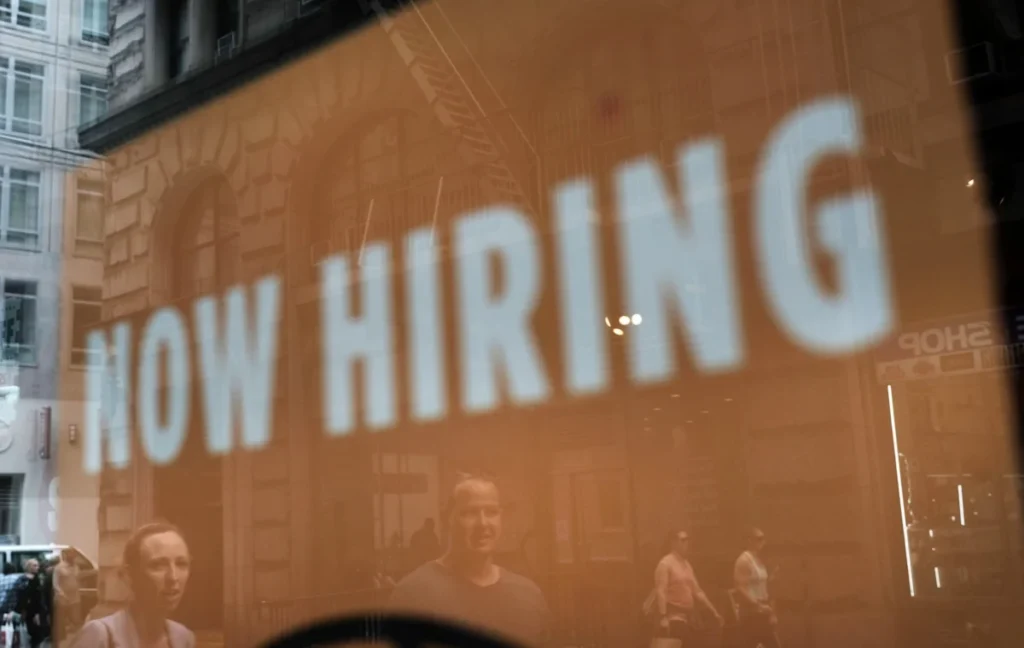
The Bureau of Labor Statistics (BLS) recently released its latest monthly jobs report, revealing that the U.S. economy added approximately 115,000 jobs last month, a figure that nearly doubled the predictions of most economists. Accompanying this growth, both overall payroll and average wages experienced an increase. Despite these positive indicators, the national unemployment rate concurrently saw a slight uptick, painting a nuanced picture of a labor market that is robust yet undeniably complex. This paradoxical combination of job creation and rising unemployment has prompted careful analysis from economists and labor market specialists alike, highlighting underlying shifts in hiring practices and workforce requirements.
The Nuance of Growth: Beyond the Headline Numbers
The reported addition of 115,000 jobs signals a continued, albeit moderated, expansion of the U.S. workforce. This figure stands in contrast to the consensus forecast from various economic surveys, which generally anticipated a more modest gain, often closer to the 60,000-job mark. While exceeding expectations for job creation, the concurrent rise in the unemployment rate suggests that the labor force participation rate may have also increased, or that more individuals are actively seeking work without immediately finding it. Economist Andrew Flowers characterized the report as "reassuringly solid" on the surface, yet cautioned against overinterpretation, stating, "By no means is this a jobs boom—far from it. But it provides evidence of labor market stability." This perspective underscores a prevailing sentiment that while the economy continues to generate employment, the pace and nature of this growth are distinct from previous periods of rapid expansion.
Understanding the BLS Jobs Report: A Key Economic Barometer
The monthly employment situation report, commonly known as the jobs report, is one of the most closely watched economic indicators in the United States. Produced by the BLS, an agency of the U.S. Department of Labor, it provides a comprehensive snapshot of the nation’s labor market health. The report is primarily derived from two major surveys: the Establishment Survey (Current Employment Statistics), which collects data from approximately 119,000 businesses and government agencies to estimate nonfarm payroll employment, hours, and earnings; and the Household Survey (Current Population Survey), which interviews about 60,000 households to determine unemployment rates, labor force participation, and demographic characteristics of the employed and unemployed.
The significance of this report extends beyond mere numbers; it offers critical insights into economic trends, consumer confidence, and inflationary pressures. Policymakers, particularly the Federal Reserve, meticulously scrutinize these figures to inform decisions regarding monetary policy, including interest rate adjustments. Leading up to this latest release, the economic landscape has been characterized by persistent inflation, aggressive interest rate hikes by the Federal Reserve aimed at cooling the economy, and ongoing discussions about the likelihood of a recession. Against this backdrop, the jobs report serves as a vital barometer for assessing the efficacy of these measures and the underlying resilience of the economy.
Detailed Economic Indicators and Sectoral Performance
Beyond the headline figures, a deeper dive into the BLS data reveals specific trends within the labor market. Average hourly earnings, a key measure of wage growth, continued their upward trajectory, signaling sustained pressure on employer costs but also providing some relief for workers facing elevated living expenses. While the report did not specify the exact percentage, the general trend in recent months has shown year-over-year wage growth moderating slightly but remaining above pre-pandemic levels. The increase in overall payroll suggests that despite some sectors experiencing slowdowns, the aggregate compensation paid to workers across the economy has risen, reflecting both increased employment and higher individual earnings.
A granular look at sectoral performance, as highlighted by Guy Berger, Ph.D., Senior Advisor on labor markets at Access/Macro, indicates a mixed bag. Healthcare and transportation sectors recorded significant gains, contributing substantially to the overall job additions. The healthcare sector’s sustained growth is often attributed to an aging population and increasing demand for medical services, a demographic trend that ensures consistent expansion. Transportation, warehousing, and logistics, on the other hand, continue to benefit from evolving supply chain dynamics and robust e-commerce activity, despite some fluctuations. Conversely, information services and financial activities reported notable declines. The information sector, which includes technology and media, has faced significant headwinds recently, marked by widespread layoffs and hiring freezes as companies recalibrate post-pandemic growth strategies and contend with rising interest rates impacting investment. Financial activities, similarly, have felt the ripple effects of a changing interest rate environment and a cautious lending landscape. These contrasting performances underscore a rebalancing within the economy, with some sectors expanding rapidly while others contract or stagnate.
Expert Analysis and Interpretations: A "Good, Not Great" Assessment
The prevailing sentiment among labor market experts leans towards cautious optimism rather than outright celebration. Guy Berger, in a LinkedIn post, succinctly summarized the findings as a "good, not great jobs report." This characterization aligns with Andrew Flowers’ assessment of "stability" rather than a "boom." Such nuanced interpretations are crucial, as they temper expectations and encourage a focus on underlying structural changes.
Ger Doyle, Regional President, North America at ManpowerGroup, further elaborated on the labor market’s evolving characteristics. He noted its continued "resilience at the headline level" but simultaneously observed it becoming "harder to access and increasingly selective." This increased selectivity is particularly evident in entry-level hiring, which has reportedly cooled. Employers are now focusing their recruitment efforts on in-demand roles at senior and specialized levels, where specific skills and experience are paramount. Doyle stated, "Employers currently hold more leverage in the labor market and are hiring with greater precision." This shift signifies a move away from the "worker’s market" narrative that dominated during the immediate post-pandemic recovery, towards a more balanced, if not employer-favored, environment. Businesses, having navigated periods of acute labor shortages, are now prioritizing efficiency and strategic alignment in their hiring decisions.
Implications for Monetary Policy and the Federal Reserve
The BLS jobs report carries significant weight for the Federal Reserve. The central bank operates under a dual mandate: to achieve maximum employment and maintain price stability. A report indicating continued job growth, even if accompanied by a slight unemployment uptick, and sustained wage increases, could influence the Fed’s stance on interest rates. While a "good, not great" report might suggest the economy is not overheating excessively, persistent wage growth could still be viewed as a contributing factor to inflationary pressures. Should the Fed perceive the labor market as remaining robust enough to withstand further tightening, it might signal a willingness to maintain higher interest rates for longer or even consider additional hikes, albeit cautiously. Conversely, signs of significant cooling or deterioration in future reports could prompt a pivot towards easing monetary policy. The nuanced nature of this report provides the Fed with complex data to weigh, as they strive to engineer a "soft landing" – bringing inflation down without triggering a severe recession.
The Evolving Role of Human Resources and Talent Strategy in the AI Age
The shifts observed in the labor market place a significant onus on Human Resources (HR) departments, already tasked with adapting hiring strategies to meet the demands of the Artificial Intelligence (AI) age. As AI integration reshapes workforces and drives organizational restructuring, HR functions are not only refining their hiring precision but also intensifying their focus on retention, internal mobility, and talent development. The emphasis has shifted from simply filling vacancies to strategically building and nurturing a future-ready workforce.
Aly Sparks, Global Head of HR at talent advisory LHH and Group SVP at workforce solution Adecco Group, recently highlighted this transformation in an interview with HR Executive. She explained that organizations are now actively driving internal mobility by meticulously examining the roles they genuinely need, the specific skills required for those roles, and identifying adjacent jobs that employees can transition into through "targeted reskilling." This proactive approach acknowledges that the skills landscape is rapidly evolving, and investing in current employees’ development is often more efficient and effective than solely relying on external recruitment.
Ger Doyle’s observation that "While employers have the power right now, skills are the real value" resonates deeply with this HR imperative. He further emphasized that "access to employment increasingly depends on how closely workers align with evolving role requirements." This means that individuals must continuously update and adapt their skill sets to remain competitive. For HR, this translates into designing robust learning and development programs, creating clear internal career pathways, and leveraging analytics to identify skill gaps and potential talent within the existing workforce. The integration of AI, while potentially displacing some jobs, also creates new roles and demands for advanced analytical, problem-solving, and creative skills, making continuous learning a critical component of career longevity.
Broader Economic Implications and Future Outlook
The complex signals from the latest jobs report contribute to an ongoing debate about the broader economic outlook. On one hand, sustained job growth and wage increases suggest underlying economic resilience, potentially averting an immediate recession. On the other hand, the rise in unemployment and the increased selectivity of employers could be early indicators of a slowing economy. The Federal Reserve’s path forward remains crucial, as its monetary policy decisions will heavily influence future hiring and investment trends.
Looking ahead, the structural shifts in the workforce, exacerbated by technological advancements like AI, will continue to define the labor market. The premium on specialized skills will likely intensify, necessitating significant investments in education, training, and lifelong learning initiatives at both individual and institutional levels. Policymakers will face the challenge of designing programs that support workers in transitioning to new roles and acquiring in-demand skills, thereby mitigating potential job displacement and ensuring equitable access to employment opportunities. For businesses, the ability to effectively manage talent, foster internal growth, and adapt to technological disruption will be paramount for sustained success.
In conclusion, the latest BLS jobs report paints a picture of a U.S. labor market characterized by resilient stability, yet undergoing profound transformation. While job creation continues to outpace expectations, the concurrent rise in unemployment and the increasing selectivity of employers signal a more discerning environment. The implications for HR strategies are particularly significant, as organizations pivot towards precision hiring, internal mobility, and continuous skill development to navigate the demands of an AI-driven future. This complex interplay of economic indicators and evolving workforce dynamics will undoubtedly shape the trajectory of the U.S. economy in the months and years to come, requiring agile responses from businesses, policymakers, and individual workers alike.







