Economic anxieties within the United States are palpably escalating, with recent surveys indicating a significant uptick in the perceived probability of a domestic recession within the next 12 months. A survey conducted by the National Association for Business Economics (NABE) revealed that half of its respondents now assign a 26% or higher chance to a U.S. recession, a notable increase in concern compared to earlier assessments. This deepening apprehension is largely attributed to the ongoing geopolitical instability, particularly the "Iran war," which has demonstrably driven up input costs for businesses and fueled a substantial surge in global energy prices.
The Shadow of Recession: Deepening Economic Concerns
The National Association for Business Economics (NABE) survey, whose findings were released on May 12, 2026, painted a stark picture of growing unease among business economists. Fifty percent of those surveyed now believe there is a 26% or greater likelihood of a U.S. recession materializing within the coming year. This marks a perceptible rise in pessimism from a similar survey conducted in January, where 44% of respondents held such a view. A recession, commonly defined as two consecutive quarters of negative gross domestic product (GDP) growth, typically signifies a broad-based contraction in economic activity, often accompanied by rising unemployment and declining consumer spending. The increasing consensus among economists regarding these elevated odds signals a shift from cautious optimism to a more guarded outlook for the nation’s economic trajectory.
Further corroborating this trend, a separate survey from Wolters Kluwer, released just prior to the NABE findings, indicated that economists now see a 35% probability of a recession in the next 12 months. This figure represents an increase from the 32% recorded in February and March, underscoring a consistent pattern of rising recessionary concerns across different expert panels. While still below a 50% certainty, the upward revision in these probabilities reflects a growing recognition of compounding economic headwinds.
Geopolitical Unrest and Its Economic Ripple Effect: The "Iran War" Impact
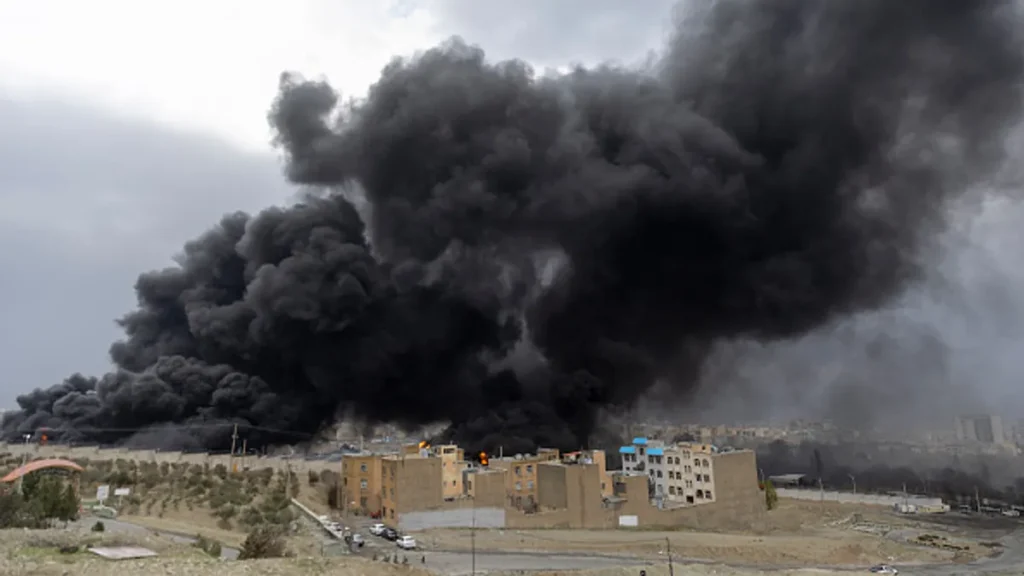
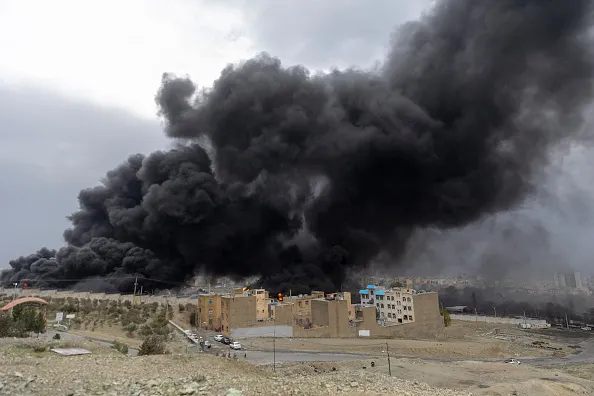
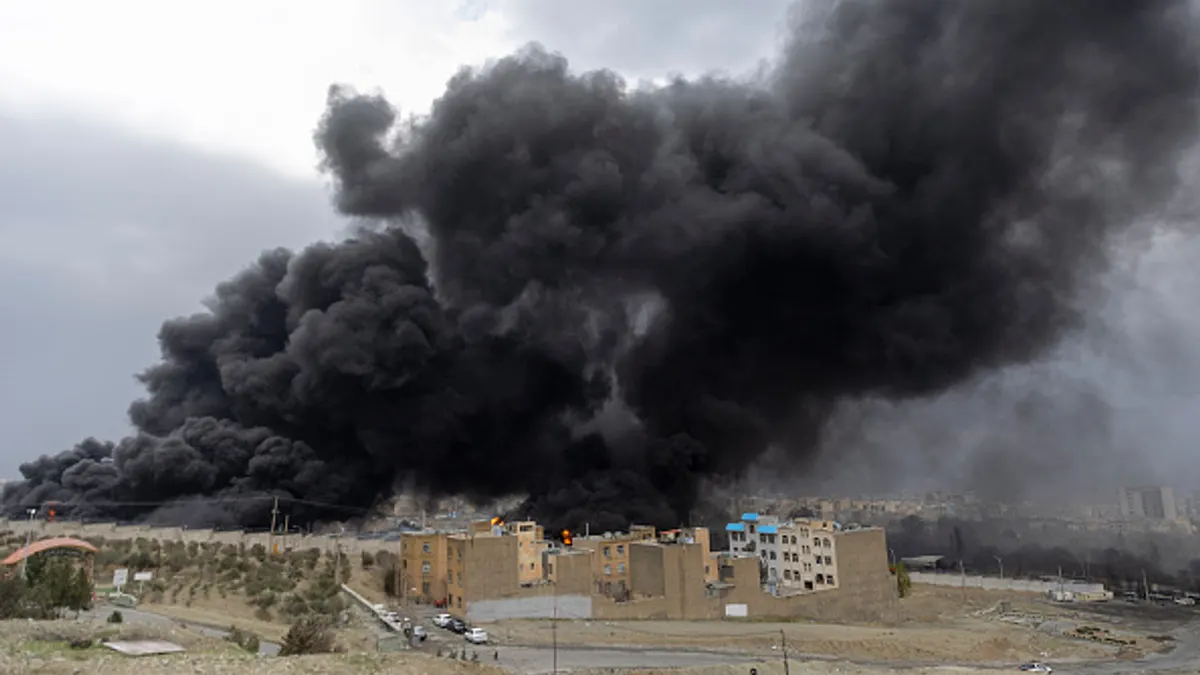
A primary catalyst for this heightened economic anxiety, as explicitly identified by the NABE survey, is the "Iran war." The conflict, which commenced on February 28, 2026, has had immediate and profound implications for global energy markets. The visual evidence of its impact was starkly captured on March 8, 2026, when airstrikes on oil depots in Tehran, Iran, sent plumes of smoke billowing into the sky, symbolizing the direct threat the conflict poses to energy infrastructure and supply.
The economic fallout from this conflict has been swift and significant. The NABE survey highlighted that 44% of its respondents reported that the "Iran war" has directly triggered an increase in input costs for their businesses. This translates to higher expenses for raw materials, transportation, and energy, which businesses often pass on to consumers in the form of higher prices, contributing to inflationary pressures.
The most direct and visible consequence of the conflict has been the dramatic escalation in crude oil prices. Futures for Brent crude oil, the international benchmark, have skyrocketed by approximately 49% since the war’s inception on February 28. Starting at around $70 per barrel, prices have surged to $104 per barrel. This sharp increase trickles down directly to consumers at the pump. Martha Moore, chief economist at the American Chemistry Council, articulated the tangible burden this places on households during a recent NABE webcast: "Middle- and lower-income consumers are really struggling now, especially with gasoline at $4.50-something-cents per gallon." Such elevated fuel costs act as a regressive tax, disproportionately impacting lower-income households who spend a larger percentage of their income on essential transportation. This erosion of purchasing power for discretionary goods and services has broader implications for overall consumer spending, a critical driver of the U.S. economy.
Inflationary Pressures and Central Bank Dilemmas

The rising energy costs exacerbated by the "Iran war" are feeding into an already challenging inflationary environment. The Wolters Kluwer survey projects that the personal consumption expenditures (PCE) price index, the Federal Reserve’s preferred measure of inflation, will likely rise by 3.4% this year. This figure remains significantly above the Federal Reserve’s long-term target of 2%, indicating persistent inflationary pressures that are proving difficult to tame.
This scenario presents a formidable dilemma for the Federal Reserve. Tasked with a dual mandate of achieving maximum employment and stable prices, the central bank must navigate a narrow path between curbing inflation and avoiding a recession. Historically, aggressive interest rate hikes, while effective in cooling an overheating economy, also carry the risk of stifling growth and pushing the economy into a downturn. The current environment, characterized by supply-side shocks from geopolitical events and lingering pandemic-related disruptions, complicates the Fed’s task.
Interestingly, the Wolters Kluwer survey also found that 71% of economists believe that higher energy prices will not generate "significant or extended pressure on so-called core prices," which exclude volatile food and energy components. This perspective suggests that many economists might view the current surge in energy costs as a temporary, supply-side shock rather than a fundamental, demand-driven inflationary spiral that would permeate all sectors of the economy. However, the sheer magnitude and persistence of high energy prices could still influence broader inflation expectations and feed into wage-price spirals if not effectively managed.
Impact on Gross Domestic Product (GDP) and Economic Growth
The surge in oil prices is expected to have a tangible dampening effect on the nation’s economic output. According to the Wolters Kluwer findings, the jump in the price of oil will likely impede gross domestic product (GDP) growth. Economists surveyed by Wolters Kluwer project that the U.S. economy will expand by 2% this year, a deceleration from the 2.1% growth recorded last year.

This anticipated slowdown is succinctly captured in Wolters Kluwer’s analysis: "Higher energy costs are expected to offset fiscal support, slowing growth below trend for a time." This statement implies that any existing or past government stimulus measures designed to boost the economy are being negated by the increased costs associated with energy. Businesses face higher operational expenses, consumers have less disposable income, and investment decisions become more cautious, all contributing to a moderation in economic activity below its potential long-term growth rate. The cumulative effect of these factors could lead to a period of "stagflation" – a portmanteau of stagnation and inflation – where economic growth is slow or negative, but prices continue to rise.
Chronology of Economic Indicators and Geopolitical Events
To provide a clearer picture of the evolving economic landscape and its triggers, a chronological overview is essential:
- January 2026: An earlier survey by the National Association for Business Economics (NABE) indicates that 44% of its respondents placed the probability of a U.S. recession in the next 12 months at 26% or higher, signifying an initial level of concern.
- February 28, 2026: The "Iran war" commences. On this date, futures for Brent crude oil, the global benchmark, were trading at approximately $70 per barrel, reflecting pre-conflict market conditions.
- February/March 2026: A survey conducted by Wolters Kluwer in this period reveals that economists estimated the odds of a U.S. recession within the next 12 months at 32%. This marked a slight increase from prior assessments, hinting at nascent concerns even before the full impact of the conflict was absorbed.
- March 8, 2026: Significant geopolitical escalation occurs with airstrikes targeting oil depots in Tehran, Iran. This event serves as a stark illustration of the conflict’s direct threat to global energy supplies and market stability.
- May 12, 2026: The current date of publication.
- The latest NABE survey shows a significant jump in recessionary fears, with 50% of respondents now placing the odds of a U.S. recession in the next 12 months at 26% or higher.
- The Wolters Kluwer survey also updates its recession probability, with economists now seeing a 35% chance, further affirming the upward trend in concerns.
- Brent crude oil futures have surged to $104 per barrel, reflecting a 49% increase since the start of the conflict, underscoring the severe impact on energy markets.
- Gasoline prices, as noted by economists, have reached upwards of $4.50 per gallon in many areas, directly impacting consumer budgets.
Broader Economic Implications and Sectoral Impacts
The confluence of geopolitical conflict, surging energy costs, and persistent inflation carries a wide array of broader economic implications across various sectors:
- Consumer Spending: As disposable incomes are eroded by higher costs for essentials like gasoline and food, consumers are likely to curtail discretionary spending on non-essential goods and services. This can lead to reduced sales for retailers, hospitality, and entertainment industries, potentially slowing economic growth.
- Business Investment: Economic uncertainty and rising input costs often lead businesses to adopt a more cautious approach to investment. Companies may postpone expansion plans, delay capital expenditures, and rethink hiring strategies, which can further dampen job creation and long-term productivity growth.
- Supply Chains: While the immediate impact of the "Iran war" is on energy, geopolitical instability can exacerbate existing fragilities in global supply chains. Disruptions in trade routes, increased insurance costs for shipping, and potential shortages of other critical raw materials could lead to further bottlenecks and cost pressures across industries, particularly manufacturing.
- Labor Market: A slowdown in economic growth typically translates to a cooling labor market. While the U.S. labor market has shown resilience, persistent recession fears could lead to hiring freezes in some sectors, a reduction in job openings, and, in a worst-case scenario, an increase in layoffs, particularly in industries sensitive to consumer demand or energy costs.
- Sectoral Impacts: Industries heavily reliant on transportation and energy, such as logistics, airlines, and heavy manufacturing, are directly impacted by fuel price increases. Retailers face challenges from reduced consumer spending. Conversely, sectors like renewable energy or domestic oil and gas production might see increased investment, though the transition costs and infrastructure challenges are significant. Financial markets also react with increased volatility as investors grapple with uncertainty.
Official Responses and Outlook
In response to these mounting challenges, policymakers and central bankers face immense pressure to stabilize the economy.
- Federal Reserve: The Federal Reserve is expected to maintain its hawkish stance on monetary policy, prioritizing inflation control. While committed to achieving a "soft landing" – bringing inflation down without triggering a recession – the increasing odds of a downturn suggest this task is becoming increasingly difficult. Further interest rate hikes are anticipated as the Fed seeks to cool demand and anchor inflation expectations.
- Government: The U.S. government may explore various avenues to mitigate the impact of high energy prices, including potential releases from the Strategic Petroleum Reserve (SPR) to increase supply, or diplomatic efforts to de-escalate geopolitical tensions and stabilize global oil markets. However, the effectiveness of such measures can be limited in the face of persistent supply-side shocks.
- International Cooperation: Given the global nature of energy markets and supply chains, international cooperation will be crucial. Collaborative efforts among major economies to coordinate energy policies, diversify supply sources, and address geopolitical conflicts could help alleviate some of the economic strain.
The current economic outlook for the United States is one of heightened uncertainty, deeply intertwined with global geopolitical events. While a recession is not yet a foregone conclusion, the rising probability indicated by leading economic surveys cannot be ignored. The "Iran war" has clearly emerged as a significant destabilizing factor, driving up energy costs and input prices, thereby feeding into inflationary pressures and dampening overall economic growth prospects. Businesses and consumers alike are urged to brace for continued volatility, while policymakers face the delicate task of navigating these complex headwinds to steer the economy toward stability and sustainable growth. The coming months will be critical in determining whether the U.S. can avert a recession or if the economic slowdown deepens further.