
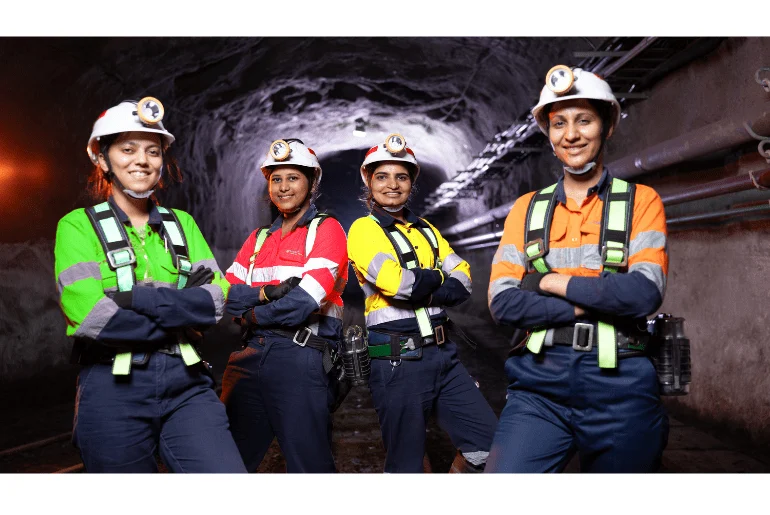
On International Youth Day, observed globally on August 12th, the Vedanta Group, a diversified natural resources conglomerate, prominently highlighted the pivotal role of India’s vibrant young workforce in fundamentally reshaping its resource-intensive industries. The company emphasized how digital skills, data-driven thinking, and new-age engineering capabilities brought by this demographic are not merely supplementing but actively driving an unprecedented transformation across sectors traditionally characterized by deep operational expertise and legacy systems. This strategic embrace of youth talent underscores a forward-looking approach to innovation, efficiency, and sustainability within core economic pillars.
The Context: International Youth Day and India’s Demographic Dividend
International Youth Day, established by the United Nations, serves as an annual reminder of the contributions young people make to global development and the challenges they face. In India, this day holds particular significance given its unique demographic advantage. With over 65% of its population under the age of 35, India possesses the largest youth population in the world, often referred to as its "demographic dividend." This vast pool of young, educated, and aspirational individuals presents an unparalleled opportunity for economic growth and societal progress. However, harnessing this potential requires concerted efforts from both the public and private sectors to provide relevant skills, employment opportunities, and a conducive environment for innovation.
The Indian government has, over the past decade, launched several ambitious initiatives like the Skill India Mission, Make in India, and the National Education Policy (NEP) 2020, all aimed at enhancing the employability of its youth and aligning educational outcomes with industry demands. Vedanta’s strategic focus on recruiting and upskilling young professionals directly aligns with these national objectives, positioning the conglomerate not just as an industrial giant but also as a significant contributor to national human capital development. The shift from traditional labor-intensive operations to technology-driven processes necessitates a workforce equipped with advanced digital and analytical skills, precisely what the younger generation often brings to the table.
Vedanta’s Strategic Influx of Young Talent
In a testament to its commitment to fostering this demographic dividend, Vedanta Group announced a significant onboarding initiative, welcoming over 1,500 young professionals this year. These new recruits have joined through a combination of full-time roles and internships, sourced from a broad spectrum of over 150 premier academic institutions across the country, including the highly coveted Indian Institutes of Technology (IITs), Indian Institutes of Management (IIMs), and National Institutes of Technology (NITs). This widespread recruitment drive ensures access to a diverse talent pool, capturing the brightest minds from various disciplines and regions.
A crucial aspect of Vedanta’s recruitment strategy is its strong emphasis on diversity and inclusion. The conglomerate proudly reported achieving 50 percent gender diversity among its new intake, a remarkable feat in traditionally male-dominated heavy industries. This commitment to gender balance not only reflects progressive corporate values but also recognizes the proven benefits of diverse teams in fostering innovation, problem-solving, and improved decision-making. Furthermore, 15 percent of the fresh hires were drawn from historically underserved regions such as the North-East, Jammu & Kashmir, and Ladakh. This geographical broadening of access is vital for ensuring equitable opportunities across the nation and integrating talent from all corners of India into the mainstream industrial economy. By reaching out to these regions, Vedanta is actively contributing to regional development and demonstrating a commitment to national integration through economic inclusion.
Reshaping Core Industries: The Digital Frontier
The transformation Vedanta is witnessing is perhaps best exemplified by its operations in Vedanta Aluminium Metal, where the average employee age has dropped to a remarkably young 31 years. A staggering 65 percent of its workforce is now under the age of 35, making it one of India’s youngest industrial employers. This demographic shift is not merely a statistical anomaly but a deliberate strategic move to infuse fresh perspectives and technological acumen into an industry traditionally reliant on decades of operational experience.
The sectors in which Vedanta operates—metals, oil & gas, critical minerals, power, and technology—are undergoing a profound metamorphosis driven by rapid technological advancements. What were once considered "smokestack" industries are now rapidly adopting cutting-edge technologies such as Artificial Intelligence (AI), advanced automation, sophisticated manufacturing techniques, predictive data analytics, and comprehensive sustainability practices. This technological paradigm shift has created an urgent demand for a new breed of professionals—individuals who possess not only foundational domain knowledge but also a profound fluency in digital tools and methodologies.
For instance, in mining and metals, AI is being deployed for geological exploration, optimizing extraction processes, and predictive maintenance of heavy machinery, significantly reducing downtime and improving safety. Automation is streamlining repetitive tasks, enhancing precision, and enabling remote operations. Data analytics provides insights into operational efficiencies, supply chain optimization, and market trends, allowing for more agile and informed decision-making. Simultaneously, the global imperative for climate action has pushed sustainability to the forefront, requiring expertise in areas like decarbonization, circular economy principles, and environmental impact assessment. The younger generation, having grown up in a digitally native world, is uniquely positioned to grasp and apply these complex technologies, accelerating the pace of industrial evolution.
Targeted Skill Development and Future-Ready Hiring
To effectively meet the evolving demands of these transformed industries and to fuel its future growth trajectory, Vedanta has strategically prioritized hiring in a range of specialized fields. These include digital technologies, data science & analytics, structural engineering, mechatronics (a multidisciplinary field combining mechanical engineering, electronics, computer engineering, and control engineering), sustainability, environment management, geology, and geosciences.

These capabilities are not just additions but are considered central to the conglomerate’s long-term vision. Expertise in geology and geosciences is critical for resource exploration, especially as India seeks to enhance its self-reliance in critical minerals vital for electric vehicles, renewable energy technologies, and defense. Structural engineering and mechatronics are indispensable for advanced manufacturing and the development of intelligent, automated industrial systems. Digital technologies and data analytics underpin every aspect of modern operations, from optimizing production lines to managing complex supply chains. The emphasis on sustainability and environment reflects a global and national commitment to responsible resource management and achieving net-zero targets. By cultivating these specialized skills, Vedanta is not only enhancing its operational capabilities but also positioning itself at the forefront of the energy transition and the development of a resilient, technologically advanced industrial base in India.
Beyond Recruitment: Holistic Engagement and Value Proposition
Vedanta’s engagement with the academic community extends far beyond mere recruitment drives. In the most recent season, the company actively engaged with over 15,000 students through a variety of impactful programs, including leadership dialogues, challenging competitions, and comprehensive career development initiatives. The primary objective of these programs is two-fold: to provide students with invaluable exposure to the complexities and scale of large-scale industrial operations, thereby demystifying these sectors, and simultaneously to identify and nurture talent particularly suited for a tech-enabled workplace. This proactive approach ensures a steady pipeline of skilled professionals who are not only academically proficient but also industry-ready. The success of this strategy is evident in the fact that last year, a remarkable 93 percent of new recruits were either fresh graduates or early-career professionals, demonstrating Vedanta’s commitment to nurturing nascent talent.
Recognizing that attracting high-potential candidates to traditionally capital-intensive sectors requires a compelling value proposition, Vedanta has significantly strengthened its offerings for early-career talent. The company has benchmarked its rewards structure for participants in its prestigious Vedanta Leadership Development Programme (VLDP) and for academic rank holders, ensuring competitive compensation packages that reflect their potential. Furthermore, in a progressive move, Vedanta has introduced Employee Stock Ownership Plans (ESOPs) and joining bonuses for entry-level roles. These incentives are designed to attract top-tier talent by offering a share in the company’s growth and providing an immediate financial advantage, thereby making careers in critical resource sectors as attractive as those in fast-growing tech companies. This comprehensive strategy helps Vedanta not only to fill vacancies but also to cultivate a strong sense of ownership and long-term commitment among its young workforce.
Leadership Vision: Catalysts of Transformation
Neha Sharma, Chief Human Resources Officer (CHRO) of Vedanta Group, articulated the strategic importance of this youth-centric approach. "Young professionals are not merely future talent; they are active contributors to the transformation taking place today," she observed. Her statement underscores a critical shift in corporate philosophy, moving beyond viewing fresh graduates as trainees to recognizing them as immediate agents of change. Sharma further emphasized the evolving landscape of industry: "With industries becoming more technology-driven, it is critical to combine deep domain expertise with cutting-edge digital capabilities and a spirit of innovation." She stressed that Vedanta’s core focus is on "creating an environment where fresh perspectives and invaluable institutional experience complement each other, fostering a culture of continuous learning and mutual growth." This vision encapsulates a symbiotic relationship where the energy and digital fluency of youth blend seamlessly with the wisdom and operational knowledge of experienced professionals, creating a robust and adaptable workforce. This strategic alignment of talent with technological trends is crucial for Vedanta’s sustained leadership in its diverse portfolio of businesses, ensuring it remains agile and competitive in a rapidly changing global economy.
A Comprehensive Skilling Ecosystem for National Impact
Beyond its internal recruitment and talent development initiatives, Vedanta’s commitment to youth empowerment extends through a robust and far-reaching skilling ecosystem designed for broader community impact. Over the past six years, the group has empowered nearly 20 lakh (2 million) people through a diverse array of programs. These initiatives span vocational training, fostering women-led entrepreneurship, implementing agriculture and farmer development programs, promoting sports-based skill development, and various other youth empowerment initiatives. This extensive outreach highlights Vedanta’s understanding that corporate responsibility extends beyond its direct employees to the communities in which it operates, contributing significantly to local economies and national human development goals.
Internally, Vedanta has established structured programs specifically designed to fast-track young professionals into leadership and technical roles. These programs often involve mentorship, rotational assignments across different business units, and specialized training modules aimed at honing their managerial and technical competencies. Externally, community mentorship programs and digital skilling efforts are actively deployed to support youth employability across various regions. These efforts create a pipeline of skilled individuals ready for both direct employment within Vedanta and for opportunities in the wider industrial ecosystem. By investing in both internal and external skilling, Vedanta is not only securing its own talent needs but also playing a crucial role in building a skilled workforce for the nation, addressing the critical gap between academic education and industry requirements.
Broader Implications for India’s Industrial Future
Collectively, Vedanta’s comprehensive campus engagement and skilling initiatives reflect a broader, strategic goal: to cultivate a workforce that seamlessly integrates formal employment with industry-relevant skills and an intimate familiarity with emerging technologies. This approach is paramount as India aggressively positions itself as a global manufacturing and technology hub. The infusion of young, digitally-savvy talent into core industries like metals, mining, and energy is not merely an operational upgrade; it is a fundamental re-engineering of the workforce that promises to unlock new capabilities, drive innovation, and significantly enhance productivity.
According to various economic forecasts, India’s manufacturing sector is projected to expand significantly in the coming decade, bolstered by government policies such as the Production Linked Incentive (PLI) schemes and a renewed focus on domestic value addition. This growth will hinge critically on the availability of a skilled and adaptable workforce. Companies like Vedanta, by proactively investing in youth talent and aligning their strategies with national skill development missions, are acting as crucial accelerators for this economic transformation. Their efforts are not only ensuring their own competitiveness but are also setting a precedent for other industries, demonstrating how private sector initiatives can synergize with national aspirations to drive sustained economic growth and secure India’s position on the global industrial stage. The journey of transforming traditional industries through the power of youth and technology is a complex one, but Vedanta’s strategic moves indicate a clear path forward for harnessing India’s demographic dividend to fuel its next phase of industrial and technological leadership.
The Vedanta Group, a global leader in the production of metals, oil & gas, critical minerals, power, and technology, continues to demonstrate its commitment to sustainable growth and nation-building through strategic investments in its most valuable asset: human capital.







