
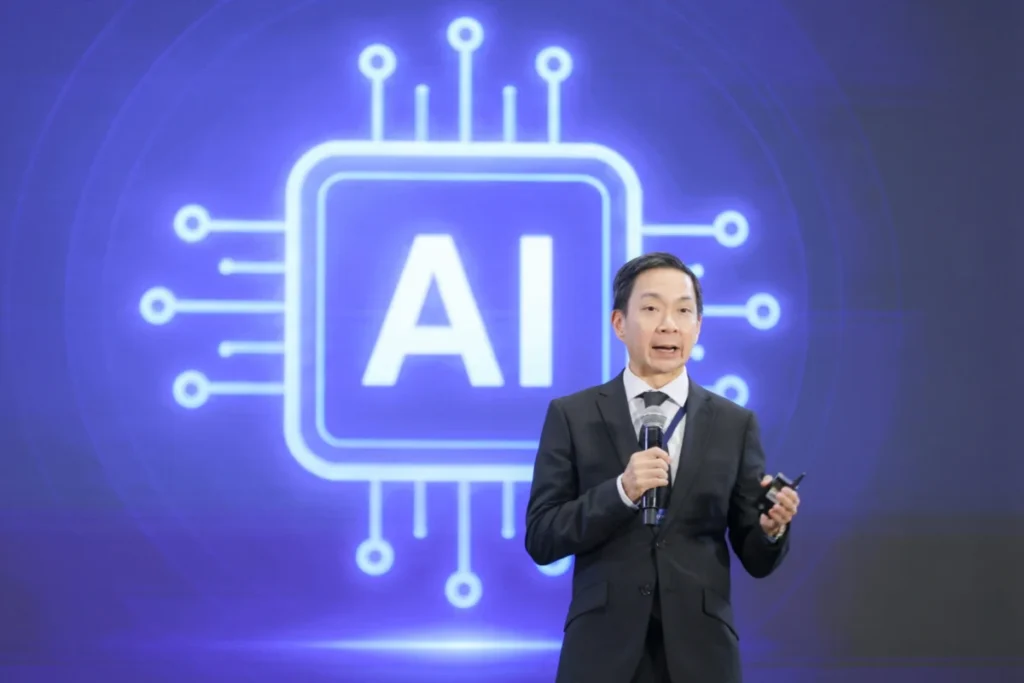
The conventional wisdom often posits Artificial Intelligence as a technological frontier, a realm primarily for IT departments and specialized engineers. However, Worawat Suvagondha, a prominent figure at the nexus of human resources and organizational leadership in Thailand, offers a starkly different perspective. For Suvagondha, the critical misstep organizations make with AI has nothing to do with the sophistication of the algorithms or the power of the platforms. Instead, he argues, the fundamental error lies in the very moment an organization categorizes AI as solely a technology project. This reorientation of perspective formed the intellectual cornerstone of Thailand HR Tech 2026, a pivotal event designed to confront the complexities of integrating AI into the modern workplace.
As the esteemed President of the Personnel Management Association of Thailand (PMAT) and the Chief People Officer at Siam Commercial Bank (SCB), one of Southeast Asia’s leading financial institutions, Suvagondha holds a unique vantage point. He sits at the intersection of national HR policy, industry-wide professional development, and the practical implementation challenges within a large, complex organization. This dual role positioned him centrally in the discourse surrounding Thailand HR Tech 2026. The event, meticulously convened by PMAT at the opulent Paragon Hall within Siam Paragon last month, operated under the overarching theme "Human – AI Harmony: Leading the Intelligent Workplace." For Suvagondha, this phrase transcends a mere slogan; it serves as a precise brief, a strategic directive. True harmony, in his considered interpretation, does not present a binary choice between human capital and machine capabilities. Rather, it demands a deliberate design decision, meticulously crafting an ecosystem where both can synergistically operate at their peak, simultaneously and effectively.
In practical application, Suvagondha advocates for a clear delineation of roles, leveraging the inherent strengths of each component. AI, he posits, excels in domains characterized by scale and speed: processing colossal volumes of data, automating repetitive and mundane tasks, and generating actionable insights with unparalleled velocity. This strategic deployment frees human talent to concentrate on capabilities that remain uniquely, intrinsically human. These include nuanced judgment, profound empathy, generative creativity, complex ethical decision-making, inspirational leadership, and the cultivation of meaningful interpersonal relationships. Organizations that successfully navigate this paradigm shift are not merely adopting new technological tools; they are fundamentally redesigning the very fabric of work itself. This involves a profound introspection, systematically asking which tasks are optimally suited for AI, how existing job roles will inevitably evolve, and, critically, what new skill sets employees must acquire and master to thrive in this transformed environment. The shift is from merely implementing technology to reimagining the human-machine interface for enhanced productivity and purpose.
The Perilous Imbalance: Where AI Adoption Stumbles
The failure mode articulated by Suvagondha is, regrettably, a common narrative across various industries globally. Organizations frequently embark on ambitious investments in advanced AI platforms and automation solutions, only to treat their most valuable asset—the human workforce—as an afterthought, an entity to be managed rather than empowered. While this approach might yield a superficial uptick in productivity in the short term, Suvagondha warns of the insidious erosion of crucial organizational assets. Trust among employees, their engagement levels, and the overall adoption rate of the new technologies tend to suffer significantly. When AI is perceived as an imposition, something forced upon people rather than integrated thoughtfully around their needs and aspirations, its potential is severely diminished.
A second, more subtle yet equally damaging error, lies in the myopic pursuit of efficiency as the sole metric of success. This narrow focus often leads organizations to overlook critical dimensions of the employee experience. Elements such as continuous learning, the cultivation of a positive and adaptive organizational culture, and the intrinsic value derived from work are often neglected because they are notoriously difficult to quantify through standard efficiency metrics. Suvagondha underscores this distinction with a powerful statement: "The goal is not AI replacing people; the goal is AI amplifying people." He further clarifies this philosophy by emphasizing that "Technology may create efficiency, but people create meaning." This profound distinction—between what technological advancements can accelerate and what only human beings can genuinely provide—forms the bedrock of his entire framework for organizational transformation. While systems can be upgraded and processes streamlined through automation, the more arduous and ultimately more rewarding work involves guiding people through the profound implications of change, helping them understand its personal relevance, and fostering a genuine belief in its ultimate benefits.
Thailand HR Tech 2026: A National Dialogue on the Future of Work
The Thailand HR Tech 2026 event was far more than a conventional trade show; it represented a strategic national platform for dialogue and foresight, addressing the critical intersection of human capital and artificial intelligence. Convened by PMAT, a venerable institution in Thailand’s professional landscape, the event gathered a diverse consortium of stakeholders. Held at the prestigious Paragon Hall in Siam Paragon, the choice of venue itself underscored the importance and contemporary relevance of the discussions. The "Human – AI Harmony: Leading the Intelligent Workplace" theme served as a clarion call for a balanced, human-centric approach to technological integration.
Thailand, under its ambitious "Thailand 4.0" initiative, is actively striving to transform its economy from a production-based model to an innovation-driven, high-value economy. Central to this vision is digital transformation and the widespread adoption of advanced technologies, including AI. This national agenda provides a crucial backdrop for events like Thailand HR Tech 2026. The discussions at the event were not abstract academic exercises; they were grounded in the tangible realities of Thailand’s economic aspirations and its workforce’s evolving needs. As a rapidly developing nation, Thailand faces the dual challenge of harnessing AI’s potential for economic growth while simultaneously mitigating its potential disruptive impact on employment and ensuring a just transition for its workforce. The event, therefore, played a vital role in shaping national strategies for skill development, policy formulation, and fostering collaboration between government, industry, and academia to prepare for an AI-powered future. Inferred reactions from attendees, ranging from corporate HR leaders to government officials and educators, likely centered on the urgency of implementing human-centric AI strategies and the need for immediate investment in workforce retraining and upskilling programs to prevent a widening skills gap. According to reports from the Digital Economy Promotion Agency (DEPA), Thailand’s digital economy is projected to reach approximately 3.3 trillion baht by 2025, with AI playing an increasingly significant role across sectors. This growth underscores the critical need for a workforce prepared for intelligent automation.
PMAT’s Enduring Legacy and Evolving Mandate
The vantage point from which Suvagondha articulates his vision is partly informed by the institutional history of PMAT. Founded in 1965, the association recently marked its 60th anniversary, a significant milestone that reflects its deep roots and enduring influence in Thailand’s professional ecosystem. Suvagondha describes an institutional arc that remarkably mirrors the evolution of the HR profession itself. What began as a primary focus on rudimentary personnel administration—managing payroll, leave, and basic compliance—has progressively expanded into a far broader and more strategic remit. Today, PMAT’s scope encompasses the multifaceted future of work, the dynamic future workforce, and the evolving future workplace.
The association, in its contemporary incarnation, engages not only with its traditional constituency of HR professionals but also actively collaborates with Chief Executive Officers, influential policymakers, leading universities, innovative technology providers, and, critically, the next generation of talent. PMAT operates as a multifaceted entity: a robust knowledge hub disseminating best practices and cutting-edge research; a vibrant professional community fostering networking and collaboration; a dynamic platform for catalyzing workforce transformation initiatives; and an essential connector bridging the spheres of business, education, and broader society. Thailand HR Tech 2026, in Suvagondha’s compelling narrative, perfectly embodies this profound shift. What might have originated as a straightforward technology showcase has blossomed into a comprehensive national conversation. This expanded discourse now encompasses critical dimensions such as visionary leadership, essential skills development, adaptive organizational culture, and holistic employee wellbeing, reflecting a maturation of the HR profession’s strategic importance. This evolution is vital as global studies, such as those by PwC, indicate that 77% of CEOs believe that skills shortages are a significant threat to their company’s growth, making PMAT’s role in fostering skills development and workforce transformation more critical than ever.
The Productive Tension of Dual Leadership: SCB and PMAT
Worawat Suvagondha’s unique position, simultaneously holding leadership roles at both PMAT and Siam Commercial Bank, creates a productive tension that enriches his perspective on AI and HR transformation. At SCB, a titan in the Thai financial sector, he is grounded in the daily realities of workforce structuring. This involves navigating complex operating-model changes, making critical skills decisions that profoundly impact both the bank’s business outcomes and the livelihoods of thousands of employees. His experience at SCB provides an invaluable crucible where theoretical HR concepts are tested against the rigorous demands of a large, commercially driven enterprise. He grapples firsthand with the challenges of integrating AI into core banking operations, from customer service to risk management, and the subsequent implications for talent development and organizational design.
Conversely, his leadership at PMAT offers a panoramic, cross-industry view of where the landscape of work is collectively heading. This role provides him with exposure to diverse sectors, emerging trends, and the aggregated challenges and innovations across the Thai economy. It allows him to synthesize insights from various organizational contexts, identify common patterns, and contribute to national-level policy recommendations. The throughline he meticulously draws between these two seemingly disparate roles is a powerful one: successful organizational transformation, particularly in the context of AI adoption, is rarely defeated by technological hurdles. Instead, Suvagondha asserts, "The most difficult leadership decisions are often not technical decisions but human ones." This insight underscores his conviction that technology is merely an enabler; the true challenge lies in leading people through change, addressing their concerns, and harnessing their potential. Data from global consulting firms often support this, with Deloitte’s Human Capital Trends reports consistently highlighting that cultural and leadership challenges often outweigh technological ones in digital transformations.
The Indispensable Human Capability in the AI Era: Finding Meaning
When probed about the single, irreplaceable capability he impresses upon his HR team—the one they absolutely cannot afford to lose as AI increasingly absorbs routine administrative and analytical work—Suvagondha’s answer notably diverged from any technical skill. His emphatic response was: the ability to help people find meaning. This capability, he argues, will become the definitive differentiator for successful organizations in the age of intelligent automation.
As the digital age progresses, knowledge becomes instantaneously accessible, and analytical processing achieves unprecedented speeds. In this new paradigm, Suvagondha contends, the distinguishing work of HR fundamentally shifts. It moves decisively away from the mechanical management of processes—tasks that AI can execute with superior efficiency—and towards something far more complex and resistant to automation. This elevated role for HR involves helping individuals make profound sense of rapid and often disorienting change, guiding them through periods of pervasive uncertainty, and, most critically, ensuring they remain deeply connected to a larger organizational purpose.
Suvagondha articulates a fundamental truth about human motivation: people do not come to work solely for a salary or to tick off items on a task list. They inherently seek to feel that their contributions matter, that their efforts contribute to something larger than themselves, and that they are an integral part of a meaningful collective endeavor. In this context, the core mandate of HR transforms into a strategic imperative: to expertly translate abstract organizational objectives and strategic goals into something tangible, relatable, and genuinely believable for every employee. It is about crafting narratives, fostering cultures, and designing experiences that imbue daily work with purpose and significance. This emphasis on meaning-making is further bolstered by global trends in employee engagement and retention. Studies by organizations like Gallup consistently show that purpose-driven work leads to higher employee satisfaction, increased productivity, and lower turnover rates. In an era where AI can handle the "what" and the "how" of many tasks, the human role increasingly focuses on the "why." HR, therefore, becomes the custodian of organizational "why," ensuring that purpose permeates every level and every role.
Broader Implications and the Future Landscape
Suvagondha’s perspective carries significant implications for various stakeholders across Thailand’s economic and educational landscape. For corporations, it necessitates a fundamental re-evaluation of their AI implementation strategies, shifting from a technology-first approach to a human-first, design-thinking methodology. This means investing not just in AI tools, but equally in change management, leadership development focused on empathy and ethical AI governance, and comprehensive reskilling programs that emphasize uniquely human capabilities. The ethical dimension of AI in HR, particularly concerning bias in algorithms for hiring or performance evaluation, is a growing concern globally. Suvagondha’s emphasis on human judgment and ethical decision-making directly addresses this, advocating for robust human oversight and accountability in AI systems.
Educational institutions, from universities to vocational training centers, must adapt their curricula to prepare the next generation for this intelligent workplace. The focus should expand beyond technical proficiency in AI to include critical thinking, emotional intelligence, collaborative problem-solving, and ethical reasoning. The Thai government, through initiatives like the National AI Strategy and Action Plan, is already promoting AI adoption while acknowledging the need for workforce development. Policymakers, in turn, are challenged to create regulatory frameworks that foster AI innovation while safeguarding human dignity and promoting equitable workforce transitions. This includes considering policies around lifelong learning, social safety nets for displaced workers, and guidelines for ethical AI use in employment practices. The World Economic Forum’s "Future of Jobs Report" consistently highlights that critical thinking, creativity, and complex problem-solving are among the top skills growing in demand, reinforcing Suvagondha’s arguments.
The overarching message resonates far beyond Thailand. It speaks to a universal challenge faced by economies worldwide: how to harness the immense power of AI without losing sight of the human element that ultimately drives innovation, resilience, and societal well-being. Suvagondha’s final conclusion serves as a powerful summation of this philosophy: "In the age of AI, knowledge will be abundant and technology will be widely available. What will distinguish great organizations is not just how intelligently they operate, but how meaningfully they engage their people." This statement serves as a potent reminder that while AI can optimize operations, it is the profound human connection to purpose and community that will ultimately define the success and sustainability of organizations in the intelligent workplace of tomorrow. The future of work, as envisioned by Suvagondha, is not merely efficient; it is deeply meaningful.








