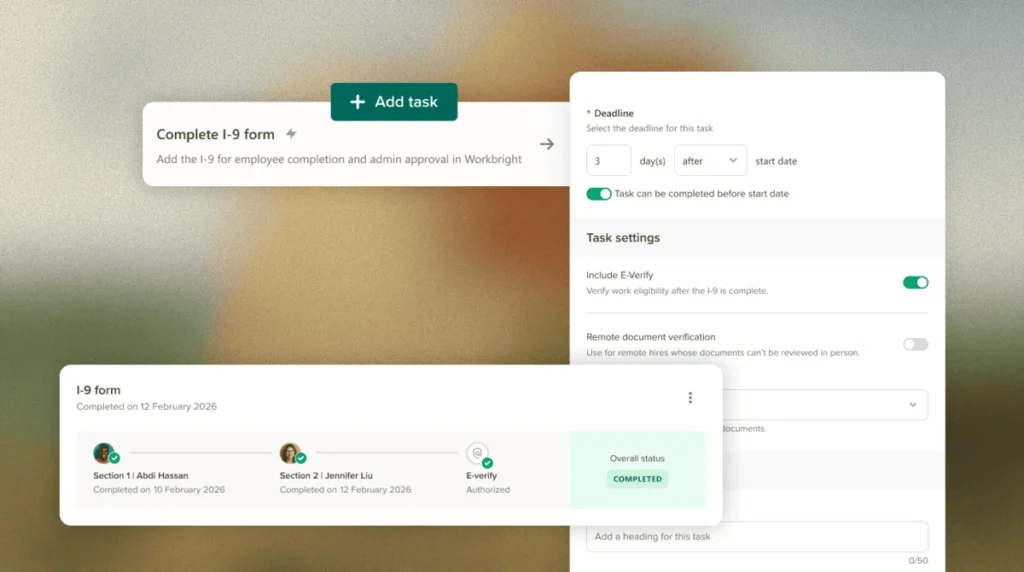
Workable, a leading global recruiting software, has officially launched a new, fully integrated workflow for Form I-9 and E-Verify, specifically designed to simplify and ensure compliance for U.S. organizations. This significant update aims to eliminate the long-standing administrative burdens associated with manual employment eligibility verification, offering a seamless, digital experience that centralizes the entire process within the Workable platform. The solution addresses critical pain points for Human Resources (HR) teams, such as downloading PDFs, duplicate data entry, and navigating multiple external systems, by enabling employees to complete Section 1 of the I-9 form digitally, while HR professionals review documents and complete Section 2 directly within Workable. For organizations opting for E-Verify, the system facilitates automatic submission during the process, ensuring federal requirements are met with unprecedented ease and efficiency.
The Imperative of Employment Eligibility Verification: Understanding I-9 and E-Verify
The landscape of U.S. employment law mandates strict adherence to regulations governing the hiring of individuals. At the heart of this regulatory framework lies Form I-9, the Employment Eligibility Verification form. Enacted under the Immigration Reform and Control Act (IRCA) of 1986, this federal requirement obliges all U.S. employers to verify the identity and employment authorization of every individual hired for employment in the United States, regardless of citizenship. Employers must ensure that employees properly complete Section 1 of the Form I-9 upon hire, presenting acceptable documents that establish both identity and employment authorization. Subsequently, employers or their authorized representatives must physically examine these documents and complete Section 2. The meticulous record-keeping and strict timelines associated with Form I-9 completion are critical, as errors or omissions can lead to substantial fines and penalties from federal agencies like U.S. Immigration and Customs Enforcement (ICE).
Complementing Form I-9 is E-Verify, an internet-based system operated by the Department of Homeland Security (DHS) in partnership with the Social Security Administration (SSA). E-Verify compares information from an employee’s Form I-9 to data from DHS and SSA records to confirm employment eligibility. While E-Verify is mandatory for federal contractors and some states, it remains voluntary for most other employers. However, its adoption has steadily increased due to its effectiveness in deterring undocumented employment and providing an additional layer of assurance regarding a new hire’s legal eligibility to work in the U.S. The E-Verify process requires employers to submit the information from Section 1 of the I-9 form electronically within three business days of the employee’s first day of employment. The system then provides an employment authorization confirmation or flags discrepancies that require further action. The dual requirements of I-9 and E-Verify, with their distinct but intertwined processes, have historically presented a significant administrative challenge for HR departments, often involving manual paperwork, data transcription, and the risk of non-compliance.
A Historical Perspective: Evolution of Compliance Challenges
The journey of employment eligibility verification in the U.S. has seen several evolutions, each adding layers of complexity that digital solutions now aim to resolve. Prior to IRCA in 1986, there was no federal requirement for employers to verify the immigration status of their workers. The introduction of Form I-9 marked a paradigm shift, placing the onus of verification directly on employers. Initially, the paper-based system, while foundational, was prone to human error, document fraud, and inconsistent application across different organizations.
The late 1990s saw the pilot programs for E-Verify, then known as the Basic Pilot Program, aiming to leverage technology to enhance verification accuracy. Over the decades, E-Verify has grown in sophistication and reach, with continuous updates to its database and user interface. More recently, the COVID-19 pandemic introduced unprecedented challenges and temporary flexibilities. The DHS temporarily allowed for remote inspection of I-9 documents, acknowledging the shift to remote work. This temporary measure, initially set to expire, led to a permanent rule change effective August 1, 2023, allowing qualified employers to remotely examine identity and employment authorization documents using live video interaction, provided they participate in E-Verify and meet specific criteria. This regulatory shift underscored the growing demand for digital, remote-friendly compliance solutions.
Workable’s new offering arrives at a crucial juncture, capitalizing on these regulatory advancements and the persistent need for streamlined HR operations. The development of this integrated workflow by Workable is a direct response to these evolving compliance landscapes and the explicit needs of their U.S. customer base, who have often resorted to manual workarounds or external, disconnected systems to manage these critical tasks. The company’s internal timeline likely involved extensive market research into compliance pain points, collaboration with legal experts, and rigorous software development and testing cycles to ensure the solution is robust, secure, and fully compliant with federal guidelines.
Workable’s Integrated Workflow: How It Works and What’s Changing
Workable’s new I-9 and E-Verify workflow is designed to be an integral part of the existing onboarding setup, providing a seamless and structured experience. This release fundamentally changes how U.S. Workable customers manage employment eligibility verification, moving away from fragmented, error-prone manual processes.
Here’s a detailed breakdown of how it works and the specific features introduced:
- Digital Employee Section 1 Completion: Upon being hired, new employees receive an automated prompt to complete Section 1 of Form I-9 digitally within the Workable platform. This eliminates the need for paper forms or external portals. The guided interface ensures employees provide all necessary information accurately, reducing common errors from the outset.
- HR Document Review and Section 2 Completion within Workable: Once Section 1 is submitted, HR teams or authorized representatives are notified. They can then review the employee’s identity and employment authorization documents. Critically, Workable supports the updated DHS regulations, enabling qualified E-Verify employers to conduct remote document inspections via live video calls. After verification, HR completes Section 2 of the I-9 form directly within Workable, with much of the data pre-populated from Section 1, minimizing manual entry and potential transcription errors.
- Automated E-Verify Submission: For organizations enrolled in E-Verify, the system automatically submits the necessary information to the DHS/SSA databases once Section 2 is completed. This automation significantly reduces the time lag and administrative effort traditionally associated with E-Verify, providing prompt status updates (e.g., "Employment Authorized," "Tentative Nonconfirmation").
- Centralized Record-Keeping and Audit Readiness: All completed I-9 forms, E-Verify case details, and associated documentation are securely stored within the employee’s profile in Workable. This centralization ensures easy access for future reference, simplifies internal audits, and significantly enhances an organization’s readiness for potential government audits from agencies like ICE.
- Reduced Duplication and Enhanced Data Accuracy: By consolidating the entire process into a single platform, Workable eliminates the need for duplicate data entry across various systems. This not only saves time but also dramatically improves data accuracy, reducing the risk of costly compliance errors.
- Improved Candidate and HR Experience: The digital, streamlined process offers a more professional and efficient onboarding experience for new hires. For HR teams, it frees up valuable time previously spent on administrative tasks, allowing them to focus on strategic initiatives and employee engagement.
Why This Matters for U.S. Organizations: Impact and Implications
The launch of Workable’s integrated I-9 and E-Verify solution carries significant implications for U.S. organizations across various sectors, addressing a critical need for enhanced compliance, operational efficiency, and risk mitigation.
Enhanced Compliance and Reduced Audit Risk:
According to studies by the U.S. Department of Justice, a significant percentage of I-9 forms contain errors, with common issues ranging from incorrect dates to missing signatures and improper document handling. The average fine for I-9 paperwork violations can range from hundreds to thousands of dollars per error, potentially accumulating into substantial penalties during an audit. For instance, in fiscal year 2020, ICE conducted 1,933 I-9 audits, leading to 250 arrests and over $14.5 million in judicial fines, forfeitures, and restitution. A digital, guided workflow like Workable’s drastically reduces the likelihood of these common errors, ensuring that forms are completed accurately and within federal timelines. The automated E-Verify submission further strengthens compliance, minimizing the risk of employing unauthorized individuals and avoiding associated penalties.
Operational Efficiency and Cost Savings:
Manual I-9 and E-Verify processes are notoriously time-consuming. HR professionals often spend considerable hours each week managing paperwork, tracking deadlines, and performing data entry. An average manual I-9 process can take 15-30 minutes per employee, not including E-Verify submission and follow-up. For companies with high hiring volumes, these minutes quickly accumulate into significant labor costs. Workable’s automation dramatically cuts down this administrative burden, allowing HR teams to reallocate their time to more strategic functions such as talent development, employee relations, and culture building. This translates directly into cost savings by optimizing HR resource utilization.
Improved Employee Experience and Employer Brand:
The onboarding experience sets the tone for a new employee’s journey within an organization. A cumbersome, paper-heavy I-9 process can be frustrating and create a negative first impression. A digital, intuitive system, however, demonstrates an organization’s commitment to efficiency and technological adoption. This positive initial experience contributes to higher employee satisfaction and reinforces a modern, organized employer brand, which is crucial in today’s competitive talent market.
Data Security and Centralized Record-Keeping:
Physical I-9 forms require secure storage to protect sensitive personal information, posing challenges for data security and retrieval. Workable’s digital solution centralizes all documentation within a secure platform, reducing the risk of lost or misplaced forms and simplifying data access for legitimate purposes. This enhanced data security also helps organizations comply with broader data protection regulations.
Adaptability to Evolving Regulations:
The recent permanent rule change by the DHS regarding remote document inspection for E-Verify participants highlights the dynamic nature of employment law. Workable’s integrated solution is designed to be agile, allowing for rapid adaptation to future regulatory updates. This foresight provides organizations with a future-proof compliance mechanism, minimizing the need for constant manual adjustments to their internal processes.
Industry Reactions and Broader HR Tech Landscape:
While specific statements from Workable leadership or industry experts were not provided in the original text, the logical inference is that this development would be met with strong approval. A Workable spokesperson would likely emphasize the company’s commitment to delivering comprehensive, user-friendly solutions that address the real-world challenges faced by HR professionals. They might state, "Our goal is to empower U.S. organizations with the tools they need to navigate complex federal regulations with confidence and ease. This integrated I-9 and E-Verify workflow is a testament to our dedication to streamlining the hiring process, reducing compliance risks, and enhancing the overall experience for both HR teams and new hires."
HR industry analysts and compliance experts would likely echo these sentiments. They might note that "this type of integrated solution is becoming essential for modern HR departments. The ability to manage I-9 and E-Verify within a single, familiar platform not only simplifies compliance but also frees up HR professionals to focus on more strategic initiatives that drive business value." This move by Workable also signals a broader trend in the HR technology landscape towards more comprehensive, end-to-end platforms that consolidate various HR functions, from recruiting and onboarding to payroll and compliance, under one roof. This integrated approach reduces vendor sprawl, improves data flow, and provides a more holistic view of the employee lifecycle.
Conclusion: A Step Forward for U.S. Employment Compliance
Workable’s new I-9 and E-Verify workflow represents a significant advancement in employment eligibility verification for U.S. organizations. By digitally transforming a traditionally manual and often problematic process, Workable is empowering businesses to achieve higher levels of compliance, enhance operational efficiency, and provide a superior onboarding experience for new employees. In an increasingly complex regulatory environment where the consequences of non-compliance are severe, solutions that simplify and automate critical HR functions are not just convenient but essential. This integrated offering solidifies Workable’s position as a forward-thinking HR technology provider, committed to supporting its customers in meeting their legal obligations while fostering a more efficient and effective hiring ecosystem. Organizations eager to embrace this streamlined approach are encouraged to contact their Workable account manager or request a demonstration to see the full capabilities of this innovative solution in action.