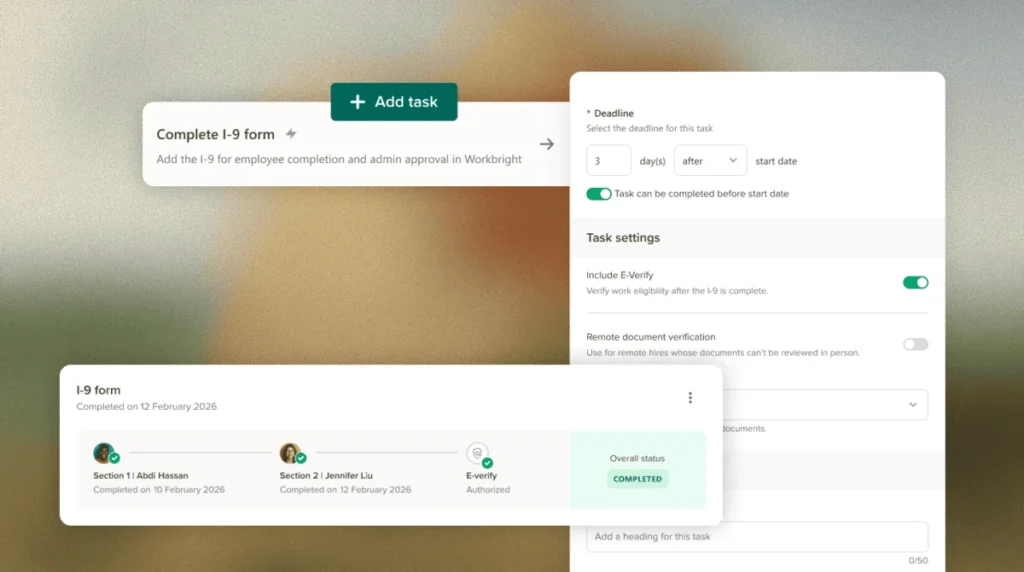
Workable, a prominent HR technology provider, has announced the launch of an integrated I-9 and E-Verify workflow, designed to streamline employee work eligibility verification for U.S. organizations. This new functionality aims to transform a historically cumbersome and paperwork-intensive process into a seamless, digital experience embedded directly within Workable’s platform. The initiative addresses critical pain points faced by HR teams, eliminating the need for manual workarounds, external systems, duplicate data entry, and the constant threat of non-compliance associated with traditional methods.
The Imperative of Compliance: Understanding I-9 and E-Verify
At the heart of U.S. employment law lies the requirement for employers to verify the identity and employment eligibility of all new hires. This mandate stems from the Immigration Reform and Control Act (IRCA) of 1986, a landmark piece of legislation enacted to deter the employment of unauthorized immigrants. Central to IRCA is Form I-9, Employment Eligibility Verification, a document that employers must complete for every individual hired in the U.S. to attest to their employee’s authorization to work and to identify them. The process involves employees completing Section 1 of the form, providing personal details and attesting to their work eligibility, followed by employers completing Section 2, reviewing specific identity and employment authorization documents, and certifying that the documents appear genuine and relate to the individual.
Beyond Form I-9, many employers, particularly those with federal contracts or in certain states, are required or choose to participate in E-Verify. E-Verify is an internet-based system operated by the Department of Homeland Security (DHS) in partnership with the Social Security Administration (SSA). It allows employers to electronically confirm the employment eligibility of their newly hired employees by comparing the information provided on Form I-9 with records available to DHS and SSA. While E-Verify offers an additional layer of security and compliance, it also introduces another layer of administrative complexity when managed manually or through disparate systems.
The traditional process for I-9 and E-Verify has long been a source of frustration for HR professionals. It typically involves downloading PDF forms, printing them, having employees manually fill them out, physically inspecting documents, making copies, and then manually entering data into the E-Verify system if applicable. This multi-step, often paper-based, and highly manual approach is prone to errors, can be time-consuming, and carries significant risks of non-compliance, leading to substantial penalties. According to U.S. Immigration and Customs Enforcement (ICE) data, I-9 errors are a common finding in audits, with fines ranging from hundreds to thousands of dollars per error, potentially escalating to hundreds of thousands or even millions for large employers with systemic issues. In fiscal year 2020 alone, ICE conducted over 2,000 I-9 audits, resulting in significant fines and, in some cases, criminal penalties.
A Chronology of Digital Evolution in HR Compliance
The journey towards digitized HR compliance solutions has been gradual but persistent. For decades following IRCA’s implementation, paper-based I-9s were the norm. The advent of the internet and digital record-keeping in the late 1990s and early 2000s paved the way for electronic I-9 solutions, offering some relief from physical paperwork. E-Verify itself, initially launched in 1996 as a pilot program, steadily gained traction and became mandatory for federal contractors and in several states over the subsequent years, pushing more employers towards digital methods, even if it often meant a separate portal.
The COVID-19 pandemic acted as a significant accelerant for digital transformation in I-9 verification. With widespread remote work, the DHS temporarily relaxed physical document inspection requirements, allowing for remote verification methods under certain conditions. This temporary flexibility highlighted the critical need for robust, secure, and integrated digital solutions. Following the end of the pandemic-era flexibilities, the DHS introduced a new permanent optional alternative procedure in August 2023 for employers enrolled in E-Verify. This new rule allows eligible E-Verify employers to conduct remote document inspections using live video interaction, provided they meet specific criteria, including retaining copies of the documents and creating an audit trail. This regulatory shift further underscored the government’s acceptance and encouragement of digital verification methods, making integrated platforms like Workable’s even more relevant and essential for modern businesses.
Workable’s new offering represents a significant milestone in this chronology, moving beyond mere electronic forms to a fully integrated, end-to-end workflow. This is not just about digitizing a form but about embedding the entire compliance process within the core hiring and onboarding platform, reflecting a broader industry trend towards holistic HR management systems.
Workable’s Seamless Solution: How it Works
Workable’s new I-9 and E-Verify workflow is meticulously designed for simplicity and compliance, integrating seamlessly into existing onboarding setups. The process unfolds in a structured, user-friendly manner:
- Digital Employee Onboarding: When a new hire is onboarded through Workable, they receive an invitation to complete their onboarding tasks, which now include Section 1 of the I-9 form.
- Employee Self-Service (Section 1): The employee accesses a secure, intuitive interface within Workable to digitally complete Section 1 of the I-9. This eliminates the need for downloading PDFs, printing, or manual handwriting, reducing errors and improving the candidate experience. They provide their personal information, attest to their work authorization status, and electronically sign the form.
- HR Document Review (Section 2): Once Section 1 is completed by the employee, the HR team is notified. They can then review the employee’s submitted identity and employment authorization documents directly within the Workable platform. For employers utilizing the new DHS remote verification option, this can involve a live video interaction with the employee to inspect the documents. Workable facilitates the secure upload and storage of these document copies.
- Employer Certification (Section 2 Completion): After reviewing the documents, the HR team completes Section 2 of the I-9 digitally within Workable, certifying that the documents appear genuine and relate to the employee.
- Automated E-Verify Submission: Crucially, for organizations opted into E-Verify, the system automatically submits the necessary information to the E-Verify system during this process. This eliminates the need for HR personnel to log into a separate E-Verify portal, re-enter data, and manually track responses, drastically cutting down on administrative burden and potential for transcription errors.
- Compliance and Audit Trails: Throughout the entire process, Workable maintains a comprehensive digital audit trail, securely storing all forms, document copies, and timestamps of actions taken. This ensures that organizations are prepared for potential audits by government agencies, providing easy access to accurate and complete records.
This integrated approach means that HR teams no longer have to navigate between disparate systems or resort to manual workarounds. The entire workflow, from employee data input to E-Verify submission, is centralized within Workable, providing a single source of truth and a unified user experience.
Supporting Data and the Cost of Non-Compliance
The shift towards automated I-9 and E-Verify solutions is not merely a matter of convenience; it is a strategic necessity driven by the high costs associated with manual processes and non-compliance.
- Financial Penalties: According to the Federal Register, civil penalties for I-9 violations can be substantial. For example, fines for substantive violations (e.g., failing to complete the form, improper verification) can range from $272 to $2,781 per form, depending on the number of violations. For knowingly hiring or continuing to employ unauthorized workers, fines range from $550 to $22,300 per unauthorized worker. These figures are periodically adjusted for inflation. A single audit revealing multiple errors across many employees can quickly lead to hundreds of thousands of dollars in penalties.
- Administrative Burden and Time Savings: Manual I-9 processes are notoriously time-consuming. Estimates suggest that HR professionals spend an average of 15-30 minutes per I-9 form, factoring in collection, review, storage, and potential E-Verify entry. For organizations hiring hundreds or thousands of employees annually, this accumulates into thousands of HR hours that could be reallocated to more strategic initiatives. Automated solutions can reduce this time significantly, often by 50-70%.
- Error Reduction: Human error is inevitable in manual data entry and review. Studies by various HR compliance firms have shown error rates in paper I-9 forms to be as high as 75%. Even minor errors, such as an incorrect date or missing signature, can trigger penalties during an audit. Digital systems with built-in validation checks and guided workflows dramatically reduce these error rates.
- E-Verify Adoption: As of Q1 2024, E-Verify boasts over 1.1 million participating employer locations. This widespread adoption, driven by mandates in 22 states and for federal contractors, underscores the growing need for efficient E-Verify integration within HR systems.
Analysis of Implications and Broader Impact
Workable’s integrated I-9 and E-Verify solution carries significant implications across several dimensions:
- For U.S. Businesses: The primary beneficiaries are U.S. organizations, particularly those with high hiring volumes or distributed workforces.
- Enhanced Compliance & Reduced Risk: By centralizing and automating the process, businesses significantly reduce their risk of I-9 errors and E-Verify non-compliance, mitigating the threat of costly fines and reputational damage. The digital audit trail provides robust evidence in case of an ICE audit.
- Operational Efficiency: HR teams gain substantial time savings by eliminating manual tasks, duplicate data entry, and navigating multiple systems. This allows HR professionals to focus on strategic initiatives like talent development and employee engagement, rather than administrative minutiae.
- Improved Candidate Experience: A streamlined, digital onboarding experience contributes to a positive first impression for new hires, setting a professional tone from day one. This is crucial in today’s competitive talent market.
- Scalability: The solution scales effortlessly with organizational growth, ensuring that compliance remains consistent regardless of hiring volume.
- For Employees: New hires experience a smoother, less cumbersome onboarding process. They can complete their Section 1 digitally at their convenience, often before their first day, reducing stress and paperwork during their initial days on the job.
- For the HR Technology Landscape: Workable’s move signals a broader trend in the HR tech industry: the convergence of specialized compliance tools into comprehensive, all-in-one platforms. As HR software matures, companies expect robust, integrated solutions that handle everything from applicant tracking to onboarding and compliance, rather than relying on a patchwork of disparate tools. This intensifies competition among HRIS and ATS providers to offer truly end-to-end functionality.
- Alignment with Regulatory Evolution: The solution aligns perfectly with the DHS’s push for more digital and remote verification options, especially for E-Verify users. It positions Workable’s clients to effectively leverage these new flexibilities while maintaining strict compliance.
Official Responses and Vision
While the provided text does not contain direct quotes, the announcement implicitly reflects Workable’s strategic vision. A hypothetical statement from a Workable spokesperson might emphasize the company’s commitment to simplifying complex HR processes and empowering organizations to operate efficiently and compliantly. "Our goal at Workable has always been to remove friction from the hiring process," a product lead might state. "This integrated I-9 and E-Verify workflow is a direct response to the critical need for U.S. employers to navigate intricate federal requirements with ease and confidence. By embedding this functionality directly into our platform, we’re not just offering a feature; we’re delivering peace of mind and freeing up invaluable HR resources to focus on people, not paperwork." This sentiment aligns with the core benefits highlighted in the announcement: simplicity, compliance, and efficiency.
The Future of HR Compliance
The introduction of Workable’s integrated I-9 and E-Verify solution underscores a significant shift in how companies approach employment eligibility verification. It represents a move away from fragmented, manual processes towards a unified, intelligent, and automated future. As regulatory landscapes continue to evolve and the demand for remote and hybrid work models persists, such integrated compliance tools will become indispensable for U.S. organizations. They not only safeguard businesses against legal and financial repercussions but also contribute to a more efficient, user-friendly, and strategically focused HR function, ultimately enhancing the entire employee lifecycle from recruitment to retention. This evolution ensures that compliance becomes an enabler of business growth rather than a perpetual administrative burden.