Workday, a long-standing titan in the enterprise software landscape, has publicly articulated a comprehensive and integrated strategy to navigate the burgeoning era of artificial intelligence. This strategic pivot, unveiled this week, marks a significant effort to reassert its leadership by synergistically leveraging nearly $3 billion in strategic acquisitions, a revitalized management team, and a redefined role for its platform within the evolving ecosystem of AI agents. The company’s initiative aims to transform its established "system of record" into a robust "platform for agents," a move that analysts suggest could reshape how businesses leverage AI for core financial and human resources functions.
The Genesis of a Reinvention: Aneel Bhusri’s Vision
The impetus for this strategic overhaul appears to stem from a period of introspection by Workday co-founder and former CEO, Aneel Bhusri. While Workday revolutionized enterprise applications in 2008 with its cloud-native, object-oriented platform, a foundational shift that offered a stark contrast to the prevalent on-premise systems of the time, the company faced challenges in clearly articulating its AI future. Bhusri, who transitioned the CEO role to Carl Eschenbach in 2024 before resuming leadership to steer this reinvention, observed a perceived dilution of the company’s startup culture and a lack of a cohesive AI strategy over the preceding two years.
"As Aneel explained to the Summit, over the last two years he felt Workday had lost its startup culture and the AI strategy was not clear," the report notes, highlighting Bhusri’s direct engagement in recalibrating the company’s trajectory. This leadership reshuffle and strategic recalibration signal a renewed commitment to innovation and market relevance.
Redefining the "System of Record" as a "Platform for Agents"
At the core of Workday’s new strategy is a fundamental redefinition of its role in an AI-saturated world. The company posits that its established "system of record" is not becoming obsolete, but rather evolving into a critical "platform for agents." This transformation hinges on unlocking the immense value embedded within Workday’s secure, governed, and compliant data infrastructure. By providing a robust framework of company rules, policies, and security protocols, Workday aims to empower AI agents to operate with the scale, security, and speed necessary for enterprise adoption. The argument is that recreating this foundational infrastructure outside of Workday would be prohibitively expensive, time-consuming, and fraught with risk.

This strategic repositioning is underpinned by five key pillars:
Pillar 1: AI as a Complement, Not a Replacement
Workday asserts that artificial intelligence, particularly in the enterprise context, complements rather than replaces existing enterprise software. The company emphasizes that complex operational processes like payroll processing, financial closing, employee onboarding, and segregation of duties enforcement require deterministic rules, established approval chains, and data models honed over years of operation. Workday’s approach, therefore, is to combine probabilistic AI reasoning with deterministic execution, creating an "enterprise AI" that is both intelligent and grounded in operational realities. This contrasts with standalone agent platforms that rely on extracted enterprise data, which Workday argues are structurally incomplete.
The analogy drawn is apt: just as autonomous vehicles require roads, traffic signals, and speed limits, and data centers depend on the electrical grid, AI agents require a stable and governed infrastructure. Workday positions itself as that essential infrastructure, enabling innovation rather than merely protecting its existing customer base.
Pillar 2: The Invaluable Role of Workday’s "Rails"
Central to Workday’s proposition is the concept of its "rails"—the configurable business process framework that encodes a customer’s unique policies, approvals, compliance rules, and organizational structures. These "rails" are presented as the very embodiment of a company’s operational DNA. An AI agent operating outside of this framework, the company contends, may produce outputs that appear reasonable but could inadvertently violate critical compliance requirements. By routing agent actions through Workday’s existing configuration, agents are rendered "lawful by default."
This perspective highlights the inherent need for coordination and adherence to rules within any complex operational environment. Workday’s argument suggests that attempting to build agent nests from scratch without leveraging existing, deeply integrated rule sets is an inefficient and potentially hazardous approach.
Pillar 3: Productizing Governance and Agent Management
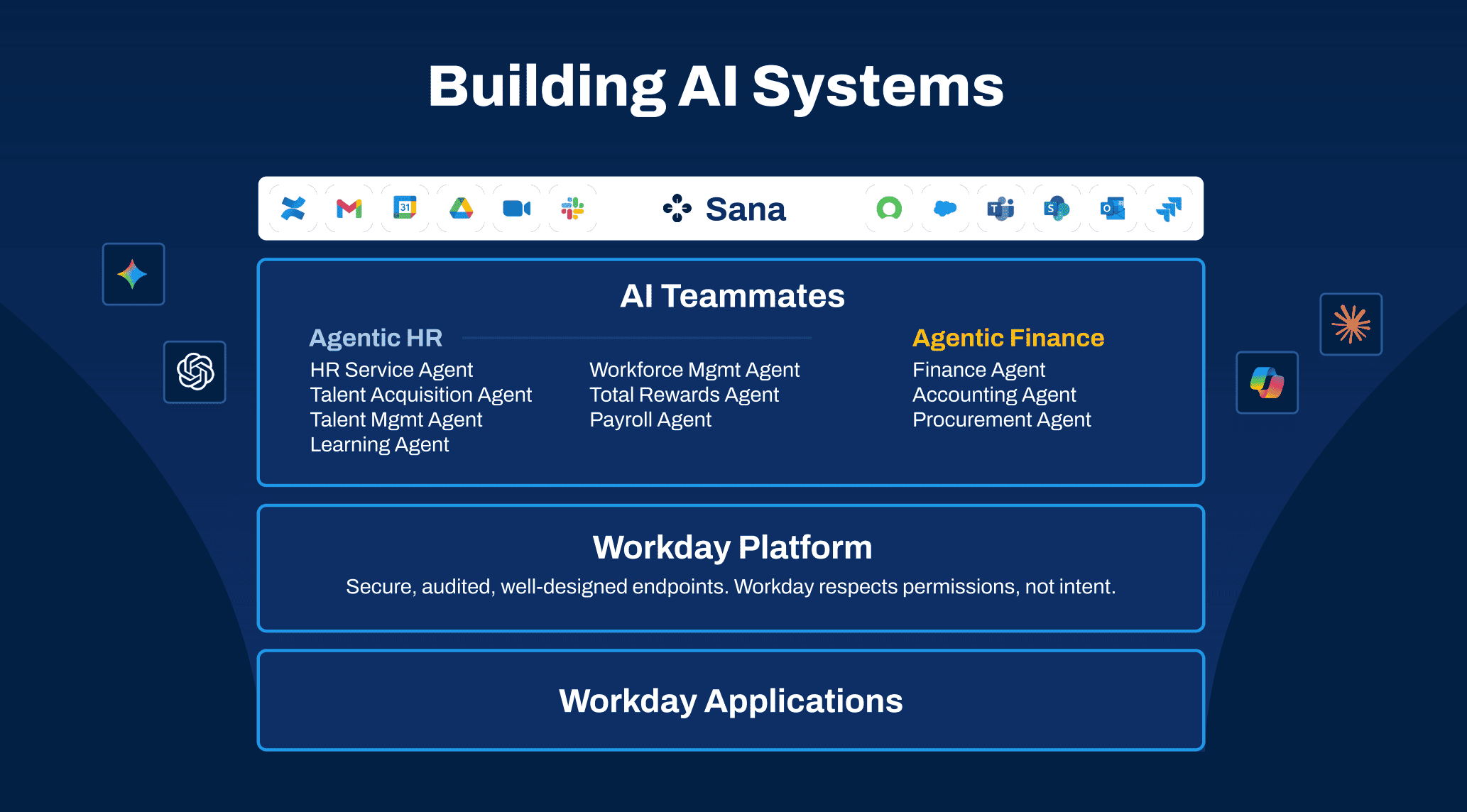
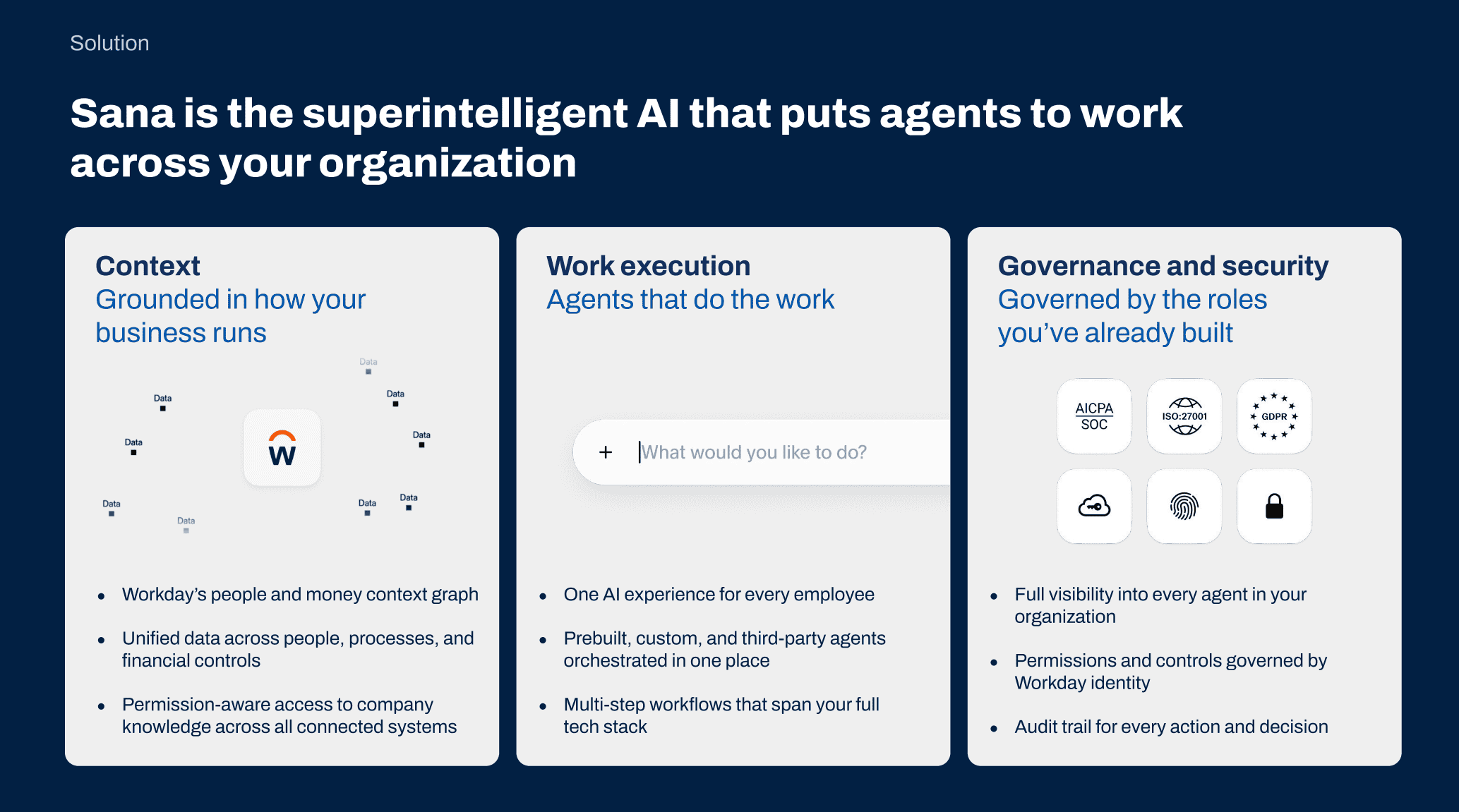
Workday is actively developing tools to manage the burgeoning landscape of AI agents, positioning these as integral components of its future infrastructure. The company views agents as "first-class citizens" with unique identities, defined skills, scoped authorizations, and comprehensive audit trails. Key productized layers include the "Agent System of Record," a new standards-based access and privilege management system, and a unified "single front door" for both internal and external agents. These offerings are designed to provide enterprise-grade trust infrastructure capable of managing the potential "agent sprawl."
While this remains a dynamic and competitive space, with players like ServiceNow and Microsoft offering similar tools, Workday’s integrated approach aims to provide its customers with a trusted, in-house solution for agent governance, alongside potential compatibility with broader open management tools.
Pillar 4: Sana: The Unified Front Door to Workday’s AI Experience
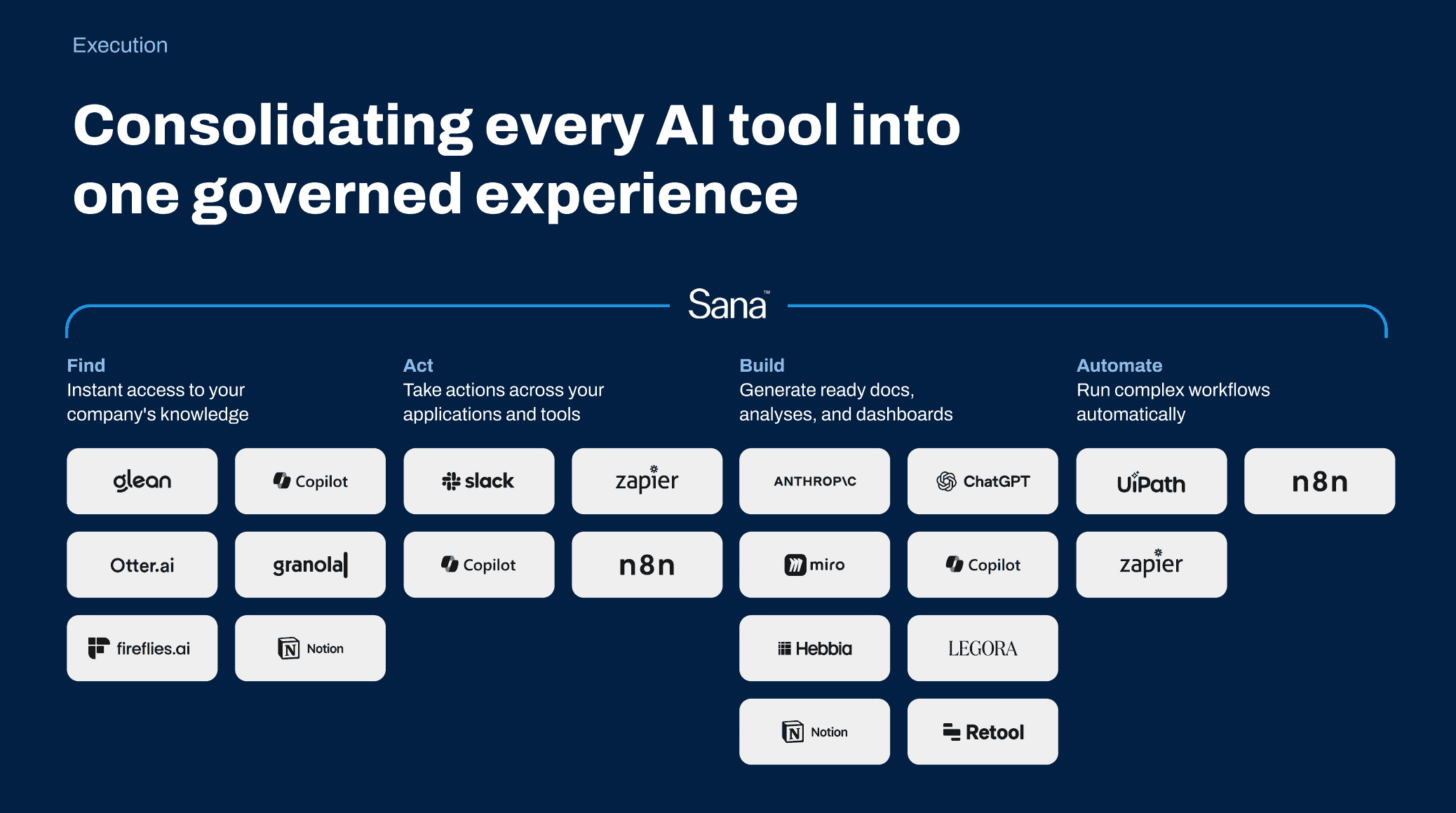
The integration of Sana, a recent acquisition, is positioned as the new default user interface for Workday, enhancing the user experience and extending its reach. Sana for Workday is bundled for all customers, with an upgrade path to "Sana Enterprise" that integrates with other leading platforms like Salesforce, Slack, Microsoft Teams, and SharePoint. This positions Sana as a direct competitor to solutions like Microsoft Copilot and other front-door AI agents.
Workday’s vision is that Sana will become the "last enterprise application employees will ever need to learn," functioning as both an agent development studio and a learning surface. The dynamic learning platform aspect of Sana is particularly noteworthy, offering not just training but also global employee enablement and significant improvements in productivity and reskilling.
Pillar 5: Outcome-Based Commercial Models
In a significant departure from traditional seat-based licensing, Workday is transitioning to a hybrid model that incorporates consumption-based pricing through "Flex Credits." This shift aims to align Workday’s revenue more directly with customer outcomes, such as business growth and productivity enhancements. APIs used by external platforms will also be metered per call, capturing revenue that Workday believes has been historically uncollected.
This move signifies a potential paradigm shift in how enterprise software value is recognized and compensated. Instead of paying solely for user access, customers will increasingly pay for the actual work performed by the "Agentic Business Platform" on their behalf.
Addressing the "Build from Scratch" Alternative
Workday directly confronts the growing trend of organizations considering building AI capabilities from the ground up, leveraging readily available large language models and data lakes. The company argues that such an approach, while seemingly flexible, leads to the creation of a "shadow ERP" that is prohibitively expensive to build, lacks a unified object graph and configuration system, and ultimately remains fragile. The agents produced by such custom builds, Workday contends, are inherently "lawless" as they prioritize task completion over rule enforcement, leading to significant risks and ultimately necessitating the integration of existing security and workflow tools.
Navigating a Multi-Agent Future
Workday acknowledges that enterprises will likely deploy multiple AI surfaces, including those from Microsoft, Anthropic, Google, and Salesforce, alongside custom-built agents. The company’s strategy is to accommodate this reality by allowing external agents to access Workday through an "Agent Gateway" using open standards. These agents can delegate tasks to Workday agents, inheriting the platform’s established "rails," or interact directly with Workday APIs. When an agent needs to engage with human resources, financial transactions, or regulated workflows, the reasoning process is seamlessly handed off to Workday for execution.
The accessibility of Workday’s Agent Developer, powered by Sana, is seen as crucial. Past difficulties in building Workday Extend applications have been a barrier; a more approachable development environment could significantly boost the adoption of custom agents and integrations.
Enhancing Agility: Dynamic Reconfiguration
A historical criticism of cloud systems has been their often slow product release cycles. Workday’s new strategy addresses this through two key initiatives:
- Extensibility through Sana: The new UX and Sana enable customers to extend Workday’s capabilities by registering agents in the Agent System of Record, allowing for rapid app development without prolonged waiting periods. The establishment of an "Agent Partner Network" further supports the deployment of industry-specific and advisory agents.
- The "Deployment Agent": This innovative system facilitates dynamic system testing, configuration, and consultative deployment, enabling customers to implement changes more rapidly and reducing reliance on expensive systems integrators. This drastically lowers implementation and ownership costs and allows Workday to deliver product updates more continuously. This has significant implications for Workday’s traditional SI partners.
Analysis of Workday’s Reinvention Strategy
The recent summit and the comprehensive product strategy unveiled by Workday signal a significant turning point for the company. Several key observations emerge from this strategic recalibration:
1. The Founder’s Return and Renewed Energy
The return of Aneel Bhusri as a driving force behind this reinvention mirrors historical instances where pioneering founders have revitalized their organizations. His deep understanding of Workday’s technology and market position, coupled with a renewed energy and a clear vision for the company’s future, is expected to infuse a much-needed "startup culture" back into the organization. The implementation of a "General Manager" model for product areas, along with a dedicated cross-functional AI task force, demonstrates a structured approach to executing this ambitious strategy. This mirrors recent moves by tech giants like Microsoft, which have also centralized engineering strategies for similar reasons.
2. Leading the Charge in Agentic HR and Finance
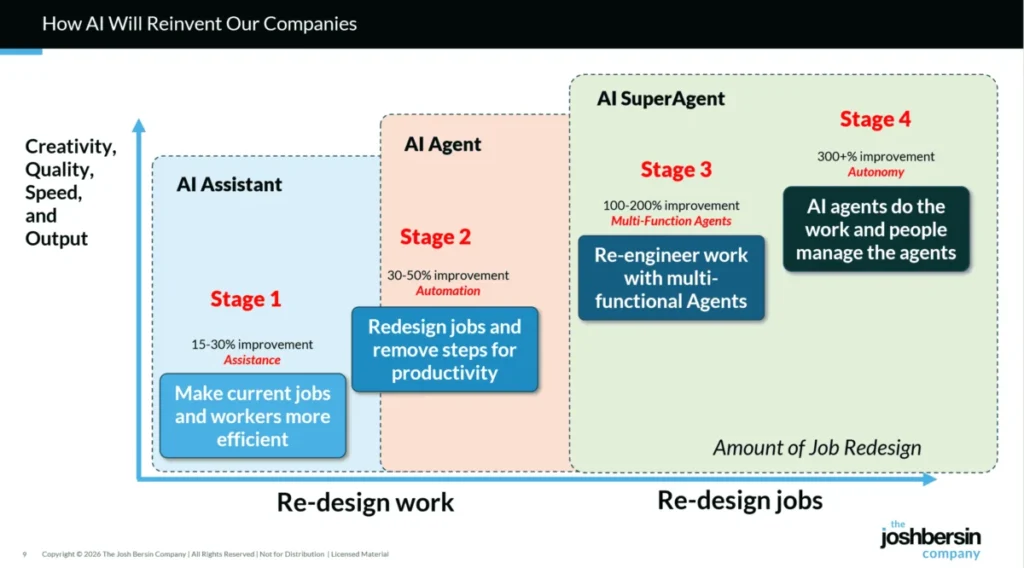
Workday’s strategic bet on "big transformation agents" for the future, rather than incremental improvements within existing workflows, positions it to lead the charge in agentic HR and finance. The acquisitions of Paradox and Sana, both leaders in AI for talent acquisition, agents, and learning, bring a wealth of experience in developing agentic applications. This enables Workday to proactively demonstrate how AI can redefine enterprise operations by seamlessly integrating with existing infrastructure. The focus on developing "stage 3 agents"—those capable of automating entire workflows and delivering substantial ROI—suggests a forward-looking approach to AI implementation.
3. Sana and Paradox: Catalysts for New Leadership and Innovation
The integration of Sana and Paradox introduces new leadership with direct accountability for key AI-driven product areas. Adam Godson, CEO of Paradox, now leads Workday’s talent acquisition platform, integrating acquired assets like HiredScore. Joel Hellermark, CEO of Sana, now spearheads Workday’s learning platform and AI layer. As General Managers, these leaders are responsible for product strategy, revenue, and customer support, fostering a level of accountability and velocity previously unseen. The strategic importance of these acquisitions is underscored by the significant market value of their respective domains, with talent acquisition and corporate learning being areas where AI is experiencing rapid advancement.
4. Defining Enterprise AI Infrastructure
Workday has a significant opportunity to define the architecture of enterprise AI. The complex questions surrounding agent design, orchestration, and governance—from determining the roles of "action" versus "observation" agents to managing information and authority—are currently a significant challenge for many organizations. Workday’s platform, with its layered approach encompassing LLMs, semantic and rules engines, agent code, and a runtime/trust layer, is well-positioned to offer a cohesive framework. The company’s ability to lead in defining this infrastructure could set industry standards and address the current "mess" of competing vendors.
5. Understanding the Context and Semantic Layer
A critical insight highlighted by Joel Hellermark, CEO of Sana, is the paramount importance of context in AI: "Everyone is ignoring the big boring problem of bad context." Workday’s recognition of this, demonstrated by its investment in knowledge graphs and context engineering—rather than solely relying on larger models—signals a sophisticated understanding of AI value creation. The evolution of Workday’s Data Cloud to encompass not just raw data but also the "real customer semantics" (skills models, cost centers, career paths, etc.) indicates that Workday is thinking holistically, like an AI company rather than a transactional vendor. This focus on semantic understanding is crucial for building truly intelligent and trustworthy agents.
Conclusion: A Turning Point for Workday
The recent announcements and leadership changes at Workday represent a definitive turning point for the company. Its ambitious AI-driven reinvention strategy, leveraging strategic acquisitions and a renewed focus on its core strengths, positions it to pioneer new solutions and enable its customers and partners to embrace the business agent revolution. The combination of new product leadership, a robust AI infrastructure, and enhanced agility through dynamic reconfiguration suggests that Workday is poised for significant innovation.
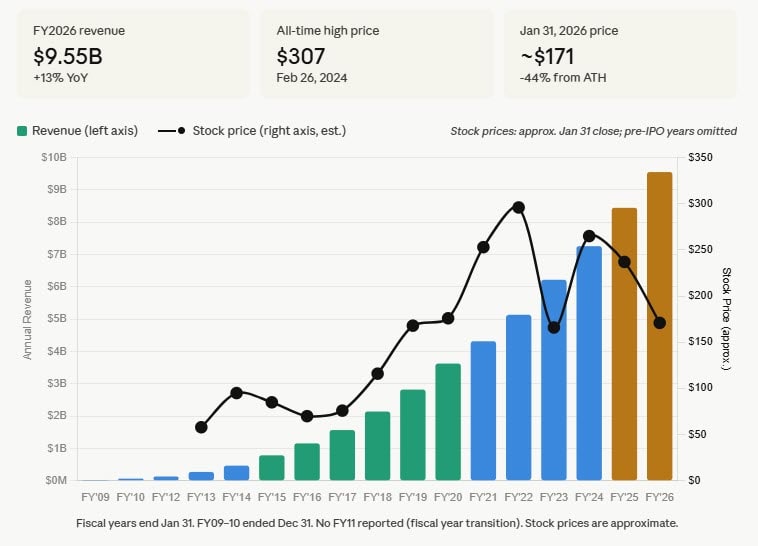
For financial analysts, the immediate impact of products like Sana, Paradox, and the enterprise AI management tools is expected to drive new revenue growth. The demonstrable value these acquired companies have delivered to Workday customers in the past five years provides a strong foundation for future success. This strategic pivot marks a critical juncture, signaling Workday’s intent to not only adapt but to lead in the evolving landscape of enterprise AI.