In today’s dynamic business landscape, organizations that fail to invest in robust employee development initiatives are increasingly finding themselves at a competitive disadvantage. The modern workforce, particularly younger generations, prioritizes growth opportunities, viewing them not as a perk but as a fundamental expectation of employment. Data from Achievers’ State of Recognition Report starkly highlights this sentiment, revealing that a significant 50% of employees believe their companies need to offer more avenues for professional growth. This unmet demand is a critical issue, as a perceived lack of future prospects within an organization directly correlates with increased employee turnover and a diminished talent pipeline.
The good news, however, is that fostering a culture of continuous development doesn’t solely rely on costly, formal training programs. Instead, it encompasses a diverse range of integrated strategies, including structured mentorship, challenging stretch projects, timely and constructive feedback, and recognition systems that celebrate progress. This article delves into six impactful employee development strategies designed to cultivate a learning-centric environment where growth is not merely available, but deeply embedded and expected.
The Evolving Landscape of Work and Employee Expectations
The concept of employee development has undergone a significant transformation over the past decade. Historically, professional growth was often seen as a linear progression, primarily driven by formal, classroom-style training sessions or sporadic workshops. However, the advent of digital transformation, rapid technological advancements, and shifts in workforce demographics have reshaped both the nature of work and employee expectations. Today’s employees seek more personalized, flexible, and continuous learning experiences that align with their individual career aspirations and the ever-changing demands of the market.
The "Great Resignation" phenomenon, which saw millions of employees voluntarily leave their jobs, underscored the critical importance of development opportunities. Research by LinkedIn Learning consistently shows that a vast majority of employees—around 94%—would commit to staying with a company longer if it invested in their professional learning and development. This statistic alone serves as a powerful testament to the direct link between development initiatives and talent retention. Companies that ignore this imperative risk not only losing their most valuable assets but also struggling to attract new talent in an increasingly competitive market.
The Economic Imperative: Cost of Stagnation
Beyond the immediate impact on morale and engagement, a lack of investment in employee development carries substantial financial repercussions. Employee turnover is notoriously expensive, with costs ranging from 50% to 200% of an employee’s annual salary, encompassing recruitment, onboarding, training, and lost productivity during the transition period. When employees leave due to a perceived lack of growth, companies incur these costs repeatedly. Furthermore, a stagnant workforce can lead to significant skill gaps, hindering innovation and reducing overall organizational agility. In an era where adaptability is paramount, a workforce whose skills are not continuously updated risks becoming obsolete, directly impacting a company’s ability to compete and thrive. The message is clear: investing in development is not an expense, but a strategic investment in the future viability and profitability of the business.
Six Pillars of Progressive Employee Development
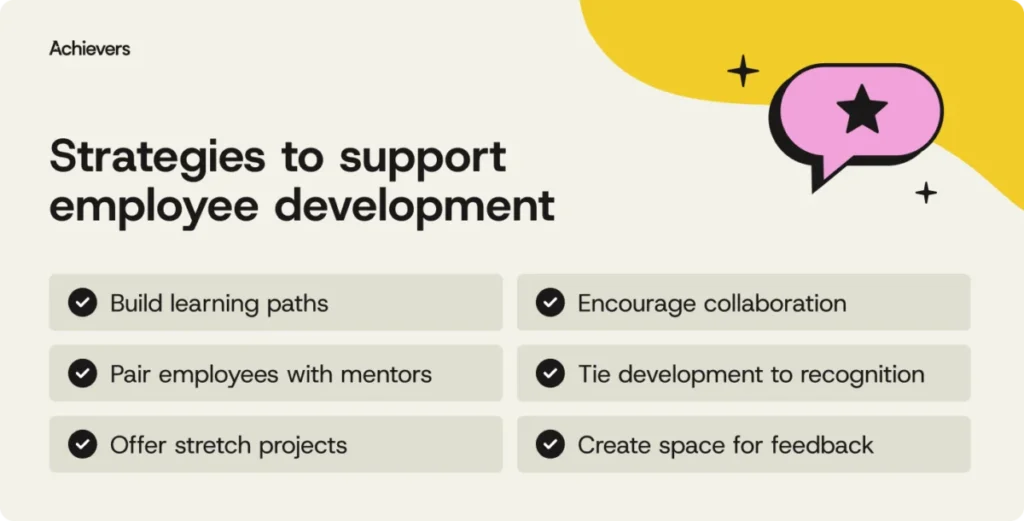
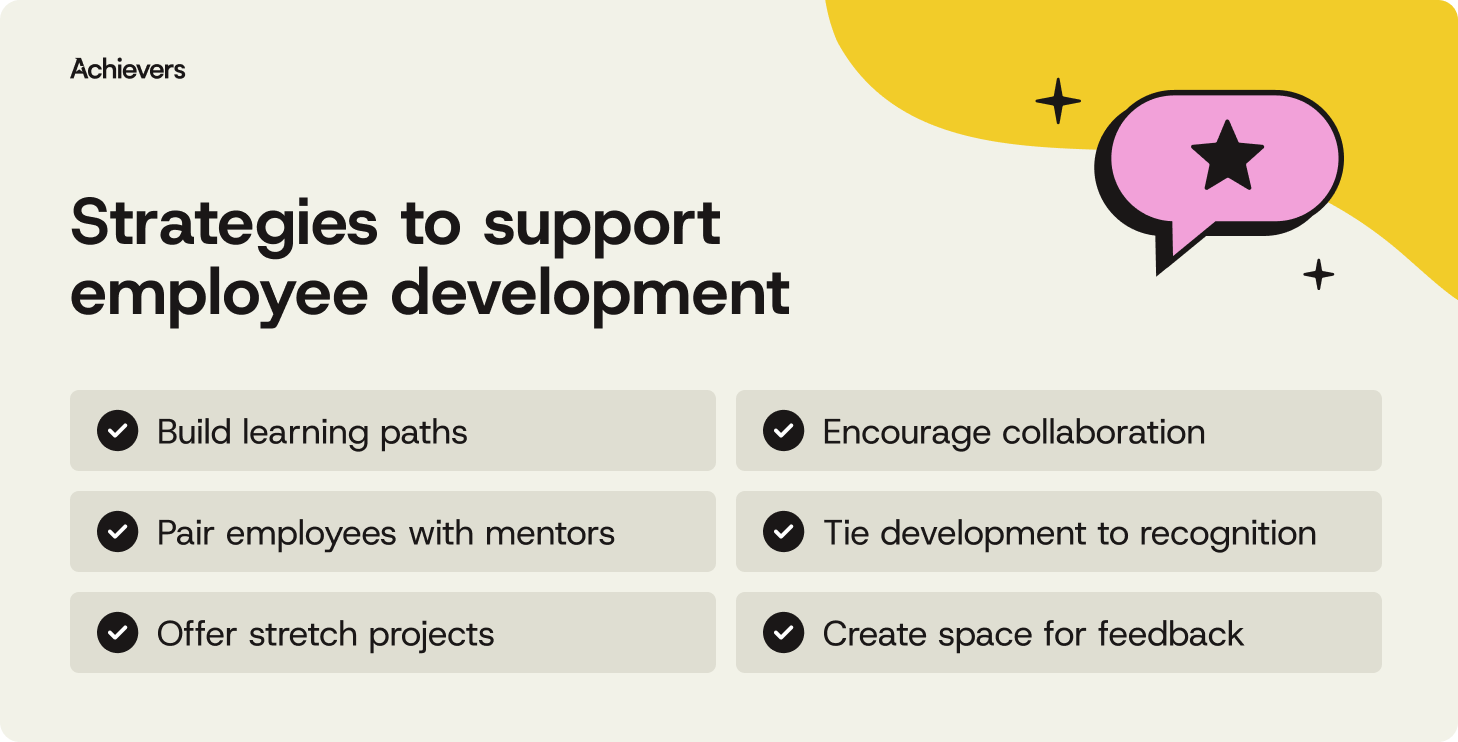
Effective employee development is not a one-size-fits-all endeavor. It demands a flexible, people-first approach that integrates learning into the fabric of daily work. The following six strategies offer a comprehensive framework for organizations committed to cultivating a culture of continuous growth:

1. Building Personalized Learning Paths
The era of generic training programs is rapidly fading. Modern employees crave relevance and autonomy in their professional growth. Personalized learning paths acknowledge individual strengths, weaknesses, career aspirations, and learning styles, offering a tailored journey that maximizes engagement and effectiveness. Instead of imposing a standardized curriculum, this strategy empowers employees to take ownership of their development, leading to higher completion rates and more impactful skill acquisition.
- Implementation: Begin with comprehensive skill assessments and career aspiration discussions to identify individual learning needs. Leverage learning management systems (LMS) that offer adaptive learning modules, AI-driven content recommendations, and micro-learning opportunities. Encourage employees to co-create their development plans with managers, outlining specific skills to acquire, resources to utilize, and timelines for achievement.
- Supporting Data: Studies indicate that personalized learning can lead to a 75% increase in engagement and a 50% improvement in learning effectiveness compared to traditional methods. It fosters a sense of psychological ownership, making learning feel less like a mandate and more like a personal investment.
- Implications: Personalized learning paths directly address skill gaps relevant to an employee’s role and future trajectory, making the workforce more adaptable and resilient. It boosts morale by demonstrating that the company values individual growth and is willing to invest in specific needs. This leads to higher retention rates as employees see a clear future for themselves within the organization.
2. Pairing Employees with Mentors or Coaches
Growth often emerges from meaningful conversations and guided experiences. Mentorship and coaching represent powerful, yet frequently underestimated, tools for employee and talent development. These relationships provide invaluable insights, practical advice, and a supportive environment for skill refinement and career navigation. Mentors, typically more experienced professionals, offer guidance based on their journey, while coaches focus on unlocking an individual’s potential through targeted questioning and goal setting.
- Implementation: Establish formal mentorship programs that carefully match mentors and mentees based on shared interests, career goals, and skill requirements. Define clear objectives for the mentorship period and provide training for both parties on effective communication and relationship building. Consider reverse mentoring, where junior employees mentor senior leaders on topics like technology or social media, fostering mutual learning.
- Supporting Data: Deloitte research suggests that employees with mentors are five times more likely to be promoted. Furthermore, mentoring programs have been shown to increase retention rates for both mentors (by 20%) and mentees (by 25%).
- Implications: Mentorship facilitates knowledge transfer, accelerates skill development, and strengthens internal networks. It also plays a crucial role in leadership development, preparing individuals for more significant roles. The enhanced sense of connection and belonging can significantly improve employee engagement and reduce feelings of isolation, especially in remote or hybrid work environments.
3. Rotating Roles or Assigning Stretch Projects
Sometimes, the most profound growth occurs when individuals step outside their comfort zones and embrace new challenges. Stretch projects and role rotations offer hands-on experience that builds cross-functional skills, fosters adaptability, and ignites innovation. These opportunities allow employees to apply existing knowledge in novel contexts, develop new competencies, and gain exposure to different facets of the business.
- Implementation: Identify high-potential employees ready for new challenges. Managers should proactively seek out projects that align with an employee’s development goals, even if they are slightly beyond their current capabilities. Ensure adequate support and resources are provided to mitigate risks. For role rotations, define clear timelines and objectives, ensuring that both the employee and the receiving department benefit from the experience.
- Supporting Data: A study by PwC found that employees who participate in cross-functional projects report higher job satisfaction and are more likely to stay with their organization. Such experiences are crucial for developing agile thinking and problem-solving skills, which are essential in fast-evolving industries.
- Implications: These initiatives break down organizational silos, foster a broader understanding of business operations, and create a more agile and versatile workforce. They are excellent for succession planning, identifying future leaders, and ensuring critical roles have a pool of internal candidates with diverse experiences. The sense of accomplishment derived from successfully navigating a challenging project significantly boosts confidence and motivation.
4. Encouraging Collaboration and Action Learning
Learning doesn’t always occur in structured courses; often, it happens organically through collaborative problem-solving. Action learning brings employees together to tackle real-world business challenges, share diverse perspectives, and collectively develop innovative solutions. This experiential approach allows individuals to apply theoretical knowledge immediately, learn from peers, and refine their critical thinking skills in a practical context.
- Implementation: Form cross-functional teams to address specific organizational challenges or opportunities. Provide these teams with clear mandates, necessary resources, and a supportive environment. Encourage open dialogue, brainstorming, and iterative problem-solving. Facilitate regular debriefs to extract key learnings and translate them into actionable insights. Consider structured hackathons or innovation labs as forms of action learning.
- Supporting Data: Research from the Association for Talent Development (ATD) indicates that collaborative learning environments lead to higher knowledge retention and improved problem-solving capabilities compared to individual learning. It also strengthens team cohesion and communication.
- Implications: Action learning fosters a culture of collective intelligence and innovation. It empowers employees to contribute directly to organizational success, enhancing their sense of purpose and engagement. The practical application of skills ensures that learning is immediately relevant and impactful, leading to tangible improvements in processes and outcomes.
5. Tying Development to Recognition and Rewards
For development initiatives to gain traction and be sustained, progress must be acknowledged and celebrated. Recognition serves as a powerful reinforcement mechanism, validating effort, reinforcing desired behaviors, and making the learning journey feel worthwhile. When growth is seen and rewarded, it fuels employee motivation and encourages a continuous pursuit of new skills and knowledge.
- Implementation: Integrate recognition directly into development frameworks. Acknowledge milestones such as completing a course, successfully applying a new skill in a project, mentoring a colleague, or leading a stretch assignment. Utilize both formal and informal recognition channels, including public praise, peer-to-peer recognition platforms, performance bonuses tied to development goals, or even small symbolic rewards. The Achievers platform, for instance, allows for real-time recognition that highlights progress.
- Supporting Data: The Achievers State of Recognition Report consistently shows a strong correlation between recognition and employee motivation and engagement. Gallup data further supports this, indicating that employees who receive regular recognition for their work are significantly more engaged and productive.
- Implications: Connecting development to recognition creates a positive feedback loop, encouraging employees to actively participate in growth opportunities. It makes learning a visible and valued part of the organizational culture, reinforcing the idea that continuous improvement is integral to success. This strategy also helps in retaining top talent who feel their contributions and growth are genuinely appreciated.
6. Creating Space for Feedback and Employee Input
The most effective development programs are those co-created with the very individuals they are designed to support. Ignoring employee input in the design and execution of learning strategies risks creating programs that are irrelevant, unengaging, or misaligned with actual needs. A culture of open feedback ensures that development initiatives remain dynamic, responsive, and truly impactful.
- Implementation: Establish regular feedback mechanisms, including 360-degree performance reviews, continuous performance management systems, and stay interviews to understand employee development needs and aspirations. Conduct surveys and focus groups to gather input on existing programs and identify new areas of interest. Empower employees to provide anonymous feedback on training effectiveness and suggest improvements.
- Supporting Data: Research from Adobe found that companies with continuous feedback mechanisms experience 14% lower turnover rates. Furthermore, employees who feel heard are more engaged and invested in their company’s success.
- Implications: By integrating employee input, organizations ensure that development programs are relevant, practical, and have higher buy-in. This fosters a sense of psychological safety, encouraging employees to voice their needs and actively participate in shaping their growth journey. It transforms development from a top-down directive into a collaborative and empowering process, leading to more effective outcomes and stronger employee connection.
Making Employee Development an Integral Part of Your Culture
Employee development should never feel like an optional add-on or a sporadic event. For it to truly thrive and yield lasting benefits, it must be woven into the very fabric of an organization’s culture. This means moving beyond occasional HR initiatives and embedding a growth mindset into how leadership operates, how teams collaborate, and how individual contributions are valued.
Achieving this cultural integration begins with visibility and consistent reinforcement. When growth is recognized and celebrated in real-time, rather than just at the culmination of a major project or an annual review, it transforms learning into an ongoing momentum. Leaders must champion development, serving as role models by pursuing their own growth and actively supporting their teams’ learning journeys. This includes allocating dedicated time for development activities, providing access to resources, and fostering an environment where experimentation and even failure are viewed as learning opportunities.
Furthermore, a culture of development is inherently linked to effective feedback. This isn’t about annual performance reviews, but about continuous, constructive dialogue that helps individuals understand their strengths, areas for improvement, and how their development aligns with organizational goals. This personalized feedback, combined with the power of employee connection through peer learning, mentorship, and shared successes, transforms individual growth into a collective endeavor. When employees feel connected to their colleagues and understand how their learning contributes to a larger purpose, their motivation to grow amplifies.
The bottom line is that authentic growth doesn’t occur in isolation. It flourishes within a culture that prioritizes and celebrates it—a culture where recognition, constructive feedback, and genuine human connection coalesce to turn learning into an unstoppable force of momentum, rather than just another bullet point on a resume. Organizations that successfully embed these principles into their core operations will not only cultivate a highly skilled and engaged workforce but also establish a formidable competitive advantage in the global marketplace.
As the business environment continues to evolve at an unprecedented pace, a commitment to continuous employee development is no longer optional; it is a strategic imperative. Companies that invest in their people’s growth are investing in their own future, ensuring resilience, fostering innovation, and building a sustainable foundation for long-term success.