Effective employee rewards programs transcend mere expressions of gratitude; they are strategic instruments designed to significantly boost engagement, enhance talent retention, and align individual efforts with overarching organizational objectives. The evolving landscape of work, characterized by dynamic market conditions and shifting workforce expectations, underscores the critical role of sophisticated recognition frameworks. A pivotal finding from the Achievers State of Recognition Report highlights this impact: employees with access to a personalized global rewards marketplace are 60% more likely to report feeling meaningfully recognized at work. This data point alone signals a profound shift in how organizations must approach employee appreciation, moving beyond ad-hoc gestures to integrated, impactful systems.
This comprehensive guide will delve into the foundational principles that distinguish truly effective employee rewards programs from rudimentary efforts. It will explore the types of rewards that resonate most deeply with diverse workforces, illuminate the strategic elements that elevate programs from average to exceptional, and provide a framework for building initiatives that are both deeply appreciated by employees and demonstrably effective for the business.
The Evolution of Employee Recognition: A Historical Perspective
The concept of employee recognition is not new, but its strategic importance and implementation methods have undergone a significant transformation over the decades. Historically, employee appreciation often manifested in annual bonuses, long-service awards, or company picnics – largely standardized, infrequent, and often impersonal gestures. These traditional approaches, while well-intentioned, often failed to capture the nuances of individual contributions or foster a continuous culture of appreciation.
The late 20th and early 21st centuries saw a gradual shift. As human resources matured into a strategic partner rather than a purely administrative function, organizations began to understand the psychological underpinnings of motivation and engagement. The rise of total rewards philosophies broadened the scope beyond compensation to include benefits, work-life balance, development opportunities, and, crucially, recognition.
The digital revolution further accelerated this evolution. The advent of specialized HR technology platforms made it possible to implement more frequent, personalized, and peer-to-peer recognition programs. This was particularly relevant as millennial and Gen Z workers, who often prioritize meaning, feedback, and cultural fit, began to dominate the workforce. The COVID-19 pandemic, with its forced shift to remote and hybrid work models, further cemented the necessity of digital, accessible, and inclusive recognition systems to maintain connection and morale across distributed teams. This chronological progression highlights a clear trend: from transactional to relational, from top-down to peer-inclusive, and from infrequent to continuous.
The Indisputable Case for Strategic Employee Recognition: Data and Impact
The rationale for investing in robust employee rewards programs extends far beyond anecdotal evidence; it is firmly rooted in compelling business data that demonstrates tangible returns on investment.
-
Enhanced Employee Engagement: A highly engaged workforce is the bedrock of organizational success. Studies consistently show a direct correlation between effective recognition and higher engagement levels. Gallup’s research, for instance, indicates that highly engaged teams show 21% greater profitability. When employees feel seen, valued, and appreciated for their efforts, their commitment to their work and the organization deepens, leading to increased discretionary effort and a stronger sense of belonging. The Achievers report’s finding – 60% higher meaningful recognition with personalized global marketplaces – directly supports this, emphasizing that the quality and relevance of recognition are paramount to driving genuine engagement.
-
Improved Talent Retention: In today’s competitive talent market, retaining skilled employees is a significant challenge and a substantial cost saver. The cost of replacing an employee can range from half to two times their annual salary, factoring in recruitment, onboarding, and lost productivity. Effective recognition programs act as a powerful retention tool. Employees who feel consistently valued are less likely to seek opportunities elsewhere. Research from Deloitte suggests that organizations with strong recognition cultures experience 31% lower voluntary turnover rates. By fostering an environment where contributions are acknowledged and rewarded, companies build loyalty and reduce the costly churn of talent.
-
Boosted Productivity and Performance: Recognition is a potent motivator. When employees understand that their hard work and achievements will be acknowledged, they are more inclined to exert greater effort and strive for excellence. This isn’t just about monetary rewards; it’s about the psychological boost that comes from knowing one’s contributions are making a difference. Performance feedback, especially when tied to recognition, helps reinforce desired behaviors and outcomes. A study by Bersin by Deloitte found that companies with "best-in-class" recognition programs are 12 times more likely to have strong business outcomes.
-
Cultivating a Positive Company Culture: Recognition programs are instrumental in shaping and reinforcing desired company values and culture. When rewards are explicitly tied to core organizational values – such as innovation, collaboration, integrity, or customer focus – they serve as tangible examples of what the company stands for. This creates a virtuous cycle: recognition reinforces values, values drive positive behaviors, and positive behaviors strengthen the culture. A healthy culture, in turn, attracts top talent and fosters a more enjoyable and productive work environment.

-
Strengthened Employer Brand: In the era of Glassdoor and social media, a company’s reputation as an employer is crucial for attracting talent. Organizations known for genuinely valuing and recognizing their employees gain a significant competitive advantage in recruitment. Prospective candidates are increasingly scrutinizing company culture and employee experiences, making a visible commitment to recognition a powerful differentiator.
-
Demonstrable Return on Investment (ROI): While sometimes challenging to quantify precisely, the ROI of effective recognition programs is increasingly evident. Reduced turnover costs, higher productivity, improved customer satisfaction (often linked to engaged employees), and stronger financial performance all contribute to a positive return. Companies that invest in robust recognition platforms often report measurable improvements in key HR metrics, solidifying their place as a strategic business investment rather than an optional perk.
Constructing an Impactful Employee Rewards Program: A Strategic Blueprint
Building a truly effective employee rewards program is an iterative and intentional process, not a one-time launch. It demands a people-first approach, strategic design, and continuous refinement to ensure it resonates with employees and delivers tangible business value. Here’s a detailed breakdown of the critical steps:
-
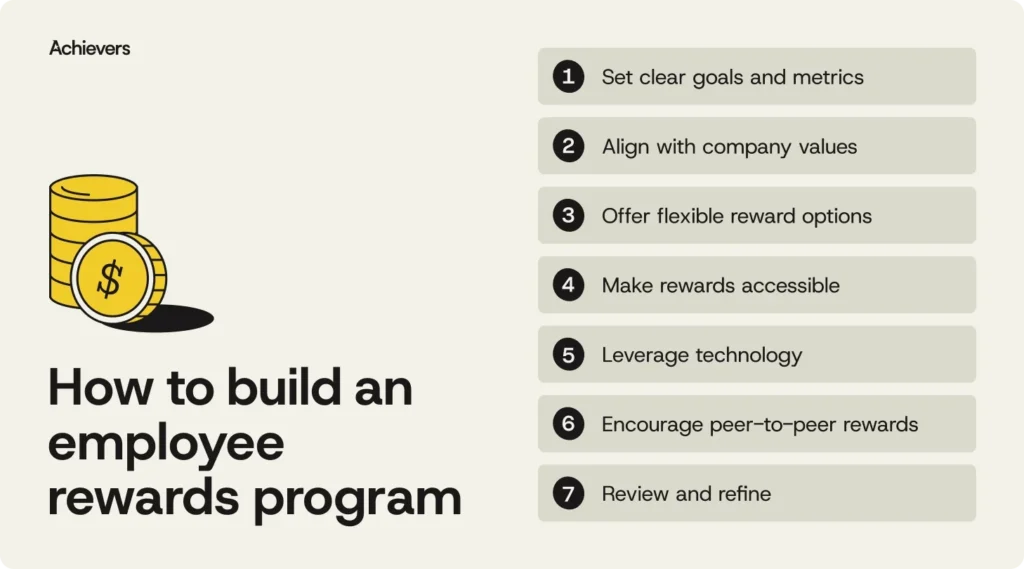
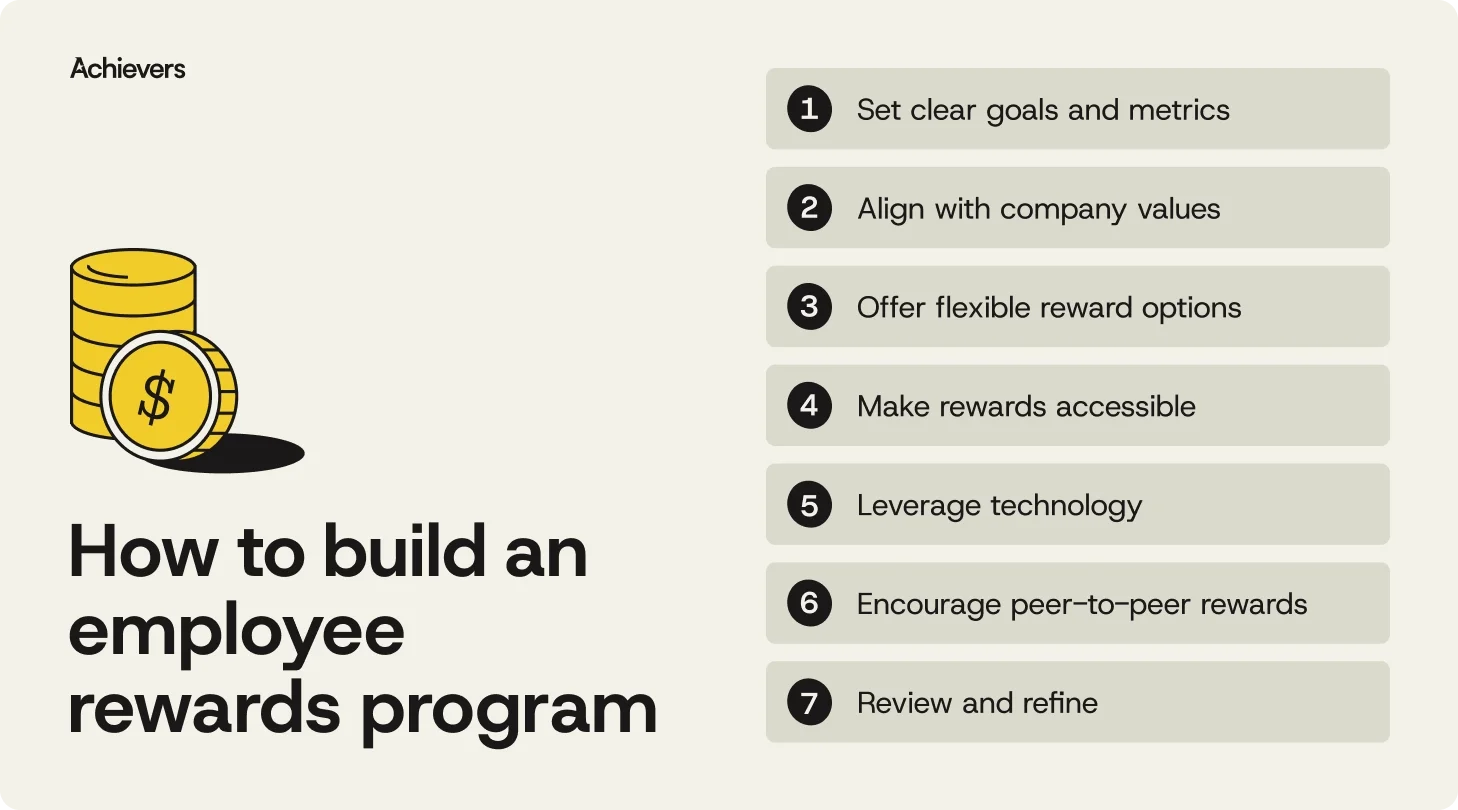
Define Clear Goals and Metrics: Before launching any program, establish a definitive "why." What specific outcomes is the program intended to achieve? Is it to increase engagement, reduce turnover in a particular department, foster cross-functional collaboration, or reinforce core values? Clearly defined, measurable goals (e.g., "increase employee engagement scores by 10% within 12 months," "reduce voluntary turnover by 5%," "increase peer-to-peer recognition acts by 20%") are essential. These metrics will serve as the foundation for evaluating success and demonstrating ROI. Without this clarity, a program risks becoming a budget sinkhole rather than a strategic asset.
-
Align Rewards with Core Organizational Values: A powerful recognition program does more than just acknowledge achievements; it reinforces the behavioral tenets that define the organization’s identity. By explicitly tying rewards to core company values (e.g., "Innovator of the Month" for creativity, "Teamwork Champion" for collaboration, "Customer First Award" for exceptional service), every act of recognition becomes a living testament to what truly matters within the company. This approach ensures that employees understand not just what they are being recognized for, but why it is important to the organization, creating a deeper, more meaningful connection. As one HR leader might articulate, "Our values are not just words on a wall; they are the behaviors we celebrate."
-
Offer Flexible, Personalized Reward Options: The days of one-size-fits-all rewards are long gone. A diverse workforce demands diverse recognition. What motivates a new graduate might differ significantly from a seasoned professional or an employee with family responsibilities. Offering a personalized global rewards marketplace, as highlighted by Achievers, is crucial. This means providing choices: gift cards to various retailers, charitable donation options, experiential rewards (e.g., travel vouchers, concert tickets), professional development opportunities, or even custom-curated experiences. The key is to empower employees to choose a reward that genuinely excites and benefits them, thereby maximizing the perceived value and impact of the recognition. "Employees are not a monolith; their preferences for recognition are as varied as their talents," states a hypothetical industry analyst.
-
Ensure Ease of Use and Inclusivity: A rewards program, no matter how well-designed, will fail if it’s cumbersome to use or inaccessible to segments of the workforce. The process of giving and receiving recognition must be intuitive, frictionless, and easily integrated into daily workflows. Furthermore, inclusivity is paramount. Programs must cater to all employee segments, including desk-based, remote, hybrid, and deskless workers. A seamless mobile experience, multi-language support, and equitable access to rewards are non-negotiable. If a recognition system requires extensive training or is only available during specific office hours, it immediately alienates a significant portion of the employee base, diminishing its overall effectiveness and perceived fairness.
-
Leverage Technology to Enhance the Experience: Modern technology is the backbone of scalable and effective recognition programs. Dedicated recognition platforms streamline the process, allowing managers and peers to give recognition instantly and publicly. These platforms can integrate with existing HRIS, communication tools (like Slack or Microsoft Teams), and performance management systems, embedding recognition directly into the flow of work. Advanced analytics offered by these technologies provide invaluable insights into recognition patterns, engagement levels, and program effectiveness, enabling continuous improvement. The right tech stack transforms recognition from a manual chore into an automated, data-driven strategy.
-
Foster a Culture of Peer-to-Peer Recognition: While managerial recognition is vital, some of the most impactful praise comes from colleagues. Peer-to-peer recognition fosters a supportive, collaborative environment where employees feel valued not only by leadership but also by those they work alongside daily. This bottom-up recognition mechanism can uncover "invisible" contributions, strengthen team bonds, and create a broader culture of appreciation. Platforms that facilitate easy peer-to-peer recognition, often with small monetary or point-based rewards, significantly amplify the reach and frequency of positive feedback throughout the organization. "The most authentic appreciation often comes from those in the trenches with you," a seasoned employee might observe.
-
Implement Regular Review and Refinement Cycles: An employee rewards program is not a static entity; it’s a living system that requires continuous monitoring, evaluation, and adaptation. Regularly solicit feedback from employees and managers through surveys, focus groups, and one-on-one discussions. Analyze program data – participation rates, popular reward choices, recognition frequency, and impact on key HR metrics. Be prepared to iterate, adjust reward options, modify communication strategies, or even re-evaluate the underlying goals. A successful program is one that evolves with the organization and its workforce, ensuring its continued relevance and impact.
Leading Employee Rewards Platforms: A Comparative Overview
The market for employee recognition and rewards platforms has matured significantly, offering diverse solutions tailored to various organizational needs and scales. These platforms serve as crucial enablers for implementing the strategic principles outlined above.
-
Achievers: Positioned as a comprehensive employee recognition and rewards platform, Achievers aims to shape behavior and drive genuine business results. Its standout feature is a vast global rewards marketplace, offering over 3 million options with fulfillment in nearly 190 countries, catering to both mid-market and enterprise organizations. This extensive catalog allows for highly personalized and culturally relevant rewards, from gift cards to charitable donations and unique experiences. Achievers emphasizes seamless integration with popular workplace tools such as Workday, Zoom, Slack, and Microsoft ecosystem, ensuring recognition happens within the flow of work. Key benefits include global reach, zero markups on rewards, 24/7 in-language support, and AI-powered insights for program optimization, making it a robust solution for complex, geographically dispersed teams seeking to reinforce performance-driving behaviors.
-
Workhuman: Workhuman distinguishes itself by integrating recognition with broader social impact and culture-building initiatives. The platform heavily emphasizes storytelling in recognition moments, fostering a sense of shared purpose and achievement. Beyond rewards, Workhuman incorporates functionalities for peer-to-peer feedback, service anniversaries, and continuous check-ins, positioning itself as a holistic platform for human capital management. Its focus on the "human moment" aims to create a more connected and appreciative workplace culture.
-
O.C. Tanner: A long-standing player in the recognition space, O.C. Tanner provides solutions primarily focused on significant milestones such as service anniversaries, performance awards, and team celebrations. Their offering includes a global rewards catalog and strong support for creating company-branded awards, often incorporating physical trophies or customized gifts. O.C. Tanner’s strength lies in its ability to manage large-scale, formal recognition programs, often with a premium feel and a focus on commemorating career milestones.
-
Awardco: Awardco is notable for its direct integration with Amazon’s global catalog, offering immense flexibility and choice for employees. This platform focuses on automation and ease of redemption, allowing employees to convert points into a vast array of products available on Amazon, alongside other options like event tickets or charitable donations. Awardco appeals to organizations seeking maximum reward choice and a frictionless redemption experience, leveraging the familiarity and reach of a major e-commerce provider.
-
Reward Gateway: This platform offers an all-in-one suite that combines employee engagement, internal communications, and rewards. Reward Gateway’s solution includes a discount hub (employee perks), robust peer recognition tools, and wellness features, making it a comprehensive platform for enhancing overall employee experience. Its integrated approach aims to create a single touchpoint for various employee benefits and engagement initiatives, fostering a holistic environment of support and appreciation.
-
Bonusly: Bonusly is designed for simplicity and high adoption, particularly excelling in peer-to-peer micro-bonuses. Its user-friendly interface allows employees to quickly send small, value-based recognition to colleagues, often tying these "bonuses" directly to company values. Bonusly’s lightweight design encourages frequent, spontaneous recognition, making it an excellent choice for organizations looking to cultivate a grassroots culture of continuous appreciation without heavy administrative overhead.
Challenges and Future Trajectories in Employee Recognition
While the benefits of strategic recognition are clear, implementing and sustaining effective programs come with their own set of challenges. Budget constraints are a perennial concern, requiring HR leaders to demonstrate clear ROI to secure executive buy-in. Ensuring authenticity and avoiding the perception of "tokenism" or forced recognition is another hurdle; programs must feel genuine and meaningful to employees. Moreover, consistently measuring the true impact of recognition on complex metrics like productivity or innovation requires sophisticated analytics.
Looking ahead, several trends are poised to shape the future of employee recognition. The integration of Artificial Intelligence (AI) is becoming increasingly sophisticated, enabling platforms to offer predictive analytics on engagement, suggest personalized recognition moments, and even analyze sentiment within recognition messages. Gamification elements, such as leaderboards, badges, and challenges, are likely to become more prevalent to drive participation and make recognition more interactive. The convergence of recognition with broader employee well-being programs is also emerging, with rewards potentially tied to healthy habits or mental health initiatives. Finally, the demand for continuous feedback loops that seamlessly blend recognition with performance discussions will continue to grow, fostering a culture of ongoing growth and appreciation.
Conclusion: The Strategic Imperative of Investing in Appreciation
The most successful employee rewards programs are never accidental; they are meticulously crafted, strategically aligned, and continuously nurtured. When rewards are seamlessly integrated with organizational values, when recognition is made effortlessly accessible, and when data-driven insights inform ongoing refinements, the impact extends far beyond simple appreciation. It translates into a more engaged, loyal, and productive workforce that is intrinsically motivated to drive business success.
In an era defined by intense competition for talent and the imperative for sustained high performance, investing in sophisticated recognition and rewards platforms is no longer a discretionary expense but a fundamental strategic imperative. Tools like Achievers, with its global rewards marketplace, seamless integrations, and AI-powered insights, empower organizations to transform appreciation into a powerful catalyst for performance, retention, and growth. The opportunity to recognize what truly matters and to reinforce the behaviors that propel a business forward is not just about employee satisfaction; it is about building a resilient, high-performing organization for the future. The time to make recognition and rewards work harder for your business is now.