
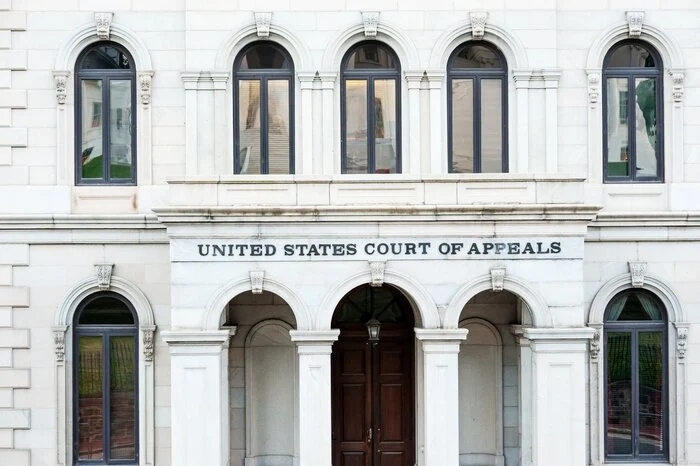
The U.S. Court of Appeals for the Fourth Circuit issued a pivotal ruling on Tuesday, affirming the dismissal of a proposed class action lawsuit brought by former manufacturing employees against a private equity firm following a sudden plant closure. The appellate court’s decision hinges on a decades-old U.S. Supreme Court precedent that restricts the ability of plaintiffs to pursue third parties in federal court solely to satisfy an existing judgment. This ruling reinforces the legal protections afforded to parent companies and investment firms against the liabilities of their subsidiary operations, specifically in the context of the Worker Adjustment and Retraining Notification (WARN) Act.
The case, which has been watched closely by both labor advocates and the private equity industry, centers on the collapse of a manufacturing facility and the subsequent inability of its former workforce to collect on a multi-million dollar judgment. By upholding the lower court’s decision to shut down the suit, the Fourth Circuit has underscored the jurisdictional boundaries that prevent federal courts from being used as a primary venue for secondary debt collection actions against corporate entities that were not the direct employers of the plaintiffs.
The Genesis of the Litigation: A Sudden Shutdown
The legal battle began several years ago when a mid-sized manufacturing plant, operated by a subsidiary of a prominent private equity firm, ceased operations without the 60-day advance notice required by federal law. Under the WARN Act, employers with 100 or more full-time employees are mandated to provide significant lead time before a mass layoff or plant closing. This period is intended to provide workers and their families a transition window to seek alternative employment or retraining.
When the plant in question shuttered its doors overnight, hundreds of workers were left without immediate recourse. The employees initially filed a lawsuit against the manufacturing entity—their direct employer—alleging a clear violation of the WARN Act. In that initial phase of litigation, the workers were successful, securing a judgment that awarded them back pay and benefits for the 60-day period they were denied.
However, the victory proved hollow. The manufacturing company, stripped of its assets and facing insolvency, was unable to satisfy the judgment. Finding the primary defendant’s coffers empty, the former workers turned their sights toward the private equity firm that owned and managed the manufacturer. They argued that the private equity firm exercised such pervasive control over the subsidiary that it should be held responsible for the unpaid judgment.
The Jurisdictional Hurdle: Peacock v. Thomas
The Fourth Circuit’s refusal to reopen the case rests on the 1996 Supreme Court decision in Peacock v. Thomas. In that landmark case, the High Court ruled that a plaintiff cannot bring a new lawsuit in federal court against a third party—such as a corporate officer or a parent company—merely to collect on a judgment previously obtained against a different defendant.
The Fourth Circuit panel explained that for a federal court to hear such a case, there must be an independent basis for federal jurisdiction. The plaintiffs in this matter sought to "pierce the corporate veil," a legal maneuver intended to hold shareholders or parent companies liable for the debts of a subsidiary. However, the court found that the workers’ attempt to pull the private equity firm into the fray was an "ancillary" proceeding aimed at judgment collection rather than a fresh claim of a federal law violation by the firm itself.
"The Supreme Court has been clear that federal courts do not possess ‘ancillary’ jurisdiction over a new lawsuit to impose liability for a money judgment on a person not otherwise liable for the judgment," the panel noted in its opinion. Because the private equity firm was not the direct employer and was not named as a primary violator in the original WARN Act litigation, the court found it lacked the authority to enforce the manufacturer’s debt against the investment firm.
Chronology of the Dispute
The timeline of the case illustrates the long and often arduous road faced by workers in the wake of corporate restructuring:
- September 2021: The manufacturing facility abruptly ceases operations. Workers are notified on the day of the closure that their employment is terminated effective immediately.
- January 2022: A class action lawsuit is filed in federal district court against the manufacturing company, alleging violations of the WARN Act.
- March 2023: The district court grants summary judgment in favor of the workers, awarding a $4.5 million judgment against the manufacturer.
- August 2023: After failed attempts to collect the judgment from the insolvent manufacturer, the plaintiffs file a secondary suit against the private equity firm, alleging "alter ego" status and seeking to pierce the corporate veil.
- June 2024: The district court dismisses the suit against the private equity firm, citing a lack of subject matter jurisdiction based on the Peacock precedent.
- May 26, 2026: The Fourth Circuit affirms the dismissal, effectively ending the workers’ pursuit of the private equity firm in federal court.
The "Single Employer" Doctrine vs. Judgment Collection
A critical nuance in this case is the distinction between the "Single Employer" doctrine and "Veil Piercing." In many WARN Act cases, plaintiffs successfully sue a parent company by proving that the parent and subsidiary operated as a single integrated enterprise. To do this, courts look at five factors established by the Department of Labor:
- Common ownership.
- Common directors and/or officers.
- De facto control by the parent over the subsidiary’s daily operations.
- Unity of personnel policies emanating from a common source.
- Dependency of operations.
In the initial lawsuit, the plaintiffs focused their efforts on the manufacturer. Had they named the private equity firm as a co-defendant at the outset and successfully argued the "Single Employer" theory, the outcome might have been different. By waiting until after a judgment was secured against only the subsidiary, the plaintiffs moved from the realm of "substantive federal law" into the realm of "judgment enforcement," where the Peacock ruling creates a formidable barrier.
Supporting Data: The Rise of Private Equity in Manufacturing
The Fourth Circuit’s decision comes at a time of increased scrutiny regarding the role of private equity in the industrial sector. According to data from the Institute for Local Self-Reliance and various financial tracking agencies, private equity firms have acquired thousands of manufacturing companies over the last decade.
- Acquisition Volume: Between 2015 and 2023, private equity-backed deals in the manufacturing sector accounted for approximately 25% of all mid-market M&A activity.
- Employment Impact: Firms owned by private equity employ an estimated 12 million people in the United States.
- Litigation Trends: WARN Act filings have seen a 15% year-over-year increase in jurisdictions with high industrial density, often following the bankruptcy of debt-laden subsidiaries owned by larger investment groups.
Critics argue that the "private equity model"—which often involves loading acquired companies with debt—makes these subsidiaries more vulnerable to sudden closures. When these companies fail, the legal structure of private equity allows the parent firm to walk away from the wreckage while the workers are left with unenforceable judgments.
Industry Reactions and Statements
The ruling has drawn sharp reactions from legal experts and interest groups.
A spokesperson for the Private Equity Stakeholder Project, a group that monitors the impact of PE firms on workers, expressed disappointment in the ruling. "This decision highlights a massive loophole in our legal system. It allows wealthy investment firms to pull the strings of a company, make decisions that lead to its demise, and then hide behind corporate shells when it comes time to pay the workers what they are owed under federal law."
Conversely, counsel representing the private equity firm praised the court’s adherence to established precedent. "The Fourth Circuit correctly recognized that federal courts are not a venue for speculative ‘veil-piercing’ once a case has reached its conclusion. Our client was not the employer, did not make the staffing decisions, and the law does not permit them to be treated as an insurance policy for a separate corporate entity’s liabilities."
Legal analysts suggest the ruling provides a clear roadmap for how these cases must be handled in the future. "The takeaway for plaintiffs’ attorneys is clear," said Sarah Jenkins, a labor law specialist. "If you want to reach the pockets of a private equity firm, you must sue them alongside the subsidiary from day one. You cannot wait for the subsidiary to go bust and then try to bring the parent into federal court later. The jurisdictional window closes once that initial judgment is signed."
Broader Implications and Analysis
The Fourth Circuit’s decision has several significant implications for the future of labor litigation and corporate governance:
1. The Strategy of Litigation
The ruling reinforces the necessity of comprehensive "shotgun" litigation strategies where every potential deep-pocketed entity is named as a defendant at the earliest possible stage. For workers, this increases the cost and complexity of filing WARN Act claims, as proving the "Single Employer" status of a private equity firm requires extensive and expensive discovery.
2. State Court as an Alternative
By closing the federal door on judgment collection, the Fourth Circuit may drive more of these "veil-piercing" actions into state courts. State laws regarding corporate liability vary significantly, and some jurisdictions may offer a more favorable environment for workers seeking to hold parent companies accountable for the debts of their subsidiaries. However, litigating in state court after a federal judgment has already been issued creates its own set of procedural hurdles.
3. Protection for the PE Business Model
For the private equity industry, the ruling is a significant win. It affirms the "corporate separateness" that is foundational to the private equity business model. By ensuring that liabilities do not easily flow upward from a portfolio company to the fund or the management firm, the court has preserved the risk-mitigation strategies that attract investors to these firms.
4. Pressure for Legislative Reform
Labor advocates are likely to use this ruling as ammunition in their push for legislative changes. There have been periodic calls in Congress to amend the WARN Act to more explicitly define "employer" to include controlling private equity firms and to simplify the process of holding parent companies liable in the event of a subsidiary’s insolvency.
Conclusion
The Fourth Circuit’s decision in this case serves as a stark reminder of the complexities of modern corporate litigation. While the WARN Act was designed to protect workers from the devastating impact of sudden unemployment, the interplay of jurisdictional rules and corporate law continues to present significant obstacles to actual recovery. As manufacturing continues to undergo structural shifts under the influence of private equity, the legal boundaries defined by Peacock v. Thomas will remain a critical battleground for the rights of the American workforce. For now, the former workers at the center of this suit are left with a judgment that, while legally valid, remains practically worthless—a "paper win" in a legal system that prioritizes the sanctity of the corporate veil.








