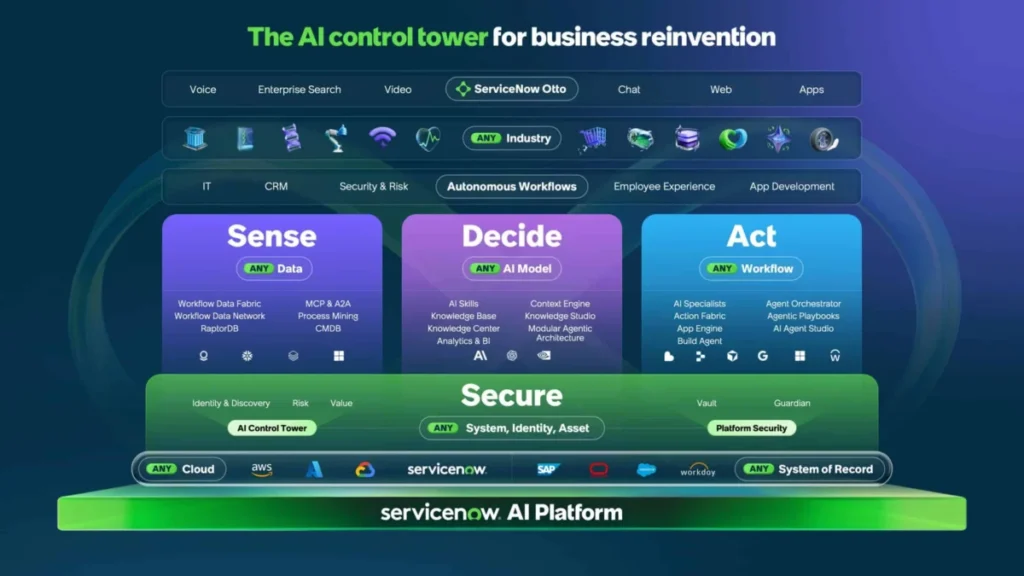
ServiceNow has launched a comprehensive suite of announcements, signaling a clear intent to become the central control point for all AI agents within enterprises. This strategic push aims to fuel a projected doubling of revenue to $30 billion within the next four years. The company’s vision is to manage, secure, and serve as the primary interface for every AI agent deployed across an organization, a move that could reshape the landscape of enterprise software and AI governance. This ambitious plan arrives as the broader SaaS market potentially emerges from a period of consolidation and reassessment.
The company’s aggressive stance is being met with similar strategic plays from major technology players like Microsoft and Workday, both of whom are investing heavily in establishing their own platforms for AI agent management. ServiceNow’s approach, articulated as "turning enterprise AI chaos into control," directly addresses the growing concern among chief information officers (CIOs) regarding the proliferation of unmanaged AI tools. Similarly, Workday emphasizes that "AI agents without enterprise governance are lawless by design." While these pronouncements resonate with IT leadership, the practical challenge for many businesses lies not in managing existing chaos, but in demonstrating scalable return on investment (ROI) from AI initiatives. ServiceNow’s new tools are positioned to facilitate this by providing the necessary oversight and structure.
The Action Fabric: ServiceNow’s Central Nervous System for AI Agents
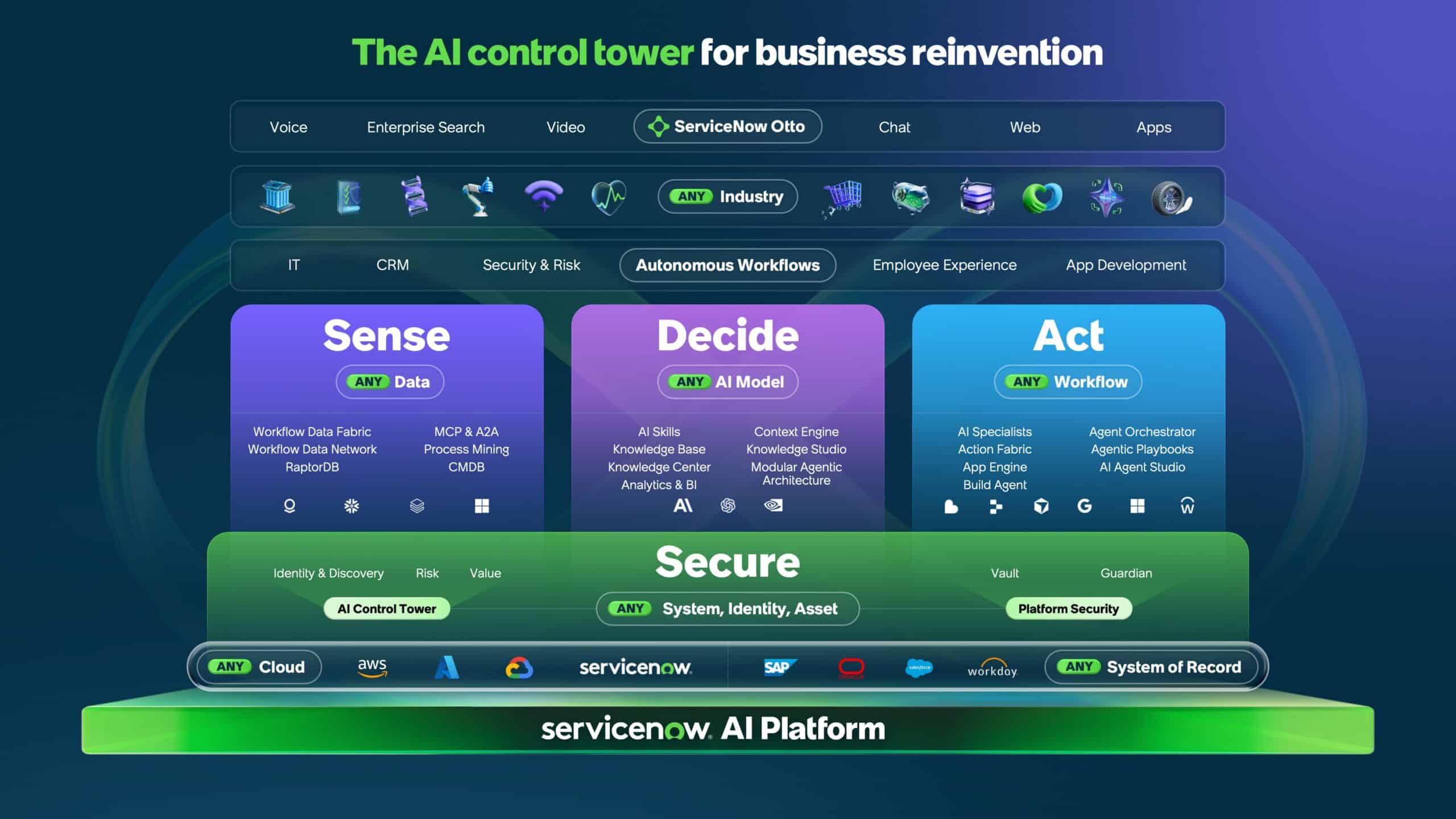
At the core of ServiceNow’s strategy is the "Action Fabric," a sophisticated monitoring and management layer designed to oversee all AI agent activity. This concept mirrors the visions put forth by Microsoft with its Agent 365 and Workday with its Agent System of Record. The Action Fabric, powered by a Master Control Program (MCP) server, is designed to be an open and inclusive platform.
Key Features of the Action Fabric:
- Universal Agent Compatibility: The platform supports any AI agent, regardless of its underlying model or the vendor that developed it. This interoperability is a critical component of ServiceNow’s strategy, as it aims to integrate the diverse AI ecosystem within an enterprise.
- Openness to All AI: The management tools are accessible not only by ServiceNow but also by AI agents themselves. This allows for automated management scenarios and the seamless integration of third-party management frameworks, fostering an extensible ecosystem.
- Robust Security and Governance: All agents connected to the Action Fabric undergo rigorous authentication, permission scoping, auditing, and monitoring. This emphasis on "Full Control; Full Trust" aims to mitigate risks associated with shadow AI and unauthorized agent behavior. The precise enforcement mechanisms for existing business rules from vendors like Workday and SAP are still being clarified, but the foundational elements for robust governance are in place.
This new capability leverages ServiceNow’s two decades of investment in its core platform, including its Configuration Management Database (CMDB), Workflow Data Network, configured business rules, Security Center, and identity and access management systems. This robust foundation positions ServiceNow as a comprehensive IT management system, now reimagined for the age of AI agents.
Meanwhile, Workday and SAP are pursuing parallel strategies. Workday’s Agent System of Record and Agent Gateway aim to open its established business processes to external agents on a per-call basis. SAP, in turn, requires agents to utilize SAP’s Business Accelerator Hub to access business rules, with usage also being metered. The choice between these platforms will likely hinge on a company’s existing investment in Workday or SAP business rules and its preference for specific development environments like Sana or Joule.
Otto: The "Front Door" to Enterprise AI and Employee Experience
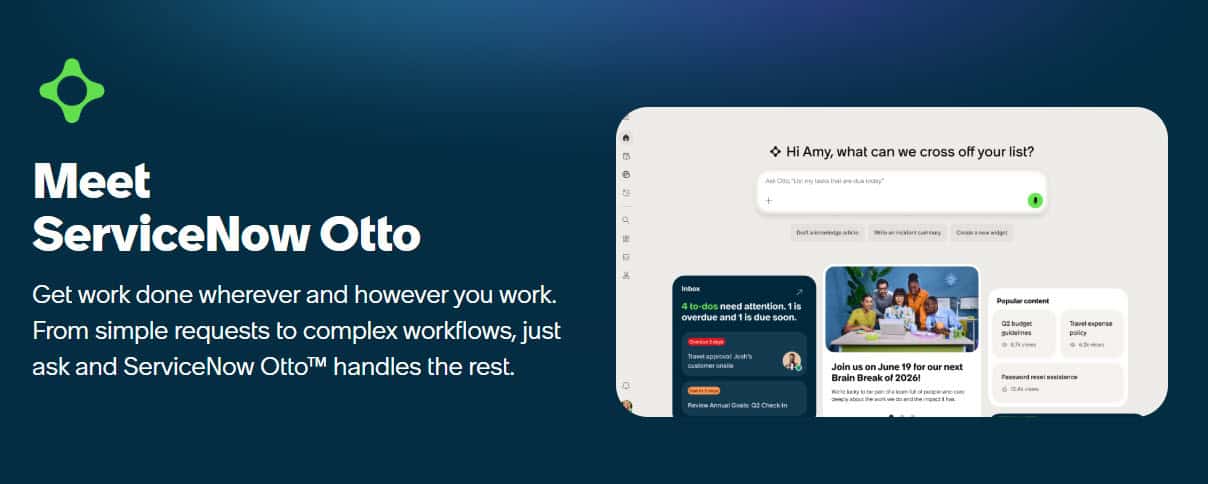
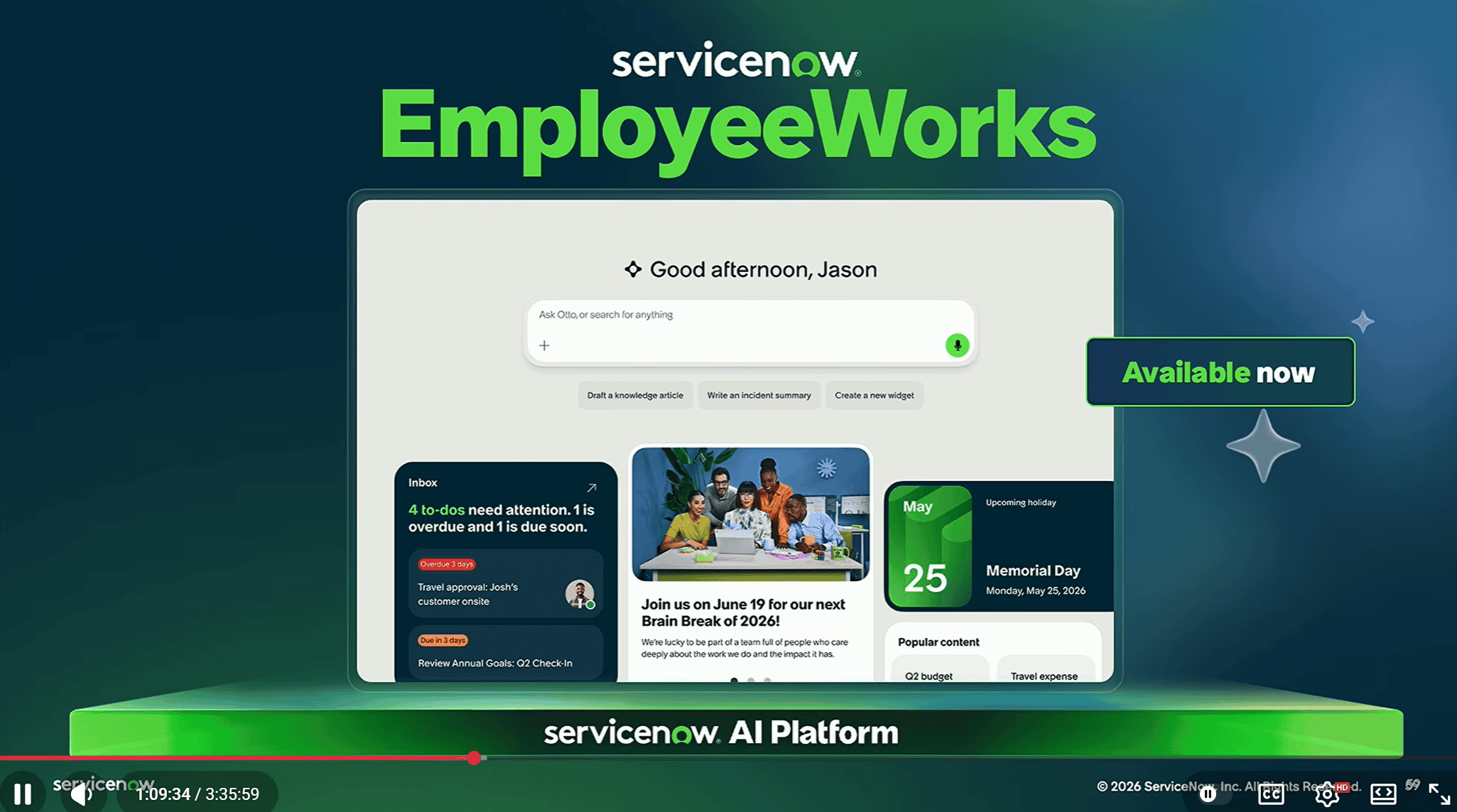
ServiceNow is also reinventing its Now Assist capabilities, rebranding and enhancing them as "Otto," positioned as the primary "Front Door" agent for accessing any enterprise resource. This move directly challenges Workday’s introduction of Sana as its Enterprise Front Door. The integration of Moveworks into Now Assist and its rebranding as Otto aims to create a more intuitive and friendly employee interface.
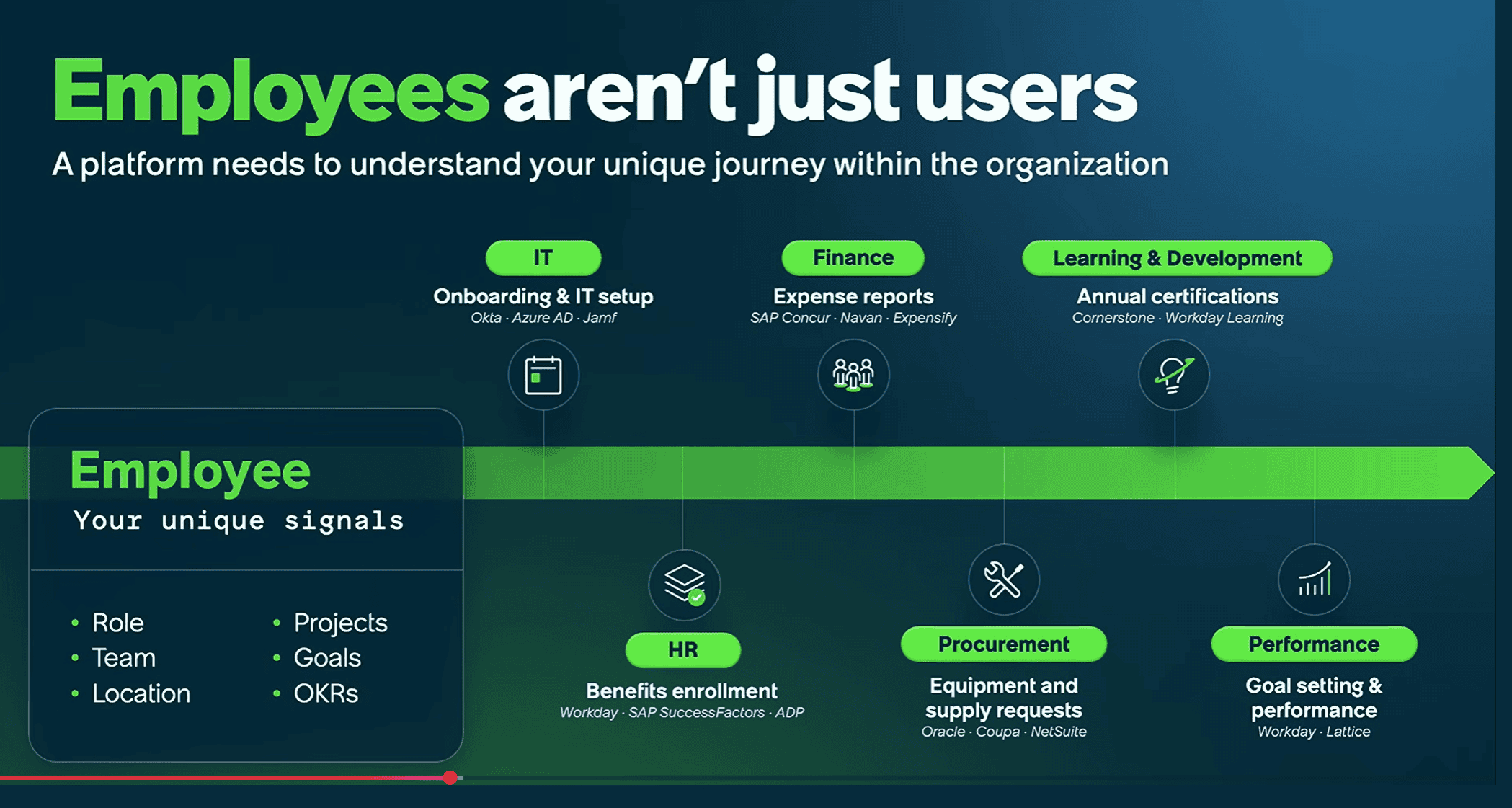
Otto is envisioned as a consolidated platform for employee needs, encompassing search, knowledge management, and a wide range of other employee-centric functions. This reimagining of the employee experience moves beyond traditional "Employee Self-Service" portals, aiming for a more proactive and personalized interaction. Bhavin Shah, founder of Moveworks, now leads the Otto initiative, which is branded as "EmployeeWorks" to emphasize its open and collaborative nature.
The evolution of the Employee Experience Platform (EXP) market is complex. While Otto may appear as a simple chatbot for policy inquiries, its true value will lie in its ability to integrate with a multitude of other enterprise systems and services. A robust EXP must handle communications, communities, training, surveys, and a broad spectrum of employee issues. The potential for Otto to address diverse scenarios, such as crisis management or global emergencies, as demonstrated by custom agents developed for specific use cases, highlights its expansive potential. The competitive landscape for EXPs is crowded, with major players like Microsoft and Zoom also vying for dominance.
The AI Control Tower: Governance and ROI Measurement for AI
ServiceNow’s "AI Control Tower" is a critical component of its strategy, offering capabilities to "discover, observe, govern, and secure enterprise AI." This ambitious vision extends beyond mere monitoring to actively compute the ROI of AI agents, identifying both high-performing and problematic deployments. The concept draws parallels to IBM’s historical "SystemView" initiative, which aimed to manage all computing resources within its proprietary network, a move that proved highly successful in its era.
The AI Control Tower is designed to provide comprehensive visibility into how AI agents are functioning, their value contribution, and potential issues such as "hallucinations" or excessive token consumption leading to cost overruns. Bill McDermott, ServiceNow’s CEO, often describes enterprises as a complex web of conflicting workflows and business rules that lack unified understanding. The AI Control Tower aims to bring order to this complexity by managing all identities: agents, workflows, and people.
However, the vision of "monitoring and managing every decision" raises important considerations about human judgment and empowerment. The Ritz Carlton’s philosophy of empowering employees to "use their own best judgement" serves as a counterpoint to an overly rigid, centrally managed system. While IT departments may find the control aspect appealing, it is crucial to ensure that such systems do not stifle human initiative and adaptability.
The Autonomous Workforce: Predefined AI Specialists
Further elaborating on its AI strategy, ServiceNow is introducing "The ServiceNow Autonomous Workforce," a set of pre-defined "AI Specialists" designed for specific business functions. This initiative aligns with the concept of specialized AI agents capable of performing autonomous tasks, akin to defined job roles.
Examples of these AI Specialists include:
- Site Reliability AI Specialist
- AI Operations Specialist
- Level 1 Service Desk Specialist
- HR Service Delivery AI Specialist
- Case Management Specialist
- Third-party Screening Specialist
- Enterprise Architecture Specialist
- Vulnerability Exposure Specialist
This approach helps organizations conceptualize and implement AI agents more effectively, assigning them specific responsibilities within the enterprise. The categorization of agents into those that "take action," "set rules," and "observe and monitor" provides a useful framework for understanding their roles. The development of specialized agents for HR functions, such as "DEI analysis and compliance specialist" or "Pay equity advocate," illustrates how AI can centralize complex tasks that previously required significant human effort.
The naming of these AI agents is an ongoing process, and ServiceNow’s initiative to define these roles could preemptively address the challenge of agent nomenclature. The integration of Galileo, ServiceNow’s "digital HR consultant," into Otto as an add-on feature further solidifies its commitment to AI-driven employee support.
The Context Engine: Unifying Enterprise Operations
ServiceNow’s "Context Engine" is designed to create a unified operational view of the enterprise by identifying and locating existing system business rules and metadata. This layer aims to map organizational structures, privacy rules, and various business workflows, many of which originate from ERP and other core systems. The platform claims to become "smarter about how a business works with each action," functioning as a "graph of graphs." This integrates ServiceNow’s workflow data network into a comprehensive graph encompassing knowledge, action, asset, and decision graphs. The introduction of "autonomous data analytics" and an "AI Analyst Specialist" further supports this goal of continuous data integration and insight generation.
This competitive space also includes Microsoft’s WorkIQ, which leverages the Microsoft Graph and offers an API for extensive connectivity. Gloat has also entered the fray with Loomra, focusing on human capital applications. The success of the Context Engine will depend on its ability to seamlessly integrate diverse data sources and provide actionable intelligence across the enterprise.
A Bold Vision for Future Revenue
ServiceNow’s expansive vision for enterprise AI management and orchestration is undeniably ambitious, aiming to capture a significant share of the emerging AI market. The company’s strategy of selling control, security, and an accessible interface for AI agents resonates with IT leadership’s perennial concerns about security, compliance, and operational efficiency. Demonstrations showcasing the AI Control Tower’s ability to detect and neutralize sophisticated attacks, such as prompt injection, underscore the potential value proposition for enterprise customers.
The economic justification for such investments is a key question. As AI agents are deployed to automate tasks and potentially replace human labor, the cost of AI token fees and the infrastructure to manage them must be weighed against labor costs and the potential for enhanced productivity. The decision by companies like Uber to scale back on software agents due to human cost-effectiveness serves as a cautionary note. The focus must shift from simply "automating work" to "transforming work," requiring a strategic redesign of processes before investing heavily in management infrastructure. The risk of licensing underutilized software remains a concern for many organizations.
Furthermore, the ease of development and the overall cost of AI transformation, encompassing development, maintenance, business rules, and governance, will influence vendor choice. If platforms like Workday or Microsoft Copilot offer a more intuitive development environment, their associated management tools may gain favor.
A New Revenue Model for Enterprise Software
ServiceNow, alongside Workday, Oracle, and SAP, appears to be defining a new revenue model for enterprise software, shifting from per-seat licensing to usage-based monetization of AI agent activity. This reflects the broader trend of "software as a service" evolving into "AI as a service," with significant implications for how software is purchased and consumed. The emergence of new service companies focused on integrated AI products, such as Anthropic’s partnership with Blackstone and OpenAI’s joint venture, further underscores this market evolution.
Ultimately, the long-term success of these strategies may hinge on balancing centralized control with human empowerment. While AI agents can automate and augment, the ability for individuals to exercise judgment and adapt to complex situations remains paramount. The aspiration is for AI agents to "liberate us to think bigger and more clearly as humans," rather than simply replacing human decision-making. The evolving landscape of enterprise AI promises significant transformation, and ServiceNow’s latest announcements place it at the forefront of this paradigm shift.