
A well-designed performance management framework serves as the bedrock of organizational success, extending far beyond mere evaluation of past performance. It is a strategic imperative, meticulously shaping future growth, fostering employee engagement, and ultimately driving organizational achievement. When a performance management system is harmoniously aligned with a company’s overarching goals and deeply integrated with its culture, it transforms disparate efforts into a unified strategy capable of propelling both individual and collective progress. This comprehensive guide aims to equip organizations, whether they are refining existing processes or building a new framework from the ground up, with the insights necessary to cultivate a performance management approach that champions continuous improvement and delivers tangible results.
Understanding the Pillars of Performance Management Frameworks
At its core, a robust performance management framework acts as an indispensable guide, steering organizations away from fragmented and often chaotic performance-related activities towards a cohesive, interconnected system. This systematic approach is designed to foster employee, team, and ultimately, business success by aligning efforts, building connections, and motivating every individual to perform at their highest capacity. Such frameworks are instrumental in ensuring that each employee understands their specific role and how their contributions directly impact the larger organizational vision.
A well-defined performance management model lays the groundwork for how an organization will:
- Set Clear Expectations: Establishing measurable objectives and desired outcomes.
- Provide Regular Feedback: Facilitating ongoing dialogue about performance and development.
- Facilitate Growth: Identifying opportunities for skill enhancement and career progression.
- Recognize Contributions: Acknowledging and rewarding achievements and efforts.
- Drive Accountability: Ensuring individuals and teams are responsible for their results.
The Strategic Imperative: Purpose and Importance of a Solid Framework
Recent research by Quantum Workplace highlights a significant disconnect in contemporary performance management practices. While a substantial 75% of employees report that their organizations have implemented changes to performance management processes within the past year, less than half of these individuals perceive these changes as effective, efficient, or motivating. This statistic underscores a critical challenge: the sheer volume of administrative tasks and cumbersome tools often associated with performance management can overwhelm busy managers and employees alike, diminishing the potential benefits.
An effective performance management program must prioritize simplification and standardization, streamlining each step of the process to maximize ease of use and impact. Furthermore, a well-structured framework is crucial for ensuring that all components of the performance management system work in concert, creating a transparent, two-way communication channel where employees feel genuinely valued and heard. The ultimate objective of such a program should be to enhance employee engagement, as a direct correlation exists between engaged employees and superior performance.

Ultimately, a strong performance management framework empowers employees to take ownership of their performance trajectories. This fosters greater engagement, cultivates increased motivation, and elevates job satisfaction. For the organization, these individual improvements translate into enhanced productivity, reduced employee turnover, and a more robust and positive workplace culture.
Core Components of an Effective Framework
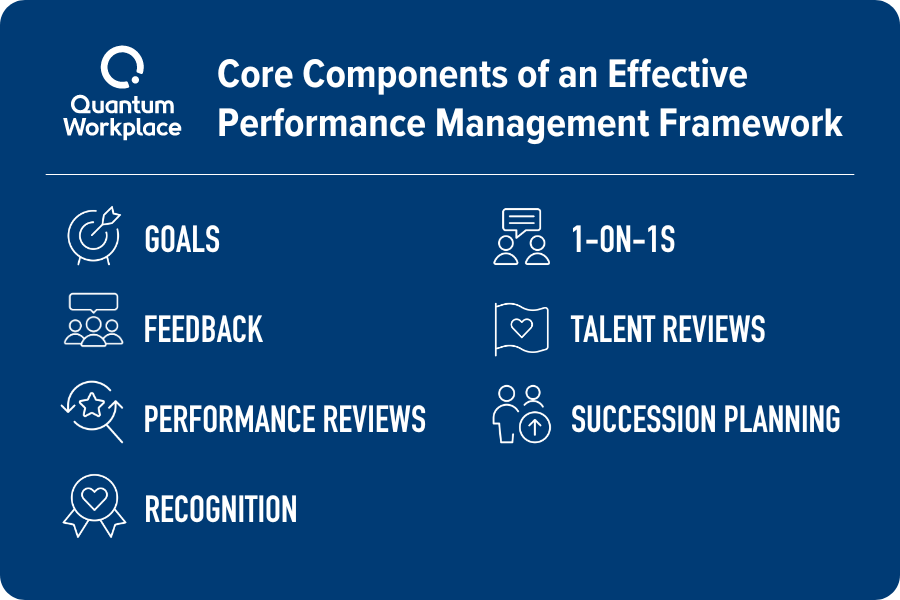
An effective performance management framework is not a singular entity but rather a collection of interconnected elements that operate synergistically throughout the performance management cycle. These core components are essential for a holistic and impactful approach:
- Goal Setting and Alignment: This foundational element involves establishing clear, measurable, achievable, relevant, and time-bound (SMART) goals that directly support organizational objectives. It ensures that individual and team efforts are consistently directed towards strategic priorities.
- Ongoing Feedback and Coaching: Moving beyond annual reviews, this component emphasizes continuous communication between managers and employees. Regular check-ins, constructive feedback, and supportive coaching are vital for real-time performance adjustments and development.
- Performance Reviews and Evaluations: While not the sole focus, formal performance reviews remain a critical touchpoint for summarizing performance over a defined period, assessing goal attainment, and discussing development needs. These should be objective, fair, and data-driven.
- Development Planning: This aspect focuses on identifying skill gaps and creating actionable plans for employee growth. It includes training, mentorship, stretch assignments, and other opportunities designed to enhance capabilities and support career progression.
- Recognition and Rewards: Acknowledging and celebrating employee achievements, both big and small, is crucial for motivation and retention. This can range from formal reward programs to informal expressions of appreciation.
- Data Analysis and Reporting: Leveraging performance data to identify trends, measure the effectiveness of the framework, and inform strategic decisions is essential for continuous improvement.
Designing Your Performance Management Framework: A Tailored Approach
The landscape of performance management is diverse, and a one-size-fits-all approach is rarely effective. Forcing an organization into a rigid, pre-defined performance management system, often seen with some HR technology vendors, can be counterproductive. Instead, the focus must be on architecting a framework that is intrinsically suited to the unique needs, culture, and operational nuances of the organization.
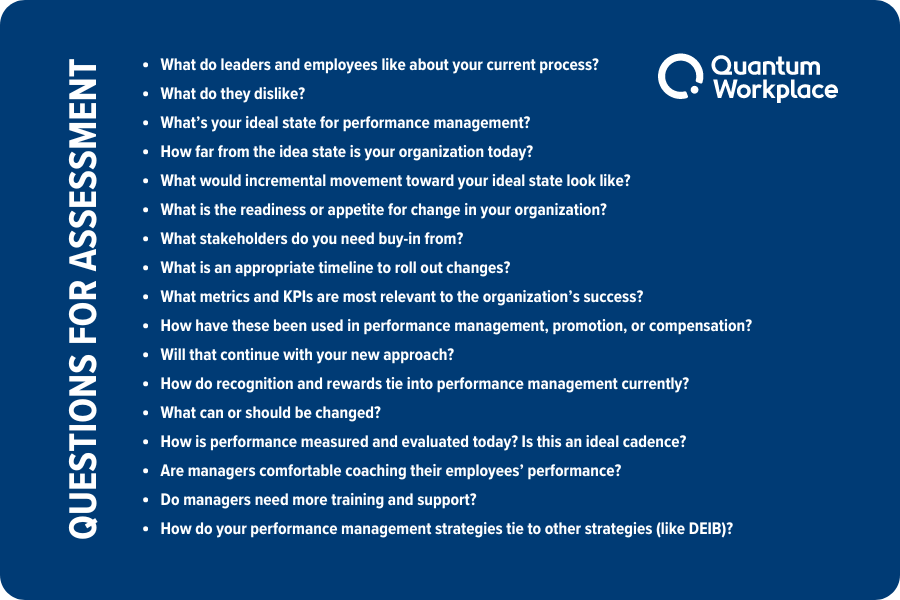
The creation of a successful performance management framework necessitates meticulous planning. The initial step involves a thorough assessment of the organization’s current performance management processes. This diagnostic phase aims to identify any existing gaps, inefficiencies, or areas requiring significant improvement. Crucially, this process should involve active participation from key stakeholders, including employees and managers. Gathering their feedback is paramount to ensuring that the new framework not only meets their expectations but also fosters a sense of ownership and readiness for implementation. Collaborative design not only enhances the efficacy of the framework but also lays the groundwork for a smoother transition and greater user adoption.
Questions for Strategic Assessment
To gain a comprehensive understanding of your current system’s efficacy and to guide its evolution, consider the following critical questions:
- Clarity of Objectives: Are organizational goals clearly communicated and understood at all levels? Do individual and team goals demonstrably align with these broader objectives?
- Feedback Mechanisms: Is there a consistent and effective process for providing and receiving feedback? Is feedback timely, specific, and actionable?
- Developmental Support: Are employees provided with adequate opportunities and resources for professional growth and skill development? Are development plans integrated with career aspirations?
- Recognition Practices: Are achievements and contributions consistently recognized and rewarded in a meaningful way? Does the recognition system align with company values?
- Managerial Effectiveness: Are managers equipped with the necessary skills and training to effectively manage performance, provide coaching, and conduct productive performance conversations?
- System Usability: Is the current performance management system intuitive and easy to use for both employees and managers? Does it add administrative burden or facilitate efficient processes?
- Impact on Engagement: Does the performance management system positively influence employee engagement levels? Do employees feel motivated and valued?
- Alignment with Culture: Does the framework reflect and reinforce the organization’s core values, beliefs, and desired behaviors?
Harmonizing with Your Culture
The efficacy of any performance management framework is intrinsically linked to its congruence with the organization’s culture. A well-integrated framework should authentically embody the company’s values, guiding principles, and operational ethos. For instance, an organization that champions teamwork and collaboration should incorporate peer feedback and team-oriented goals within its framework. Conversely, a culture that thrives on innovation and individual initiative should foster an environment that encourages creativity, risk-taking, and supports entrepreneurial spirit.
When a performance management framework is seamlessly blended with a company’s unique cultural identity, it significantly enhances employee performance. This integrated approach fosters a sense of belonging and inclusivity among team members, cultivating a more cohesive and engaged work environment.
Quantum Workplace’s Performance Pathways: A Modular Approach
Quantum Workplace recognizes that a universal performance management solution is often inadequate. Each organization possesses a distinct culture, set of values, and operational methodologies, necessitating a customized approach. To address this, Quantum Workplace has developed "Performance Pathways," a suite of flexible performance management frameworks designed to empower organizations in creating and implementing systems that precisely fit their needs. These pathways offer structured approaches to cater to diverse organizational requirements:
Pathway #1: Performance Evaluation
This pathway focuses on standardizing performance evaluation through structured review cycles initiated by HR. It ensures that employee performance is consistently aligned with organizational objectives.
- Best for Organizations That: Prioritize formal review cycles, require a standardized approach to performance assessment, and seek to directly link individual performance to strategic goals.
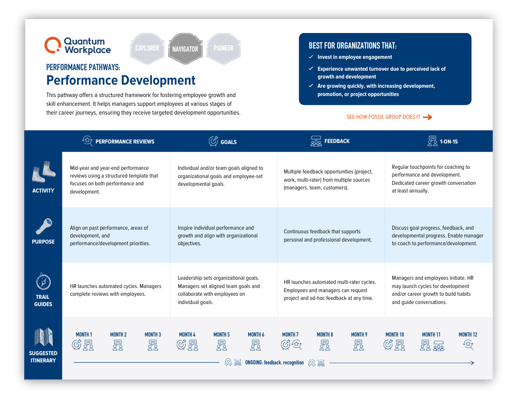
Pathway #2: Performance Development
This pathway provides a structured framework for nurturing employee growth and enhancing skills. It equips managers to support employees at various career stages, offering targeted development opportunities and aligning them with thoughtful career pathing strategies.
- Best for Organizations That: Emphasize employee growth and skill enhancement, are committed to career development, and want to provide managers with tools to support individual progression.
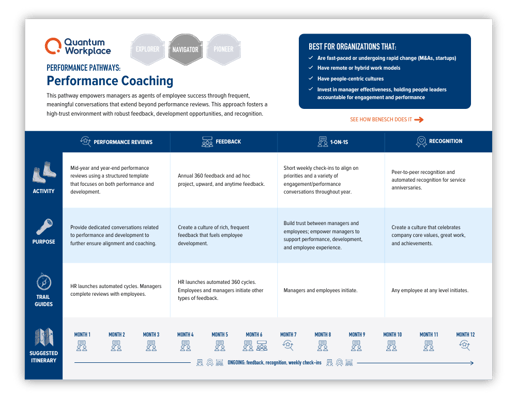
Pathway #3: Performance Coaching
This pathway empowers managers to act as catalysts for employee success through frequent, meaningful conversations that extend beyond traditional performance reviews. It cultivates a high-trust environment characterized by robust feedback, developmental opportunities, and consistent recognition.
- Best for Organizations That: Seek to foster strong manager-employee relationships, prioritize continuous feedback and development, and aim to build a culture of trust and open communication.
Pathway #4: Collaborative Performance Coaching
Leveraging a systematic approach to employee feedback, this pathway closely links performance management with business outcomes and career progression. It is ideal for data-oriented organizations, matrixed environments, and those with structured hierarchies, ensuring a strong alignment between employee contributions and strategic objectives.
- Best for Organizations That: Operate in complex organizational structures, value data-driven insights, require close alignment between individual contributions and strategic goals, and benefit from a structured feedback loop.
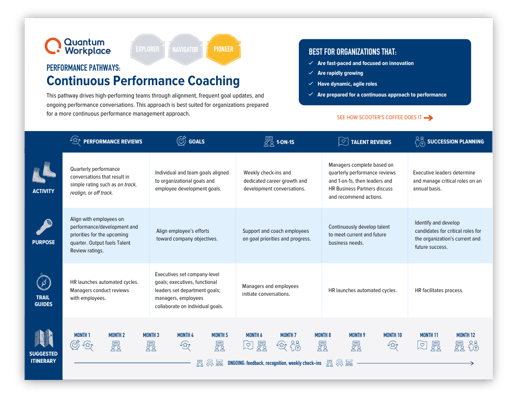
Pathway #5: Continuous Performance Coaching
This pathway is designed to cultivate high-performing teams through alignment, frequent goal updates, and ongoing performance conversations. It is best suited for organizations ready to embrace a more dynamic and continuous performance management methodology.
- Best for Organizations That: Are agile and adaptable, embrace frequent feedback and goal adjustments, and seek to foster a culture of continuous improvement and high performance.
Best Practices for Implementing Your Performance Management Framework
Implementing a new performance management system can seem like a monumental task. However, success is often achieved through gradual progress and mindful change management, rather than attempting a complete overhaul overnight.
Prioritize and Scale
Begin by identifying your organization’s most pressing needs and focus on addressing the highest priority first. Define the desired behaviors, establish clear goals, and leverage platform features to build a solid foundation. As initial goals are met, gradually expand your efforts to incorporate more sophisticated capabilities. Continuously gather user feedback to refine your strategies and solidify the desired behaviors.
Progress and Evolve
Do not halt progress once initial priorities are met. Continue to address subsequent items on your list, repeating the cycle of implementation and refinement. As you introduce new features and capabilities, explore how to harness the wealth of data generated for insightful analysis and strategic decision-making.
Transparent Change Management
Effective communication is paramount during any organizational change.
- Define Your "Why": Ensure absolute clarity and alignment regarding the purpose and expected benefits of the new performance management system. Communicate the rationale behind the changes transparently.
- Engage Stakeholders: Maintain consistent communication with all stakeholders before, during, and after the launch. Involve them in the process to foster buy-in and address concerns proactively.
- Offer Training and Support: Partner with your chosen technology provider to deliver comprehensive training and ongoing support for users. A supportive vendor can significantly ease the transition.
- Align with Mission and Values: Continuously connect the performance management changes back to the organization’s mission, values, culture, and strategic priorities. Reinforce how these initiatives contribute to broader organizational goals.
- Encourage Flexibility: Emphasize adaptability and flexibility throughout the implementation process. Acknowledge that challenges may arise, and the ability to adjust is key to long-term success.
- Collect Feedback: Establish clear channels for collecting user feedback. Utilize this input to refine your approach and promptly address any emerging issues.
- Adapt and Evolve: Be prepared to modify your strategy as needed. The journey toward a successful performance management system is an ongoing one, and continuous adaptation will be necessary to remain effective.
Evaluating and Enhancing Your Performance Management Model
Regularly assessing the effectiveness of your performance management framework is crucial for its sustained relevance and impact. This evaluation should extend beyond mere usage metrics to encompass its influence on the organization’s overall performance.
Data-Driven Evaluation
Collect data on key performance indicators (KPIs) such as employee engagement scores, goal attainment rates, and outcomes from employee development initiatives. Analyze this data to identify trends, strengths, and areas requiring enhancement. Supplement quantitative data with qualitative insights gathered through employee feedback surveys and focus groups to understand their experiences with the framework.
Continuous Improvement Cycle
Review these metrics consistently, looking for discernible trends. Are employee engagement scores improving since the implementation of the framework? Are employees demonstrating increased success in meeting their goals? The answers to these questions provide valuable insights for optimizing the framework’s effectiveness.
Continuous performance management is an ongoing journey, not a static endpoint. Regularly audit your framework, solicit feedback from all stakeholders, and actively seek opportunities for improvement.
Ongoing Training and Support
Consider providing continuous training and support to both managers and employees. Offer refresher courses on essential skills such as providing and receiving feedback, conducting effective performance conversations, and developing actionable development plans. By fostering a culture of continuous learning and growth, organizations can ensure their performance management framework remains relevant and responsive to evolving needs.
Integrating Performance Management Software
Selecting the right performance management tool that aligns with your workplace culture is fundamental to the success of your strategy. The ideal technology solution should not merely offer standalone functionalities but should actively support and propel organizational growth by integrating various elements of an effective system. Seek providers that offer comprehensive platforms capable of supporting your entire performance management lifecycle, from goal setting to talent development.
Driving Performance with Clear, Aligned Goals
Setting clear and aligned goals is indispensable for fostering high-performing teams. Quantum Workplace empowers organizations by providing tools to set, monitor, and achieve critical objectives. This enables teams to effectively manage their progress towards important milestones.

- Learn more about Quantum Workplace Goals
Boosting Trust and Performance with Employee Feedback
The ability to solicit and act upon employee feedback is a cornerstone of building trust and enhancing performance. Platforms that facilitate real-time feedback mechanisms allow for immediate recognition of positive contributions and timely intervention for areas needing improvement.
Aligning Performance with Reviews and 1-on-1s
Performance reviews and regular one-on-one meetings remain vital for ensuring managers and employees are synchronized. These touchpoints provide opportunities for constructive dialogue, performance assessment, and career development discussions, ensuring alignment and clarity.
- Learn more about Quantum Workplace Performance Reviews
Identifying and Developing Top Talent with Talent Reviews
Talent reviews are essential for identifying high-potential employees and developing strategies for their growth and retention. This proactive approach ensures that the organization has a robust pipeline of future leaders.
Sustaining High Performance with Succession Planning
Effective succession planning ensures business continuity and organizational resilience by identifying and preparing internal candidates to fill critical roles. This strategic foresight is crucial for long-term stability and growth.
Conclusion
In conclusion, the cultivation of a robust performance management system is a critical determinant of organizational success. A thorough understanding of its purpose, core components, and best practices empowers organizations to significantly enhance employee engagement and elevate overall performance. Embarking on the journey towards improved performance management is a strategic investment. Exploring resources such as Quantum Workplace’s Performance Pathways can provide the structured guidance needed to build an ideal program tailored to your organization’s unique needs, leveraging intuitive and trustworthy tools.
Ready to architect your ideal performance management program with flexible, intuitive, and engaging tools you can rely on? Request a custom demo of Quantum Workplace’s comprehensive performance management software.
What is a Performance Management Framework?
A performance management framework is a systematic approach that organizations employ to plan, measure, and enhance employee performance over time. It establishes clear objectives, facilitates consistent feedback, and creates opportunities for growth, thereby ensuring that individual contributions are effectively aligned with overarching business objectives. For example, a company might utilize a performance management framework to synchronize departmental goals with its strategic priorities, ensuring that each employee understands how their daily activities contribute to the organization’s overall success.
What are the Key Components of a Performance Management Framework?
An effective performance management framework comprises both strategic and behavioral elements that bridge people strategy with tangible performance outcomes. Typically, these key components include:
- Goal Setting and Alignment: Establishing clear, measurable, and aligned objectives.
- Ongoing Feedback and Coaching: Facilitating continuous communication and support.
- Performance Reviews and Evaluations: Periodic assessments of performance against goals.
- Development Planning: Creating pathways for skill enhancement and career growth.
- Recognition and Rewards: Acknowledging and celebrating achievements.
- Talent Management: Identifying and nurturing key talent.
How Do You Create a Performance Management Framework?
A performance management framework is developed through the definition of its purpose, structure, and processes. Rather than a mere checklist, it is an integrated system that evolves in tandem with the organization.
Core components to incorporate:
- Strategic Alignment: Ensuring individual and team goals directly support organizational objectives.
- Continuous Feedback Loop: Implementing regular and constructive communication.
- Developmental Focus: Prioritizing employee growth and skill enhancement.
- Recognition and Reinforcement: Acknowledging and rewarding contributions.
- Data-Driven Insights: Utilizing performance data for informed decision-making.
When these components function cohesively, the system fosters continuous improvement rather than episodic evaluations.
What is the Common Framework?
The most prevalent performance management framework follows a continuous improvement loop, often conceptualized as the "Plan-Do-Check-Act" or "Plan-Act-Review-Improve" model. This cyclical process ensures employees are consistently working towards evolving objectives while maintaining transparency regarding their progress. Many modern organizations adapt this model using methodologies such as SMART goals, OKRs, or Continuous Performance Management systems to introduce flexibility and real-time adaptability, thereby aligning people strategy with business agility.
What are the Steps of the Performance Management Framework?
The performance management framework typically follows five foundational steps that align people performance with business impact:
- Planning: Setting clear goals and expectations.
- Monitoring: Regularly tracking progress and providing feedback.
- Developing: Supporting employee growth and skill enhancement.
- Rating: Assessing performance against established criteria.
- Rewarding: Recognizing and acknowledging achievements.
This process establishes a consistent cycle of accountability, enabling both employees and managers to adjust strategies in real time for sustained success.