A well-designed employee rewards and recognition program is far more than a simple morale booster; it is a critical strategic tool for organizations navigating the complexities of scaling teams and managing diverse workforces. In today’s competitive landscape, where demands are constantly increasing, such programs provide a practical mechanism to cultivate engagement, elevate performance, and significantly improve employee retention. However, the efficacy of these initiatives hinges on their design and, crucially, their consistent and meaningful delivery.
Research underscores the profound impact of regular recognition. A comprehensive study, the State of Recognition Report, which surveyed 2,500 employees across eight global regions, revealed a compelling correlation: employees who receive recognition on a weekly basis are 2.6 times more likely to be performing at their peak. This data points to a fundamental truth: recognition is most effective when it is frequent, imbued with genuine meaning, and clearly linked to the specific behaviors and outcomes an organization wishes to foster. This guide aims to dissect the core components of impactful recognition, explore successful reward strategies, and offer actionable advice for embedding a culture of appreciation that moves beyond an afterthought to become an ingrained habit.
The Foundation of Employee Engagement Through Recognition
Employee engagement is not a directive; it is an outcome cultivated through deliberate effort, with recognition serving as a cornerstone. At its essence, employee recognition involves acknowledging and valuing the contributions, actions, and achievements that propel an organization forward. This can range from a simple, timely expression of gratitude to a more elaborate, company-wide celebration. When consistently and meaningfully implemented, recognition becomes a potent catalyst for engagement.
The significance of this practice lies in its direct influence on how employees perceive their work and their workplace. According to the Achievers Workforce Institute (AWI), a mere 25% of employees report feeling appreciated and engaged, indicating a substantial untapped potential within most organizations. Conversely, when employees feel genuinely appreciated, the ramifications are profound: they are 12 times more likely to find their work meaningful and an impressive 17 times more likely to envision a long-term career with their company.
Consistency is the differentiating factor. Recognition is not a singular event but an ongoing practice that shapes the daily employee experience. AWI research further highlights that employees who receive frequent, meaningful recognition are 2.6 times more productive and six times more likely to remain with their company in the long term. Therefore, recognition transcends being a mere feel-good moment; it is a strategic lever that strengthens belonging, clarifies expectations of success, and connects employees to a shared sense of purpose. When executed effectively, recognition not only enhances engagement but also drives performance and retention at scale. Structured and consistent recognition programs, encompassing both rewards and appreciation, are instrumental in operationalizing these benefits.
An Executive Briefing on Evolving Employee Recognition Trends
Employee recognition is rapidly transitioning from a peripheral HR initiative to a central driver of engagement, retention, and overall performance. For executives, key trends indicate a definitive shift towards more frequent, data-driven, and culturally integrated programs.
Leading organizations are moving beyond traditional, milestone-based recognition to a model of continuous appreciation that reinforces desired behaviors in real-time. This approach ensures that accomplishments and efforts are acknowledged promptly, fostering a consistent sense of value.
Furthermore, the scope of recognition is expanding beyond managerial circles to encompass peer-to-peer initiatives. This broader participation enhances authenticity and engagement across larger, more complex workforces, empowering employees at all levels to acknowledge and celebrate each other’s contributions.
A significant trend involves aligning recognition programs directly with core company values and strategic objectives. This alignment ensures that appreciation efforts not only celebrate achievements but also actively influence performance and shape a positive organizational culture. By highlighting actions that embody company principles, organizations reinforce their values in practical, everyday terms.
The industry is also witnessing a consolidation of recognition, rewards, and feedback mechanisms into unified platforms. These integrated systems offer greater scalability and improved measurability, streamlining the management of recognition programs and providing a holistic view of employee sentiment and contribution.
Moreover, leaders are increasingly leveraging recognition data to track participation, identify engagement gaps, and quantitatively connect recognition efforts to tangible business outcomes such as retention and productivity. This data-informed approach allows for continuous program optimization and demonstrates the ROI of recognition initiatives.
Finally, employee expectations are evolving. Today’s workforce anticipates timely, personalized recognition that accurately reflects their individual contributions and connects them to a broader sense of purpose. This demand for personalized acknowledgment necessitates a more sophisticated and responsive recognition strategy.
Collectively, these trends underscore a paradigm shift: recognition is no longer solely about expressing appreciation; it is a strategic instrument for shaping workforce behavior and achieving measurable business results. Advanced platforms that integrate recognition, rewards, and data-driven insights are crucial for organizations seeking to operationalize these trends at scale, transforming everyday moments into impactful outcomes.

At its core, an employee rewards and recognition program is a systematic framework for organizations to acknowledge and reinforce exemplary work. It encompasses recognizing employee contributions—both significant achievements and day-to-day efforts—and pairing this acknowledgment with meaningful rewards. Modern programs are typically delivered through structured, scalable systems, providing organizations with a consistent method to recognize excellence while supporting future growth and increasing complexity. This approach ensures that recognition is visible across teams, reinforcing shared values, while reward systems, often points-based, offer employees flexibility and provide HR leaders with budgetary control and operational simplicity. This model is equally effective for mid-market teams and global enterprises. The overarching goal is straightforward yet strategic: to elevate morale, incentivize strong performance, and enhance employee retention. When implemented effectively, employee recognition not only fosters a positive sentiment but also demonstrably improves engagement, productivity, and retention. The good news is that building a successful recognition program does not necessitate enterprise-level resources; it requires the right structure, clear objectives, and a steadfast commitment to consistent appreciation as the organization evolves.
Real-World Recognition: Demonstrating Employee Value
Effective employee recognition does not need to be overly complicated; its sincerity is paramount. The most impactful recognition is timely, meaningful, and directly linked to an employee’s contributions.
Organizations can implement recognition and reward employees through several practical and proven methods:
Intentional Work Anniversaries
While a simple "Congratulations on five years!" is a starting point, personalized messages, public acknowledgment, or a thoughtful reward demonstrate a deeper appreciation for an employee’s time and commitment. Celebrating service milestones, from the first year to a decade and beyond, reinforces loyalty and assures employees they are valued for their sustained contributions.
Enhanced Employee Appreciation Events
Team lunches, virtual gatherings, and company-wide appreciation events provide dedicated opportunities to recognize employees without the constraints of a packed agenda. These occasions allow organizations to pause, express gratitude, and foster a stronger sense of connection. The inclusion of a celebratory element, such as dessert, can further enhance the positive experience.
Achievement Recognition That Reinforces Desired Behaviors
Publicly acknowledging accomplishments, such as the successful completion of a major project, achieving a performance target, or navigating a challenging deadline, helps reinforce the behaviors an organization wishes to see more of. Recognition shared in team meetings, through awards programs, or on internal platforms makes success visible and encourages its replication.
Consistent Employee Spotlights
Weekly or monthly employee spotlights offer a straightforward method for regular recognition, extending beyond major milestones. A brief feature in a company newsletter or a shout-out on collaboration tools like Slack ensures employees feel seen and provides visible examples of excellent work in action.
Understanding the Distinction: Recognition vs. Rewards
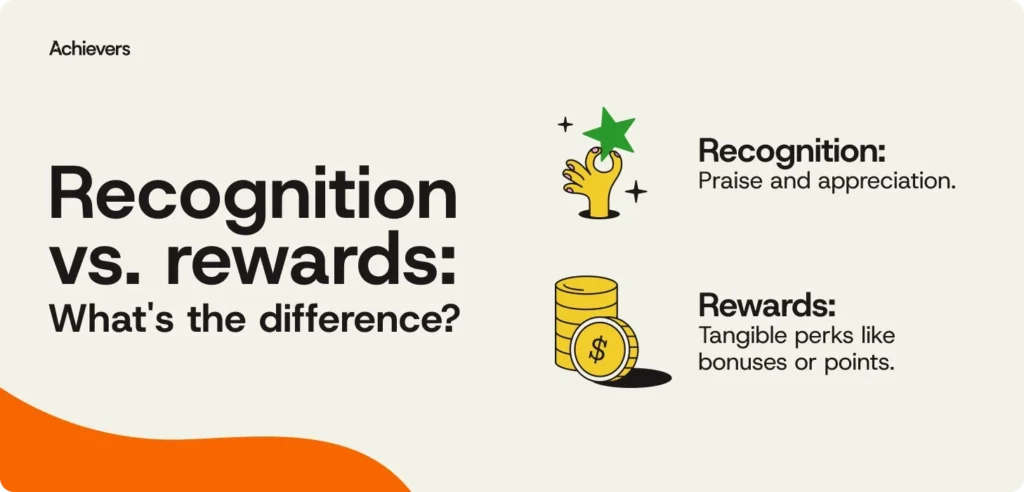
While employee recognition and employee rewards are intrinsically linked, they are not interchangeable. Recognizing the difference is crucial, as the most robust programs strategically integrate both. For organizations experiencing growth, recognition often serves as the initial step, establishing positive habits, visibility, and consistency. Rewards then provide structure and reinforcement as teams expand and expectations evolve. The most effective programs leverage both elements intentionally.
Recognition is the act of acknowledging an employee’s effort, behavior, or results. This can manifest as a sincere thank-you message, a public commendation, or a note detailing the impact of their work. Recognition is frequently social and visible, reinforcing organizational values and making positive contributions more apparent and imitable.
Rewards, conversely, are tangible benefits. These typically include bonuses, gift cards, points, or experiences that employees can redeem. Rewards add an extra layer of impact by assigning material value to recognition. However, their effectiveness is maximized when paired with clear, meaningful recognition.
In essence:
- Recognition communicates, "I see your effort, and it matters."
- Rewards convey, "And we value it."
The most effective employee rewards and recognition programs do not treat these as mutually exclusive options. They strategically combine timely recognition with thoughtful rewards to reinforce the behaviors that drive engagement, performance, and retention, all while maintaining operational simplicity.
The Strategic Investment in Employee Rewards and Recognition Programs
Beyond fostering a sense of appreciation, rewards and recognition programs are instrumental in cultivating a more engaged, connected, and loyal workforce. An aspirational goal might be to make employees genuinely excited for Monday mornings, but the practical outcome of a well-executed program is a workforce that is more present and committed.
Effective rewards and recognition programs enable several key business advantages:
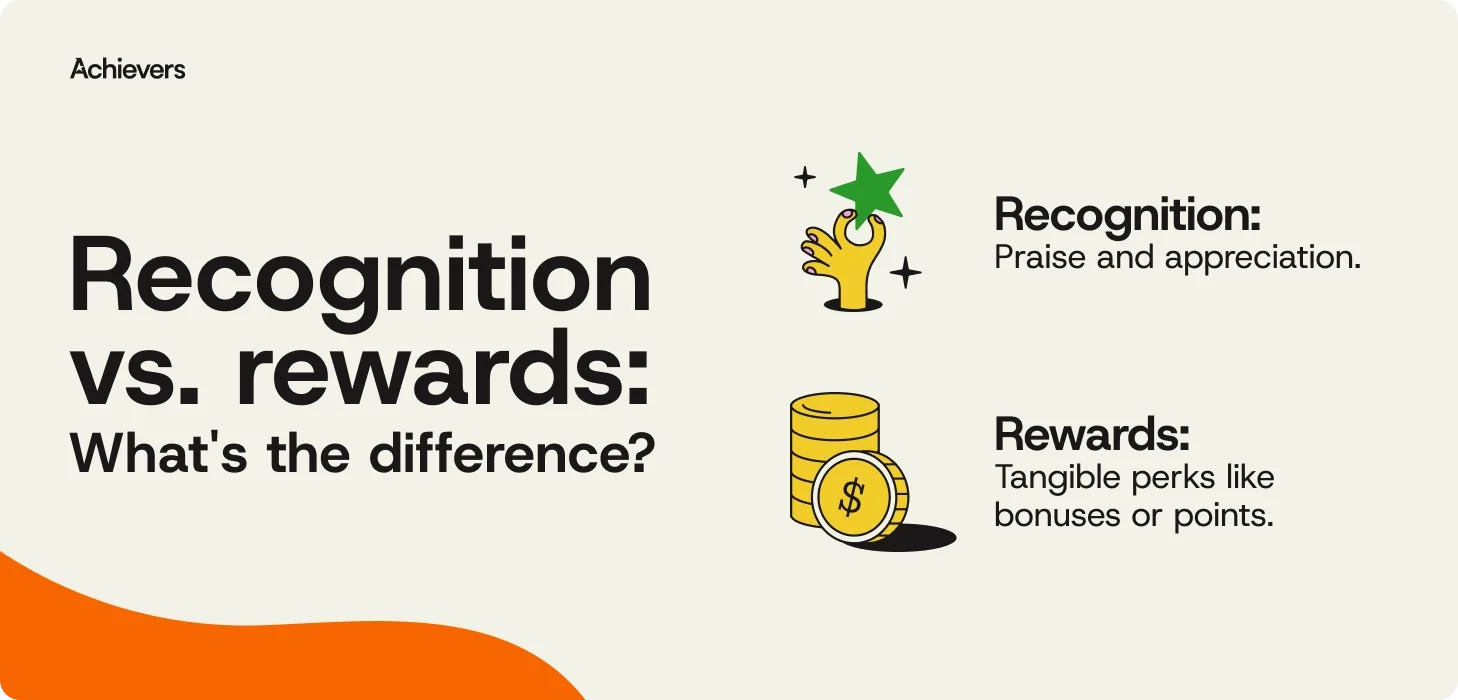
Elevated Employee Engagement and Sustained Motivation
When employees feel seen and valued, they invest more energy and commitment into their work. Regular recognition, particularly through points-based systems, ensures that appreciation is a continuous flow, rather than being confined to annual reviews that may occur long after the relevant moment.
A Culture That Reinforces Core Values
Recognition stands out as one of the most potent methods for reinforcing company values and strategic priorities. By consistently highlighting behaviors that align with the organizational mission, recognition helps these principles permeate across teams, transforming abstract values into actionable behaviors that employees readily adopt and repeat.
Enhanced Sense of Belonging and Increased Retention
Feeling valued is a powerful builder of connection. When employees understand that their work has significance, they experience a greater sense of inclusion, motivation, and a stronger inclination to envision a long-term future with the organization. Recognition shifts the perception of employment from "just a job" to "I belong here."
Improved Collaboration and Healthier Team Dynamics
When recognition is integrated into daily work, rather than being solely a managerial prerogative or confined to private messages, interpersonal relationships improve. Public acknowledgment, peer-to-peer recognition, and shared celebratory moments empower teams to support one another, fostering an environment where individuals uplift each other, not just during informal gatherings.
The Quantifiable Impact of Recognition: The Business Case for Gratitude
While the intrinsic value of recognition is widely acknowledged, data consistently demonstrates its tangible, measurable impact when implemented with intention and consistency. Insights from the Achievers Workforce Institute’s State of Recognition Report unequivocally show that recognition drives results, provided it is designed for scalability and sustainability.
-
Increased Engagement: Employees who are recognized at least once a month are 45% more engaged. This regularity signals to employees that their contributions are noticed in real-time, fostering a sense of continuous validation. Engagement flourishes when appreciation is woven into the daily work rhythm.
-
Reduced Turnover: Consistent recognition from managers can reduce turnover risk by 35%. Managerial acknowledgment carries significant weight as it directly links effort to organizational expectations and priorities. Regular recognition from managers builds trust, clarity, and confidence, critical factors in employee retention decisions.
-
Positive Business Outcomes: Organizations with peer-to-peer recognition programs are 37% more likely to experience positive business outcomes. When recognition is democratized beyond managers, it reinforces culture at all levels, making appreciation visible across teams. It also captures contributions that managers might otherwise miss, transforming recognition into a shared responsibility.
-
Program Success Rates: Recognition programs emphasizing frequent, low-cost recognition moments are 26% more likely to succeed. While significant rewards capture attention, small, frequent gestures are more sustainable. Programs prioritizing regular, meaningful recognition over occasional high-value rewards are easier to maintain and far more effective at shaping behavior over time.
-
Impact of Social Recognition: Social, non-monetary recognition can account for 60-70% of total recognition and still yield substantial results. Recognition need not be expensive to be impactful. Public praise, thoughtful messages, and visible appreciation address a fundamental human need to be seen. While monetary rewards add value, social recognition is the bedrock of building connection and culture at scale.
-
Alignment with Values: A remarkable 96% of high-performing recognition programs align recognition with company values. High-impact programs focus on recognizing what matters most. When recognition is directly tied to organizational culture and values, it reinforces priorities, guides behavior, and translates abstract principles into tangible actions that employees can emulate.
-
Retention Through Meaningful Milestones: Milestone awards that reflect meaningful achievements drive 50% higher retention than generic years-of-service awards. Recognition that acknowledges growth, impact, and contribution resonates far more deeply than generic tenure awards. Employees are more likely to stay when recognition feels personal, relevant, and earned.
The overarching conclusion is that a substantial budget is not a prerequisite for an effective recognition program; intention and consistent follow-through are the key ingredients.
Understanding the Business Value of Recognition and Rewards
Most organizations possess some form of recognition and rewards framework, whether it’s a platform, a process, or a budget, driven by the clear intention to enhance performance, strengthen connections, and cultivate a culture that drives business success. However, this intention does not always translate directly into measurable impact. Even with established elements in place, it can be challenging to draw a clear line between recognition efforts and the desired outcomes.
Emma Harvie, Global Head of Recognition and Rewards Insights at Achievers, in her analysis "From Platform to Performance: Unlocking the Business Value of Recognition and Rewards," identifies a common gap: the issue is not typically about doing more, but rather about understanding what truly drives results and what does not.
Why Many Recognition Strategies Fall Short of ROI Potential
The mere presence of a recognition platform does not guarantee an effective recognition strategy. Programs often begin with strong intent and initial momentum, but without consistent reinforcement, recognition fails to become a regular, meaningful part of the daily work experience. Data from the Achievers Workforce Institute (AWI) supports this, revealing that while 69% of organizations report having a formal recognition platform, only 24% of employees feel meaningfully recognized.
As Harvie explains, this disconnect arises when recognition is viewed as a static entity rather than an active process requiring regular implementation to influence behavior. Without this consistency, it becomes difficult to link recognition efforts directly to crucial business outcomes.
Shifting from Platform Activity to Genuine Behavior Change
Measuring recognition activity—such as platform logins, shared recognitions, or redeemed reward points—can create an illusion of program success. However, activity alone does not indicate whether recognition is genuinely influencing how people work. The crucial metric is the frequency with which employees experience meaningful recognition. This consistency is what reinforces behaviors, builds connections, and shapes performance over time.
The data is stark: employees who are recognized weekly are four times more productive, three times more engaged, and five times more likely to see a long-term career path at their organization. This highlights a necessary shift in perspective—moving beyond platform metrics to understanding the behavioral and organizational changes driven by consistent recognition.
The Role of Rewards Marketplaces in Scaling, Governance, and Impact
Rewards, when offered in isolation, can feel transactional. However, when coupled with meaningful recognition, they provide a reinforcing layer that sustains behavior change over the long term. This distinction is vital: recognition establishes the behavioral signal; rewards provide the reinforcement. Without this linkage, rewards risk becoming disconnected from the very behaviors they are intended to encourage. When consistently integrated, the impact is significant. Achieving this, however, requires more than just good intentions; it demands the right structural framework for consistent, fair, and visible reward delivery.
Building a Recognition Program That Evolves with Your Organization
Developing a recognition program that consistently delivers results does not need to be overly complex. With a clear structure, a focused approach, and a genuine commitment to appreciation, organizations can create a recognition experience that employees genuinely value and, perhaps, even enjoy.
Key elements for success include:
Early, Frequent, and Frictionless Recognition
Frequency is paramount. When recognition is an integral part of the daily workflow, rather than an occasional event reserved for birthdays or annual reviews, employees feel seen and supported in real time. The most effective programs minimize barriers to recognition by utilizing simple, intuitive platforms that enable participation from all levels of the organization, from senior leaders to new hires.
Specific and Meaningful Recognition
Generic praise is easily forgotten. Recognition achieves its greatest impact when it clearly articulates what an employee did and why it was significant. Instead of a vague "great job," specify the behavior or outcome to be reinforced—such as assisting a team in meeting a deadline, going the extra mile for a customer, or collaborating effectively across departments. Specific recognition enhances clarity and makes desirable work repeatable.
Soliciting and Acting on Feedback
The most effective recognition programs are dynamic and adaptable. Regular employee feedback, gathered through satisfaction surveys, pulse checks, or informal conversations, provides valuable insights into what is resonating and what needs adjustment. Equally important is demonstrating to employees that their input leads to tangible changes. Actively listening and following through builds trust, credibility, and sustained engagement.
Partnering for the Right Rewards and Recognition Solution
The efficacy of a recognition program is directly tied to the quality of the underlying platform. A well-chosen third-party solution not only simplifies the recognition process but also helps embed appreciation as a consistent, measurable habit throughout the organization. When evaluating employee recognition platforms, consider these essential features:
- Scalability: The platform should accommodate organizational growth and evolving needs.
- Integration: Seamless integration with existing workplace tools (e.g., Microsoft Teams, Slack) is crucial for ease of use.
- User Experience: An intuitive and engaging interface for both giving and receiving recognition is vital.
- Reporting and Analytics: Robust data and reporting capabilities are necessary to track program effectiveness and identify areas for improvement.
- Reward Options: A diverse and appealing selection of rewards that cater to varied employee preferences enhances program appeal.
Selecting the Optimal Employee Recognition System
To ensure the selection of the most suitable recognition system, organizations should follow a structured approach:
1. Define the System’s Purpose
Establish clear, measurable goals for the recognition system. This could include improving recognition consistency, increasing manager participation, or reinforcing company values. A system without a defined purpose is unlikely to gain traction and will struggle to demonstrate tangible outcomes. Clear objectives ensure the program remains focused on achieving desired results.
2. Prioritize Simplicity and Intuition
Opt for a platform that allows for recognition to be delivered with minimal effort, ideally within a few clicks, and without requiring extensive training. Ease of use is a primary driver of adoption. If the experience is slow or cumbersome, employees will likely disengage, leading to inconsistent recognition practices across the business.
3. Integrate with Daily Workflows
Select a system that seamlessly integrates with the tools employees already utilize daily, such as Microsoft Teams, Outlook, Slack, and Zoom. Systems that operate outside these existing workflows necessitate extra effort to access, creating friction and diminishing the impact of recognition.
4. Support Both Recognition and Rewards
Choose a system that facilitates both visible, shared recognition and flexible reward options. Recognition should be easy to give and easy to see, while rewards should offer meaningful choice for employees. Look for platforms that feature interactive newsfeeds to highlight recognitions and awards, alongside an extensive rewards marketplace that can be tailored to individual interests.
5. Align with Company Values
Utilize a system that prompts employees to connect recognition to specific behaviors, goals, or values. Built-in value tagging or structured recognition categories enhance consistency and clearly demonstrate what strong performance looks like in the context of organizational principles.
6. Review Reporting and Participation Data
Select a system that provides clear insights into how recognition is being used across the organization, including frequency, reach, and participation rates. Dashboards and participation tracking enable the identification of gaps, such as teams with low recognition activity or managers who are not actively engaging, allowing leaders to intervene and maintain program consistency.
7. Test with Employees Before Full Rollout
Pilot the platform with a small group of employees to confirm its seamless integration with their workplace tools and accessibility on both desktop and mobile devices. Early testing also reveals whether employees naturally engage in mutual recognition or require encouragement, providing valuable feedback to address any issues before a broader launch.
Strategic Employee Rewards Budget Planning
When budgeting for employee rewards, establishing a per-employee budget is a foundational step. Many organizations set a fixed annual amount per person, which facilitates cost forecasting, ensures fairness, and allows for scalable program expansion as the workforce grows.
Subsequently, define the allocation of this budget. Rather than concentrating spending on a few high-value awards, distribute it across several categories, including:
- Peer-to-peer recognition: Empowering employees to acknowledge each other.
- Manager-driven awards: Supporting leaders in recognizing their teams.
- Milestone celebrations: Marking significant work anniversaries or achievements.
- Service awards: Acknowledging long-term commitment.
- Spot bonuses: For exceptional, on-the-spot contributions.
- Team-based rewards: For collaborative successes.
This structured approach ensures that recognition is distributed equitably and consistently across the business.
Tracking and control are essential. Rewards programs should clearly delineate how funds are allocated and utilized, including participation rates and remaining budgets. This enables mid-year adjustments, ensuring budgets are fully utilized and aligned with program objectives.
Finally, connect budget decisions to tangible outcomes. Tools like an ROI calculator can illuminate the impact of a rewards program, empowering HR and people leaders to make more informed budget decisions. A robust budget plan is characterized by ease of management, support for frequent recognition, and the assurance that every dollar contributes to meaningful employee impact.
Supercharging Your Employee Rewards and Recognition Program
When executed with precision, a well-structured employee rewards and recognition program makes employees feel genuinely valued, cultivating a culture of appreciation that directly contributes to business success. Frequent, meaningful recognition, aligned with company values, fosters the positive behaviors that lead to improved team dynamics and enhanced results.
Whether an organization is formalizing recognition for the first time or preparing to scale it across a larger workforce, adopting the right approach today can strategically position it for future growth. A modern, mobile-friendly platform, such as Achievers, streamlines the entire process, supporting peer-to-peer recognition, manager-driven appreciation, and points-based reward systems. Coupled with a wide array of desirable rewards, these platforms empower organizations to create a recognition experience that keeps employees motivated and committed to staying.