
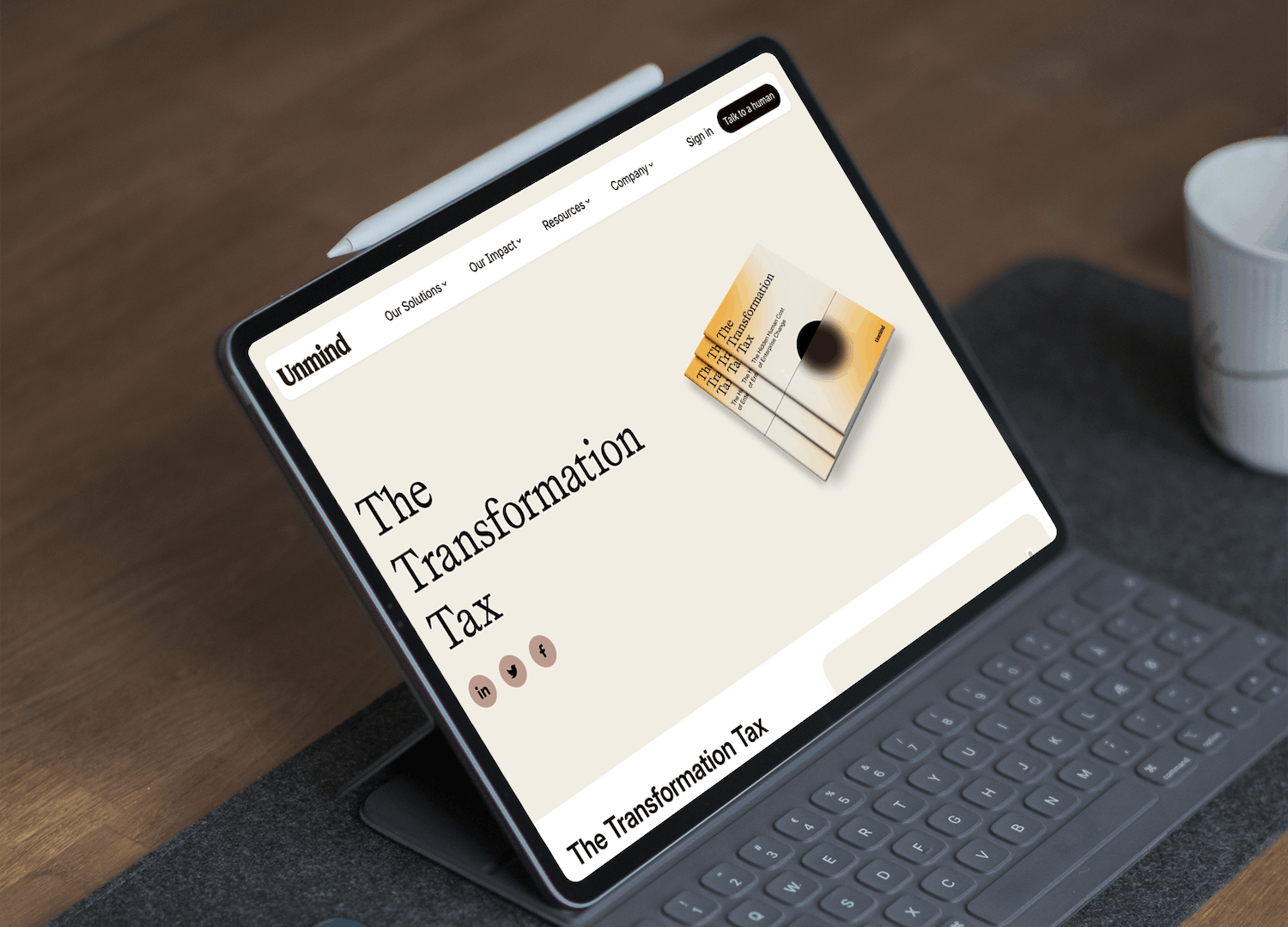
A groundbreaking report, "Transformation Tax: The Hidden Human Cost of Enterprise Change," released in partnership with Unmind, reveals that the constant flux within modern organizations is no longer a temporary project but a perpetual state, exacting a significant toll on employees if not managed with empathy and strategic foresight. The findings, compiled from the perspectives of Chief Human Resource Officers (CHROs), paint a stark picture of the challenges to workplace mental health anticipated for 2026, underscoring the critical need for HR leaders to proactively address the human element of ongoing organizational evolution.
The report’s central thesis posits that the relentless pace of change, often driven by technological advancements, market volatility, and evolving business models, has created a pervasive "transformation tax." This tax, manifested in increased stress, disengagement, and burnout, accumulates when organizations fail to adequately support their workforce through periods of upheaval. If left unaddressed, this invisible cost can lead to diminished morale, decreased productivity, and a decline in employee loyalty, ultimately impacting an organization’s long-term success.
The Evolving Landscape of Enterprise Change
The modern business environment is characterized by an unprecedented rate of change. Digital transformation, the rise of artificial intelligence, shifting consumer expectations, and geopolitical uncertainties have compelled organizations to adapt at an accelerated pace. What was once a cyclical process of strategic planning and implementation has evolved into a continuous cycle of adaptation. This perpetual state of flux, while necessary for survival and growth, presents a unique set of challenges for human capital management.
Historically, organizational change initiatives were often project-based, with defined start and end dates. These projects, while impactful, were typically discrete events. However, the current paradigm demands an ongoing commitment to innovation and agility. This means that employees are increasingly experiencing change not as a temporary disruption but as an inherent aspect of their work lives. This sustained exposure can lead to a phenomenon known as "change fatigue," a state of emotional, physical, and mental exhaustion caused by the cumulative effects of constant adaptation.
Unpacking the "Transformation Tax": Key Findings from the Report
The "Transformation Tax" report, drawing on extensive CHRO interviews and proprietary research, illuminates several critical areas where the human cost of enterprise change is most acutely felt.
1. The Undervalued Human Cost of Rapid Change:
A core finding of the report is the widespread underestimation of the stress, disengagement, and burnout that accumulate during transformation initiatives. The report highlights that when robust support structures and transparent communication are absent, the cumulative effect of these pressures creates a significant "transformation tax." This manifests as a discernible decline in employee morale, a reduction in overall productivity, and a weakening of organizational loyalty. This tax, if not actively managed, accrues over time, posing a substantial risk to an organization’s human capital.
2. The Pervasive Nature of Change Fatigue:
The report indicates that a significant majority of employees, exceeding 50%, are experiencing fatigue due to ongoing organizational changes. This persistent state of weariness directly impacts productivity and engagement. The findings suggest that leaders who fail to proactively offer support and guidance during these periods of flux exacerbate this fatigue, leading to further disengagement and a potential loss of valuable talent.
3. Communication as a Critical Performance Lever:
In the context of organizational transformation, transparent communication emerges as a pivotal factor in fostering trust. The report substantiates this by stating that employees are 80% more likely to trust their organization when communication is characterized by openness and honesty. This trust is not merely a desirable outcome; it is a foundational requirement for achieving alignment and ensuring effective execution of change initiatives. When employees feel informed and understood, they are more likely to embrace new directions and contribute positively to the transformation process.
4. The Profound Impact of Recognition on Output:
The report underscores the direct correlation between employee recognition and productivity. A striking 85% of employees report that feeling appreciated significantly influences their output. Furthermore, 79% of employees believe their relationship with their direct manager plays a crucial role in their productivity. This manager-employee connection becomes even more critical during times of change, as managers often serve as the primary conduit for information, support, and encouragement. The report implicitly suggests that embedding regular recognition habits into weekly routines can help normalize praise and provide employees with a sense of progress and validation, even amidst uncertainty.
5. Wellbeing Surpassing Compensation for a Growing Segment:
Perhaps one of the most significant shifts highlighted is the growing prioritization of employee wellbeing over traditional financial incentives. The report reveals that half of all employees would prefer an employer that demonstrates a genuine commitment to their wellbeing over a 10% pay increase. This preference is not static; it is reportedly increasing year over year, signaling a fundamental recalibration of employee expectations and values in the contemporary workplace.
A Chronology of Evolving Workplace Expectations
The past decade has witnessed a dramatic evolution in how employees perceive their relationship with their employers.
- Early 2010s: Focus on employee engagement metrics, often driven by surveys and initiatives aimed at improving job satisfaction. The emphasis was largely on creating a positive work environment.
- Mid-2010s: Growing awareness of mental health issues in the workplace. Organizations began to introduce employee assistance programs (EAPs) and some early mental health resources. However, these were often treated as reactive measures rather than integral components of a holistic wellbeing strategy.
- Late 2010s – Early 2020s: The COVID-19 pandemic acted as a significant catalyst, bringing mental health and wellbeing to the forefront of organizational priorities. Remote work arrangements and the blurring of work-life boundaries necessitated a more proactive and integrated approach to supporting employee health. The concept of "resilience" became a buzzword, though sometimes misapplied to place the burden solely on individuals.
- Present Day (as reflected in the report): The current landscape, as detailed in the "Transformation Tax" report, indicates a maturation of these trends. Wellbeing is no longer an ancillary benefit but a core expectation, often ranking higher than financial compensation for a substantial portion of the workforce. The focus has shifted from individual resilience to organizational responsibility for creating a supportive and sustainable work environment, especially in the face of continuous change.
Enriching the Narrative: Supporting Data and Context
The insights presented in the "Transformation Tax" report align with broader trends observed in the global workforce. Numerous studies have quantified the economic impact of poor mental health in the workplace. For instance, the World Health Organization (WHO) estimates that depression and anxiety disorders cost the global economy US$1 trillion each year in lost productivity. This underscores the financial imperative for organizations to invest in employee wellbeing as a strategic priority, not just a humanitarian one.
Furthermore, the rise of AI and automation, while promising increased efficiency, also introduces new anxieties for employees regarding job security and the need for reskilling. The report’s recommendation to pair AI acceleration with people readiness is therefore particularly timely. As organizations integrate AI, they must simultaneously invest in upskilling their workforce, providing clear guidelines for AI usage, and addressing potential risks such as algorithmic bias and data privacy concerns. This dual approach ensures that technological advancements serve to augment human capabilities rather than displace them, fostering a sense of empowerment rather than apprehension.
Five Practical Moves for HR to Mitigate the "Transformation Tax"
The report outlines five actionable strategies for HR departments to proactively reduce the "transformation tax" and foster a more resilient and thriving workforce:
-
Over-Communicate During Change – Transparently and Often: This involves not only sharing known information but also acknowledging uncertainties and repeating key messages across multiple communication channels. Transparent updates are crucial for building and maintaining trust, effectively countering the spread of rumors and misinformation. Equipping managers with standardized talking points ensures that employees receive consistent messages during one-on-one interactions, reinforcing organizational communications and fostering a sense of shared understanding. This approach moves beyond a one-off announcement to a continuous dialogue.
-
Empower Managers as Your Force Multipliers: Managers are on the front lines of change and are critical in supporting their teams. The report emphasizes the need to provide them with adequate time, tools, and training to conduct regular check-ins, clarify priorities, and acknowledge progress. The manager-employee relationship is identified as a primary driver of both productivity and wellbeing. Integrating quick recognition habits into weekly team rhythms can help normalize praise and updates on achievements, reinforcing a positive feedback loop even amidst significant organizational shifts.
-
Treat Mental Health as Infrastructure, Not a Side Program: Wellbeing resources should be centralized and easily accessible to employees, allowing for discreet and private access to support. The report advocates for leaders to openly share their own wellbeing journeys to help destigmatize seeking help and encourage broader adoption of support services. Critically, it recognizes that burnout often stems from organizational factors such as excessive workloads, lack of clarity, and insufficient resourcing, requiring systemic solutions rather than solely focusing on individual resilience. This perspective shifts the onus from the individual to the organizational design.
-
Pair AI Acceleration with People Readiness: As organizations embrace AI, it is imperative to invest in upskilling the workforce while simultaneously establishing clear governance and ethical guardrails. The report notes that while a majority of employees report productivity gains through AI, significant risks related to bias, errors, and the inadvertent sharing of sensitive data necessitate robust oversight. The strategic goal should be to leverage AI to free up employees for higher-value, human-centered tasks, thereby enhancing job satisfaction and skill development.
-
Reinforce Belonging Through Recognition and Purpose: Strategic, values-based recognition can effectively connect daily accomplishments to the broader organizational mission. Small, frequent moments of appreciation are highlighted as powerful tools for boosting employee wellbeing and maintaining team focus on what constitutes success, particularly during periods of change. The report stresses the importance of making recognition accessible across different locations and roles to ensure that all employees feel seen and valued, fostering a stronger sense of belonging.
Broader Impact and Implications
The findings of the "Transformation Tax" report have profound implications for the future of work. Organizations that fail to adapt their human capital strategies to account for the ongoing nature of change risk significant talent attrition, decreased innovation, and a damaged employer brand. The growing preference for wellbeing over traditional compensation signals a shift in employee priorities that businesses can no longer afford to ignore.
The report serves as a clear call to action: sustainable transformation is intrinsically linked to putting people first. When leaders prioritize open communication, equip their managers effectively, consistently recognize progress, and make wellbeing a non-negotiable aspect of the organizational culture, performance and humanity can move in tandem, rather than in opposition. This holistic approach is essential for minimizing the "transformation tax" and cultivating a resilient, high-performing culture that can thrive in the dynamic landscape of 2026 and beyond.
The partnership between the report’s authors and Unmind, a leading digital mental health platform, underscores the industry’s recognition of the urgent need for integrated solutions. By providing tools and resources that support mental wellbeing, organizations can begin to systematically address the human costs associated with perpetual change, ultimately fostering a more engaged, productive, and loyal workforce. As the report concludes, this is not merely about managing change; it is about building a more human-centric future of work.