The contemporary landscape of talent acquisition, marked by fierce competition for skilled professionals, is undergoing a significant transformation with the introduction of advanced scheduling improvements designed to eliminate longstanding inefficiencies and elevate the candidate experience. For hiring managers, the scenario is universally familiar: a meticulously crafted interview invitation is dispatched to a promising candidate, aligning perfectly with the team’s availability. Yet, mere hours before the scheduled interaction, an email arrives, apologetically stating, "I’m so sorry, but something has come up. Can we reschedule?" This seemingly minor hiccup often initiates a protracted, multi-email exchange involving calendar cross-referencing, coordination with multiple interviewers, and often, days later, a new time is finally secured. During this bureaucratic shuffle, the initial enthusiasm of a strong candidate may wane, potentially leading them to question the organization’s commitment to its purported modern, people-first image.
These latest enhancements address this pervasive friction by introducing a suite of features, most notably candidate self-rescheduling, aiming to fundamentally reshape the interaction dynamic in recruitment. The update promises not only to drastically reduce administrative burdens for hiring teams but also to empower candidates, fostering an environment of respect and autonomy from the very first engagement. This development is particularly pertinent given alarming statistics revealing that a substantial portion of interview requests fail to translate into actual meetings, highlighting a critical bottleneck in the talent pipeline.
The Persistent Challenge of Interview Scheduling Friction
For years, the process of coordinating job interviews has been a silent yet significant drain on resources for human resources departments worldwide. The traditional model, often reliant on manual communication and rigid systems, inherently placed the burden of flexibility almost entirely on the candidate. This imbalance is not merely an inconvenience; it represents a tangible barrier to effective talent acquisition. Data compiled from extensive recruitment platforms underscores the scale of this issue: on average, a staggering 50% of initial interview requests do not culminate in a confirmed meeting. To put this into perspective, if a company receives 200 applications and extends interview invitations to 40 qualified candidates, only about 20 of those interviews are likely to be scheduled and confirmed on a calendar. This means half of all potential interview opportunities are effectively lost before a single conversation can even begin, representing a substantial loss in potential talent and wasted effort.
The underlying causes for this inefficiency are multifaceted but often coalesce around inflexible scheduling workflows. Historical data, drawing from interactions with over 10,000 candidates who received multiple scheduling requests at the same stage of the hiring process, reveals a crucial insight: these repeated requests were rarely due to recruiter oversight. Instead, they were a direct consequence of systems that offered no easy recourse for candidates needing to adjust their appointments. When a candidate needed to reschedule, the only available option was frequently to generate an entirely new scheduling link, effectively restarting the coordination process from scratch. This iterative, often frustrating cycle consumes valuable time for both recruiters and candidates, leading to a diminished candidate experience and, crucially, a significant number of promising interviews never materializing.
Evolving Landscape of Candidate Experience
The concept of "candidate experience" has ascended to a strategic imperative within talent acquisition. In today’s competitive job market, where top talent often has multiple options, the interaction a candidate has with a potential employer from the initial application to the final offer profoundly shapes their perception of the company’s culture and values. Research consistently demonstrates that the most positive candidate experiences are anchored in principles of respect and autonomy. When candidates are afforded the ability to manage their own schedules, mirroring the standard practice for any other professional engagement, they feel trusted, valued, and empowered. Conversely, being funneled through rigid, one-way communication channels can evoke a sense of being "processed" rather than partnered with, undermining efforts to cultivate a positive employer brand.
A 2023 LinkedIn survey revealed that 79% of candidates consider the overall candidate experience a significant factor in their decision to accept or reject a job offer. Furthermore, a poor experience can have lasting repercussions, with studies by the Talent Board indicating that 72% of job seekers who had a bad experience would share it online or with their network, potentially deterring future applicants. This highlights that the "friction" in scheduling is not merely an operational glitch but a critical touchpoint that can either reinforce or erode an organization’s reputation. The demand for seamless, intuitive, and respectful interactions throughout the hiring journey has never been higher, pushing HR technology providers to innovate beyond basic calendar synchronization.
A New Paradigm: Candidate Self-Rescheduling in Action
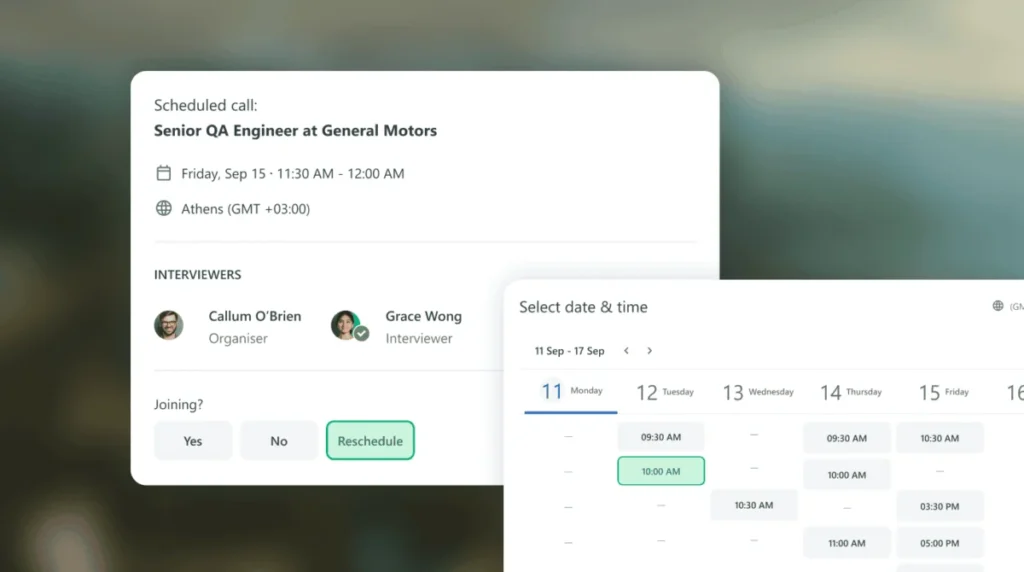
The core of the new enhancements lies in a powerful self-service capability: candidates can now reschedule their interviews with a single click. This eliminates the cumbersome email threads, the anxious waiting for a response, and the worry of inconveniencing the hiring team. Candidates simply select a new time slot from the same pool of available options initially provided to them, maintaining efficiency while granting much-needed flexibility. This innovation is not merely about convenience; it’s about embedding respect for the candidate’s time and autonomy directly into the recruitment workflow.
Crucially, this self-rescheduling feature is engineered with intelligent guardrails designed to protect both the candidate experience and the operational efficiency of the hiring team. These safeguards ensure that:
- Real-time Availability: Candidates can only select from genuinely open slots that align with all interviewer’s calendars, preventing double-bookings or conflicts.
- Policy Enforcement: Companies can set parameters, such as limiting the number of times a candidate can reschedule or imposing deadlines for changes (e.g., no rescheduling within 24 hours of the interview), to maintain fairness and operational predictability.
- Automated Notifications: All relevant parties – the candidate, the recruiter, and the interview panel – are automatically notified of any changes, ensuring everyone remains updated without manual intervention.
- Consistency of Interviewers: The system aims to preserve the original interview panel where possible, minimizing disruption to the assessment process and ensuring continuity.
These guardrails transform what could be a chaotic free-for-all into a structured, self-service model that benefits all stakeholders.
Beyond Rescheduling: A Holistic Suite of Enhancements
While candidate self-rescheduling is the headline feature, it is part of a broader suite of improvements born from extensive feedback from hiring teams. Addressing no less than eight distinct pain points, these enhancements aim to create a more robust and intuitive scheduling ecosystem. While specific details of each improvement were not enumerated, they generally encompass advancements in areas such as:
- Enhanced Interviewer Management: Streamlining the coordination of complex interview panels, ensuring optimal utilization of interviewer time.
- Automated Reminders and Follow-ups: Reducing no-shows and improving communication through intelligent, configurable notifications for candidates and interviewers.
- Optimized Timezone Handling: Seamlessly managing interviews across different geographical locations, a critical feature in a remote-first world.
- Integration with Applicant Tracking Systems (ATS): Deeper, more fluid integration to ensure data consistency and reduce manual data entry errors.
- Customizable Scheduling Templates: Allowing hiring teams to easily create and deploy standardized interview schedules for various roles.
- Improved Analytics and Reporting: Providing insights into scheduling efficiency, candidate drop-off rates, and time-to-schedule metrics.
- Preparation Material Delivery: Automating the delivery of relevant pre-interview materials to candidates, ensuring they are well-prepared.
- Feedback Collection Streamlining: Integrating post-interview feedback mechanisms more smoothly into the scheduling workflow.
These collective enhancements move beyond mere calendar synchronization, offering a comprehensive interview management solution that tackles the administrative burden from multiple angles. Industry analysts, such as those at Gartner and Forrester, have consistently highlighted the need for such integrated solutions, predicting that automation in HR processes, particularly in recruitment, will be a key differentiator for successful talent acquisition strategies in the coming years.
Implications for Candidates, Hiring Teams, and Business Metrics
The ramifications of these improvements extend far beyond mere convenience, instigating a fundamental shift in the power dynamic within the recruitment process.
For Candidates, these changes signify being treated with the professionalism and respect they deserve. The ability to manage their schedules, communicate changes clearly, and experience companies as flexible and accommodating from day one profoundly influences their perception. This positive initial interaction can significantly enhance a candidate’s willingness to engage further and ultimately accept an offer, reinforcing the company’s employer brand.
For Hiring Teams, the benefits translate into dramatically less administrative overhead. The elimination of email ping-pong, manual calendar updates, and the painstaking detective work to ascertain why a promising candidate might have ghosted an interview frees up valuable recruiter time. Recruiters can now reallocate this time to more strategic activities, such as proactive sourcing, deeper candidate engagement, and fostering relationships, rather than being bogged down in logistical coordination. This operational efficiency is critical in environments where recruiters often manage dozens of requisitions simultaneously.
For Hiring Metrics, the impact is both direct and measurable. Companies can anticipate faster time-to-fill rates as scheduling bottlenecks are removed. Higher interview show rates will lead to more completed evaluations and less wasted interviewer time. Crucially, improved candidate satisfaction scores will bolster employer branding and reduce candidate drop-off, leading to a more robust talent pipeline. These are not merely soft benefits but quantifiable improvements that directly contribute to business objectives and the overall return on investment for recruitment efforts. A faster time-to-fill, for instance, means critical roles are staffed sooner, impacting productivity and revenue generation.
Shifting the Power Dynamic: Why It Matters Now More Than Ever
The traditional model of recruitment often operated under an unspoken assumption: companies dictated the terms, including when and how interviews would occur, and candidates were expected to conform. This power imbalance, while historically prevalent, is increasingly untenable in the modern talent market. Today’s best candidates are not merely seeking employment; they are actively evaluating potential employers, weighing company culture, flexibility, and values as much as, if not more than, the companies are evaluating them. Every single interaction, from the initial application to the final interview, serves as a touchpoint that shapes a candidate’s perception of the organization.
In a candidate-driven market, providing autonomy in interview scheduling sends a powerful, unambiguous message: the company respects their time, trusts their professionalism, and believes that individuals deserve to be treated well from the very first interaction. This philosophy aligns with broader societal trends towards greater work-life balance and employee empowerment. Companies that embrace such candidate-centric approaches are not just improving their recruitment process; they are cultivating a reputation as progressive, employee-focused organizations, which is a significant competitive advantage in the war for talent. This is not merely "good recruiting"; it is, fundamentally, "good business." Companies that fail to adapt risk alienating top talent, extending their time-to-hire, and ultimately, falling behind competitors who prioritize a seamless and respectful candidate journey.
Seamless Integration and Future Outlook
The new self-rescheduling capabilities are now fully available to all customers leveraging Google or Microsoft Calendar integrations, ensuring broad accessibility across prevalent enterprise ecosystems. A key aspect of this rollout is its non-disruptive nature; existing scheduling links remain active, allowing teams to adopt the new functionality at their own pace without interrupting ongoing recruitment activities. This phased adoption ensures a smooth transition and allows organizations to integrate these advancements strategically into their established workflows.
This wave of updates, meticulously shaped by extensive feedback from hiring teams, represents a significant stride in reducing friction within the interview process. The developers acknowledge that the journey of improvement is continuous, and scheduling remains an area where even seemingly minor changes can yield profound differences in efficiency and experience. The guiding principle behind these innovations is clear: thoughtful hiring technology should serve to remove obstacles, not create them. When the scheduling process operates smoothly and intuitively, hiring teams can divert their focus from laborious coordination tasks to the more critical objective of engaging in meaningful conversations with the right candidates, thereby fostering better matches and building stronger teams. This ongoing commitment to innovation positions the platform at the forefront of modern talent acquisition, promising further advancements that will continue to streamline and humanize the hiring journey.
Ready to empower candidates and optimize your hiring workflow? Explore the transformative potential of these new scheduling features or reach out to our specialists to understand how they can be seamlessly integrated into your talent acquisition strategy.