The modern global job market is undergoing a profound transformation, driven by an accelerating recognition that diversity, equity, and inclusion (DEI) are not merely ethical imperatives but strategic business advantages. In this rapidly evolving landscape, organizations are moving beyond superficial commitments to actively cultivate environments where every individual feels valued, respected, and empowered. Central to this paradigm shift is the emergence and widespread adoption of specialized diversity tools designed to deconstruct bias, broaden talent pools, and foster truly inclusive workplaces from the very first interaction: the job description.
The Indisputable Imperative of Diversity and Inclusion
The drive for diversity and inclusion in the workplace is no longer a peripheral HR concern; it is a core business strategy. Research consistently demonstrates a strong correlation between diverse teams and improved organizational performance. Studies by leading consultancies like McKinsey & Company have repeatedly shown that companies with greater ethnic and cultural diversity on executive teams are significantly more likely to outperform their peers on profitability. Similarly, gender-diverse companies are also more likely to achieve superior financial returns. Beyond financial metrics, diverse teams are linked to enhanced innovation, better problem-solving, improved employee engagement, higher retention rates, and a deeper understanding of diverse customer bases.
The background to this imperative is multifaceted. Societal shifts have heightened awareness of historical inequalities and systemic biases, pushing companies to reflect the diverse communities they serve. Legally, anti-discrimination laws globally mandate fair employment practices, with a growing focus on proactive measures to ensure equitable opportunities. Economically, companies compete for top talent in a globalized market, where a reputation for inclusivity is a powerful magnet for skilled professionals from all backgrounds. The confluence of these factors has created an urgent demand for practical solutions to embed DEI principles throughout the entire talent lifecycle.
Combating Unconscious Bias: The Foundation of Inclusive Hiring
At the heart of many DEI challenges lies unconscious bias – mental shortcuts or stereotypes that can inadvertently influence decisions, often without malicious intent. In the hiring process, unconscious biases can manifest in numerous ways, from the language used in job descriptions to candidate screening, interviewing, and final selection. These biases can lead to a narrow talent pool, overlook highly qualified candidates, and perpetuate homogeneity within an organization.
Recognizing this critical vulnerability, the development of diversity tools has largely focused on identifying and mitigating these subtle yet impactful biases. The evolution of these tools reflects a growing sophistication in understanding how bias operates and how technology can be leveraged to create fairer processes. Early efforts often targeted overt discriminatory language, but modern tools delve deeper, analyzing tone, common idioms, and even the absence of inclusive elements.
The Evolution of Diversity Tools: From Simple Checks to Holistic Platforms
The landscape of diversity tools has evolved significantly over the past decade. Initially, many tools focused primarily on a single dimension of bias, predominantly gender. These early innovators laid the groundwork for more comprehensive solutions that address a broader spectrum of biases and integrate DEI across various HR functions.
- Early Gender-Focused Tools (circa 2010s): The first wave of accessible tools primarily aimed at identifying gender-coded language in job descriptions. These tools often relied on lists of words empirically linked to masculine or feminine perceptions, aiming to neutralize job postings to attract a wider gender demographic.
- Expansion to Broader Bias Detection: As understanding of unconscious bias matured, tools began to identify other forms of bias, including those related to race, age, disability, and even socioeconomic background, within job descriptions. This marked a shift towards a more holistic approach to inclusive language.
- Integrating Beyond Job Descriptions: The recognition that bias can permeate the entire hiring journey led to tools that support inclusive interviewing, candidate assessment, and even blind recruitment processes.
- Workplace Culture and Communication: The scope further expanded to address DEI within the existing workforce, offering tools for internal communication, employee feedback, and cultural analysis.
- Comprehensive DEI Management Platforms: The most advanced solutions today offer integrated platforms that combine bias detection, analytics, training, and strategic recommendations to manage DEI initiatives across the organization.
This chronological development highlights a journey from reactive, narrow-scope solutions to proactive, multi-dimensional platforms that aim to embed DEI into the very fabric of an organization’s operations.
Spotlight on Leading Diversity Tools for Inclusive Hiring
Several innovative platforms are leading the charge in assisting organizations in their pursuit of diverse and inclusive talent acquisition. These tools offer varying functionalities, from precise language analysis to comprehensive DEI strategy development.
-
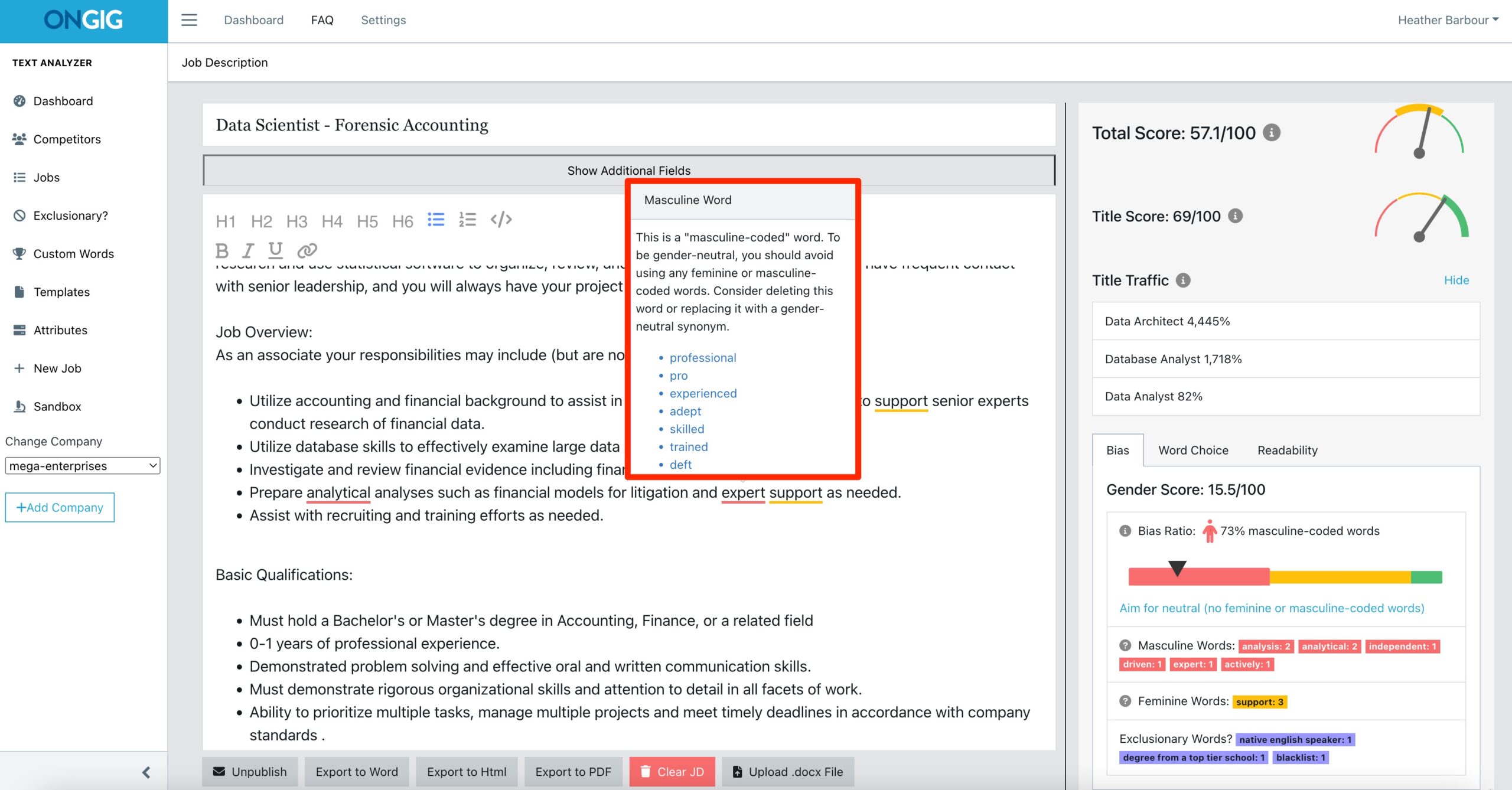
Ongig’s Text Analyzer: A prominent player in this space, Ongig’s Text Analyzer software has evolved significantly since its inception in 2011. Initially focusing on enhancing job descriptions with multimedia, its Text Analyzer component, launched in 2017, began by targeting gender bias. Today, it stands as a sophisticated "diversity job ad proofing tool" that meticulously scans job descriptions for multiple forms of bias, including those related to gender, race, age, and disability. The platform provides a user-friendly dashboard offering "Total Score" and "Gender Bias Scores," filterable by team or location, allowing organizations to benchmark their inclusivity against competitors. Beyond merely flagging problematic terms, Ongig provides hundreds of inclusive replacement suggestions, empowering recruiters to immediately rectify biased language. Furthermore, its AI-powered "Section Finder" identifies missing critical information that candidates value, such as salary ranges, benefits, and diversity statements, ensuring job descriptions are not only unbiased but also comprehensive and engaging. Its deep contextual analysis and actionable recommendations differentiate it in a competitive market.
-
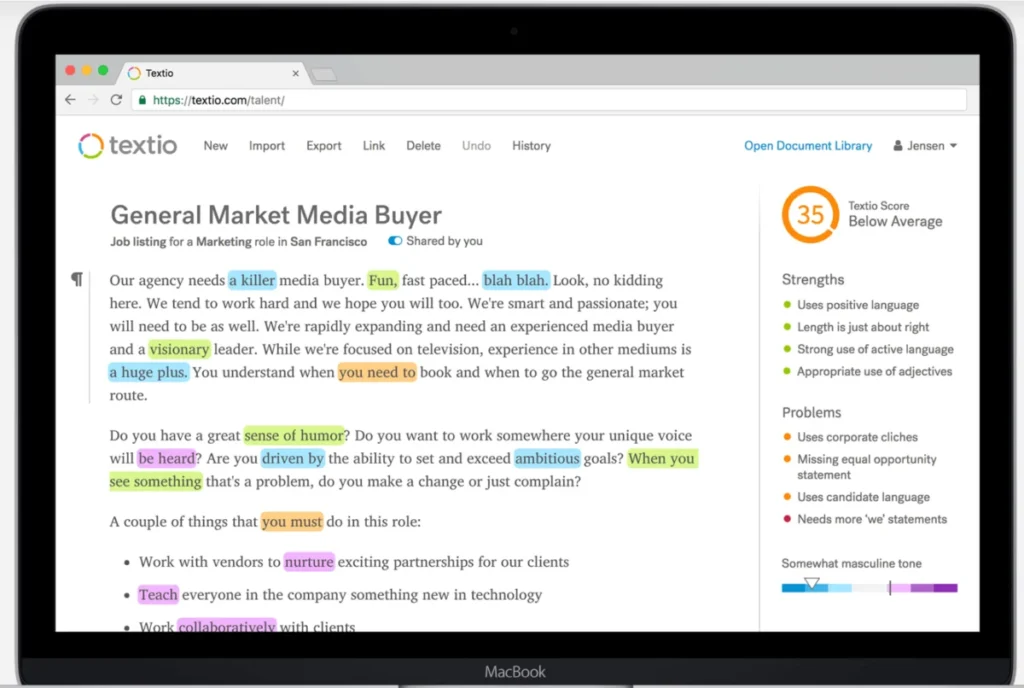
Textio: Known for its "augmented writing" capabilities, Textio analyzes job posting outcomes from a vast dataset to predict the success of job descriptions. It provides real-time feedback, color-coding words and phrases to highlight areas for improvement in terms of diversity, neutrality, and overall effectiveness. Textio’s gender writing analysis flags "masculine terms" and offers alternatives, demonstrating its commitment to balancing the tone of job advertisements. Its data-driven approach aims to optimize language for better applicant response rates and candidate quality.
-
Gender Decoder: A simple, free, and highly effective tool, Gender Decoder originated from a psychological study on how specific words attract different genders to job roles. It serves as an excellent starting point for small businesses or individuals primarily concerned with identifying and neutralizing gender-coded language. By comparing text against established lists of masculine and feminine words, it provides immediate, clear feedback on potential gender bias, embodying a focused approach to a critical aspect of inclusive writing.
-
Clovers (formerly Talvista): This platform guides hiring teams through a more efficient and inclusive hiring process. Its integrated job description builder reviews text for word choice, positive/negative language, and includes a gender decoder feature, offering alternative phrasing. Clovers extends its utility beyond initial job descriptions to support the entire interview process, aiming to standardize questions and reduce interviewer bias, thereby promoting a more equitable candidate evaluation.
-
The Polite Type: While not exclusively designed for job descriptions, The Polite Type is an invaluable open-source tool for promoting inclusive language in broader communication. It automatically rewrites harmful or offensive words (e.g., racial slurs) with more respectful and inclusive alternatives. Co-created with diverse youth, this tool underscores the importance of conscious language use in all organizational communications, indirectly influencing the overall culture of inclusivity that underpins fair hiring.
-
Allie: A chatbot companion, Allie integrates with communication platforms like Slack to foster internal DEI. It excels at disseminating D&I surveys, gathering employee perspectives on inclusion, and sharing diversity-related news. Crucially, Allie facilitates a feedback mechanism for employees to propose DEI enhancements and offers diversity training sessions, ensuring that inclusivity is a continuous dialogue and learning process within the organization.
-
Blendoor: This diversity analytics and hiring software company champions unbiased hiring through blind recruitment and sourcing from diverse backgrounds. Blendoor’s unique offering includes a scoring system that benchmarks an organization’s DEI performance against government data and market trends. It provides actionable insights and tracking tools to help companies improve their diversity efforts over time, serving as a data-driven coach for inclusive talent acquisition.
-
DBSquared: DBSquared focuses on building fairer workplaces through specialized tools for hiring and compensation. Its DBDescriptions software helps craft unbiased and compliant job postings, adhering to regulations like ADA and FLSA. Complementing this, DBCompensation identifies pay disparities by analyzing factors like experience, race, and gender, creating visualizations that highlight discrepancies. Their CompBldr tool streamlines job description creation, comparative analysis, and ensures equitable pay structures, promoting fairness across the employee lifecycle.
-
Diversio: A comprehensive DEI platform, Diversio offers several advanced tools. The "Bias Corrector" flags cultural insensitivity and unconscious bias in company communications (e.g., Slack), while the "Social Media Barometer" monitors public perception of the company’s D&I record. Its "Recommendation Engine," powered by algorithms, matches organizational challenges with tailored solutions, effectively acting as a strategic advisor for DEI initiatives.
-
Recruitment SMART: This AI-driven platform generates optimized job advertisements based on company hiring goals. Its equitable hiring tool offers diversity analytics, enables anonymous hiring by removing candidate identifiers, and includes a bias checker for objective candidate data scoring. Recruitment SMART aims for an 80% time reduction in JD posting and a 70% increase in content consistency, leading to improved candidate matching and quality of hire.
-
Manatal: An advanced recruitment automation system, Manatal simplifies the creation of inclusive job descriptions at scale. Its AI assistant generates JDs from user-provided details (company name, role, location), offering 200 JD generations per month for subscribers. Manatal also features a prompt refinement tool, allowing users to fine-tune outputs to align with their specific hiring processes, combining efficiency with a focus on quality and inclusivity.
-
Jasper Chat: Leveraging natural language processing (NLP), Jasper Chat is an AI chatbot that generates structured job descriptions rapidly. Users simply input vacancy details through conversational prompts, and the AI interprets the information to produce comprehensive JDs. This tool offers scalable JD creation, ensuring consistency and adherence to best practices in inclusive language.
-
Skima AI: Skima AI empowers hiring teams to generate high-quality job descriptions by inputting key details like job titles and skills. Its expert algorithm analyzes top-performing JDs to derive "winning recipes," ensuring impact and inclusivity. Users can conveniently edit, remove, or regenerate sections, and the platform continuously learns from user best practices, ensuring compliance with industry requirements and streamlining candidate matching.
Measuring and Tracking Diversity Initiatives: The Path to Accountability
Implementing diversity tools is only the first step; sustained progress in DEI requires robust measurement and tracking. Organizations must establish clear benchmarks and key performance indicators (KPIs) to monitor their diversity initiatives effectively. This includes tracking demographic representation across all levels, analyzing hiring and promotion rates by demographic, monitoring pay equity, and assessing employee sentiment regarding inclusion.
Data-driven insights are crucial. Diversity tools, particularly those with analytics capabilities like Blendoor and Ongig, help organizations gather and interpret this data. By identifying patterns and disparities, companies can pinpoint areas needing improvement, refine their strategies, and allocate resources more effectively. Setting ambitious yet realistic goals and regularly reporting on progress fosters accountability and demonstrates a genuine commitment to continuous improvement in DEI.
The Indispensable Role of Leadership in Driving DEI
While diversity tools provide the technological framework, the ultimate success of DEI initiatives rests on the shoulders of leadership. HR leaders and business executives play a pivotal role in shaping an inclusive culture by:
- Setting the Tone: Leaders must articulate a clear vision for DEI, embedding it as a core organizational value. Their visible commitment signals its importance to every employee.
- Creating Inclusive Policies: Crafting and enforcing policies that promote fairness in recruitment, promotion, compensation, and development is a fundamental leadership responsibility.
- Fostering Courageous Conversations: Leaders must create safe spaces for open dialogue about bias, discrimination, and lived experiences, addressing issues head-on and demonstrating empathy.
- Leading by Example: Authentic leadership involves actively seeking diverse perspectives, championing underrepresented groups, and modeling inclusive behaviors.
- Driving Accountability: Setting measurable DEI goals, tracking progress, and holding themselves and others accountable ensures that DEI remains a priority and translates into tangible change.
Challenges and Future Outlook
Despite the advancements, challenges remain. The effective adoption of these tools requires organizational change management, continuous training for hiring teams, and a genuine commitment to addressing the insights revealed by the data. Data privacy and ethical AI considerations are also paramount as these tools become more sophisticated.
Looking ahead, the future of diversity tools will likely see even greater integration of AI and machine learning for predictive analytics, personalized DEI interventions, and seamless integration with existing HR tech stacks. The focus will broaden from mere bias detection to proactive bias prevention and the creation of intrinsically inclusive systems.
Conclusion
The modern job market demands not just talent, but diverse talent. Diversity tools are proving to be invaluable allies in this quest, transforming how organizations approach hiring and culture. By systematically addressing unconscious bias in job descriptions, expanding talent pools, and providing actionable insights for DEI strategies, these technologies empower companies to build workforces that are not only more equitable but also more innovative, resilient, and ultimately, more successful. The journey towards true inclusion is ongoing, but with the intelligent application of these tools and unwavering leadership commitment, organizations are well-equipped to forge a future where every voice is heard, every talent is recognized, and every individual can thrive.