As summer heats up across the globe, bringing with it major sporting events and the promise of much-anticipated holidays, a peculiar juxtaposition of events unfolds, highlighting both the unexpected pathways to sporting glory and the increasingly strategic demands on corporate human resources departments. From an Irish footballer’s unlikely ascent to international fame thanks to a professional networking platform, to HR teams meticulously planning Christmas festivities in the midst of June’s sweltering heat, these narratives underscore the evolving dynamics of modern life and work.
Roberto Lopes: From Mortgage Advisor to International Football Icon, Courtesy of LinkedIn
In a tale that redefines talent scouting for the 21st century, Irish-born footballer Roberto Lopes, a stalwart defender for Ireland’s Shamrock Rovers, has achieved legendary status on the international stage through an unconventional medium: LinkedIn. Known affectionately as “Pico,” Lopes’s journey from a newly qualified mortgage adviser playing part-time in the League of Ireland a decade ago to a key figure in a stunning World Cup-level upset, illustrates the unexpected utility of professional networking platforms beyond traditional career advancement.
Lopes’s initial foray into the professional world saw him balancing semi-professional football with a career in finance. For years, he honed his skills on the pitches of the League of Ireland, first with Bohemians and later with Shamrock Rovers, where he established himself as a reliable and formidable presence in defence. His commitment to both his sporting and professional aspirations was typical of many Irish footballers operating outside the top tiers of European leagues.
The pivotal moment in Lopes’s career arrived in 2018, not through a conventional scout’s recommendation or a trial, but via a direct message on LinkedIn. The sender was Rui Águas, the then-manager of the Cape Verde national football team. The initial message, penned in Portuguese, landed in Lopes’s inbox and was, like many unsolicited communications on the platform, dismissed as spam. This common reflex – to disregard messages from unknown senders, especially those in unfamiliar languages – nearly cost him an extraordinary opportunity.
It was only after Águas, demonstrating remarkable persistence and foresight, sent a follow-up message, this time in English, that Lopes took notice. The clarity of the second message cut through the digital noise, prompting Lopes to reconsider. He translated Águas’s initial Portuguese message, which revealed a direct invitation: "We’re looking at getting new players into the Cape Verde squad and would you be interested in declaring for Cape Verde?" The manager had identified Lopes’s eligibility to represent the island nation through his paternal lineage, a common practice in international football where diaspora players are often sought to bolster national teams.
Lopes, reportedly feeling a touch of rudeness for his initial oversight, accepted the call. This decision would prove momentous, not just for his career but for the history of Cape Verdean football. Cape Verde, a nation with a rich footballing culture but often overshadowed by larger African footballing powers, has steadily climbed the FIFA rankings in recent years, demonstrating increasing prowess on the continental stage, including multiple appearances in the Africa Cup of Nations. The addition of players like Lopes, with European league experience and a robust professional background, became a strategic part of their development.
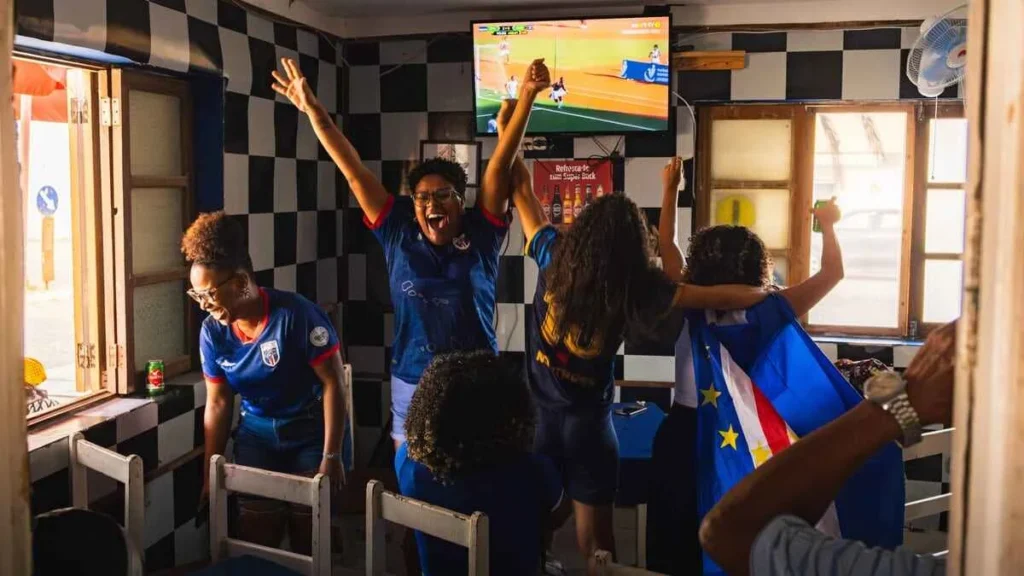
The culmination of this unlikely recruitment story arrived on a Monday, during a significant international fixture that garnered global attention. Cape Verde, considered massive underdogs, achieved a sensational draw against tournament favourites Spain. This result was heralded as one of the biggest shocks in recent football history, particularly when measured against the vast disparity in FIFA rankings between the two nations. Spain, a perennial top-tier footballing power with multiple World Cup and European Championship titles, typically occupies a spot within the top 10, while Cape Verde, though improving, often hovers outside the top 70.
Beyond the sheer improbability of the draw, Cape Verde’s performance also set a remarkable record: they achieved this incredible result while committing only one foul throughout the entire match. This unprecedented display of disciplined, clean football in a high-stakes encounter further cemented their heroic status and underscored the team’s tactical brilliance and composure under pressure. Lopes, a key component of their resilient defence, was instrumental in this historic achievement, solidifying his reputation as a world-class defender.
The story resonated deeply within the professional community, particularly in the offices of publications like Personnel Today, where it prompted a collective introspection about overlooked opportunities and the hidden potential within professional networks. It served as a stark reminder that talent, in its myriad forms, can emerge from the most unexpected corners, and that the modern tools of connection, such as LinkedIn, are reshaping traditional paradigms of discovery. For Lopes, the platform transformed from a mere business networking site into the conduit for a dream realized, cementing his place as a new hero in the beautiful game.
Implications of the LinkedIn Discovery in Modern Football

Roberto Lopes’s story offers a compelling case study for the evolving landscape of professional sports. Traditionally, talent identification in football has relied heavily on scouts physically attending matches, reviewing player performance data, and leveraging established networks within the sport. While these methods remain crucial, Lopes’s experience highlights several significant implications:
- Redefining Scouting Paradigms: The incident challenges the conventional wisdom that talent must always be found through direct observation. It suggests that digital footprints and professional profiles can serve as valuable initial screening tools, especially for players in less prominent leagues or those with dual nationalities.
- Empowering Lesser-Known Talents: For players outside the elite European leagues, LinkedIn and similar platforms offer an avenue to be seen and considered by national teams or clubs that might not have extensive scouting networks in their region. It democratizes access to opportunities.
- The Rise of Data-Driven Recruitment: While Águas’s initial contact was personal, his ability to identify Lopes’s eligibility likely stemmed from background research, possibly using online databases or public records. This aligns with a broader trend in sports analytics, where data plays an increasingly vital role in player recruitment and strategic planning.
- Brand Building for Athletes: Lopes’s profile, even if not meticulously maintained for footballing purposes, provided enough information for Águas to make the initial connection. This underscores the importance for modern athletes, even those in non-superstar roles, to maintain a professional online presence.
- Inspiration for Dual-Career Athletes: Lopes’s success as both a mortgage advisor and an international footballer provides a powerful narrative for athletes who pursue education or parallel careers alongside their sporting ambitions. It demonstrates that professional versatility can lead to unexpected rewards.
The draw against Spain, and the disciplined performance of the Cape Verde team, will undoubtedly inspire a new generation of Cape Verdean footballers and could lead to increased investment and attention for the nation’s football program. For Lopes, it means a permanent place in the annals of Cape Verdean sporting history and a further elevation of his profile within international football, a journey kickstarted by a message that almost went unread.
June: The New November for Corporate Holiday Planning
While Roberto Lopes was making headlines on the football pitch, a different kind of strategic play was unfolding in corporate offices worldwide. Amid an extreme heatwave, the ongoing World Cup, cricket season, and the imminent start of Wimbledon – a period traditionally associated with summer leisure and productivity dips – Human Resources departments are already deep into planning their annual Christmas parties. This striking shift in the festive planning calendar marks June and July as the new "autumn" for corporate event organization, a phenomenon driven by a complex interplay of demand, competition, and post-pandemic recalibrations.
Personnel Today, a leading publication in HR insights, has highlighted this emerging trend, noting that HR teams are "moving to secure spaces six months in advance." This represents a significant departure from historical norms, where Christmas party planning typically commenced in September or October. Artur Stepaniak, co-founder of event booking platform Tagvenue, corroborates this observation, stating, "What we’re seeing is a clear shift in how organisations approach their end-of-year celebrations. Now, HR teams are increasingly starting the process in June because they know the best venues and dates disappear quickly."
The data supports this assertion. According to Tagvenue, 12% of all Christmas venue hire activity now takes place in June, marking a substantial 75% increase compared to June 2022. While 12% might seem modest to some, the rapid growth indicates a clear, accelerating trend rather than an isolated anomaly. As one internal commentary within Personnel Today humorously remarked, "12%? It’s not exactly a rush," reflecting a common initial skepticism before recognizing the underlying strategic imperative.
This early planning strategy is not merely a matter of administrative efficiency; it reflects a deeper understanding within HR of the critical role that employee engagement and morale play in retention and productivity. Post-pandemic, companies are grappling with heightened expectations for workplace culture, and annual celebrations like Christmas parties are seen as vital components of fostering a positive, cohesive environment. Securing premium venues and preferred dates ensures a higher quality event, which in turn contributes to greater employee satisfaction and a stronger sense of belonging.
Driving Factors Behind the Early Planning Phenomenon
Several factors contribute to this pronounced shift in corporate event planning:
- Post-Pandemic Demand Surge: The easing of pandemic restrictions has unleashed pent-up demand for in-person corporate events. Companies are eager to bring employees together for team building, celebration, and fostering a sense of community that was disrupted during periods of remote work. This increased demand puts pressure on venue availability.
- Venue Scarcity and Competition: The most desirable venues, especially those offering unique experiences, excellent catering, or convenient locations, are limited. As more companies prioritize quality events, competition for these spaces intensifies, pushing booking windows earlier.
- Strategic Employee Engagement: HR departments are increasingly viewing events not just as a perk but as a strategic tool for employee retention and satisfaction. Investing in a well-planned, high-quality Christmas party sends a strong message to employees about their value and the company’s commitment to their well-being.
- Budget Management and Supplier Relations: Early planning allows HR teams more time to negotiate better rates with venues and suppliers, ensuring optimal use of budgets. It also fosters stronger relationships with event partners, potentially leading to preferential treatment or tailored services.
- Reduced Last-Minute Stress: By front-loading the planning process, HR professionals can mitigate the significant stress and logistical challenges associated with last-minute bookings. This allows for more thoughtful execution and reduces the risk of compromises due to limited options.
- Economic Uncertainty: In times of economic uncertainty, companies may seek to lock in prices early to avoid potential cost increases later in the year. Early commitment can provide financial predictability.
The irony of HR teams meticulously planning winter festivities while battling summer heatwaves and managing workforce distractions from major sporting events is not lost on observers. While air conditioning systems teeter on the brink and discussions of ice lollies and expanding clusters of colleagues outside pubs dominate the immediate office environment, HR’s forward-thinking approach underscores a pragmatic and strategic imperative. It speaks to a profession that is constantly adapting to new challenges, balancing immediate operational demands with long-term strategic goals for employee well-being and corporate culture.
As the mercury climbs towards 30°C and the World Cup narrative continues to unfold, one might ponder whether the newly minted international football stars of Cape Verde, basking in their unexpected glory, have already secured their Christmas party venue. While that remains an amusing hypothetical, for HR professionals globally, the question is no longer "if" they should plan early, but "how early" they can realistically start to secure the best possible celebration for their teams, ensuring a festive close to the year, regardless of the seasonal distractions that precede it. This early planning trend is more than just a logistical shift; it is a clear indicator of HR’s evolving strategic importance within the modern organization.