Organizational culture is the invisible architecture that defines how individuals within a company interact, collaborate, and make decisions, particularly when unsupervised. It manifests in the nuanced dynamics of team collaboration, the decision-making processes of leadership, and the overall sentiment employees experience about their work environment. When an organization successfully cultivates a positive culture, the outcomes are demonstrably beneficial, leading to enhanced relationships, more astute decision-making, accelerated innovation, and ultimately, superior business performance. Conversely, neglecting organizational culture can have far-reaching negative consequences, impacting everything from employee engagement and retention to customer loyalty and brand reputation.
This article delves into the fundamental meaning of organizational culture, its critical role as the bedrock of high-performing enterprises, and actionable strategies for its cultivation. Whether an organization is in the process of refining an existing culture or building one from the ground up, understanding and implementing these principles is essential for fostering a workplace where employees can not only succeed but also thrive.
Defining Exceptional Organizational Culture: The Traits of Thriving Workplaces
Exceptional organizational cultures are not the product of chance; they are meticulously constructed, intentionally nurtured, and consistently reinforced through deliberate actions. The most successful workplaces are characterized by a confluence of key traits that translate abstract values into tangible, everyday behaviors. These distinguishing characteristics set truly thriving cultures apart from those that merely exist in mission statements or slide decks.
At its core, organizational culture represents the collective values, behaviors, and norms that shape an employee’s daily experience within an organization. It encompasses the entirety of the workplace environment, from the leadership’s style and approach to the intricate dynamics of team interactions. A robust organizational culture serves as a powerful connector, linking employees to a shared purpose, fostering a sense of engagement, and acting as a direct catalyst for improved business outcomes.
The Blueprint for Building a Resilient Organizational Culture: Ten Essential Strategies
Translating an understanding of exceptional organizational culture into practical implementation is where the most significant effort and, consequently, the most substantial rewards lie. The following ten steps offer a roadmap for transforming cultural aspirations into concrete, impactful actions.

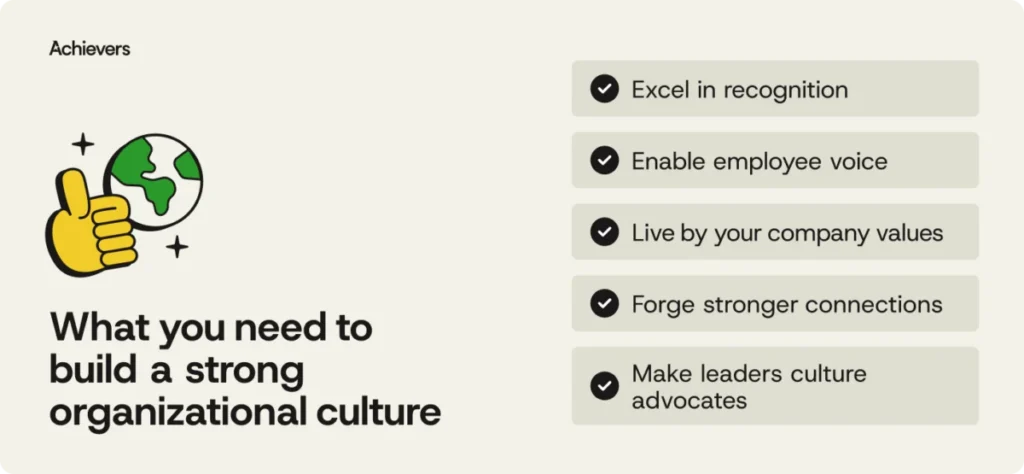
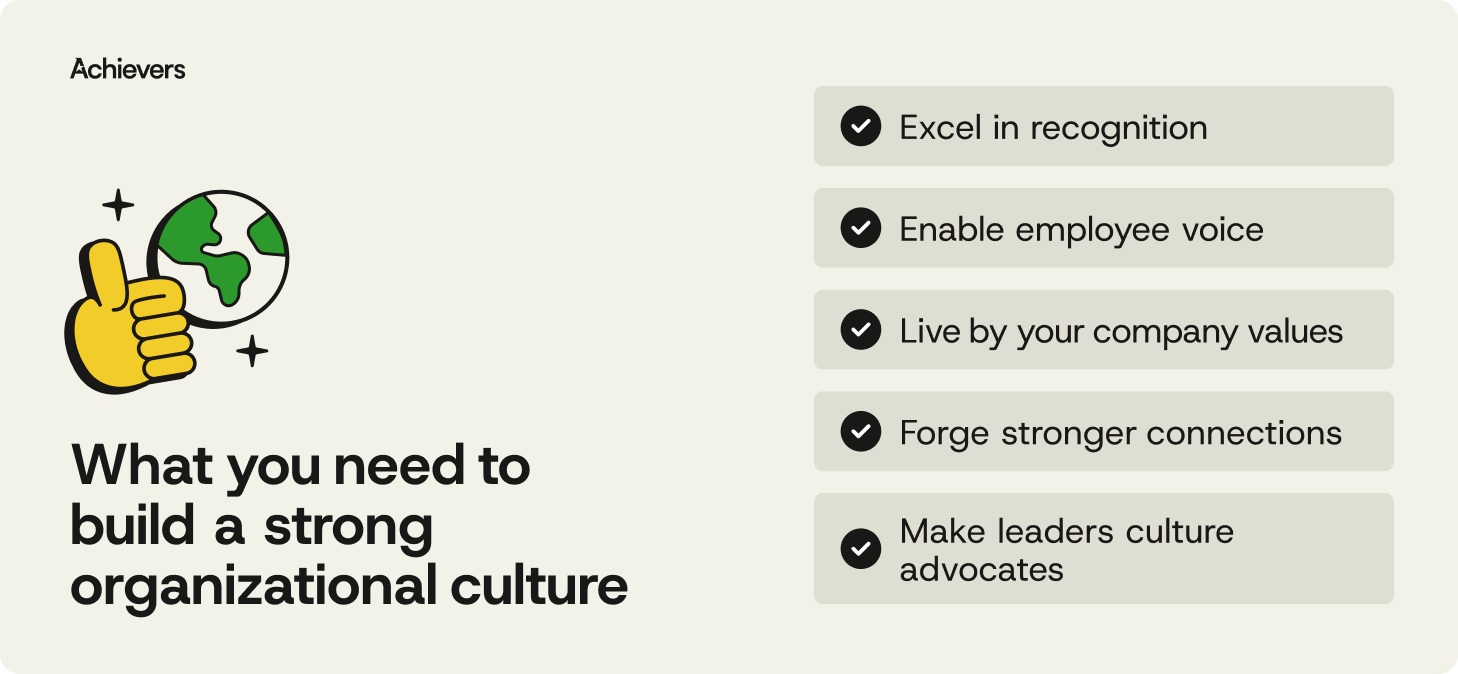
1. Excel in Recognition: Making Employees Feel Valued
Effective recognition transcends perfunctory gestures like long-service awards. It is an ongoing, meaningful exchange that consistently communicates to employees that their contributions are recognized and valued. When recognition becomes an integrated and regular aspect of the work rhythm, it significantly strengthens interpersonal connections, elevates engagement levels, and directly fuels enhanced performance. Human beings are inherently motivated to repeat behaviors that receive positive reinforcement. Therefore, it is imperative to create an environment where it is easy and natural for everyone, from managers to peers, to acknowledge and celebrate each other’s achievements frequently. Employee recognition should not be viewed as an optional extra; it is a fundamental requirement for cultivating a culture where individuals feel seen, heard, and genuinely appreciated.
2. Enable Employee Voice: Empowering Input and Action
Every employee possesses a reservoir of ideas – insightful and valuable contributions waiting to be tapped. This is the inherent power of employee voice. The true impact of this voice is realized not just when it is heard, but when it actively drives tangible change. When employees witness their feedback leading to demonstrable improvements, their engagement levels surge, trust within the organization deepens, and the overall culture is strengthened. Utilizing a variety of channels, such as surveys, open forums, and one-on-one conversations, is crucial for amplifying employee voices and maintaining a clear understanding of what truly matters to the workforce. Crucially, it is imperative to ensure that this feedback is not left unaddressed. Closing the loop, communicating progress, and demonstrating that employee input has a material impact are essential for fostering a sense of agency and encouraging continued participation.
3. Make Leaders Culture Advocates: The Ripple Effect of Management
Organizational culture is not confined to the pages of human resources manuals; its true embodiment lies in the daily actions and behaviors of leadership. Managers wield significant influence, capable of either fortifying or undermining the established culture. Consequently, it is vital to equip them with the necessary tools and comprehensive training to effectively champion cultural initiatives. The practices of providing recognition, offering constructive feedback, engaging in coaching, and actively listening are not mere "nice-to-haves"; they are integral components of a leader’s core responsibilities. When leaders consistently model the desired behaviors and values, employees are far more likely to follow suit. Conversely, a failure to "walk the talk" is readily observed and can lead to disillusionment. Establishing accountability for leadership in cultural stewardship is paramount, empowering managers to actively shape, rather than passively observe, the organizational culture.
4. Live by Your Company Values: Integrating Principles into Practice
Company values should transcend the status of decorative posters in the breakroom. They must be demonstrably reflected in the daily work practices, leadership approaches, and decision-making processes of every individual within the organization. To ensure that values become deeply ingrained, it is essential to actively reward and recognize employees who consistently embody these principles in their daily work. Performance reviews and development conversations should be explicitly linked to these values, and they should be seamlessly integrated into the hiring process, onboarding procedures, and leadership development programs. Values only possess genuine power when they serve as a guiding force for action; otherwise, they risk becoming mere corporate platitudes. A culture built upon actively lived values cultivates trust, ensures consistency, and strengthens the alignment of teams towards common objectives.
5. Forge Stronger Connections: Building a Collaborative Ecosystem
Work becomes a more fulfilling and productive experience when individuals do not feel isolated. A robust organizational culture thrives on strong employee connections, extending beyond individual teams to encompass the entire organization. Fostering opportunities for employees to build meaningful relationships is paramount. This can be achieved through various avenues, including mentorship programs, social events, interest-based groups, and cross-functional project collaborations. The importance of these connections is amplified in remote and hybrid work environments, where organic interactions that once occurred naturally around the water cooler are less likely to happen spontaneously. Strong workplace relationships are directly correlated with increased engagement, enhanced collaboration, and improved employee well-being. Moreover, they contribute significantly to a more positive and less daunting work experience.
6. Focus on Learning and Development: Investing in Human Capital
Organizations cannot achieve sustainable growth without concurrently fostering the development of their people. A thriving culture provides employees with genuine opportunities for growth and skill enhancement, whether through formal training programs, challenging stretch assignments, or dedicated coaching. Demonstrating a clear investment in an employee’s success often results in a reciprocal commitment to the company. Furthermore, a sustained focus on learning keeps an organization agile, infused with fresh perspectives, and well-prepared for the evolving landscape of the future of work. This commitment extends beyond mere career advancement; it is about equipping individuals with skills that are relevant and valuable both in the present and for the future. Employees who are driven by growth inherently contribute to businesses that are poised for growth – a straightforward and powerful correlation.
7. Start Culture from Day One: Laying the Foundation Early
First impressions play a pivotal role in shaping an employee’s initial experience. From the recruitment process through the critical onboarding phase, organizational culture must be a central and visible element. Hiring individuals who demonstrably align with the company’s values and clearly articulating expectations regarding how the culture manifests on a daily basis are crucial initial steps. Onboarding should extend beyond administrative tasks and technology setups; it represents a prime opportunity to convey to new hires that they have joined an organization that genuinely cares about its people. Early positive experiences are vital; helping new employees feel welcomed, connected, and valued from their first day fosters long-term engagement and establishes a solid foundation for a strong organizational culture.
8. Personalize the Employee Experience: Recognizing Individual Motivations
Employees are not monolithic, and their motivations vary significantly. Therefore, a culture that attempts to apply a one-size-fits-all approach is unlikely to be effective. Personalizing the employee experience involves understanding what uniquely drives each individual – from their preferred methods of recognition to their aspirations for professional growth – and tailoring support to meet those specific needs. Leveraging data and insights can help create more meaningful and impactful experiences, moving beyond standardized approaches. Personalized recognition, flexible career pathways, and thoughtfully designed support systems communicate to employees that they are recognized as individuals, not merely as numbers on a spreadsheet. This individualized approach is fundamental to building lasting loyalty and commitment.
9. Prioritize Mental Health and Well-being: A Foundation for Performance
Employees cannot consistently perform at their peak if they are experiencing burnout or feeling depleted. A high-performing culture recognizes the paramount importance of well-being as a core business priority, rather than a peripheral concern. This involves offering comprehensive mental health resources, creating safe and supportive environments where stress and burnout can be openly discussed, and actively promoting work-life balance in practical, day-to-day implementation – not just as a stated policy. Leaders should serve as role models for healthy habits, and managers should actively encourage the establishment of clear boundaries. Investing in employee well-being directly contributes to higher engagement, reduced turnover rates, and the cultivation of a culture where employees feel genuinely cared for, leading to increased trust and commitment.
10. Recognize and Celebrate Diversity: Harnessing the Power of Inclusion
Diversity is not merely a compliance metric; it is a significant competitive advantage. Organizations that actively recognize and celebrate diversity consistently experience enhanced performance, higher levels of engagement, and more robust innovation. This begins with the deliberate creation of a workplace where individuals feel safe and empowered to express their authentic selves, and where differences are not just tolerated but actively valued. Diversity, equity, and inclusion (DEI) initiatives should not operate as standalone programs; they must be deeply integrated into every facet of the organization, including hiring, recognition processes, leadership development, and employee growth strategies. When individuals feel a genuine sense of belonging, they are not only more likely to remain with the organization but also to thrive, propelling the business forward in tandem.
Building a Culture That Endures and Drives Results
The cultivation of a thriving organizational culture is not a singular project with a defined endpoint. It is a continuous and unwavering commitment to acknowledging, listening to, and actively supporting the workforce. When culture is intentionally designed and consistently practiced, employees feel valued, deeply connected, and intrinsically motivated to deliver their best work.
Organizations that prioritize this intentional approach to culture often find themselves seeking robust solutions to translate their aspirations into daily realities. Platforms designed to facilitate employee recognition, foster open communication, and provide actionable insights into employee sentiment are becoming indispensable tools for modern businesses.
By empowering organizations to strengthen alignment with their core purpose, build profound trust among their teams, and foster an environment conducive to innovation, these solutions make it easier to shape a culture where every employee feels seen, heard, and genuinely appreciated. Ultimately, when employees thrive, the business inherently thrives alongside them. The goal is to move beyond discussions about culture and actively embed it into the fabric of daily operations, ensuring it is a living, breathing entity within the organization.