This significant update to Workable’s AI-powered recruitment platform addresses a long-standing challenge in talent acquisition: the inherent dynamism of hiring requirements. In an increasingly competitive and rapidly evolving job market, the initial specifications for an open role rarely remain static throughout the entire recruitment lifecycle. Hiring teams frequently encounter scenarios where initial assumptions about necessary experience, critical skills, or cultural fit need to be revised, sometimes substantially, as the search progresses. Until now, the flexibility to adapt the core Ideal Candidate Profile (ICP) within AI-driven systems has been limited, often forcing recruiters to manually override or second-guess the system’s recommendations, thereby negating a primary benefit of automation.
The Evolving Landscape of Talent Acquisition and the Role of AI
The talent acquisition landscape has undergone a profound transformation over the past decade, driven by technological advancements, demographic shifts, and changing workforce expectations. Artificial intelligence has emerged as a pivotal technology, promising to revolutionize how companies identify, attract, and hire talent. AI-powered Applicant Tracking Systems (ATS) and recruitment agents like Workable’s are designed to streamline processes, reduce bias, and improve the quality of hires by automating tasks ranging from candidate sourcing and screening to initial assessment.
At the heart of many AI recruitment systems is the Ideal Candidate Profile (ICP). This profile serves as the blueprint, defining the characteristics, qualifications, and experiences that an AI agent uses to evaluate potential candidates. The ICP dictates which candidates are sourced from various databases, how their applications are scored, and when they are automatically advanced or disqualified from the hiring pipeline. Its accuracy and relevance are paramount to the success of an AI-driven hiring strategy. If the ICP is outdated or inaccurate, the AI’s decisions can quickly diverge from the actual needs of the hiring team, leading to inefficiencies, frustration, and potentially missed opportunities to secure top talent.
Industry data consistently highlights the challenges associated with rigid hiring processes. According to a recent study by the Society for Human Resource Management (SHRM), the average time-to-hire for many roles can extend beyond 40 days, with costs often exceeding $4,000 per hire. A significant portion of this time and cost can be attributed to manual review and rework necessitated by shifting requirements or an initial miscalibration of candidate profiles. Furthermore, the financial impact of a bad hire can be substantial, with estimates suggesting it can cost a company anywhere from 30% to 150% of an employee’s annual salary, factoring in recruitment costs, training, lost productivity, and potential negative impacts on team morale. These statistics underscore the critical need for agile and responsive recruitment tools.
Addressing a Critical Pain Point: The Rigidity of Initial ICPs
Historically, once an AI agent constructed an Ideal Candidate Profile for a specific job, based on the initial job description and recruiter input, modifying its fundamental criteria proved challenging. While systems often allowed for re-weighting existing criteria (e.g., making a ‘nice-to-have’ skill a ‘must-have’), they typically did not permit the wholesale addition, removal, or significant alteration of core requirements. This limitation created a disconnect when the real-world demands of a role inevitably shifted.
For instance, a recruiter might initially specify "three years of experience" for a software engineer role, only to realize midway through the search, after interviewing early candidates or receiving feedback from the hiring manager, that "one year of demonstrable experience with a strong portfolio" would be more appropriate and inclusive. Similarly, a skill initially deemed "essential" might later be identified as "trainable on the job," or an entirely new, critical requirement might emerge due to evolving project needs or market conditions. In such scenarios, without the ability to edit the ICP, recruiters were left with two undesirable options: either manually review every candidate to apply the new criteria, thereby bypassing the AI’s intended automation, or continue to rely on an increasingly irrelevant ICP, leading to a pipeline filled with candidates who no longer perfectly matched the evolving ideal. Both options undermined the efficiency and effectiveness that AI tools promise.
Workable’s Innovation: Dynamic ICP Editing
Workable’s latest enhancement directly tackles this critical pain point by introducing the capability for dynamic ICP editing. This feature empowers hiring teams to modify the Ideal Candidate Profile at any stage of the recruitment process, ensuring that the AI agent’s assessment criteria remain perfectly aligned with the actual, current needs of the role.
Previously, Workable offered robust controls for fine-tuning ICP settings, allowing users to designate criteria as "must-have" or "nice-to-have" and to establish specific disqualifiers. While valuable, these functions operated within the confines of the initially established criteria. The new update significantly expands this flexibility, enabling users to:
- Add entirely new criteria: If a hiring manager identifies a previously unconsidered skill or experience as crucial, it can now be seamlessly integrated into the ICP.
- Remove existing criteria: If a skill initially thought to be essential is later deemed less critical or redundant, it can be removed, preventing the AI from unnecessarily filtering out otherwise suitable candidates.
- Modify specific parameters within criteria: This includes altering experience levels (e.g., changing "5+ years" to "2-3 years"), adjusting proficiency levels for skills, or refining educational requirements.
- Update the weighting of criteria dynamically: Beyond simple must-have/nice-to-have, specific criteria can be given increased or decreased importance based on real-time feedback and strategic shifts.
This level of granular control transforms the ICP from a static blueprint into a living document, capable of adapting to the nuances and unforeseen changes inherent in complex hiring processes.
How the Dynamic ICP Feature Works in Practice
The implementation of this feature is designed for intuitive use, integrating directly into the existing Workable interface. Hiring teams can access and modify the ICP directly from the job dashboard, utilizing the same canvas where the profile was initially created.
When a user initiates changes to the ICP—be it lowering an experience requirement, adding a new technical skill, or refining cultural fit parameters—the Workable Agent intelligently assesses the significance of these edits. For any meaningful alteration, the system automatically creates a new version of the ICP. This versioning system is a critical component, ensuring a clear, auditable record of how the ideal candidate profile has evolved over time. This transparency allows for retrospective analysis and maintains consistency, as recruiters can always trace what criteria candidates were evaluated against at any given point.
The Ripple Effect: Re-evaluation of Entire Candidate Pipelines
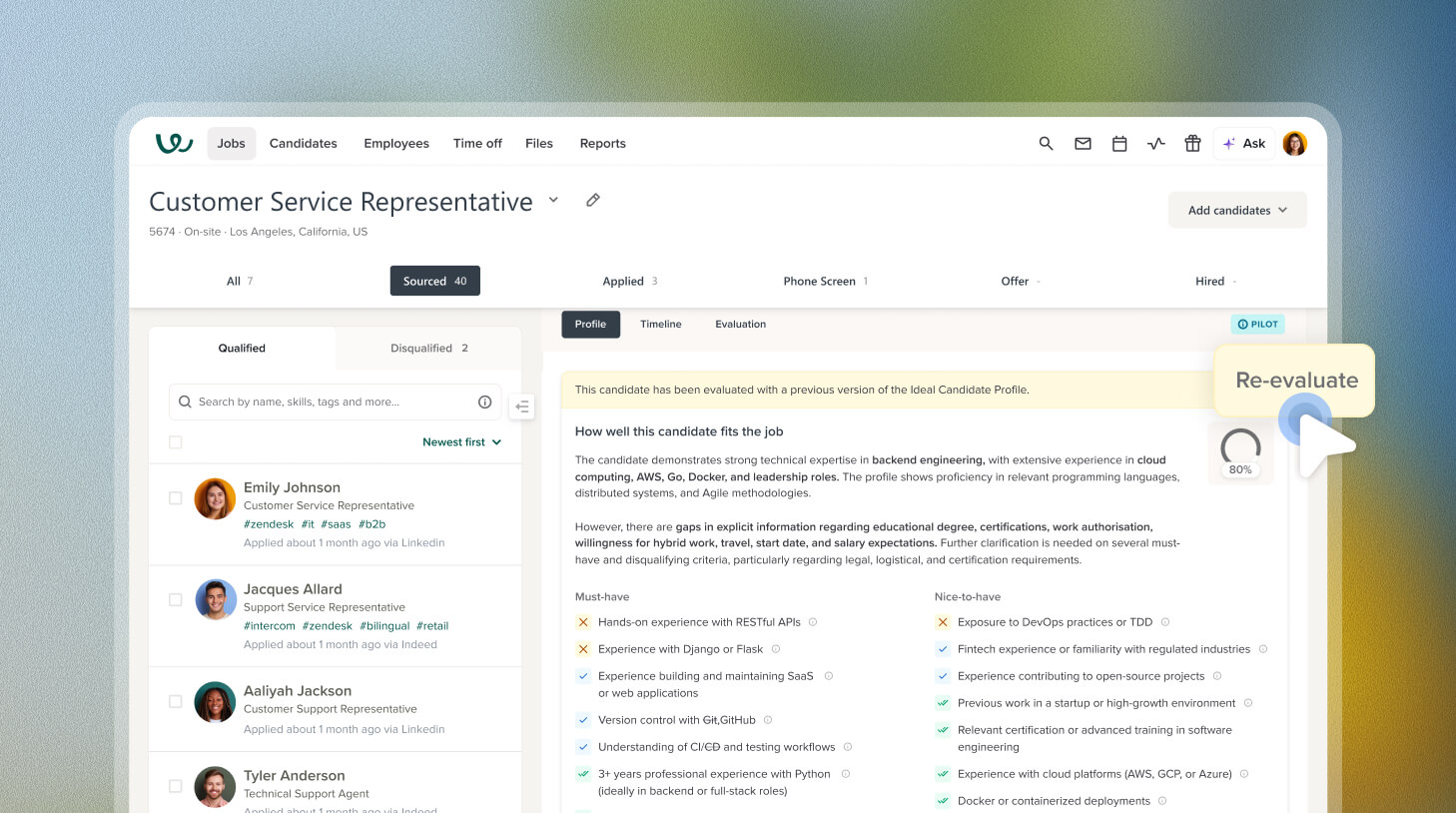
One of the most impactful aspects of this update is its ability to propagate changes across the entire candidate pipeline. Unlike systems that apply new criteria only to future applicants, Workable’s Agent can re-score every candidate already in the pipeline against the newly updated ICP. This includes candidates who have already been processed, advanced, or even initially disqualified.
Upon saving the updated ICP, the Agent initiates a comprehensive re-evaluation process. During this period, affected candidates are temporarily marked as "under review" to indicate that their status is being reassessed. Once the re-evaluation is complete, the system automatically refreshes all auto-advance and auto-disqualify decisions to align with the revised profile. Crucially, each candidate whose status or score changes receives an automated agent comment detailing the outcome and the rationale behind it. This transparent feedback mechanism ensures that there are no "silent changes" and that every candidate, regardless of when they applied, is held to the exact same, most current standard. This consistency is vital for maintaining fairness, reducing potential biases, and building trust in the AI’s judgment.
Consider a scenario where a company is hiring for a data scientist role, initially prioritizing deep experience in Python. Midway through the search, the team realizes that R is equally, if not more, critical for an upcoming project. With the dynamic ICP editing, the recruiter can add R proficiency as a "must-have" skill. The Workable Agent will then automatically re-evaluate all existing candidates, potentially identifying new top contenders who were previously overlooked due to a lack of Python emphasis, or re-ranking others whose R skills now make them more competitive. This real-time adaptability ensures that the talent pipeline is always optimized for the most current and accurate understanding of the role’s requirements.
Strategic Advantages for Hiring Teams
The introduction of dynamic ICP editing offers a multitude of strategic advantages for hiring teams:
- Enhanced Accuracy and Fit: By allowing continuous refinement of the ICP, companies can ensure that their AI-driven sourcing and screening processes are always aligned with the precise needs of the role, leading to better candidate-job fit and ultimately, higher quality hires.
- Reduced Time-to-Hire: The ability to adapt quickly to changing requirements without resorting to manual reviews means fewer delays, accelerating the overall recruitment cycle. This agility is crucial in fast-paced industries where securing top talent quickly is a competitive differentiator.
- Optimized Cost-per-Hire: By minimizing the need for manual intervention and improving the efficiency of the AI agent, organizations can reduce the resources spent on recruitment, including recruiter time and external agency fees.
- Improved Candidate Experience: Consistent evaluation standards across the entire pipeline, coupled with transparent feedback, contribute to a fairer and more professional candidate experience. Candidates appreciate knowing they are being assessed against the most relevant criteria, fostering a positive perception of the employer brand.
- Increased Trust in AI Tools: Recruiters and hiring managers gain greater confidence in the AI agent’s decisions when they know they have full control over the underlying criteria. This transparency and control foster trust, encouraging broader adoption and utilization of AI in recruitment workflows.
- Greater Agility and Responsiveness: The feature allows organizations to be more responsive to market shifts, internal strategic changes, or emergent project needs, adapting their hiring strategies on the fly without having to restart searches or create entirely new job profiles.
Supporting Data and Industry Trends
The need for such flexibility is echoed by broader industry trends. A survey by LinkedIn found that 75% of hiring managers admit to changing job requirements during the hiring process. Furthermore, data from Glassdoor indicates that a positive candidate experience can improve the quality of hires by 15% and reduce turnover by 10%. By ensuring that AI tools can dynamically adapt to these real-world changes, Workable is directly addressing key challenges faced by HR professionals globally. The feature also aligns with the growing demand for "human-in-the-loop" AI solutions, where automation complements human judgment rather than replacing it, providing both efficiency and intelligent oversight.
Voices from Workable and the Industry
A Workable spokesperson, possibly the Head of Product, commented on the release, stating, "Our core mission at Workable has always been to empower hiring teams with intuitive, powerful tools that simplify and enhance recruitment. We understand that hiring is a dynamic process, not a static one. This update to the Workable Agent directly reflects our commitment to listening to customer feedback and delivering solutions that provide genuine flexibility and control. We believe this dynamic ICP editing capability will significantly boost the accuracy and efficiency of our clients’ hiring processes, ensuring their AI agent is always working with the most current understanding of their needs."
Industry analysts have also weighed in. Sarah Chen, a leading HR technology consultant, remarked, "This is a crucial evolution for AI in recruitment. One of the biggest criticisms of early AI systems was their rigidity. The ability to dynamically edit the Ideal Candidate Profile and, more importantly, to re-evaluate the entire existing pipeline against those changes, is a game-changer. It means AI tools can finally match the fluidity of real-world hiring, dramatically increasing their utility and trustworthiness for recruiters who often face shifting demands."
Broader Implications for AI in HR Technology
This development by Workable sets a new standard for AI-driven recruitment platforms. It underscores a growing industry trend towards more adaptable, user-centric AI solutions that empower human users rather than constrain them. As AI continues to mature, its integration into critical business functions like HR will increasingly depend on its ability to handle complexity, ambiguity, and change. Features like dynamic ICP editing move AI from being merely an automation tool to a truly intelligent assistant that can learn, adapt, and refine its performance in real-time based on evolving human input.
The implications extend beyond just Workable’s platform. Competitors in the ATS and HR tech space will likely feel pressure to introduce similar functionalities, pushing the entire industry forward towards more sophisticated and flexible AI offerings. This competition will ultimately benefit companies seeking to leverage AI for talent acquisition, providing them with more powerful and responsive tools to navigate the complexities of the modern job market. Furthermore, it highlights the increasing importance of explainable AI (XAI) in HR, where the rationale behind AI decisions is transparent and easily auditable, fostering greater trust and adoption.
Conclusion
Workable’s update to its AI Agent, enabling dynamic Ideal Candidate Profile editing and full pipeline re-evaluation, represents a significant leap forward in recruitment technology. By providing hiring teams with unparalleled control and consistency, the platform ensures that the AI’s judgment is always aligned with the most current requirements, enhancing hiring accuracy, reducing operational inefficiencies, and ultimately leading to better talent outcomes. As the world of work continues to evolve, tools that offer such agility and responsiveness will be indispensable for organizations striving to build high-performing teams.
Editing the ideal candidate profile is available now for jobs managed by the Workable Agent.