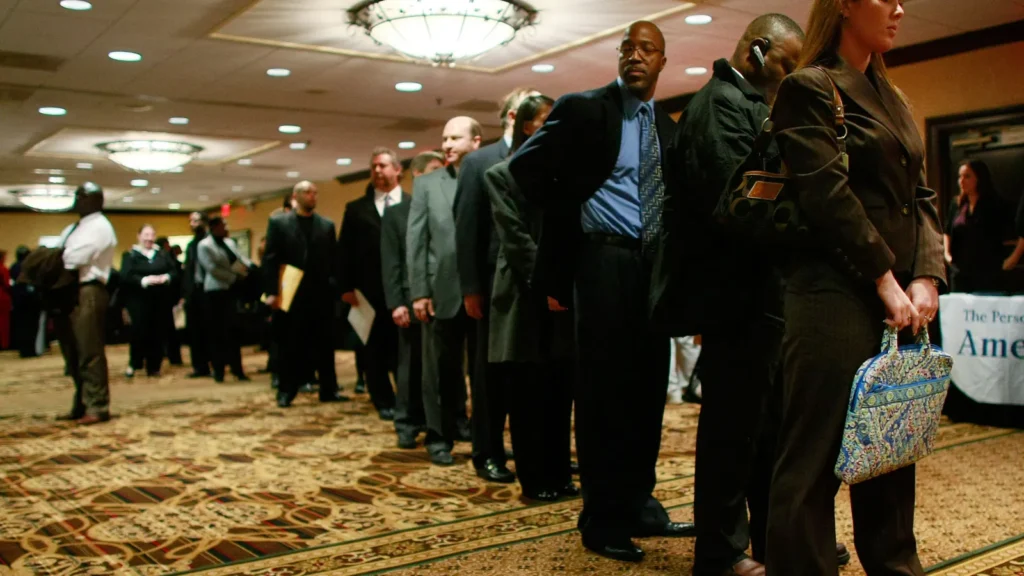
A groundbreaking report from hiring platform Greenhouse has cast a stark light on the increasingly opaque and frustrating reality of modern job applications, revealing that a staggering nearly one-third of applicants are rejected without ever receiving communication from either a human recruiter or an artificial intelligence agent. This unsettling statistic underscores a widespread sentiment among job seekers that the hiring process has become a "black box," leaving them feeling unheard and unseen in their pursuit of employment. Published on October 23, 2026, the report, authored by contributor Lara Ewen, paints a picture of a system struggling under the weight of automation, where efficiency often comes at the cost of transparency and human connection.
The Evolving Landscape of Recruitment: A Historical Context
For decades, the job application process, while never entirely without its challenges, largely revolved around direct human interaction. Candidates would submit resumes and cover letters, often by mail or in person, and expect a response, even if it was a polite rejection letter. The advent of the internet brought about a significant shift, transitioning applications to online portals. This move promised greater efficiency for employers and broader reach for candidates, but it also introduced the first layer of detachment. Applicant Tracking Systems (ATS), initially designed to simply organize and store applications, began to evolve, becoming sophisticated keyword-matching tools that filtered candidates before a human eye ever saw their credentials.
The late 2010s and early 2020s marked the rapid acceleration of artificial intelligence integration into human resources. What began as basic keyword filtering quickly expanded into complex algorithms capable of parsing resumes for specific skills, analyzing language for cultural fit, and even conducting initial video interviews using computer vision and natural language processing. The promise of AI in recruitment was compelling: reduce unconscious bias, streamline high-volume hiring, identify top talent more quickly, and free up recruiters for more strategic tasks. However, as the Greenhouse report indicates, the reality for job seekers has often fallen short of this utopian vision, creating new hurdles and anxieties.
The study, which surveyed over 2,800 individuals actively seeking employment across the U.S., U.K., Ireland, Germany, and Australia, found a pervasive sense of disillusionment. The core finding – that nearly a third of applicants are rejected without any form of contact – highlights a critical breakdown in communication. This "silent rejection" not only leaves candidates in the dark but also chips away at their morale and perception of fairness in the job market. It suggests a system where applications are simply ingested by algorithms, processed, and then discarded if they don’t perfectly match predefined criteria, without any feedback or acknowledgment.
The "Black Box" Phenomenon: Candidate Struggles and Coping Mechanisms
The report delves deeper into the candidate experience, revealing a landscape rife with frustration and the adoption of desperate measures. It found that nearly half of all applicants resorted to seeking a referral, recognizing that a personal connection could be their only reliable path through the automated gatekeepers. This trend, while not new, has intensified, suggesting that networking, rather than merit alone, is becoming an indispensable tool for simply getting an application reviewed. Even more telling is the statistic that 27% of job seekers paid for professional resume writing services, an investment driven by the perceived need to craft applications that can "speak" to algorithms rather than human readers. This financial burden, often borne by individuals already under economic stress, underscores the pressure candidates feel to navigate the complex digital hiring environment.
The challenges don’t end once an application manages to bypass the initial AI screens. Even among candidates who secured an interview, a staggering 96% reported having "at least one complaint" about the process. The most prevalent grievance, cited by 45% of interviewees, was being "ghosted" by the employer after an interview – a phenomenon that has become increasingly common and detrimental to candidate morale. Other complaints included being asked to repeat information already provided in their application, indicating a lack of integration between different stages of the hiring process or a fundamental oversight by human interviewers. These issues suggest that even when candidates get a foot in the door, the experience remains far from ideal, characterized by inefficiency and a lack of respect for their time and effort.
Sharawn Tipton, Chief People Officer at Greenhouse, encapsulated this widespread dissatisfaction, stating, "For the first time I can remember, neither side thinks hiring is working. Candidates send applications into a black hole, while employers sift through AI-polished resumes that all look the same. The application used to be a front door. Now, too often, it’s a dead end. Candidates need a system that actually works and gives them a fair shot. Bolting bad AI on top only hurts them and employers." Tipton’s remarks highlight the dual nature of the problem, affecting both those seeking jobs and those attempting to fill them.
The AI Paradox: A Double-Edged Sword in the Job Search
Artificial intelligence has become an undeniable force in the job search process, but its impact is a complex paradox. The report reveals that 77% of U.S. job seekers utilized AI tools to assist in their job search within the past year. This widespread adoption points to AI’s utility in generating resumes, crafting cover letters, and even practicing interview responses. However, this reliance on AI has also bred a new layer of anxiety and strategic maneuvering among candidates.
A significant 60% of applicants admitted to either altering or contemplating altering their application’s wording to avoid it being mistaken for something generated by AI. Furthermore, 39% took the drastic step of rewriting their entire application for this specific reason. This phenomenon highlights a reactive arms race: as employers increasingly use AI to detect AI-generated content, candidates are forced to adapt their strategies, attempting to make their applications appear more "human" to bypass detection algorithms.
The attempts to circumvent AI are even more pronounced when it comes to screening processes. Nearly two-thirds (62%) of job seekers confessed to employing various tactics to bypass AI screening systems. This included a majority (54%) using AI itself to decipher what the screening system was looking for, essentially fighting fire with fire. Alarmingly, 40% admitted to adding skills or keywords they didn’t actually possess, and a third (33%) confessed to embedding "hidden text" specifically designed to appeal to AI reviewers, a practice akin to search engine optimization for resumes. These tactics, while understandable given the "black box" nature of the process, raise serious ethical questions about candidate honesty and the integrity of the application process. They also signal a desperate attempt by job seekers to regain some control in a system they perceive as stacked against them.

The Quest for Authenticity and Transparency
Despite the tactical maneuvering, the underlying desire of job seekers remains genuine: to effectively demonstrate their true potential. The report found that a resounding 96% of job seekers desired a method to convey "something more clearly than their job application allows." More specifically, 52% expressed a strong wish to showcase their ability to learn and adapt – crucial soft skills that traditional resumes and keyword-driven ATS often fail to capture. This highlights a fundamental disconnect between what employers claim to seek (adaptability, critical thinking, soft skills) and what their automated hiring processes actually prioritize (keywords, pre-defined qualifications).
Interestingly, while AI screening causes significant frustration, the report also suggests a nuanced acceptance of AI in other stages of the process. Nearly half of the candidates surveyed had participated in an AI-driven interview in the past year. Of those, 70% felt that the AI interviewer provided a valuable platform to showcase their skills, indicating that when implemented thoughtfully, AI can facilitate a more structured and perhaps less biased initial assessment. Critically, only 7% of candidates stated they would outright refuse to be interviewed by AI, suggesting that the primary issue isn’t AI itself, but rather its implementation and the lack of transparency surrounding it.
The demand for transparency is overwhelming. A staggering 88% of job seekers expressed a desire for at least one legal requirement compelling employers to disclose when AI would be used in interviews. Furthermore, 55% specifically requested advance notice. This call for regulatory oversight underscores a fundamental erosion of trust in the current hiring ecosystem. Candidates want to understand the rules of engagement and feel that they are being evaluated fairly, not by a mysterious, undisclosed algorithm.
Ophir Samson, Head of Voice AI at Greenhouse, emphasized the importance of trust and genuine assessment: "AI can polish a resume or fire off hundreds of applications, but it can’t show an employer how someone thinks or learns. A structured conversation early in the process could give the right candidates that chance. But it only works if candidates understand how they’re being evaluated, and know a real person will review their responses. Trust must be built into the process from the start." Samson’s statement points towards a more integrated and transparent use of AI, where its capabilities are leveraged to facilitate meaningful interactions rather than replace them entirely.
Broader Implications and The Future of Hiring
The findings of the Greenhouse report resonate with other industry observations, signaling a systemic challenge in modern recruitment. A recent report from TestGorilla, for instance, found that while 72% of U.S. talent professionals surveyed acknowledged that AI expedited candidate sourcing, a significant one-third expressed a lack of confidence in the candidates identified by AI. Even more concerning, 8% reported that using AI actually decreased their confidence in candidates. This highlights a critical disconnect: AI might make the process faster, but it doesn’t necessarily improve the quality of hires or the confidence of the hiring teams, suggesting that the "efficiency" gained might be superficial.

The implications of this "black box" hiring system are far-reaching.
For Candidates: The process fosters a sense of hopelessness, reduces self-esteem, and can lead to burnout. It encourages gaming the system rather than genuine self-representation, potentially creating a workforce that excels at navigating algorithms but not necessarily at the job itself. The lack of feedback means candidates cannot learn or improve their application strategies, perpetuating the cycle of frustration.
For Employers: The reliance on poorly implemented AI risks overlooking highly qualified and diverse talent. Employers might miss out on candidates who don’t fit a narrow, algorithmically defined profile but possess invaluable soft skills, innovative thinking, or unique experiences. It also damages employer branding, as a negative candidate experience can deter future applicants and reflect poorly on the company culture. Furthermore, the ethical and legal risks associated with biased AI are growing, with regulations like New York City’s Local Law 144 requiring independent bias audits for automated employment decision tools, and the European Union’s comprehensive AI Act setting strict standards for high-risk AI systems, including those used in employment.
For HR Technology Providers: There is an urgent imperative to develop more sophisticated, ethical, and transparent AI solutions. This means moving beyond simple keyword matching to tools that can genuinely assess competencies, learning agility, and cultural fit while providing clear explanations of their decision-making processes. The focus must shift from pure automation to augmentation, where AI empowers human recruiters rather than replaces their judgment. This includes building "human-in-the-loop" systems where AI-generated insights are always reviewed and validated by human experts.
The Regulatory Landscape: The increasing demand for transparency will likely accelerate the development of more stringent regulations governing AI in hiring. Governments worldwide are beginning to grapple with how to ensure fairness, prevent discrimination, and protect data privacy in an AI-driven recruitment environment. This could lead to mandatory disclosure of AI use, requirements for explainability in AI decisions, and regular audits for algorithmic bias.
Ultimately, the Greenhouse report serves as a critical call to action for the entire hiring ecosystem. It underscores the urgent need to re-evaluate the role of AI in recruitment, ensuring that technology serves to enhance the human connection and facilitate fair opportunities, rather than becoming an impenetrable barrier. The future of hiring must strike a delicate balance between efficiency and empathy, leveraging AI’s power to streamline processes while prioritizing transparency, trust, and the invaluable human element that defines meaningful employment. Building this trust from the start, as Ophir Samson suggests, will be paramount in transforming the "black box" into a clear, equitable pathway to opportunity for all.