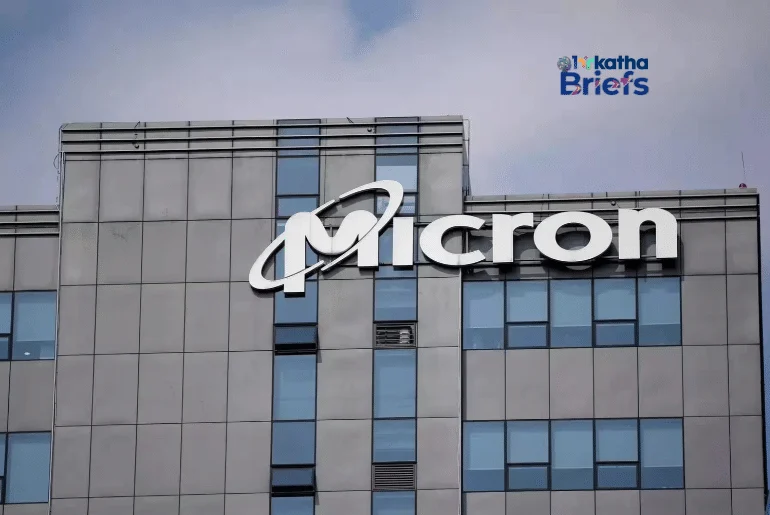
Micron Technology, a global leader in memory and storage solutions, is set to implement a new quarterly, company performance-linked bonus scheme for its employees worldwide, commencing in fiscal year 2027. This significant shift in its compensation strategy follows concerted pressure from labor unions in Taiwan, advocating for workers to receive a more equitable share of the unprecedented profits being generated by the burgeoning artificial intelligence (AI) industry. The initiative is poised to enhance Micron’s existing annual incentive program, signaling a strategic move to align employee rewards more closely with the company’s financial success in a highly competitive and rapidly evolving technological landscape.
Delving into the New Compensation Framework
The newly announced quarterly bonus scheme is designed to directly link employee compensation to Micron’s financial performance, ensuring that global staff benefit from the company’s profitability. Under the proposed structure, the bonus pool for each quarter will be calculated based on a formula incorporating profit after tax, from which projected capital expenditure for the subsequent quarter will be subtracted. This sophisticated metric, with fiscal year 2026 serving as the established baseline, aims to provide a clear and tangible link between operational efficiency, strategic investment, and employee remuneration.
Payouts from this quarterly pool will be split into two components: half will be disbursed in cash following the announcement of quarterly financial results, providing immediate tangible rewards. The remaining half will be paid in company shares, which will vest after a one-year period. This dual-component payout strategy is intended to foster long-term employee engagement and encourage a sense of ownership, aligning individual financial interests with the company’s sustained growth and stock performance. While the company has not yet disclosed a fixed percentage of profits allocated to employees or the total amount earmarked for the bonus pool, the structure underscores a commitment to performance-based incentives.
A Confluence of Factors: AI Boom and Union Advocacy
The decision to introduce this global performance-linked bonus scheme did not emerge in a vacuum. It is a direct response to two powerful forces converging in the semiconductor industry: the exponential growth fueled by the AI revolution and the increasing assertiveness of labor unions, particularly in key manufacturing hubs like Taiwan.
The global semiconductor market is experiencing a period of unprecedented demand, largely driven by the insatiable need for high-performance chips required to power AI data centers, machine learning algorithms, and advanced computing applications. Memory chips, especially High Bandwidth Memory (HBM), are critical components in this ecosystem, and companies like Micron are at the forefront of supplying these essential technologies. The surge in demand has translated into significant revenue growth and profitability for chipmakers, leading to a broader conversation about how these gains are distributed among stakeholders, including the workforce responsible for their creation.
Taiwan, a pivotal nation in the global semiconductor supply chain, hosts a significant portion of Micron’s manufacturing operations. With approximately 15,000 employees in the region, Taiwan is a key manufacturing base for the company’s memory chips, which are indispensable for AI servers. The presence of organized labor, specifically unions at Micron’s facilities, has provided a structured platform for employees to voice their expectations regarding profit-sharing. This scenario highlights a growing trend where the high-tech sector, traditionally less unionized than traditional industries, is experiencing increased labor advocacy as employees seek greater financial recognition for their contributions to booming corporate profits.
Chronology of Negotiations and Agreements
The genesis of this global compensation overhaul can be traced back to persistent negotiations between Micron and its labor unions in Taiwan. The pressure for a more direct profit-sharing mechanism had been building, culminating in formal discussions.
The initial breakthrough occurred with an agreement reached between Micron management and the union representing workers at its larger Taichung operations. This resolution laid the groundwork for the global scheme and addressed specific local concerns. Following this successful negotiation, Micron officially announced the details of the new global quarterly scheme, along with other comprehensive benefits.
However, the dialogue with labor organizations remains dynamic. As of October 22, negotiations with another union, representing employees at Micron’s Taoyuan facility, were still ongoing. This phased approach to agreement underscores the complexity of addressing diverse employee needs and union demands across different operational sites within the same region. The ongoing discussions suggest that while a global framework has been established, localized considerations continue to be refined, ensuring comprehensive and equitable solutions for all employees in Taiwan.
Broader Enhancements and Taiwan-Specific Initiatives
Beyond the new quarterly performance-linked bonus, Micron is also implementing several other significant enhancements to its global compensation and benefits package. The company will increase the maximum payout available under its existing annual incentive program. This program, which is linked to broader company targets including strategic goals and operational milestones, will see an elevated ceiling, offering greater potential rewards for achieving key corporate objectives. Crucially, both the new quarterly scheme and the enhanced annual incentive program will apply globally, ensuring a consistent approach to employee remuneration across Micron’s international footprint.
In recognition of Taiwan’s strategic importance and as part of the agreements reached with local unions, Micron has also announced a suite of additional benefits specifically for its employees in Taiwan. These include a notable increase in employer retirement contributions, rising from 8 percent to 10 percent, providing enhanced long-term financial security for its Taiwanese workforce. Furthermore, employees in Taiwan will receive three additional paid days off, offering greater flexibility and work-life balance. The company is also implementing higher shift allowances and structural salary adjustments, directly addressing concerns related to compensation for specific roles and working patterns, thereby improving the overall competitiveness of its employee value proposition in the region.
The Strategic Imperative: Talent Retention in a Hot Market
Micron’s proactive overhaul of its compensation structure can be viewed as a strategic imperative in the fierce global competition for talent within the semiconductor industry. The demand for highly skilled engineers, researchers, and manufacturing specialists has never been higher, particularly those with expertise in advanced memory technologies crucial for AI applications. Companies are not only competing on innovation and market share but also intensely on attracting and retaining the best human capital.
By introducing a direct link between company performance and employee bonuses, Micron aims to foster a stronger sense of shared success and ownership among its workforce. This approach can significantly enhance employee morale, loyalty, and productivity. In an industry characterized by high intellectual property value and rapid technological cycles, retaining experienced talent is critical for maintaining a competitive edge and ensuring continuity in product development and manufacturing excellence. The equity component of the quarterly bonus, vesting over one year, further incentivizes long-term commitment, potentially reducing attrition rates and stabilizing its workforce in a volatile talent market.
Industry Landscape and Precedent Setting
Micron’s move could also set a significant precedent within the broader semiconductor industry. As other chipmakers continue to reap substantial profits from the AI boom, they face similar pressures from employees and potentially, labor organizations, to share the wealth. Competitors such as Samsung, SK Hynix (also major memory producers), and even foundries like TSMC, may find themselves scrutinizing their own compensation models in light of Micron’s new scheme.
The semiconductor industry has historically been cyclical, with periods of boom and bust. Tying employee bonuses to quarterly financial performance, specifically "profit after tax minus projected capital expenditure," introduces a variable cost structure that can be advantageous. During highly profitable periods, employees are rewarded, reinforcing positive engagement. During potential downturns, the bonus pool would naturally shrink, providing a degree of flexibility for the company’s operating expenses. This model could be seen as an intelligent way to manage compensation costs while maintaining a motivated workforce through various market conditions.
Financial and Operational Considerations
While the new bonus scheme introduces a variable cost component tied to profitability, it represents a strategic investment rather than a mere expense. The potential benefits in terms of enhanced employee motivation, reduced turnover, and improved overall productivity could offset the direct financial outlay. By explicitly linking compensation to financial performance, Micron is effectively turning its workforce into direct stakeholders in the company’s economic success. This alignment can drive greater efficiency and focus on profitability across all levels of the organization.
The inclusion of "projected capital expenditure" in the bonus calculation formula is particularly insightful. It indicates that the company is balancing immediate profit distribution with the need for sustained investment in future growth and technological advancement. By subtracting CapEx, the scheme ensures that critical investments in R&D, new fabs, and equipment upgrades – essential for remaining competitive in the capital-intensive semiconductor industry – are prioritized, even while rewarding employees.
The Evolving Role of Labor in High-Tech
Micron’s agreement with its unions in Taiwan underscores the evolving role and increasing influence of labor organizations in the high-tech sector, particularly in Asia. Traditionally, many tech companies have resisted unionization, preferring direct engagement with employees. However, as the industry matures and generates unprecedented wealth, and as global economic disparities become more pronounced, labor movements are gaining traction. The success of unions in Taiwan in securing enhanced benefits and profit-sharing mechanisms could embolden similar efforts in other regions and within other technology companies, signaling a potential shift in employer-employee dynamics across the industry. This development could reshape how high-tech companies manage their human resources and engage with their workforce in the coming decades.
Analyst and Stakeholder Perspectives
Industry analysts are likely to view Micron’s move as a pragmatic and forward-thinking strategy. It addresses the immediate pressures from a highly profitable market and a vocal workforce, while also positioning the company favorably in the long term for talent attraction and retention. Union representatives, particularly those in Taichung, would likely hail the agreement as a significant victory for workers, demonstrating the power of collective bargaining to secure a fairer share of corporate success. From Micron’s leadership perspective, the announcement would be framed as a testament to its commitment to its global workforce, an investment in its most valuable asset, and a strategic step to ensure sustained innovation and market leadership in the AI era.
In conclusion, Micron Technology’s introduction of a global, performance-linked quarterly bonus scheme, coupled with enhanced annual incentives and specific benefits for its Taiwanese workforce, marks a pivotal moment in the company’s human resources strategy. Driven by the immense opportunities presented by the AI boom and the advocacy of its labor unions, this move is poised to strengthen employee alignment with corporate success, reinforce its position as an attractive employer in a highly competitive market, and potentially set new standards for employee compensation within the global semiconductor industry.