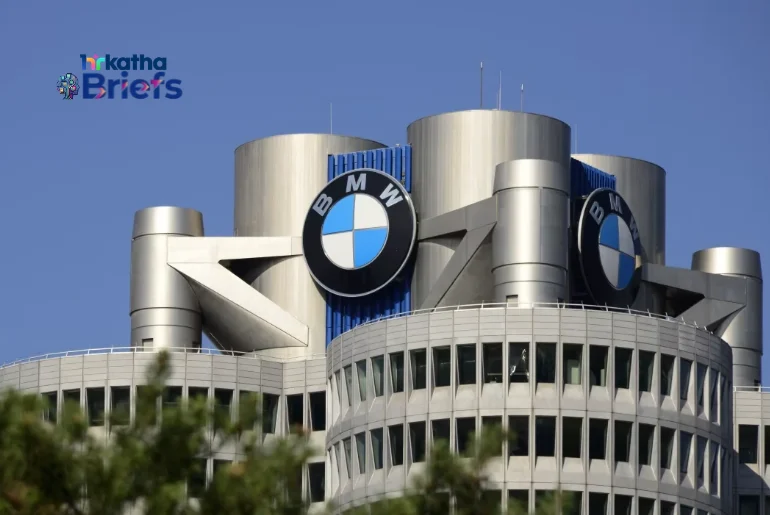
German luxury automotive giant BMW AG has unveiled an ambitious plan to significantly streamline its organizational structure, targeting the elimination of approximately 20 percent of its senior management positions by mid-2027. This strategic realignment is closely intertwined with the company’s aggressive expansion of artificial intelligence (AI) across its business operations, signaling a profound shift in how the Munich-based automaker intends to manage its global enterprise. The move underscores a broader industry trend where established corporations are leveraging advanced technologies to enhance agility, optimize decision-making processes, and bolster profitability in an increasingly competitive global market.
BMW to Streamline Leadership Ranks Amidst AI-Driven Transformation
The core of BMW’s latest restructuring initiative involves consolidating various divisions and management layers. This consolidation is set to be facilitated through an agreed buyout programme, designed to simplify decision-making hierarchies, improve overall operational efficiency, and strengthen the company’s financial performance. According to reports, the majority of the positions slated for elimination are expected to be located at BMW’s global headquarters in Munich, a central hub for the company’s strategic and administrative functions.
Currently, BMW’s leadership architecture includes approximately 65 senior vice presidents who report directly to the board, supported by an additional layer of around 400 senior management positions. The planned reduction of 20 percent will, therefore, affect roughly 100 senior roles within this hierarchy. A company presentation, referenced in industry reports, explicitly states that AI-enabled processes are anticipated to support this 20 percent reduction in senior vice-president positions, alongside a more comprehensive consolidation of management structures across the board. This signals that AI is not merely a tool for efficiency but a foundational element enabling a leaner, more responsive leadership framework.
Strategic Imperatives Driving the Restructuring
This significant organizational overhaul is not an isolated event but rather a direct response to the multifaceted pressures and transformative shifts sweeping across the global automotive industry. BMW, like its peers, is navigating an era defined by rapid technological advancements, evolving consumer preferences, and intensified competition.
The Evolving Automotive Landscape: The industry is undergoing an unprecedented transition from internal combustion engine (ICE) vehicles to electric vehicles (EVs). This shift demands substantial investments in research and development for battery technology, charging infrastructure, and new production processes. Simultaneously, the rise of software-defined vehicles (SDVs) requires automakers to become proficient in software development, data analytics, and over-the-air updates, fundamentally altering vehicle architecture and customer interaction. Autonomous driving technologies, though still in development, represent another colossal investment area that necessitates agility and swift decision-making. Furthermore, traditional luxury automakers face fierce competition not only from established rivals like Mercedes-Benz and Audi but also from innovative new entrants such as Tesla and a growing contingent of well-funded Chinese EV manufacturers like BYD and Nio, which are rapidly expanding into global markets with competitive offerings. These pressures necessitate a more efficient and nimble corporate structure capable of rapid innovation and adaptation.
BMW’s "Neue Klasse" Strategy: Central to BMW’s future vision is its "Neue Klasse" platform, which is poised to underpin a new generation of electric vehicles starting from 2025. This platform is not just about electrification; it’s designed to integrate advanced digitalization, circular economy principles, and a completely reimagined user experience. Successfully launching and scaling the "Neue Klasse" requires unprecedented levels of cross-functional collaboration, accelerated development cycles, and efficient resource allocation. The current restructuring, particularly the focus on streamlining management and leveraging AI, is therefore a critical enabler for the successful execution of this ambitious strategy. By reducing hierarchical layers, BMW aims to empower teams, speed up project approvals, and foster a culture of innovation that is less encumbered by bureaucratic processes.
Details of the Senior Management Reduction
The targeted reduction of 20 percent in senior management positions is a precise and calculated move. With roughly 65 senior vice presidents and an additional 400 senior management roles, the total pool of affected positions could be around 465. A 20 percent cut implies the elimination of approximately 90-100 roles, predominantly at the higher echelons of the company’s leadership. The buyout program is a common mechanism in Germany for workforce reductions, often involving severance packages and support for career transition, which helps to mitigate potential industrial disputes and ensures a socially responsible approach in consultation with works councils. The consolidation of divisions and management layers aims to eliminate redundancies, reduce reporting lines, and create flatter organizational structures. This is expected to foster greater accountability and allow for a more direct flow of information, thereby accelerating decision-making from strategy formulation down to operational execution.
The Central Role of Artificial Intelligence
A defining feature of this restructuring is the explicit reliance on artificial intelligence as a catalyst for organizational transformation. Walter Mertl, BMW’s Chief Financial Officer, has been vocal about the consistent use of AI agents across the company as a means to create leaner structures, speed up decision-making processes, and significantly improve operational efficiency.
The integration of AI is envisioned not just for automating routine tasks but for fundamentally redesigning workflows and intelligence gathering at the management level. For instance, AI-powered analytics can provide senior leaders with real-time insights into market trends, production efficiencies, supply chain vulnerabilities, and financial performance, enabling more data-driven and agile responses. AI agents could automate the compilation of reports, synthesize complex data from various departments, and even flag potential issues or opportunities that might otherwise go unnoticed. This reduces the need for extensive human oversight in data aggregation and analysis, allowing managers to focus on strategic thinking, problem-solving, and innovation.
Beyond traditional analytics, AI is being deployed in areas such as predictive maintenance in manufacturing, optimizing logistics and supply chains, enhancing customer relationship management, and even streamlining human resources processes through intelligent talent acquisition and performance analysis. In the context of management, AI could facilitate project management by predicting bottlenecks, optimizing resource allocation, and automating progress tracking. It could also support strategic planning by simulating various market scenarios and evaluating potential outcomes of different strategic choices. The goal is to create an "intelligent enterprise" where information flows seamlessly, decisions are made with greater precision and speed, and resources are utilized optimally, ultimately requiring fewer layers of human management for oversight and coordination.
Broader Workforce Adjustments and Context
The current focus on senior management follows a wider workforce restructuring initiated earlier in Germany. In July, BMW reached an agreement to reduce its white-collar employment through a voluntary departure programme. Individuals familiar with the matter, cited in various reports, indicated that this initiative could result in the elimination of approximately 8,000 positions. This figure represents about 5 percent of BMW’s global workforce, highlighting a significant, multi-faceted effort to optimize personnel costs and structures across different levels of the organization.
Such voluntary departure programs are a common mechanism in the German industrial landscape, often negotiated in close collaboration with powerful works councils and labor unions like IG Metall. These agreements typically prioritize social compatibility, ensuring that affected employees receive fair compensation and support for retraining or re-employment. The simultaneous pursuit of both voluntary departures for a broader white-collar segment and targeted buyouts for senior management indicates a comprehensive approach to organizational efficiency, addressing both the overall headcount and the specific configuration of its leadership. This layered approach allows BMW to adapt its workforce to the changing demands of the industry while adhering to Germany’s robust labor protection laws.
Financial and Operational Impact
While BMW has not publicly detailed the specific financial savings expected from these management reductions, such initiatives are typically undertaken with a clear objective of improving cost efficiency and bolstering the bottom line. Reducing approximately 100 senior roles, each commanding substantial salaries, benefits, and associated overheads, is likely to result in annual savings in the high tens of millions of euros. These savings can then be re-invested into critical areas such as EV research and development, software development, or expanding market presence.
Operationally, the anticipated benefits extend beyond mere cost reduction. A leaner management structure is expected to foster greater agility, allowing BMW to respond more quickly to market changes and technological shifts. Simplified decision-making processes can accelerate product development cycles, speed up market introductions of new technologies, and enhance overall strategic responsiveness. This is particularly crucial in the fast-evolving automotive sector, where time-to-market for new models and features can be a significant competitive differentiator. Improved efficiency is also likely to positively impact project execution, resource allocation, and overall operational performance, contributing to a stronger competitive position. BMW reported an operating margin of 9.6% in its automotive segment in the third quarter of 2023, and these efficiency drives aim to sustain or improve such healthy margins amidst increasing investment requirements.
Industry-Wide Trend of AI-Driven Restructuring
BMW’s restructuring efforts are emblematic of a broader, accelerating trend across large corporations globally, where artificial intelligence is increasingly being deployed beyond its traditional applications in technology and manufacturing, extending into core corporate and management functions. Bloomberg has previously reported similar workforce reductions affecting management and administrative roles at other major companies, including logistics giant United Parcel Service (UPS) and airline group Deutsche Lufthansa.
This trend signifies a paradigm shift in how companies perceive and utilize AI. It’s no longer just about automating factory floors or improving software code; it’s about fundamentally rethinking organizational structures, decision-making processes, and the very nature of management work. AI’s ability to process vast amounts of data, identify patterns, automate routine analytical tasks, and even generate insights is prompting companies to question the necessity of certain middle and senior management layers whose primary roles historically involved information synthesis, coordination, and oversight. The "lean management" principles of the past are now being supercharged by AI, leading to a new era of "intelligent lean management." This suggests that the impact of AI on white-collar jobs, particularly in administrative and managerial functions, will continue to grow, pushing companies to adapt their workforce strategies and talent development programs.
Stakeholder Perspectives and Reactions
BMW Leadership Commentary: While specific public statements beyond those by CFO Walter Mertl are often reserved for investor calls or official press releases, the overarching message from BMW’s leadership is clear: the company is committed to transforming itself into a future-proof, digitally native, and highly efficient organization. CEO Oliver Zipse has consistently emphasized the importance of innovation, sustainability, and customer focus. This restructuring aligns with that vision, aiming to create the organizational backbone necessary to achieve these ambitious goals. The narrative emphasizes proactivity and strategic foresight rather than reactive cost-cutting, positioning BMW as a leader in adapting to the new industrial reality.
Works Council and Labor Union Stance: In Germany, the influence of works councils (Betriebsräte) and powerful labor unions like IG Metall is paramount in any significant workforce adjustment. While specific details of the senior management buyout program would be negotiated confidentially, it is highly probable that the works council would have been involved in ensuring the fairness and transparency of the process. Their primary concern would be to minimize hardship for affected employees, ensure compliance with labor laws, and advocate for comprehensive social plans, including severance packages, outplacement services, and opportunities for retraining. The agreement for the earlier voluntary departure program sets a precedent for how such discussions are likely to proceed, focusing on social compatibility and employee support.
Analyst Insights: Industry analysts generally view such proactive organizational adjustments as critical for long-term competitiveness. Many would see BMW’s move as a necessary step to free up resources for future investments and enhance agility. Analysts from major investment banks and automotive consulting firms would likely commend BMW for its forward-thinking approach to AI integration at the management level. They might highlight the potential for improved return on capital employed, enhanced shareholder value, and a stronger competitive position against tech-driven competitors. However, they would also watch closely for potential pitfalls, such as the risk of losing valuable institutional knowledge or the challenges of maintaining employee morale during a period of significant change. The successful execution of the AI integration will be a key metric for analysts evaluating the program’s long-term success.
Challenges and Future Outlook
Implementation Complexities: Executing a significant reduction in senior management positions while simultaneously integrating advanced AI technologies is fraught with complexities. Challenges include identifying the right roles for elimination without disrupting critical operations, managing the knowledge transfer from departing leaders, and ensuring that the new, leaner structure maintains effective oversight and decision-making capabilities. Furthermore, successfully integrating AI agents requires robust IT infrastructure, data governance frameworks, and a workforce trained to collaborate effectively with AI tools. Employee morale during such periods of change also needs careful management to prevent disengagement or the loss of key talent.
Measuring Success: The true success of this initiative will be measured not just by cost savings but by tangible improvements in operational efficiency, acceleration of product development, enhanced innovation, and ultimately, sustained profitability and market leadership. BMW will need clear metrics to track these outcomes and demonstrate the value generated by its AI investments and organizational restructuring.
Long-Term Vision: By undertaking these bold steps, BMW is positioning itself for continued leadership in the digital and electric age. The goal is to build an organization that is inherently agile, data-driven, and capable of rapid adaptation to unforeseen market dynamics. This restructuring is a testament to the belief that the future of automotive success lies not only in superior engineering and design but also in superior organizational intelligence and operational efficiency, powered by cutting-edge technology.
In conclusion, BMW’s decision to cut a substantial portion of its senior management while simultaneously embedding AI deep into its corporate fabric represents more than just a cost-cutting exercise. It is a fundamental strategic repositioning, aiming to forge a leaner, more agile, and technologically advanced organization ready to navigate the profound transformations sweeping across the global automotive industry. This move sets a precedent for how established corporations are likely to evolve in an era where artificial intelligence is increasingly becoming a core driver of corporate strategy and organizational design.