The burgeoning field of Artificial Intelligence, once heralded as a pathway to unprecedented efficiency and innovation, is poised to confront a stark economic reality: the cost of accessing and deploying AI tools is on the precipice of a significant escalation, a development that promises to reshape industries and challenge business models. This impending price surge, driven by astronomical infrastructure investments and the pursuit of profitability by AI developers, is not merely a financial adjustment but a potentially disruptive force that could redefine how businesses and consumers interact with advanced technology.
The fundamental driver of this predicted price hike is the sheer, unyielding expense associated with delivering sophisticated AI capabilities. The infrastructure underpinning these technologies, particularly the vast data centers required to train and run complex models, represents an investment that dwarfs historical technological undertakings. Globally, spending on data centers, even when adjusted for inflation, has already surpassed the monumental cost of constructing the entire 47,000-mile U.S. highway network over four decades, a figure estimated to be around $670 billion.
The Unprecedented Scale of AI Infrastructure Investment
The past twelve months alone have witnessed an astonishing acceleration in capital expenditure within the AI ecosystem. The four dominant hyperscale cloud providers – Amazon, Alphabet (Google), Microsoft, and Meta – are reported to have collectively invested between $370 billion and $410 billion in 2025. This figure, based on strict capital expenditures, financial leases, and fiscal year adjustments, is a significant increase from previous years. A report citing Bridgewater’s estimates indicates that these four giants invested approximately $410 billion in 2025 and are projected to escalate this investment to around $650 billion in 2026.
Beyond these foundational players, the landscape of "AI data-center builders" has expanded to include entities like Oracle, CoreWeave, and Elon Musk’s xAI/SpaceX. When factoring in the infrastructure development by these companies, the recent annualized investment in AI data centers surges to an estimated $500 billion, with projections indicating a run-rate spending of $700 billion to $750 billion or more by 2026. While broader market figures, including multi-year commitments, are considerably larger, these represent announced capacity rather than immediately spent capital.

Furthermore, the colossal demand for AI hardware, particularly advanced semiconductors, adds another substantial layer to the overall investment picture. Companies such as Nvidia, TSMC (Taiwan Semiconductor Manufacturing Company), Micron, Intel, SK Hynix, and Seagate, all critical components in the AI supply chain, are collectively investing an estimated $200 billion to $300 billion. When aggregated, this signifies that the global AI infrastructure spend is rapidly approaching a staggering $1 trillion annual run rate by 2026.
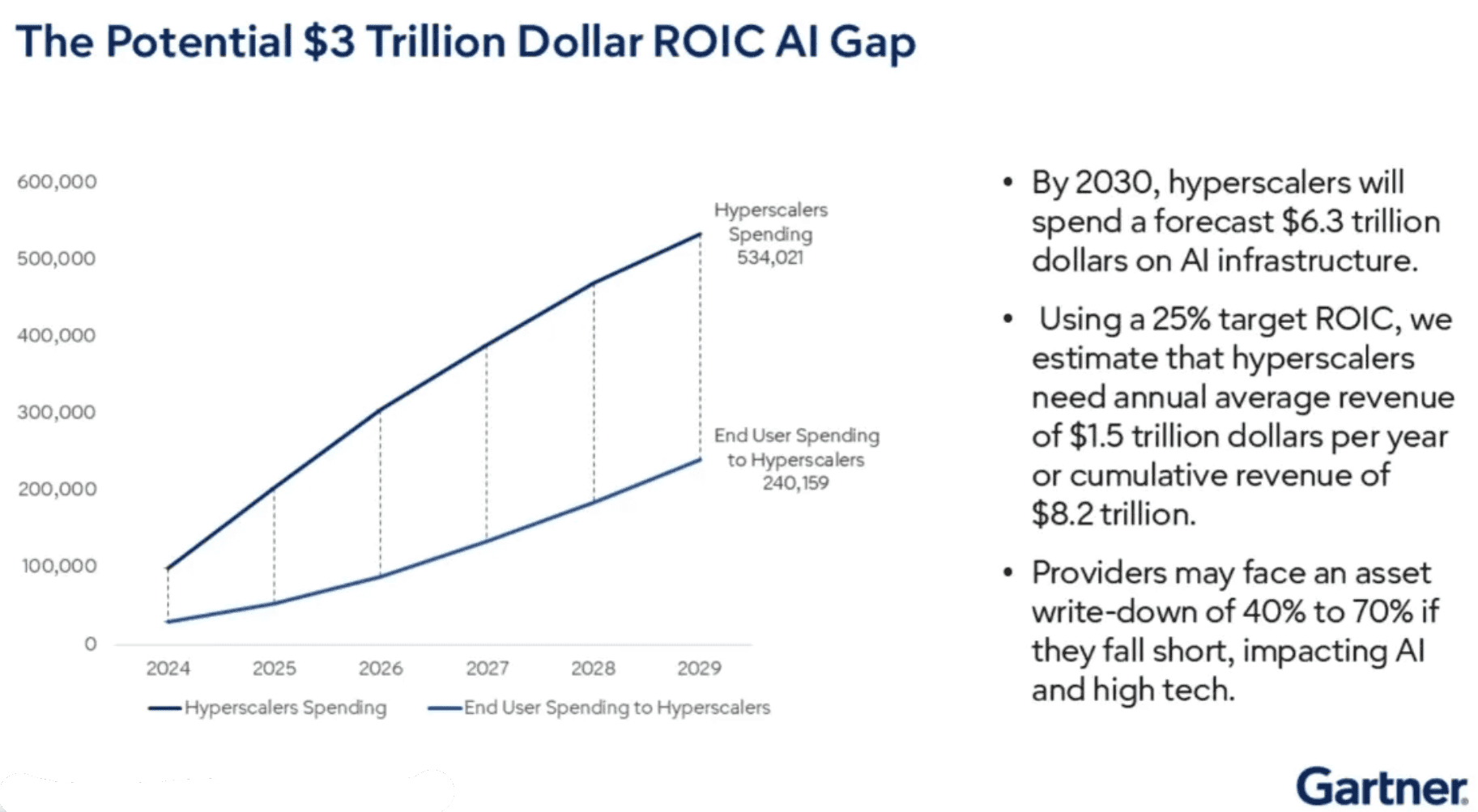
Looking ahead, industry analysts project an even more dramatic escalation. Gartner forecasts that global spending on AI-related infrastructure and services will reach an astronomical $6.3 trillion by 2030, underscoring the long-term, capital-intensive nature of this technological revolution.
The Pressure Cooker of Profitability: AI Developers and Pricing Power
The economic calculus for AI providers is rapidly shifting. Many emerging AI companies, such as Anthropic and OpenAI, are increasingly navigating the path toward public offerings. This transition inherently places them under immense pressure to demonstrate robust financial performance and positive gross margins to Wall Street investors. Anthropic, for instance, is reportedly nearing this profitability threshold. Consequently, to bolster their financial standing and justify their valuations, these companies are expected to leverage their pricing power.
This strategic pricing adjustment is not confined to nascent AI developers. Established enterprise software giants, including SAP, Workday, Oracle, Salesforce, and Adobe, are also keen to showcase their AI initiatives as revenue-generating engines. As these companies integrate AI into their existing product suites and offer new AI-driven services, they will likely face similar pressures to optimize their pricing strategies to reflect the significant investments and operational costs associated with their AI offerings.
Customer Reactions and the Search for Cost-Effective Solutions
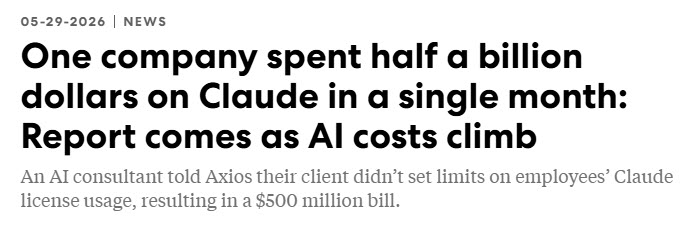
The initial wave of AI adoption has been characterized by a willingness among many businesses to absorb rising costs, driven by the perceived value and productivity gains promised by AI tools. However, as the financial implications become more apparent, businesses are beginning to re-evaluate their AI spending. Anecdotal evidence suggests a growing concern among chief information officers (CIOs) and other technology leaders. In recent discussions with clients, it has been reported that the escalating costs associated with AI tools, such as Claude Code, have prompted some to explore alternative, more cost-effective solutions. Specifically, the possibility of outsourcing AI development and implementation to engineering talent in regions like India has emerged as a tangible consideration.
Eric Johnson, CIO at PagerDuty, a company that assists software engineers in managing technical outages, expressed his preparedness for volatile AI costs. As his organization’s 1,200 employees begin to leverage Anthropic’s AI coding and other tools to accelerate software development and enhance operational tasks, Johnson anticipates significant financial outlays. He acknowledges the inherent value of AI but also highlights the open questions surrounding its cost management and the precise return on investment for this relatively new technology.
Anthropic, a key player in the generative AI space, has already begun to recalibrate its pricing model. The company has shifted from flat-fee structures to a usage-based pricing model for its enterprise customers. This means that businesses will be billed based on the volume of AI services they consume, a move that could lead to substantially higher costs for heavy users. Anthropic attributes this pricing adjustment, in part, to the implementation of a new version of a "tokenizer" technology for its latest AI models, which contributes to increased computational demands and, consequently, higher operational expenses.
Despite these rising costs, many technology firms and large Anthropic customers have indicated their intention to absorb these expenses. Their strategic imperative remains focused on leveraging AI to boost productivity among software engineers and sales teams through task automation. This suggests a short-term acceptance of increased expenditure in anticipation of long-term efficiency gains.
The Emerging Price-Performance Battleground
The competitive landscape for AI services is evolving rapidly, with a notable shift towards optimizing the balance between cost and performance. In a recent development, Google announced the Gemini 3.5 Flash model, positioned as a significantly more cost-effective alternative to existing high-performance models. Priced at a fraction of the cost of models like Opus 4.7, this announcement signals the official commencement of a fierce competition to deliver superior price-performance ratios in the AI market. This move by Google is likely to put pressure on other AI providers to reassess their own pricing structures and explore ways to offer more economical yet capable AI solutions.
Quantifying the Cost Surge: The Trillion-Dollar Revenue Imperative
To comprehend the magnitude of the impending price increases, a closer examination of the financial requirements for AI infrastructure investment is essential. For AI providers to achieve a 15% compound annual return on their substantial investments, assuming a five-year depreciation period for their assets, they must generate new revenue streams totaling at least $1 trillion annually. This figure, based on current AI profit margins, is likely to be even higher.
This colossal revenue target will inevitably be sourced from a combination of consumer and business expenditures. On the consumer front, current global internet advertising spending hovers around $750 billion. For AI companies to offset a significant portion of their infrastructure costs through advertising, it would necessitate a dramatic increase in ad volume across all platforms, potentially doubling the current ad spend.
On the business side, the global enterprise software market is valued at approximately $1.2 trillion, according to Gartner. This suggests that businesses could potentially double their spending on enterprise software to accommodate the costs associated with AI integration and deployment. This scenario implies that businesses will either face significantly higher prices for their existing enterprise software solutions or will need to invest considerably more to adopt new AI-driven platforms.
Beyond consumer and enterprise software markets, additional revenue streams are expected to emerge from government spending on military applications and the development of new markets in areas such as bio-research and energy research. However, the sheer scale of the required investment suggests that neither consumer advertising nor business software spending alone will be sufficient to meet the revenue demands.
The End of "Moore’s Law" for AI Costs?

The long-held notion that computing power consistently becomes cheaper, often associated with "Moore’s Law," appears to be temporarily suspended in the context of AI. The current trajectory suggests that the cost of advanced computing, essential for AI development and deployment, is unlikely to decrease in the near term.
A historical comparison illustrates this point. The original IBM PC, introduced in 1981 with a price tag of $1,565 (without a hard disk), would cost approximately $5,700 in today’s inflationary-adjusted dollars. While modern PCs, such as Lenovos or Macs, often retail around $3,000, this comparison does not account for the broader computing ecosystem, including smartphones, which have become integral to personal technology consumption. Over the past 45 years, the cost of personal computing has not seen a drastic reduction when viewed holistically.
The implication is that the current wave of AI innovation, while offering immense potential, comes with a significant price tag. Unless AI proves capable of replacing a substantial number of existing technologies and services, consumers and businesses are likely to face increased costs. From an economic perspective, this necessitates the realization of unprecedented productivity gains, improvements in healthcare, or other tangible benefits that have not yet fully materialized.
A Shift in Business Models: From Seat Licensing to Compute as Revenue
The strategic objectives of major technology firms in the AI space are clear: they are not primarily focused on replacing existing revenue streams with AI but on achieving substantial growth. Companies like Nvidia, Oracle, Microsoft, Workday, Google, Meta, SpaceX, Amazon, and Apple view AI compute as a direct revenue generator. This paradigm shift signifies a move away from traditional seat-based licensing models towards a consumption-based model where the utilization of AI processing power is directly monetized. This evolution in business models further reinforces the expectation of increased costs for AI services, as the direct correlation between compute usage and revenue becomes paramount.
The future of AI deployment will undoubtedly be shaped by this economic recalibration. Businesses that are heavily reliant on AI tools will need to carefully manage their usage and explore strategies to optimize their AI investments. The era of readily accessible, low-cost AI may be giving way to a more economically demanding phase, where the true cost of advanced intelligence is becoming increasingly apparent. This transition will likely spur innovation in cost-optimization techniques and foster a more discerning approach to AI adoption, ensuring that the value derived from these powerful technologies aligns with the significant investments required.