At enterprise scale, the hiring problem isn’t finding candidates. It’s processing them. This critical distinction lies at the heart of a persistent challenge facing global organizations: the sheer volume of applications versus the finite capacity of human recruiters. In today’s competitive talent market, businesses are grappling with an avalanche of applications – often tens of thousands monthly across hundreds of open roles, diverse business units, and multiple geographical markets. The traditional, manual approach to screening is buckling under this pressure, leading to significant bottlenecks, inconsistencies in evaluation, and a disheartening candidate drop-off rate. The consequence of a critical role remaining unfilled reverberates throughout the organization, impacting project timelines, overburdening existing teams, and ultimately, leading to lost revenue. The investment case for adopting Artificial Intelligence (AI) in enterprise-scale interviewing is therefore not merely a question of efficiency, but a strategic imperative for sustained business growth. The core question for many organizations is not if they should adopt AI, but whether their current infrastructure and processes are truly equipped to harness its transformative potential.
The Enterprise Recruiting Capacity Crisis: A Structural Mismatch
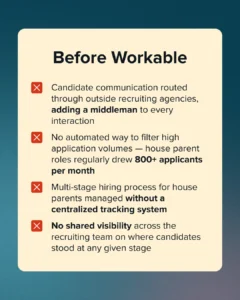
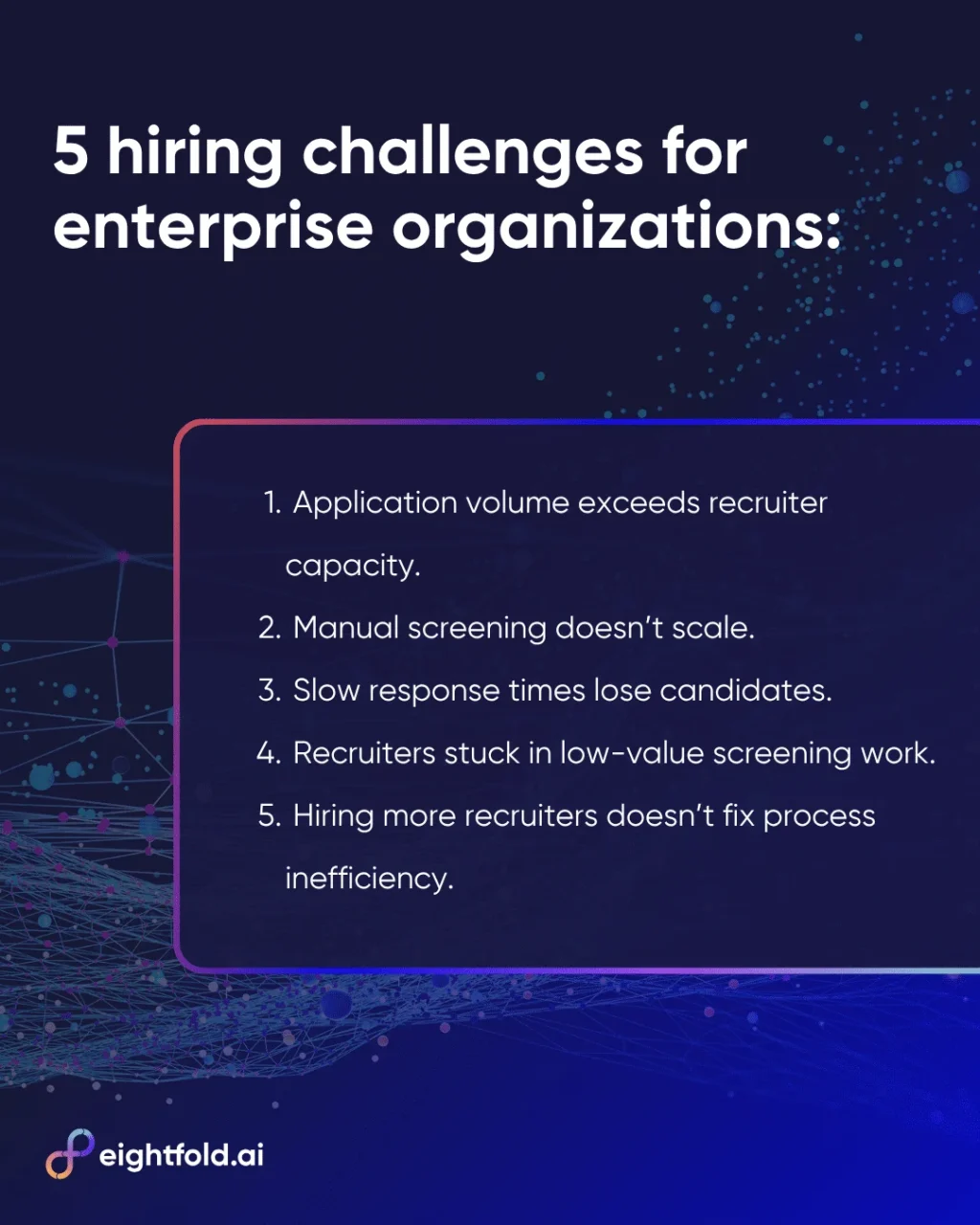
Even the most well-resourced enterprise talent acquisition teams are encountering a fundamental structural imbalance between the sheer volume of incoming applications and the limited capacity of their recruiters. The reality of high-volume hiring in large organizations is stark: a single, sought-after position can attract anywhere from 500 to over 1,000 applications within the initial 72 hours of its posting. When a recruiter dedicates even a conservative five minutes to thoroughly screen each application, they are looking at a commitment of over 40 hours of work for just one role. When this workload is multiplied across a portfolio of 300 or more open requisitions, the mathematical equation becomes unsustainable, if not impossible, to manage effectively through manual means.
The predictable fallout from this capacity deficit is a cascade of negative consequences. Response times to candidates stretch from days into weeks, a delay that in today’s swift job market often leads to qualified individuals disengaging or accepting offers from competing employers. Recruiters, frequently buried under the weight of essential but time-consuming triage work, find themselves with diminished capacity for the relationship-building and strategic partnership activities that are crucial for driving business objectives and securing top talent. Hiring managers, in turn, experience mounting frustration with the inconsistent quality of candidate pipelines and the prolonged turnaround times for filling critical positions. This creates a cyclical problem, perpetuating the very issues that plague the recruitment process.
The common solution many organizations gravitate towards – increasing recruiter headcount – is a costly, slow-to-scale approach that, crucially, fails to address the underlying systemic problem. What enterprise talent teams genuinely require is a sophisticated screening layer that can operate with the speed and volume demanded by the modern application funnel. This is where the strategic implementation of AI-driven solutions becomes not just beneficial, but essential.
AI Interviewer: Scaling Recruitment Operations with Intelligent Automation
Eightfold AI’s AI Interviewer, built upon the robust Eightfold Agentic Talent Operating System and currently trusted by a third of the Fortune 500, offers enterprise talent acquisition teams a consistent and automated screening layer. This solution activates the moment a candidate applies, simultaneously across every role, every region, and every business unit. It is designed to address the capacity crisis head-on by automating the most time-intensive aspects of the initial recruitment stages.
Reclaiming Recruiter Capacity for Strategic Impact
The AI Interviewer automates the foundational screening tasks: inviting candidates, posing role-specific questions, evaluating their responses, and generating structured, concise summaries. Recruiters are then presented with these summaries and AI-generated interview scores, enabling them to prioritize their candidate pipelines in minutes rather than days. Early adopters have reported significant improvements, with organizations reducing the time to the first human interview by as much as 90%.
This reclaimed capacity translates directly into measurable business value. When recruiters can dedicate less time to administrative screening and more time to engaging with genuinely qualified candidates, hiring manager satisfaction sees a marked improvement. Offer acceptance rates tend to increase, and the talent function can deliver a more strategic impact per dollar invested. This shift allows recruiters to move from being purely transactional processors to strategic talent advisors, contributing more meaningfully to the organization’s overarching goals.
Ensuring Standardized Evaluation Across Global Operations
A persistent and significant challenge in enterprise hiring is maintaining consistency across a decentralized and geographically dispersed recruitment operation. When hundreds of recruiters, operating in dozens of locations, are responsible for initial candidate screenings, evaluation criteria can inevitably shift. The questions asked, and the interpretation of responses, can vary substantially from one region or business unit to another. This inconsistency is not necessarily due to differing role requirements, but rather a lack of standardized evaluation processes.
The AI Interviewer addresses this by ensuring that every candidate is asked the same role-specific questions. Crucially, it evaluates responses based on demonstrable skills, relevant experience, and proven capabilities, rather than being influenced by factors such as résumé formatting, interviewer subjectivity, or the time of day the screening occurs. This rigorous, skills-based assessment provides every candidate with a fair and consistent evaluation. Consequently, hiring managers receive summaries built on the same, objective criteria, making cross-market and cross-team comparisons genuinely meaningful and reliable.
The system’s underlying models have undergone rigorous bias audits, and it supports over 22 languages, having been validated for effectiveness across 155 countries. This makes it equally adept at supporting recruitment efforts for a corporate headquarters in Chicago as it is for a regional operation in Singapore. Furthermore, candidates with accessibility needs are seamlessly routed to a human-led process at every stage, ensuring inclusivity and compliance.
Demonstrating Tangible ROI for Boardroom Visibility
For Chief Human Resources Officers (CHROs) and Chief People Officers (CPOs) tasked with justifying investments in AI technology, the financial case is compelling and concrete. A reduction in the time-to-fill metric, even by a single week across hundreds of annual hires, translates into substantial recovered productivity and cost savings. Mitigating mis-hires through more consistent, skills-based evaluations directly reduces the significant costs associated with employee turnover and replacement. Moreover, freeing up senior recruiters from administrative screening allows the organization’s most valuable and costly talent resources to be deployed on high-stakes decisions that truly require human expertise and judgment.
The AI Interviewer integrates directly with leading Applicant Tracking Systems (ATS), a feature that significantly streamlines implementation. This means the system can be up and running in hours, not months, and does not necessitate dedicated technical resources or a complex, time-consuming change management program to achieve initial adoption. This rapid deployment capability allows organizations to begin realizing the benefits of AI-powered screening much sooner.
Human Judgment Remains Central to the Hiring Process
While the AI Interviewer expertly handles initial screening and delivers structured, data-driven insights, the ultimate hiring decision always remains firmly with the human recruitment team. Recruiters and hiring managers have the full capability to replay any interview, review complete transcripts, add their own contextual insights and notes, and critically, override AI recommendations whenever their professional judgment dictates. The AI interview score serves as a valuable signal and a robust data point, not as a definitive verdict. Every significant hiring decision is retained by the human team.
Moreover, because the AI Interviewer is an integral component of the broader Eightfold Agentic Talent Operating System, the insights generated during the screening process do not vanish after a hire is made. These data points feed into a richer, more comprehensive understanding of the existing workforce over time. This comprehensive data then informs critical strategic decisions related to internal mobility, skills gap analysis, succession planning, and proactive retention strategies across the entire enterprise. This holistic approach transforms recruitment from a standalone function into a strategic driver of workforce planning and development.
Enterprise Talent Leaders Report Significant Outcomes
Organizations that have implemented AI Interviewer at an enterprise scale consistently report several standout outcomes, underscoring its efficacy in addressing the core challenges of high-volume recruitment:
- Accelerated Time-to-Hire: A dramatic reduction in the duration from application to interview, enabling organizations to secure top talent before competitors.
- Enhanced Candidate Experience: By providing faster feedback and a more structured, fair evaluation process, AI Interviewer helps maintain candidate engagement and satisfaction.
- Improved Recruiter Productivity: Automating repetitive tasks frees up recruiters to focus on strategic engagement, relationship building, and closing candidates.
- Increased Hiring Quality: Standardized, skills-based evaluation leads to more objective assessments, reducing bias and improving the quality of hires.
- Reduced Cost-Per-Hire: Streamlined processes and increased efficiency contribute to a lower overall cost for each successful hire.
The Escalating Cost of the Status Quo
In large enterprise organizations, the financial and operational costs associated with a slow or inconsistent hiring process extend far beyond individual roles. These inefficiencies compound across the entire business. Talent gaps can significantly impact project timelines, disrupt product roadmaps, compromise customer commitments, and negatively affect employee morale and retention. For CHROs and CPOs who are accountable to their boards for workforce performance and strategic talent acquisition, the risk of inaction regarding hiring efficiency is a tangible and growing concern.
The AI Interviewer is built upon an enterprise-grade platform that has been recognized as one of the Top HR Products of 2025. This same underlying technology is trusted by a substantial portion of the Fortune 500 to power their talent decisions at scale. It delivers the consistency, speed, and analytical depth that enterprise hiring demands, critically, without the implementation complexity that often impedes widespread adoption.
Ultimately, the enterprise talent teams that are succeeding in today’s competitive landscape are not necessarily those with the largest recruitment departments. Instead, they are the organizations that have adopted the smartest processes – those that move with agility, evaluate candidates fairly and objectively, and strategically deploy their human capital to focus on the tasks that truly require human judgment and expertise. The adoption of AI in recruitment is no longer a future possibility; it is a present-day necessity for organizations aiming to thrive.