The rapid evolution of Artificial Intelligence (AI) within the enterprise landscape is marked by a fundamental shift from traditional software systems to dynamic, learning agents. These AI Agents and Superagents, as detailed in the HR 2030 architecture, are not static applications but rather evolving entities that absorb, adapt, and ultimately embody the unique operational nuances of a company. This transformative capability has profound implications for how businesses leverage their most valuable assets: their tacit knowledge, historical experiences, and intricate operational policies.
At the core of this revolution is Microsoft’s recent advancements, particularly its integration of proprietary intelligence, such as Galileo, into its Microsoft Copilot platform. This integration allows Copilot to ingest and retrain itself on a company’s intellectual property, transforming it into a deeply knowledgeable and trusted AI partner. The results, as demonstrated by early adopters like the Microsoft HR team, have been astoundingly useful, providing detailed and accurate insights directly attributable to the company’s own documented expertise. This signifies a move towards AI that acts as an extension of the organization’s collective wisdom, rather than an external tool.
The Rise of Personalized AI Agents: Beyond Generic Solutions
The traditional approach to enterprise software often involved implementing standardized systems that required significant customization to align with a company’s unique practices. However, AI Agents offer a paradigm shift. Instead of adapting the company to the system, the system adapts to the company. An AI agent tasked with recruitment, for instance, will continuously learn and refine its understanding of the organization’s specific hiring criteria, cultural fit expectations, and preferred candidate profiles. Similarly, an AI agent handling employee service delivery will become increasingly adept at navigating the company’s internal policies, benefits structures, and support protocols.
This learning process is crucial for capturing and operationalizing what is often termed "tacit knowledge"—the implicit, unwritten understanding and experience that forms a significant competitive advantage for many organizations. This includes established policies, ingrained cultural behaviors, risk management processes, and the subtle "how we do business" that distinguishes one company from another. Historically, this knowledge has been difficult to codify and disseminate effectively, often residing within the collective memory of long-tenured employees.
Microsoft’s Frontier Tuning: Institutionalizing Company-Specific Intelligence
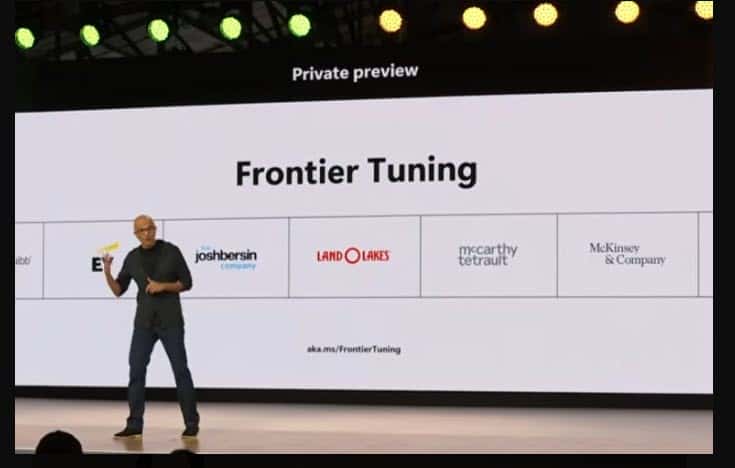
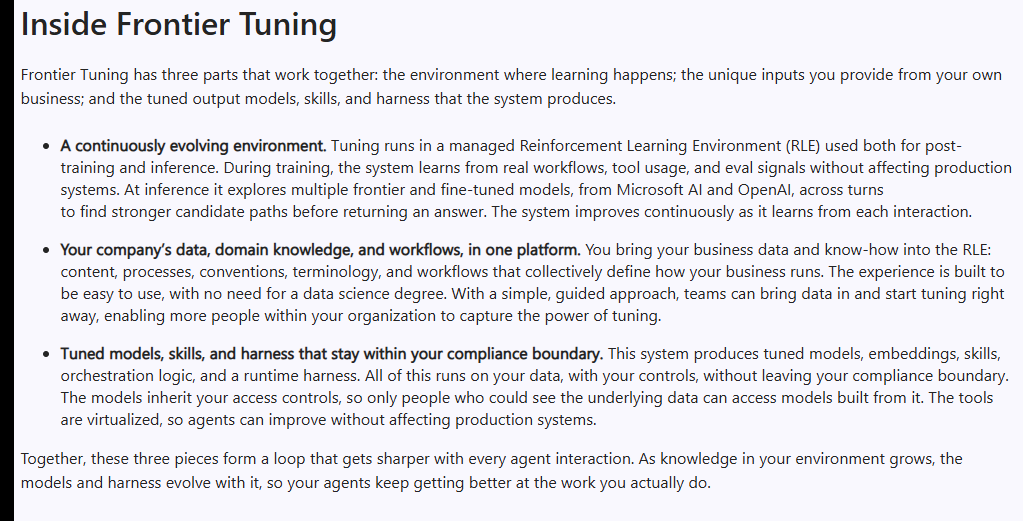
Microsoft is actively productizing this capability through its "Frontier Tuning" initiative, allowing organizations to fine-tune their Copilot instances. This means IT or HR departments can directly input their company’s policies, hiring guides, pay practices, onboarding procedures, and any other relevant documentation into the system. This process effectively "institutionalizes" this proprietary information, embedding it directly into the AI’s operational framework.
This approach distinguishes itself from Retrieval Augmented Generation (RAG) implementations, which primarily serve to provide context to a pre-trained model without fundamentally altering its core learning. Frontier Tuning, conversely, enables the AI to learn and adapt based on the provided company-specific data.
Autonomous Learning: The Next Frontier in AI Evolution
A key differentiator of Microsoft’s approach, as highlighted by the Frontier Tuning system, is its capacity for autonomous learning. Referred to by Microsoft as the "Reinforcement Learning Environment," this feature allows AI agents to continuously improve based on real-world feedback from users. This is a significant leap forward, mirroring how humans learn and adapt through experience.
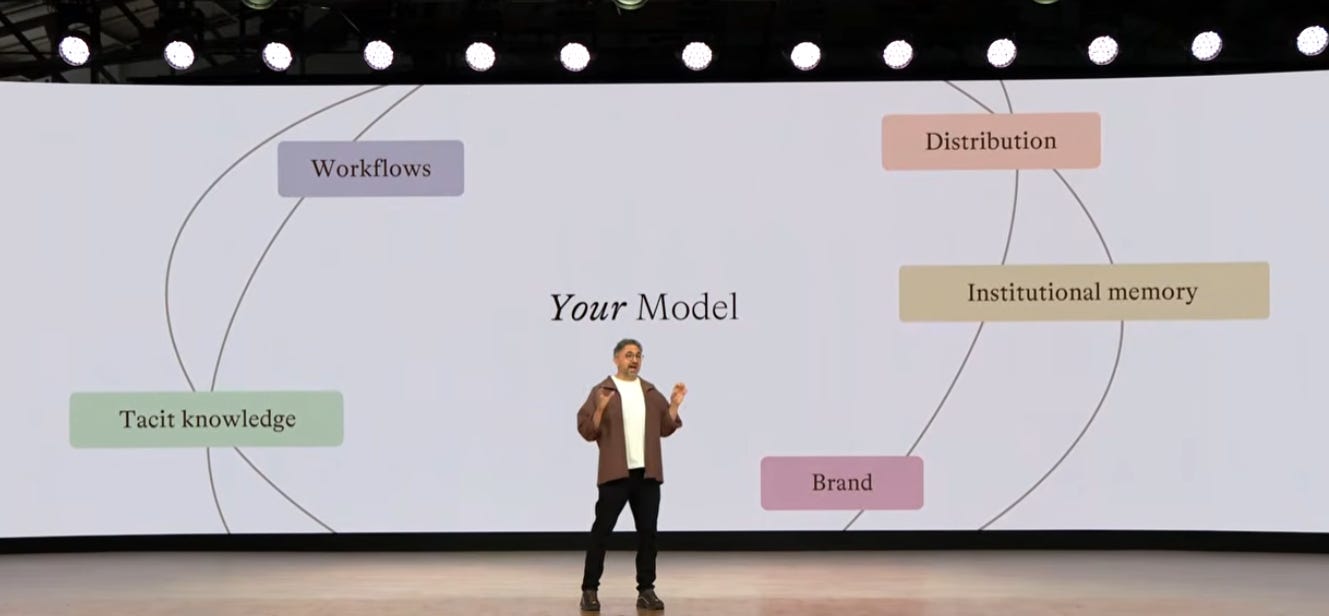
This autonomous learning capability was prominently showcased at Build 2026, where demonstrations illustrated its power. The ability to embed not only external intelligence like Galileo but also internal company practices allows for a truly bespoke AI solution. This aligns with the vision articulated by Microsoft CEO Satya Nadella, who has emphasized the value of making AI models unique and customized to a company, rather than relying on generic, widely shared models. The goal is to create AI that is an indispensable, tailored asset to the enterprise.
The "Harness" Layer: Orchestrating Diverse AI Models
Microsoft’s Copilot is evolving into a versatile "harness" layer, capable of hosting various AI models, including those from OpenAI, Anthropic, Microsoft’s own proprietary models, and custom-tuned models developed by enterprises. This offers significant flexibility, allowing different departments or teams to leverage specialized AI models for their unique needs. For example, R&D teams could utilize a fine-tuned model trained on confidential internal data, ensuring proprietary information remains secure and accessible only to authorized personnel.
This concept of a "harness" is critical for managing the complexity of enterprise AI. It provides a unified interface for accessing and deploying diverse AI capabilities, streamlining integration and management.
Reinforcement Learning in Action: Enhancing Crisis Management and Onboarding
The autonomous nature of reinforcement learning was exemplified by Microsoft’s internal crisis management agent. While initially effective, unforeseen global events like the war in Ukraine and subsequent conflicts introduced new challenges, such as employees facing internet outages or requiring relocation assistance. By enabling the agent to learn from these evolving circumstances and new policy requirements, Microsoft demonstrated how reinforcement learning can equip AI systems to adapt to dynamic and complex situations.
Similarly, a demonstration of Microsoft’s Fine-Tuned Copilot for HR Onboarding showcased its ability to personalize the employee integration process, providing tailored information and support based on individual roles and needs. This contrasts with traditional onboarding methods, which can often be generic and fail to address specific employee requirements.
While other methods for training Microsoft Copilot exist, such as the Microsoft Graph Connector, which allows access to data across SharePoint, PowerPoint, Word, Outlook, and Work IQ, these are not as deeply integrated into the agent’s core learning process. The reinforcement learning mechanism offers a more profound and continuous improvement cycle.
Microsoft’s Strategic Move: Launching Proprietary AI Models
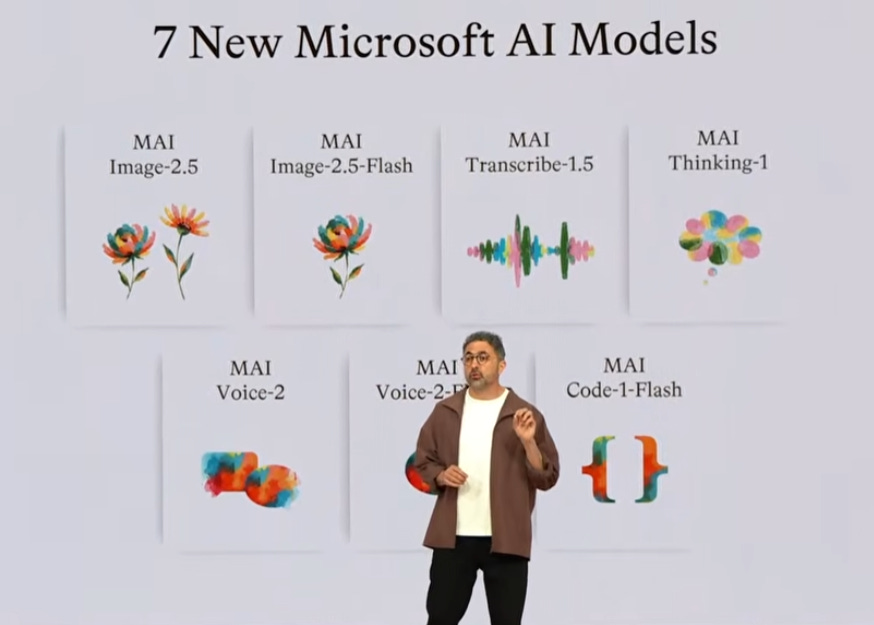
In a significant strategic development, Microsoft has announced the launch of seven new AI models, optimized for specific business use cases. This initiative, spearheaded by Mustafa Suleyman, aims to provide businesses with efficient, clean, and ethically sourced AI models. This move is partly driven by the cost implications of existing licensing agreements with third-party AI providers.
Previously, Microsoft’s contract with OpenAI limited its ability to develop and deploy its own cutting-edge models. Now, the company is actively building rivals to leading models like Anthropic’s Claude and OpenAI’s GPT series. This allows Microsoft to offer a more cost-effective and controlled AI solution, enhancing the value proposition of Copilot as an open and adaptable platform.
Cost Efficiency and Data Sovereignty: The Advantages of Proprietary Models
The development of proprietary models presents a clear advantage in terms of cost. As Suleyman noted, the goal is to "reduce and ultimately eliminate" the substantial costs associated with licensing external models. This economic benefit can be passed on to customers, making advanced AI more accessible to a broader range of businesses.
Furthermore, these new models address critical concerns around data sovereignty and intellectual property protection. Unlike some third-party services where user data might be used to train public models, Microsoft’s new offerings are designed to prevent the sharing of proprietary information with other customers. This is particularly significant for companies dealing with sensitive intellectual property or confidential data. If a user chooses not to opt into learning features with certain external models, their data may still be utilized by the provider for broader training purposes. Microsoft’s approach aims to provide a secure environment where enterprise data remains proprietary.
Industry Adoption and Future Potential
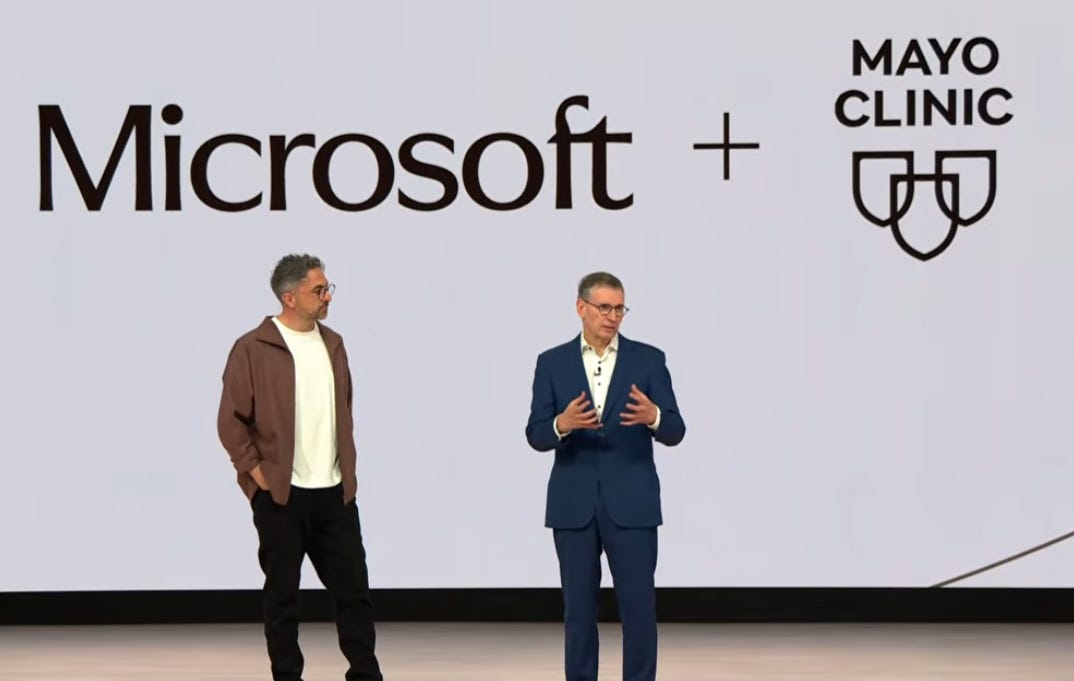
The implications of this strategic direction are far-reaching. For instance, Mayo Clinic is collaborating with Microsoft to develop a "New Frontier Model for Healthcare," leveraging these tools to enhance clinical practices. This signifies a move towards specialized AI solutions tailored to the unique demands of critical sectors.
Similarly, Land-O-Lakes has been piloting Microsoft’s MAI-Thinking-1 reasoning model. By fine-tuning a copy of the model with thousands of internal documents, Teams messages, and Outlook emails, the company achieved significantly higher accuracy and a tenfold cost reduction compared to using OpenAI’s GPT-4.5, according to Microsoft senior product manager Tanaya Yadav. This real-world application underscores the tangible benefits of fine-tuning AI models with proprietary enterprise data.
The demonstrations and announcements from Build 2026, particularly the detailed exploration of Frontier Tuning and the new proprietary models, suggest a robust and forward-looking strategy from Microsoft in the enterprise AI space. The company’s commitment to providing a flexible, customizable, and continuously improving AI platform positions it as a strong contender in the race to empower businesses with intelligent automation.
The long-term potential of this approach is immense. By enabling enterprises to deeply embed their unique knowledge and leverage self-improving AI agents, Microsoft is facilitating a new era of operational efficiency, competitive differentiation, and strategic agility. As businesses increasingly recognize the value of their proprietary data and the need for tailored AI solutions, Microsoft’s Frontier Tuning initiative appears poised to play a pivotal role in shaping the future of enterprise intelligence.
Additional Resources:
- Podcast: Addressing the High Cost of AI, Frontier Fine-Tuning, Edge Computing, Microsoft, and Nvidia. [Link to podcast]
- Research: The Reinvention of Workday: From System of Record to Platform of Agents. [Link to article]
- Analysis: Could Microsoft Win The War For Enterprise AI? [Link to article]
- Podcast: The AI vs. Labor Economy, Why Benefits Are Being Cut, The Role of Legacy Systems. [Link to podcast]
- Podcast: The Context Layer (Semantic Layer) In Enterprise AI (And Where Business Rules Go). [Link to podcast]
- Product: The Superagent for HR: Galileo Mars Release. [Link to product page]