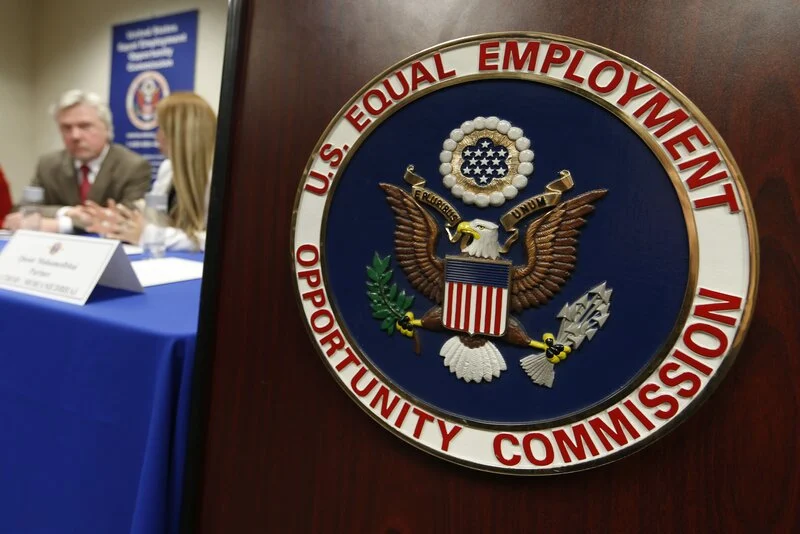
The U.S. Equal Employment Opportunity Commission (EEOC) faced a significant procedural setback on Thursday when a New York federal court denied its motion to reconsider a ruling that allows a local school district to maintain its primary defense in a high-profile pay discrimination lawsuit. The case, centered on allegations that a female school superintendent was paid substantially less than her male predecessor for performing substantially equal work, remains a focal point for legal experts monitoring the evolution of the Equal Pay Act (EPA) and Title VII of the Civil Rights Act. The court’s refusal to strike the district’s defense ensures that the "factor other than sex" justification will remain a central pillar of the upcoming trial, potentially setting a precedent for how educational institutions justify executive salary discrepancies.
The Core of the Dispute: Executive Pay and Gender Equity
The litigation originated when the EEOC filed a complaint alleging that the school district violated federal law by establishing a starting salary for its female superintendent that was tens of thousands of dollars lower than the salary paid to the man who previously held the position. According to the initial filings, the female superintendent possessed comparable, if not superior, educational credentials and relevant administrative experience at the time of her appointment. Despite these qualifications, the district’s board of education approved a contract that the EEOC characterizes as discriminatory and reflective of a broader systemic bias in educational leadership compensation.
In its defense, the school district has consistently argued that the pay disparity was not rooted in gender bias but was instead based on "factors other than sex"—a specific affirmative defense available under the Equal Pay Act. The district contends that the male predecessor’s higher salary was a result of his longer tenure in the specific district, his unique negotiation of benefits during a period of administrative volatility, and the prevailing market rates at the time of his final contract renewal.
The EEOC’s motion for reconsideration sought to have the court revisit its earlier decision to allow these defenses to proceed to trial. The commission argued that the district’s justifications were legally insufficient and that allowing them to stand would undermine the remedial purpose of the EPA. However, the court’s Thursday ruling emphasized the high burden required for a motion for reconsideration, finding that the EEOC did not present new evidence or demonstrate a manifest error of law that would warrant overturning the prior decision.
Chronology of the Litigation
The legal battle has spanned several years, reflecting the complexity of proving pay discrimination at the executive level. The following timeline outlines the key milestones in the case:
- July 2022: The female superintendent is hired by the New York school district. Upon reviewing the previous administration’s public salary records, she identifies a significant gap between her starting salary and the ending salary of her predecessor.
- January 2023: Following an internal grievance process that failed to resolve the disparity, a formal charge is filed with the EEOC.
- November 2023: The EEOC completes its investigation, finding "reasonable cause" to believe that the district violated the Equal Pay Act and Title VII. Conciliation efforts between the parties fail.
- March 2024: The EEOC officially files suit in the U.S. District Court for the Northern District of New York.
- Late 2025: The school district moves for summary judgment, or in the alternative, to assert several affirmative defenses. The court grants the district the right to present its "factors other than sex" defense.
- Early 2026: The EEOC files a motion for reconsideration, specifically targeting the court’s interpretation of what constitutes a valid "factor other than sex" in a public sector employment context.
- June 18, 2026: The federal court denies the EEOC’s motion, solidifying the legal framework for the upcoming trial.
Supporting Data: The Gender Pay Gap in Educational Leadership
The EEOC’s case against the New York school district does not exist in a vacuum. National data suggests that while the teaching profession is dominated by women, the highest levels of administrative leadership—specifically the superintendency—remain a bastion of gender-based pay inequality.
According to a 2025 report by the American Association of School Administrators (AASA), women make up approximately 76% of the K-12 teaching workforce but hold only about 30% of superintendent positions nationwide. Furthermore, the report found that even when controlling for district size and years of experience, female superintendents earn, on average, 88 cents for every dollar earned by their male counterparts.
In New York specifically, data from the State Education Department indicates that the pay gap for school executives has narrowed over the last decade but persists in rural and suburban districts where salary negotiations are often less transparent than in large urban centers. Legal analysts point out that the "negotiation" defense—where employers argue a male employee was simply a "better negotiator"—is increasingly being challenged in courts, yet it remains a viable strategy in many jurisdictions, as evidenced by the current ruling.
The School District’s Defense: Navigating the "Factor Other Than Sex" Exception
The Equal Pay Act prohibits employers from paying employees of one sex less than employees of the opposite sex for "equal work on jobs the performance of which requires equal skill, effort, and responsibility, and which are performed under similar working conditions." However, the Act provides four affirmative defenses. An employer can justify a pay differential if it is based on:
- A seniority system;
- A merit system;
- A system which measures earnings by quantity or quality of production; or
- A differential based on any other factor other than sex.
The fourth "catch-all" defense is the most frequently litigated. In this case, the New York school district argues that the male predecessor’s salary was inflated by "market forces" and his specific "salary history."
The EEOC has been aggressive in recent years in trying to limit the "salary history" defense. The commission argues that relying on prior salary simply perpetuates existing discrimination from one job to the next. Several states, including New York, have passed salary history bans to address this. However, the district in this case argues that the predecessor’s pay was not just about his history, but about the specific "retention value" he provided to the district during a period of high turnover, a factor they claim is gender-neutral.
Official Responses and Inferred Reactions
While the parties are restricted in their public comments due to the ongoing nature of the litigation, the implications of the court’s refusal to reconsider are clear.
A spokesperson for the school district’s legal counsel expressed satisfaction with the ruling, stating in a brief brief, "We believe the court’s decision correctly recognizes that school boards must have the flexibility to consider a variety of non-discriminatory factors when setting executive compensation. We look forward to presenting the full context of our budgetary and hiring decisions at trial."
Conversely, the EEOC has signaled that it will continue to prioritize pay equity cases. While they lost this specific motion, the commission’s broader strategy involves pushing for a narrower interpretation of the "factor other than sex" defense. In similar cases, EEOC representatives have argued that "if the ‘factor other than sex’ exception is allowed to become a back door for subjective or market-based excuses, the Equal Pay Act loses its teeth."
Advocacy groups for female educators have also weighed in. "This ruling is a reminder of the steep uphill battle women face in leadership roles," said a representative for a New York-based educational equity non-profit. "When a court allows a district to use ‘market rates’ as a shield, it ignores the fact that the ‘market’ itself has historically undervalued women’s labor."
Broader Legal and Social Implications
The denial of the motion for reconsideration has several significant implications for the legal landscape:
1. The High Bar for Reconsideration
The ruling reinforces the principle that federal courts are loath to revisit their own decisions absent a glaring error. This places a premium on the initial briefing of summary judgment motions. For the EEOC, this means that their primary challenge will now be to convince a jury that the district’s "factors other than sex" are merely a pretext for discrimination.
2. Impact on New York Pay Transparency Laws
New York has been a leader in pay transparency legislation. This case serves as a test of how these laws interact with federal standards. If a school district can successfully defend a pay gap by citing "market conditions" despite transparency requirements, it may prompt state legislators to further tighten the language of the New York Labor Law to prevent such exceptions from swallowing the rule.
3. Precedent for School Districts
School boards across the country are watching this case. If the district prevails at trial using the "factor other than sex" defense, it will provide a roadmap for other public entities to justify disparate pay scales between outgoing male executives and incoming female successors. This is particularly relevant in the public sector, where budgets are scrutinized by taxpayers and salary increases are often capped by state law or local referendum.
4. The "Glass Cliff" Phenomenon
Legal scholars have noted that women are often hired into leadership roles during times of crisis (the "glass cliff"), yet they are frequently offered less compensation than the men who preceded them in more stable times. The EEOC’s focus on this case suggests a desire to address the structural inequalities that govern how executive "value" is calculated during the hiring process.
Fact-Based Analysis of the Path Forward
As the case moves toward trial, the evidentiary burden will shift. The EEOC must prove that the "equal work" standard was met—which is often easier in the context of a superintendency where job descriptions are codified by state law. The battleground will then shift entirely to the district’s affirmative defense.
The court’s decision to keep the defense alive means the jury will hear detailed testimony about the district’s budget meetings, the male predecessor’s performance reviews, and the "headhunter" or search firm’s recommendations at the time of the female superintendent’s hire. If the EEOC can demonstrate that the district did not apply the same "market rate" logic when negotiating with the female candidate as they did with her predecessor, the "factor other than sex" defense may fail.
Furthermore, this case highlights the tension between the Equal Pay Act’s strict liability-style framework and Title VII’s requirement to prove discriminatory intent. Under the EPA, a plaintiff does not necessarily need to prove the employer intended to discriminate, only that a disparity exists that cannot be justified by the four allowed exceptions. By keeping the district’s defense alive, the court has ensured that the "justification" phase of the trial will be the most scrutinized portion of the proceedings.
In conclusion, while the EEOC’s failure to get the ruling reconsidered is a tactical loss, it sets the stage for a high-stakes trial that will test the boundaries of pay equity law in the educational sector. The outcome will likely influence how executive contracts are negotiated in school districts throughout New York and the rest of the United States for years to come. For now, the female superintendent at the heart of the case remains in her position, her salary a matter of public record and federal litigation, as the legal system grapples with the definition of fairness in the modern workplace.