The global market for professional development, encompassing training, certification, and upskilling, stands as a colossal entity exceeding $400 billion. Intriguingly, nearly a third of this vast sum is allocated to topics and technologies that transcend specific company loyalties. For the past three decades, this demand has been predominantly met by a diverse array of training providers: sprawling online course libraries, extensive video repositories, intricate simulations, expert assessments, and a multitude of professional certification, testing, and accreditation programs. This sector has historically demonstrated remarkable resilience, often described as recession-proof, as continuous skill enhancement is a perpetual necessity for career advancement and organizational competitiveness. Companies themselves often champion their roles as incubators for career growth, skill acquisition, and staying ahead in a rapidly evolving professional world.
However, the business of online learning is currently experiencing an unprecedented period of rapid transformation. Established industry giants like Udacity (recently acquired by Accenture), Coursera, Udemy (itself recently acquired by Coursera), LinkedIn Learning, SkillSoft, and Pluralsight, along with influential content creators such as Masterclass, TEDx, and BigThink, are finding their once-dominant positions challenged. The recent "merger" of Coursera and Udemy, accompanied by the noticeable decline in stock prices of publicly traded companies in this space, signals a fundamental disruption. This shift is not attributed to a lack of managerial acumen, but rather to a profound alteration in the technological underpinnings and the very nature of how individuals consume learning content.
The Evolution from Content Consumption to Holistic Growth
The fundamental demand for skills development within the corporate and professional spheres remains robust, driven by the inherent human aspiration for career progression. Regardless of the specific job family—be it Information Technology, Sales, Marketing, Finance, Support, or Human Resources—the need for acquiring new competencies is constant. This persistent demand can be categorized into five distinct levels of professional growth, a framework that provides clarity in understanding individual learning journeys:
Level 1: Foundational Knowledge Acquisition
This tier represents entry-level training, crucial for individuals new to a profession, role, or career path. Often, the immediate goal is to achieve foundational "certification" in the basics. In fields like Human Resources, for instance, numerous foundational certifications are pursued, with organizations such as SHRM and HCI playing significant roles. However, the value of these certifications is subject to constant re-evaluation, as employers may not always prioritize them. Anecdotal evidence, particularly within HR, suggests a decline in the perceived value of certain long-standing certifications, like those offered by SHRM. At this level, professionals primarily seek to grasp fundamental concepts, terminology, core principles, and an overview of essential tools.
Level 2: Deepening Practical Experience
Professionals who have accumulated two to three years of experience fall into this category. While possessing a solid grasp of the basics, they often encounter areas where their understanding is less developed. This stage necessitates exposure to case studies, advanced use-case scenarios, and training designed to expand their thinking. For a recruiter aiming to transition to a senior recruiter role, this might involve delving into advanced sourcing strategies, sophisticated skills assessment techniques, effective candidate marketing, and the application of Artificial Intelligence in recruitment processes.
Level 3: Broadening Specialized Expertise
At this juncture, professionals possess deep knowledge in a specific area but lack breadth across other domains. A recruiter, for example, might be an expert in tech hiring but have no experience recruiting senior executives or sales teams. Similarly, an individual might aim to master the hiring and assessment of both internal and external candidates to build a product organization. This level demands exposure to global best practices, multi-industry perspectives, or diverse technological applications. It is often at this stage that professionals seek new opportunities outside their current organizations to escape perceived "niching" and broaden their horizons. Training interventions here may include new case studies, project-based learning, and engagement with more senior or multi-disciplinary experts. This trajectory can lead to leadership roles, such as moving from "Senior Recruiter" to "Head of Recruiting," which signifies a transition into a new career phase requiring dedicated leadership development.

Level 4: Pursuing World-Class Advancement
Individuals in Level 4 often possess decades of experience and are driven to remain at the cutting edge, identify emerging technologies and methodologies, and frequently expand their industry or global reach. Senior HR leaders, for instance, may find their perspectives limited by their industry-specific knowledge. Venturing into new industries can provide invaluable exposure to novel approaches, thereby enhancing wisdom, broadening perspective, bolstering confidence, and increasing value creation. Professionals at this level may aspire to senior executive positions, transition from large corporations to startups, or explore vast new technological or scientific frontiers. The intrinsic drive to delve deeper into adjacent domains, a common phenomenon in seasoned professionals, leads them to seek access to profound expertise, cutting-edge research, and training in complementary (often termed "T-shaped") skill sets.
Level 5: Mastering and Mentoring
The pinnacle of professional development is represented by Level 5, comprising a select group of senior, tenured experts—the "10X engineers" or C-suite luminaries—who have demonstrably proven their expertise and impact. Their motivation shifts towards teaching, mentoring, and contributing through writing or thought leadership. Their engagement is not driven by a quest for fame, as they are already deeply respected; rather, it stems from a desire to connect with peers, collaborate, and contribute to professional communities through deep research and global exchange.
The Traditional Training Model Under Strain
Historically, the professional development and training market has attempted to address these varied needs through packaged solutions. However, many providers have focused on "selling products" without adequately considering the nuanced progression outlined above. An "advanced" course, for example, might introduce unfamiliar topics, but its effectiveness is questionable if the learner is already operating at Level 3 or 4. This disconnect makes it challenging to align pre-packaged training with the evolving requirements of professionals seeking genuine career advancement.
AI as the Catalyst for Personalized Learning
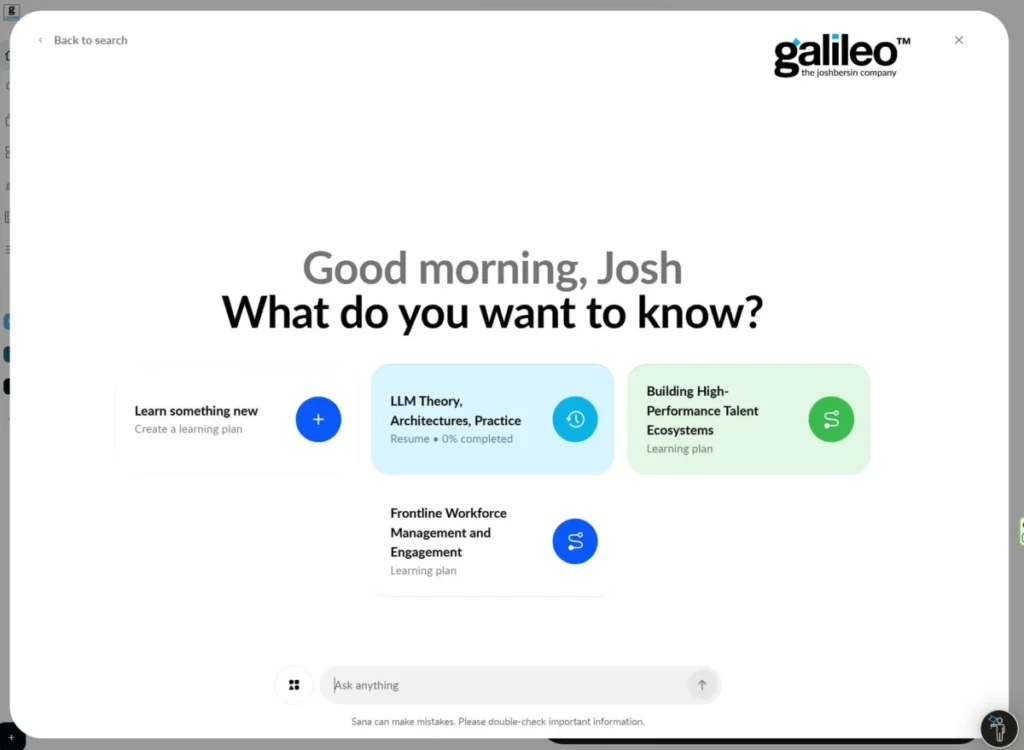
Artificial Intelligence (AI) is emerging as a transformative force, poised to revolutionize how these learning needs are met. The vast repositories of information and skill-building resources can now be dynamically and custom-assembled to align precisely with individual goals. As detailed in the research paper "The Revolution in Corporate Learning," AI is inherently suited to address these complex requirements. Platforms like Galileo, for instance, are designed to cater specifically to HR professionals and leaders. The widespread adoption of tools like ChatGPT, with an estimated 900 million weekly users, underscores the public’s growing reliance on AI for learning. Astonishingly, analyses by OpenAI and other industry observers indicate that 40% or more of these interactions involve users seeking to learn—finding information, developing skills, or solving problems. This trajectory suggests that within a remarkably short period, AI platforms have attracted a learner base far exceeding that of any traditional Learning & Development (L&D) platform in history.
Two primary factors explain this surge in AI-driven learning:
- Intuitive Inquiry-Based Learning: The inherent ease of asking questions, acquiring knowledge, and satisfying curiosity through AI agents mirrors the natural learning processes developed in childhood. This "questioning" approach allows for organic exploration and discovery.
- Holistic Information Interconnection: The underlying AI content models, such as those employed by Galileo, interconnect information through sophisticated AI embeddings in a holistic and systemic manner. This architecture liberates learners from rigid, linear learning paths (unless desired). Users can freely ask for explanations, request more details, or opt to skip content at any point, significantly accelerating both the speed and quality of their learning.
Platforms like Galileo exemplify this paradigm shift by offering dynamic examples, scenarios, challenges, and simulations on demand. Users can opt for structured courses or engage with a "Supertutor" to address specific queries. The AI can then magically present new information and experiences tailored to the user’s role, past interactions, and other relevant data. The experience is often described as breathtaking in its responsiveness and educational efficacy.
Market Disruption: From Publishing to Dynamic Delivery
This profound shift from a "publishing courses" model to one of "dynamically delivering content" is fundamentally reshaping the entire professional development market. The current landscape comprises five key segments: learning platforms (LMS, LXP), learning content (course libraries, programs, executive education), content development tools, certifications (testing and accreditation), and learning consultants. Each of these segments is compelled to adapt to an AI-native infrastructure. This is not a minor evolutionary step; it represents a discontinuous and rapidly accelerating transformation.

The traditional "old model" was fundamentally a publishing paradigm. It involved identifying learning needs, assembling subject matter experts, and designing courses, interactive modules, simulations, and assessments. This content was then "published" onto a Learning Management System (LMS) or a custom platform and subsequently "launched" or sold to users. This web publishing model, groundbreaking in its early 2000s inception, disrupted numerous traditional classroom training companies. Many successful bootcamp providers and executive education programs continue to operate within this framework, particularly for high-touch, premium-priced experiences. However, the vast majority of professional development is now migrating towards a new paradigm.
This emergent "AI-First" or "AI-Native" model leverages AI for content collection, generation, translation, and delivery. An AI-native platform, such as Galileo, crafts personalized learning experiences by integrating extensive research and case studies with a company’s internal content. Users can engage in formal courses, request simulations, participate in role-playing exercises, or simply pose questions to the AI tutor, which then provides instant, contextualized answers, much like a live classroom interaction. This fundamentally different user experience presents a significant disruption to the traditional courseware business model.
Beyond the enhanced personalization, which allows AI to adapt to individual needs based on past interactions, the complex and costly infrastructure traditionally required for instructional design, translation, and video generation is becoming highly automated. AI-native systems can operate with near autonomy, generating novel learning experiences daily as new content is integrated. When a company’s proprietary content is added, the system seamlessly blends external expert knowledge with the organization’s specific processes, technical intricacies, and cultural nuances.
Features previously requiring substantial investment, such as the development of career pathways, learning paths, skills taxonomies, and assessments, are now machine-generated. Consequently, professional development vendors are increasingly shifting from selling static content and platforms to offering a dynamic, personalized, user-friendly, and highly valuable learning experience. The ability to leverage AI tools like Sora to rapidly generate instructional videos, as demonstrated by the creation of a five-minute course on the economics of the frontline workforce, illustrates this potential. While such content might not be directly for sale, platforms like YouTube are already integrating AI-powered chapter creation for videos, enhancing their educational utility even without full AI integration.
The sophistication of AI extends to identifying individual learning levels, preferences, and technical interests. Users of platforms integrating various leading AI models, like Gemini, ChatGPT, and Claude, often find their systems developing a comprehensive understanding of their professional identity, work, and communication style. By integrating meetings and other professional interactions, these AI platforms gain deep insights, enabling them to function as highly personalized learning companions.
A Fertile Ground for Innovation
The online learning industry, prior to the AI revolution, had experienced a period of relative stagnation, marked by a lack of significant innovation. The advent of AI has unlocked hundreds of new possibilities, fundamentally reinventing the market. This reinvention is manifesting across several key areas:
- Personalized Learning Paths: AI algorithms can now dynamically create and adapt learning journeys based on an individual’s existing knowledge, career aspirations, and learning pace.
- On-Demand Skill Development: Learners can access targeted modules and micro-learning content precisely when and where a skill gap is identified.
- AI-Powered Coaching and Mentorship: Sophisticated AI agents can provide personalized feedback, guidance, and encouragement, simulating aspects of human coaching.
- Immersive Simulations and Experiential Learning: AI can generate realistic simulations and role-playing scenarios, allowing professionals to practice skills in a safe, virtual environment.
- Content Generation and Curation: AI tools can assist in creating diverse learning materials, from text-based lessons to video scripts and interactive exercises, and can also curate relevant existing content.
- Skills Intelligence and Career Pathing: AI can analyze skills data to provide insights into in-demand competencies and suggest personalized career progression routes.
- Adaptive Assessment: AI-driven assessments can dynamically adjust difficulty and focus based on learner performance, providing more accurate evaluations of skill mastery.
- Global Collaboration and Knowledge Sharing: AI can facilitate cross-cultural communication and knowledge exchange among global professional communities.
Implications for Professionals, HR, and L&D Stakeholders
Every entity involved in training, certification, and professional education must confront this paradigm shift. While organizations may not immediately discard existing course libraries or subscriptions, the emergence of personalized, AI-centric providers will likely lead to the acquisition or adaptation of legacy vendors.
The contextual change is significant: in the near future, most employees will have access to AI agents integrated into their devices, whether through operating system providers like Microsoft and Apple or through chosen third-party applications. This ubiquitous access will simplify the process of reaching employees, provided that backend offerings can effectively support these agents. This mirrors the revolution brought about by Google Search, which fundamentally altered how users accessed information, rendering websites without robust searchability less user-friendly. Similarly, as employees increasingly utilize internal AI agents for inquiries related to benefits, payroll, and other HR functions, they will naturally pose questions like, "What is my path to promotion?"
This transition presents an unparalleled opportunity to reimagine the deployment of learning within organizations. Consider an hourly worker seeking to increase their income by taking on extra shifts. An AI agent could proactively inform them, "By upgrading your skills in X area, you can qualify for shifts in another position that pays $5 more per hour." Such use cases are becoming increasingly feasible with AI.
Many organizations are actively exploring AI-powered leadership coaching agents, AI-driven assessment tools (from vendors like Skillable and others), AI content generation tools (including advanced capabilities in video and audio production), and AI assistants for building courses and job aids. For the upcoming year, a critical imperative for L&D professionals is to develop a re-engineered vision for their learning strategies. This is substantiated by recent research indicating that many traditional L&D functions, including translation services, skills architecture management, LMS publishing and metadata, and the creation of role-based learning and job aids, are prime candidates for full automation. Several large corporations have already re-engineered their manager training, HR support, and other L&D programs, achieving a remarkable 40% reduction in L&D spending while simultaneously delivering a far more personalized employee experience.
For vendors and consultants in the professional development space, the ongoing transformation is undeniable. The advice is to embrace this evolution boldly. Examining emerging market players, forging strategic partnerships, and investing in or developing necessary AI platforms are crucial steps. This era presents an exciting opportunity to redefine how individuals are developed and supported, with demand for effective solutions expected to surge. As major industry research and maturity models are released in the coming months, exploring immediate AI-driven learning solutions, such as those offered by Galileo, provides a tangible pathway to experiencing the future of professional development firsthand.