In an era defined by rapid technological disruption and shifting economic landscapes, staff development has transitioned from a peripheral human resources function to a core strategic pillar for global enterprises. Staff development, defined as the comprehensive process of helping employees enhance their knowledge, skills, and career readiness, encompasses a broad spectrum of activities including formal training, coaching, mentoring, and experiential learning. The overarching objective is to harmonize individual performance with the long-term strategic goals of the organization, ensuring that the workforce remains agile in the face of unprecedented change.
As the global economy grapples with the integration of generative Artificial Intelligence (AI) and a persistent widening of the skills gap, modern staff development has moved beyond the constraints of traditional, periodic training sessions. Today, the focus has shifted toward building long-term "durable skills" that allow employees to adapt to evolving roles. This holistic approach utilizes a sophisticated blend of formal education, peer-to-peer teamwork, and real-world application to foster a culture of perpetual improvement.
A Chronology of Corporate Learning: From Vocational Training to Skills Intelligence
To understand the current state of staff development, one must examine its evolution over the past century. During the industrial era of the early 20th century, "training" was largely vocational and focused on repetitive manual tasks. By the 1960s and 70s, the rise of the "knowledge worker" necessitated a shift toward management training and professional development.
The 1990s saw the introduction of the first Learning Management Systems (LMS), which digitized training records and compliance modules. However, the most significant turning point occurred in the early 2020s. The COVID-19 pandemic accelerated digital transformation by several years, forcing organizations to adopt remote learning technologies and emphasizing the need for resilience and digital literacy. Today, the timeline of staff development is entering its most sophisticated phase: the era of "Skills Intelligence," where AI-driven data determines exactly what an employee needs to learn in real-time to remain relevant in a volatile market.
Distinguishing Training from Development: A Strategic Analysis
While often used interchangeably, training and development represent two distinct yet complementary functions within the corporate ecosystem. Understanding this distinction is critical for Learning and Development (L&D) leaders tasked with architecting workforce strategies.
Training is fundamentally tactical and job-focused. It is designed to address immediate performance requirements and close specific skill gaps. For example, teaching an employee how to use a new software interface or explaining updated safety protocols constitutes training. It is short-term in nature and yields immediate results in efficiency and compliance.
Conversely, development is strategic and career-focused. It aims at capability growth and future readiness. Development programs might include leadership coaching, critical thinking workshops, or cross-functional projects that prepare an employee for a role that may not even exist yet. While training solves today’s problems, development prepares the organization for tomorrow’s opportunities.
Data from the World Economic Forum’s "Future of Jobs Report" suggests that by 2025, 50% of all employees will need reskilling due to the adoption of new technology. This statistic highlights why organizations cannot rely on training alone. A balanced strategy that integrates both immediate skill acquisition and long-term capability growth is essential for maintaining a competitive edge.
The Quantifiable Benefits of Staff Development Programs
The shift toward robust staff development is backed by significant empirical evidence. Organizations that prioritize internal growth see marked improvements across several key performance indicators (KPIs).
1. Enhanced Individual and Organizational Performance
Continuous learning equips employees with the latest methodologies and technical proficiencies. This direct infusion of knowledge leads to higher quality output and a more confident workforce. According to industry benchmarks, companies with comprehensive training programs have a 24% higher profit margin than those who spend less on training.
2. Increased Productivity and Operational Efficiency
By addressing knowledge gaps, organizations minimize errors and reduce the time required to complete complex tasks. Skilled employees are better equipped to leverage automation and AI tools, further amplifying their productivity.
3. Employee Engagement and Retention
In the current "war for talent," development is a primary driver of loyalty. A LinkedIn Learning report found that 94% of employees would stay at a company longer if it invested in their career development. When employees see a clear path for advancement, job satisfaction increases, and the high costs associated with turnover are significantly mitigated.
4. Leadership Pipeline and Succession Planning
Internal mobility is a cost-effective alternative to external hiring. Development programs allow organizations to identify high-potential individuals early and groom them for leadership roles through mentoring and executive coaching. This ensures continuity and protects the organization’s institutional knowledge.

5. Innovation and Resilience
A culture of learning encourages employees to question the status quo and propose creative solutions. Furthermore, a workforce that is accustomed to learning new skills is inherently more resilient during economic downturns or industry shifts, as they possess the "meta-skill" of learning how to learn.
Prioritizing Diverse Development Modalities
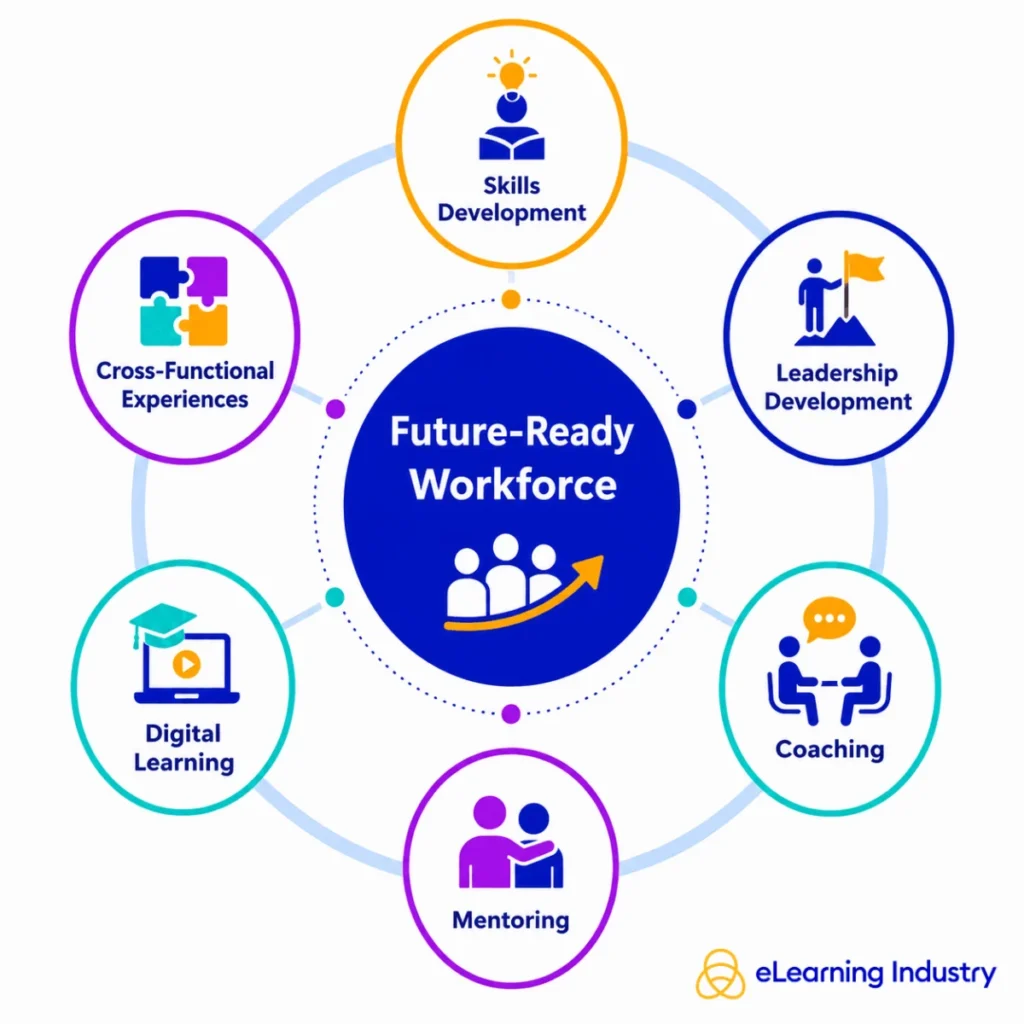
Effective staff development is not a monolithic event but a multifaceted suite of opportunities. Forward-thinking organizations prioritize several types of growth to ensure a well-rounded workforce.
- Skills Development: This includes technical upskilling (data analytics, cybersecurity) and the increasingly vital AI literacy. As AI tools become ubiquitous, employees must learn to work alongside these technologies responsibly.
- Leadership Development: This involves training managers at all levels in emotional intelligence, conflict resolution, and strategic decision-making.
- Professional Development: This focuses on external certifications and industry-specific workshops that keep the organization aligned with global standards.
- Coaching and Mentoring: These relational models facilitate the transfer of "soft knowledge" and cultural nuances that formal courses cannot capture.
- Cross-Functional Learning: By rotating employees through different departments, companies break down silos and foster a holistic understanding of the business.
- Self-Directed Learning: Empowering employees to choose their own learning paths via digital libraries fosters autonomy and personal accountability.
Framework for Building a High-Impact Development Program
Building an effective program requires a departure from "check-the-box" mentalities. Industry experts recommend a five-step structured approach:
I. Alignment with Business Objectives
L&D initiatives must be tethered to the company’s bottom line. If the corporate goal is digital transformation, the development program must prioritize digital literacy and agile methodologies. Capability mapping is essential here to visualize the delta between current skills and future needs.
II. Data-Driven Gap Analysis
Assumptions are the enemy of effective training. Modern organizations use skills assessments and performance analytics to pinpoint exactly where teams are struggling. This data-driven approach ensures that resources are allocated to the areas of highest impact.
III. Personalized Learning Pathways
The "one-size-fits-all" approach to education is largely obsolete. Personalization, driven by an employee’s specific role and career aspirations, ensures higher engagement levels. Role-based pathways ensure that a software engineer and a marketing manager receive the specific, relevant content they need to excel.
IV. The Blended Learning Model
The most effective programs utilize the 70-20-10 model: 70% of learning comes from on-the-job experience, 20% from social learning (mentors/peers), and 10% from formal classroom or online instruction.
V. Measuring Outcomes Over Completions
Success should not be measured by how many people finished a course, but by how that course affected business outcomes. Metrics such as internal promotion rates, reduction in error rates, and post-training performance scores provide a much more accurate picture of Return on Investment (ROI).
The Role of Technology: LMS, LXP, and AI
Technology serves as the delivery engine for modern staff development. The traditional Learning Management System (LMS) remains the backbone for compliance and administrative tracking. However, the Learning Experience Platform (LXP) has emerged as a more learner-centric alternative, offering a "Netflix-style" interface that recommends content based on user behavior and interests.
The integration of Artificial Intelligence is the latest frontier. AI-powered platforms can now perform "predictive skill mapping," identifying which skills will become obsolete and suggesting preemptive training. This proactive stance allows companies to transform their workforce before a crisis occurs, rather than reacting to one.
Expert Perspectives and Future Outlook
"Staff development is now central to organizational growth," says Christopher Pappas, CEO of eLearning Industry. "By investing in how employees learn, adapt, and evolve, companies build future capability, not just skills. In a constantly changing world, successful organizations are those that continually develop their people."
This sentiment is echoed across the C-suite as Chief Learning Officers (CLOs) gain more influence in boardroom discussions. The consensus is clear: human capital is the only sustainable competitive advantage in an age where technology can be easily replicated.
In conclusion, staff development has evolved into a sophisticated, technology-driven ecosystem that balances the immediate needs of the business with the long-term aspirations of the individual. As the workplace continues to be reshaped by automation and global economic shifts, the ability of an organization to foster a culture of continuous learning will be the primary determinant of its longevity. Investing in people is no longer merely a human resources initiative; it is a fundamental business strategy for the 21st century.