ORLANDO – The corporate landscape for Diversity, Equity, and Inclusion (DEI) initiatives is undergoing a profound transformation, marked by significant legal challenges, political pressure, and a re-evaluation of fundamental principles. Last year witnessed not only a discernible trend of DEI program rollbacks across various industries but also a forceful pushback from political figures, most notably former President Donald Trump, whose administration moved to enforce a stringent anti-DEI agenda within federal agencies and among contractors. This shifting environment has prompted intense debate and strategic recalibration among human resources professionals and legal experts alike, with the future trajectory of corporate inclusion appearing increasingly "bumpy" over the coming years, particularly at the intersection of evolving cultural norms and legal interpretations.
The Political and Legal Headwinds Against DEI
The genesis of the current turbulence can be traced to a confluence of factors, including a changing political climate and a series of high-profile legal rulings. While previous legal challenges to the Trump administration’s anti-DEI orders have seen limited success, the scope of opposition expanded recently with 20 attorneys general filing a lawsuit against the administration over a DEI order specifically targeting federal contractors. This action underscores the growing legal battleground where the boundaries of corporate and governmental DEI mandates are being contested.
The broader context for this pushback includes a prevailing sentiment in some political circles that DEI initiatives have become overly prescriptive, leading to what critics term "reverse discrimination" or a departure from merit-based principles. This perspective gained significant traction following the U.S. Supreme Court’s landmark decision in 2023, which effectively outlawed affirmative action in higher education. Although directly applicable to universities, the ruling sent ripple effects through the corporate world, prompting many organizations to review and adjust their own diversity policies to mitigate potential legal exposure. The concern among legal experts was that the rationale behind the Supreme Court’s decision, emphasizing individual merit over group-based considerations, could eventually extend to employment practices, fundamentally altering how companies approach talent acquisition, promotion, and retention through a DEI lens.
The EEOC’s Evolving Enforcement Stance
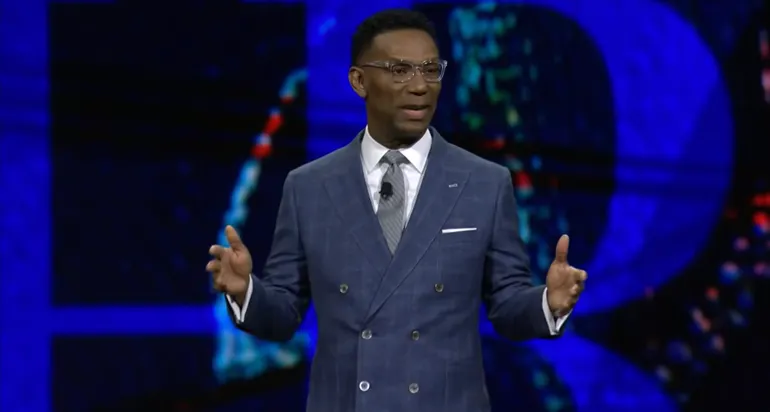
A pivotal player in this evolving landscape is the U.S. Equal Employment Opportunity Commission (EEOC), the federal agency responsible for enforcing anti-discrimination laws. Historically, the EEOC has been perceived primarily as a regulatory body, mediating disputes and issuing guidance. However, as Johnny Taylor Jr., CEO and president of the Society for Human Resource Management (SHRM), noted at SHRM’s annual conference on June 17, there’s a distinct shift in how the EEOC is now operating. "For the first time, I’ve heard the EEOC consistently referred to as a law enforcement agency," Taylor stated, emphasizing a more aggressive and proactive approach to identifying and prosecuting discrimination.
Acting Chair Andrea Lucas has been particularly forthright in her mission, making it "very clear that her job is to find illegal discrimination," according to Taylor. While the EEOC continues to pursue what might be considered "standard" cases, such as its lawsuit against StoneMor Cemetery Management Company alleging racial discrimination and retaliation, a notable shift has emerged. The agency recently filed a lawsuit against a Coca-Cola bottler, alleging reverse discrimination against men concerning an all-women work trip – a claim the company is actively contesting. This case, among others, signals a broadening of the EEOC’s enforcement focus to include claims of discrimination against groups traditionally not considered underrepresented, particularly white men.
This evolution in the EEOC’s approach necessitates a reorientation for HR professionals. Taylor predicts that over the next three years, the profession will need to transition from "focusing on groups that were just historically underrepresented and historically discriminated to broadly say any form of discrimination will not be tolerated." This expanded interpretation challenges the traditional framework of DEI, which often prioritized addressing systemic inequities faced by marginalized communities.
Redefining Discrimination: The Rise of "Reverse Bias"
The concept of "reverse bias" or "reverse discrimination" is rapidly moving from a fringe legal argument to a central concern for employers. Taylor reflected on his past as an HR practitioner and labor lawyer, where the protected class status of an employee (e.g., a Black female or Hispanic male) significantly influenced termination decisions. "Now, everyone’s protected," he asserted. "We had a heightened standard when it was a Black female or a Hispanic male; now it’s a White male. He’s in a protected class category, too." This perspective underscores the legal reality that Title VII of the Civil Rights Act prohibits discrimination based on race, color, religion, sex, or national origin against any individual, regardless of their demographic group.
Attorneys had already anticipated this trend at the beginning of the year, identifying "reverse bias" as a likely hot topic in DEI discussions for 2026. This shift implies that companies must meticulously ensure that all their diversity initiatives, from recruitment quotas to specialized development programs, are implemented in a way that does not inadvertently create a disparate impact or explicit discrimination against majority groups. Legal scrutiny will increasingly focus on whether programs designed to uplift underrepresented groups inadvertently disadvantage others, thereby violating the equal protection principles enshrined in Title VII.
Looking further ahead to 2027 and 2028, Taylor predicts that the emphasis might shift towards employee resource groups (ERGs) and broader business development initiatives, which are often less susceptible to "reverse discrimination" claims if structured inclusively. Furthermore, there is an expectation that "charging parties" (those filing complaints) may attempt to push these cases to the Supreme Court before any potential change in administration, seeking to codify these evolving DEI attitudes into established law. This strategic legal maneuvering could profoundly shape the long-term legal framework for corporate diversity efforts.
SHRM’s Proactive Adaptation and Controversies
Amidst these turbulent changes, SHRM, the world’s largest HR professional society, has positioned itself as a "meteorologist" for the HR world, anticipating shifts and guiding its members through the storm. Taylor highlighted SHRM’s foresight, recalling their prediction in 2023 that the Supreme Court’s affirmative action ruling would inevitably impact the workplace, even before President Trump’s re-emergence as a dominant political force was widely considered.
SHRM’s proactive stance, however, has not been without controversy. The organization faced significant backlash in July 2024 when it distinctly dropped the "E" (for "equity") from its inclusion acronym, leading to accusations of abandoning a core principle of DEI. "I’ll remember it forever: July 9, 2024. People were livid," Taylor recounted. He explained that SHRM’s decision was not a judgment on the value of equity but a pragmatic response to anticipated legal and sociocultural shifts. "All we were saying was, much like AI, it’s coming, embrace this, or you’re going to be on the other side of this," he said, adding, "And it’s going to be the wrong side of it."
Taylor clarified SHRM’s rationale: "The text of Title VII does not mention equity; it says equal. So, your job is to protect your company and to not let your values [or] your belief systems control it. Now, if we want to change the law, let’s change the law. Until such time the law has changed, you’ve got to comply with it." This statement underscores SHRM’s commitment to guiding HR professionals in legal compliance, even if it means adjusting their terminology or strategic focus.
Further emphasizing its commitment to diversity and inclusion within the confines of legal frameworks, SHRM recently unveiled a revamped SHRM Center for Inclusion and Diversity. This move, too, garnered mixed reactions. "That made no one happy," Taylor admitted, noting that left-leaning individuals were upset by the exclusion of "equity," while right-leaning individuals were displeased with the continued inclusion of "diversity." For Taylor, however, this polarized reaction signifies effective leadership in navigating complex, contentious issues. "Diversity matters, we know it. The research tells us that. Inclusion for all matters, too. You get it right now, then you’re cooking with grease." He concluded, "Sometimes, we say, ‘We were right. We told you in 2024 we’d be here today, and we were right.’"
Broader Implications for Corporate America
The evolving legal and political landscape has profound implications for corporate America. Employers face a delicate balancing act: how to foster diverse and inclusive workplaces that are proven to enhance innovation, employee engagement, and financial performance, while simultaneously mitigating the growing legal risks associated with a narrower interpretation of anti-discrimination laws. Studies consistently demonstrate that companies with diverse workforces are more likely to outperform their peers financially, innovate more effectively, and have higher employee satisfaction. For instance, research by McKinsey & Company has repeatedly shown a strong correlation between diversity in leadership and financial outperformance. However, without culture-based DEI commitments, some workplace experts warn that employers not only risk losing out on top talent but may also inadvertently create environments ripe for discriminatory, unlawful harassment.
HR professionals are now tasked with re-evaluating their DEI strategies, moving away from prescriptive quotas or explicit preferences for certain groups, and towards universal programs that promote fairness, equal opportunity, and a culture of belonging for all employees. This could mean a renewed focus on unconscious bias training, equitable hiring practices that scrutinize criteria for inherent bias, and robust internal complaint resolution mechanisms that treat all allegations of discrimination with equal gravity, regardless of the complainant’s demographic profile.
Employee Resource Groups (ERGs), traditionally vital for fostering community and support among underrepresented groups, may also need to evolve. To avoid legal challenges, ERGs might broaden their charters to ensure they are open and inclusive to all employees, or demonstrate how their activities contribute to overall business objectives without creating exclusionary practices. The emphasis will increasingly be on "inclusion for all" rather than targeted interventions that could be construed as preferential treatment.
The potential for these cases to reach the Supreme Court adds another layer of uncertainty. A Supreme Court ruling that further defines the boundaries of corporate DEI could either cement the current trajectory of increased scrutiny on "reverse bias" or offer new guidance that allows for more expansive, yet legally compliant, diversity initiatives. In the interim, legal compliance will remain paramount, dictating that company policies align strictly with the "equal" mandate of Title VII, rather than abstract notions of "equity" that may be perceived as creating unequal outcomes.
Ultimately, the future of corporate inclusion will demand agility, a deep understanding of legal precedent, and a commitment to fostering workplaces where every individual feels valued and has an equal opportunity to thrive. The "bumpy ride" predicted by SHRM’s leadership signifies not an abandonment of diversity, but a maturation of the field, forcing a rigorous examination of how inclusive principles can be upheld within a complex and ever-changing legal framework.