When recognition programs are effectively implemented, a palpable shift occurs within an organization. Employees become more engaged, teams demonstrate greater alignment, and work is not merely completed, but infused with a profound sense of purpose. According to the comprehensive State of Employee Recognition Report, a staggering 91% of employees indicate they would dedicate more effort if they felt genuinely valued. This underscores the potent influence of meaningful recognition. However, a significant challenge persists: numerous recognition programs operate on vague aspirations and a passive hope for success, often characterized by a detached "we have a program… people probably use it… right?" mentality. To cultivate recognition that yields tangible results, organizations must move beyond anecdotal evidence and implement measurable criteria. This approach transcends fleeting feel-good moments, focusing instead on clear indicators of performance, cultural alignment, and sustained engagement.
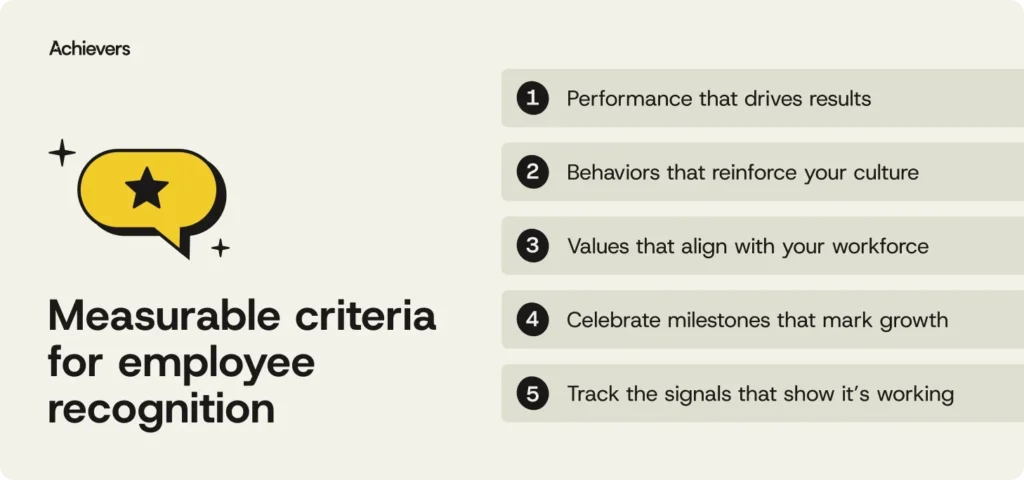
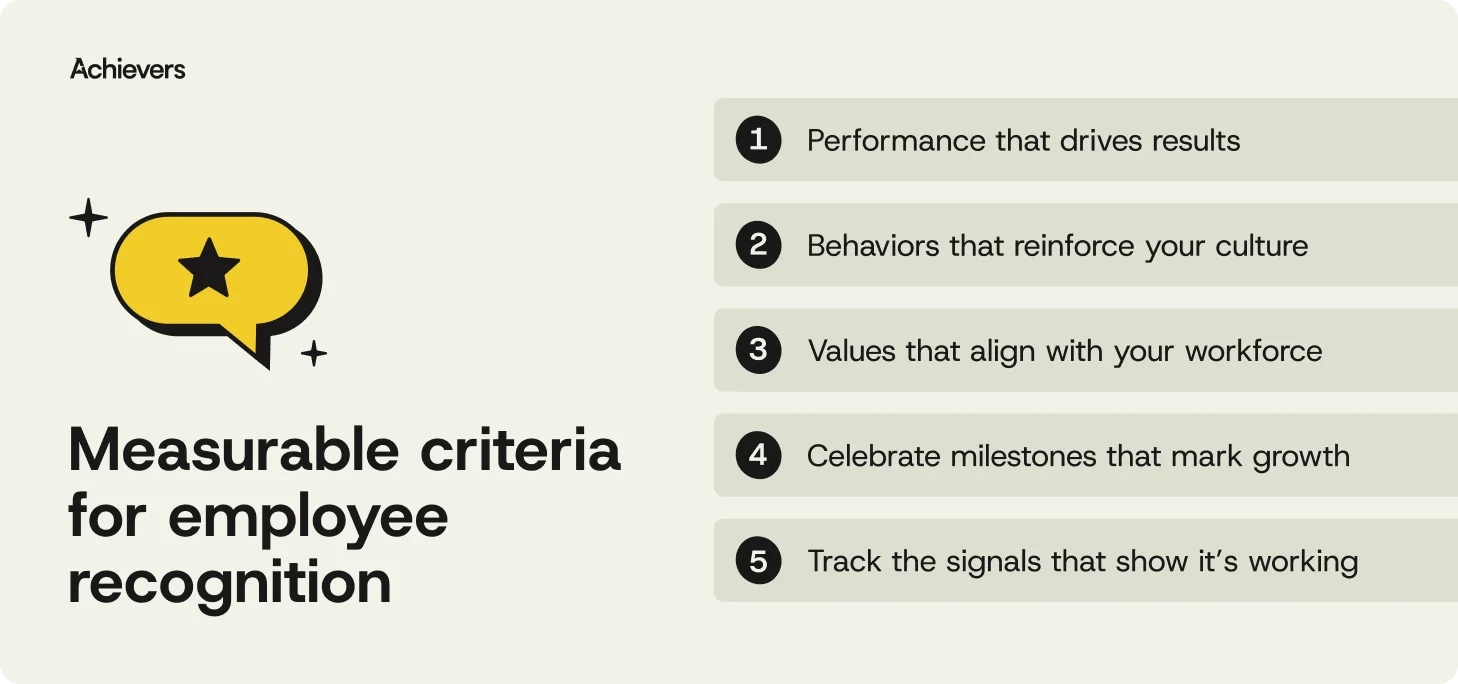
The absence of a robust measurement strategy renders a recognition program a well-intentioned but ultimately ephemeral initiative. To foster a culture of appreciation that is both enduring and scalable, it is imperative to define precisely what constitutes exemplary conduct and contribution. The adoption of appropriate criteria enables organizations to identify and celebrate pivotal moments, reinforce desired behaviors, and demonstrably showcase the program’s positive impact on the business. This article explores five essential measurable criteria that elevate recognition beyond superficial gestures, guiding the development of programs that are not only appreciated but also demonstrably accountable.
The Imperative of Measurable Criteria in Employee Recognition
A recognition program lacking a defined measurement strategy is akin to embarking on a journey without a map; it may feel good in the moment, but its ultimate destination and impact remain uncertain. To build a resilient and impactful recognition culture, organizations must clearly articulate what "good" looks like. The right criteria serve as a compass, directing efforts towards recognizing moments that truly matter, reinforcing behaviors that align with organizational goals, and providing clear data on the program’s contribution to business objectives. These five measurable criteria form the bedrock of recognition programs that are not merely meaningful but also actionable and demonstrably effective.
Five Pillars of Measurable Recognition
1. Performance That Drives Tangible Results
While not every achievement warrants a trophy, those that demonstrably contribute to business objectives should be a cornerstone of any recognition program. Performance-based recognition serves to reinforce the daily actions and efforts that propel an organization forward. By spotlighting individuals who consistently meet targets, adhere to deadlines, or deliver exceptional quality of work, organizations do more than simply reward output; they establish a clear benchmark for success. This approach cultivates an environment where high performance is not only expected but also visibly celebrated, motivating others to strive for similar achievements.
What to Measure:
- Key Performance Indicator (KPI) Achievement: Tracking the attainment of specific, quantifiable performance metrics relevant to individual roles and team objectives. This could include sales targets, project completion rates, customer satisfaction scores, or efficiency gains.
- Quality of Work: Evaluating the caliber of deliverables, often through peer review, client feedback, or internal quality assurance metrics. This recognizes consistency and excellence in execution.
- Innovation and Problem-Solving: Identifying instances where employees have developed novel solutions, improved processes, or overcome significant challenges that resulted in positive business outcomes. This can be measured by the impact of the innovation or the quantifiable benefits derived from problem-solving.
- Efficiency and Productivity Gains: Recognizing employees who have found ways to streamline workflows, reduce waste, or increase output without compromising quality. This can be measured by time saved, resources optimized, or increased throughput.
2. Behaviors That Reinforce Organizational Culture
Recognition extends beyond mere outcomes; it encompasses the manner in which individuals conduct themselves throughout their work. Behavioral recognition shines a light on the everyday actions that subtly shape and strengthen an organization’s culture. This includes instances of employees stepping up to assist colleagues, approaching challenges with curiosity, demonstrating resilience under pressure, or embodying collaborative spirit. These are the often-unseen contributions that significantly impact the work environment and deserve explicit acknowledgment.
What to Measure:
- Collaboration and Teamwork: Identifying and rewarding employees who actively support colleagues, share knowledge generously, and contribute positively to team dynamics. This can be gauged through peer nominations and feedback on cross-functional project contributions.
- Initiative and Proactiveness: Recognizing individuals who go above and beyond their defined responsibilities, anticipate needs, and take proactive steps to address potential issues or seize opportunities. This can be tracked through self-nominations or manager observations highlighting proactive contributions.
- Adaptability and Resilience: Acknowledging employees who effectively navigate change, remain optimistic in the face of adversity, and demonstrate the ability to bounce back from setbacks. This can be assessed through feedback during periods of organizational change or challenging projects.
- Customer-Centricity: Recognizing employees who consistently prioritize customer needs, go the extra mile to ensure satisfaction, and embody the organization’s commitment to exceptional service. This can be measured through customer feedback, testimonials, and internal service metrics.
3. Values That Resonate with Your Workforce
Recognition gains a deeper dimension when it is intrinsically linked to an organization’s core principles. Values-based recognition connects acts of appreciation to the fundamental tenets that guide the company, illustrating not only what is valued but also the underlying reasons why. Whether an employee demonstrates unwavering integrity in a difficult decision or champions inclusivity during a team discussion, these moments fortify the organizational culture from within. By acknowledging actions that embody these values, organizations reinforce their commitment to a principled and ethical workplace.
What to Measure:

- Demonstration of Core Values: Tracking specific instances where employees have visibly embodied and promoted the company’s stated values, such as integrity, innovation, respect, or accountability. This can be measured through qualitative examples provided in nominations and peer feedback.
- Commitment to Diversity, Equity, and Inclusion (DEI): Recognizing employees who actively foster an inclusive environment, champion equitable practices, and contribute to a sense of belonging for all. This can be tracked through participation in DEI initiatives and feedback on inclusive behaviors.
- Ethical Conduct: Acknowledging employees who consistently uphold ethical standards, even when faced with challenging situations or potential personal gain. This can be measured through the absence of ethical breaches and positive feedback regarding ethical decision-making.
- Commitment to Continuous Learning: Recognizing employees who actively seek new knowledge, share their expertise, and contribute to the professional development of others, aligning with a value of growth and improvement. This can be tracked through participation in training, mentoring activities, and knowledge-sharing contributions.
4. Milestones That Mark Growth and Contribution
Milestones represent the celebratory markers within an organization, akin to expected yet always appreciated occasions. When thoughtfully implemented, they transcend mere calendar events, serving as powerful opportunities to communicate appreciation and acknowledge an individual’s journey and contributions. From significant career achievements to important life moments, recognizing these milestones helps employees feel valued for their entirety – not just their output, but also their personal and professional development. This holistic approach fosters a deeper sense of belonging and commitment.
What to Measure:
- Service Anniversaries: Acknowledging and celebrating employees’ tenure with the company, recognizing their loyalty and accumulated experience. This is a straightforward, quantifiable metric.
- Career Advancements: Recognizing promotions, successful completion of significant training programs, or attainment of new certifications that signify professional growth. This can be tracked through HR records and individual development plans.
- Project Completion and Success: Celebrating the successful conclusion of major projects or initiatives, acknowledging the collective and individual efforts that led to their success. This can be measured by project deliverables and stakeholder satisfaction.
- Personal Milestones (Optional and Sensitive): Depending on company culture and employee comfort, recognizing significant personal achievements such as graduating, achieving a major health goal, or welcoming a new child can foster a more human-centered approach. This requires careful consideration of privacy and consent.
5. Tracking Signals of Program Effectiveness
Recognition is a potent tool, but its efficacy hinges on its ability to reach the intended recipients, occur with sufficient frequency, and demonstrably influence behavior and outcomes. This is where robust measurement becomes indispensable. Effective tracking moves beyond static spreadsheets, employing real-time signals that indicate whether a program is truly integrated into the organizational fabric or merely existing in name. These metrics provide critical insights into what is working, areas requiring adjustment, and the broader influence of recognition across the entire organization.
What to Measure:
- Frequency and Cadence of Recognition: Monitoring how often recognition is given and received across the organization. This includes both formal and informal acknowledgments, peer-to-peer recognition, and manager-led appreciation.
- Breadth of Recognition Distribution: Assessing whether recognition is equitably distributed across various departments, roles, seniority levels, and geographic locations. Uneven distribution can highlight potential biases or areas of low program adoption.
- Participation Rates: Tracking the percentage of employees actively giving and receiving recognition. High participation suggests the program is accessible and valued.
- Qualitative Feedback and Sentiment: Gathering anecdotal evidence and employee feedback through surveys, focus groups, or direct conversations to understand the perceived impact and meaning of recognition.
- Correlation with Engagement and Performance Data: Analyzing whether increases in recognition activity are associated with improvements in employee engagement survey scores, eNPS (Employee Net Promoter Score), productivity metrics, or retention rates.
Strategies for Tracking Recognition Effectiveness
The journey to an effective recognition program begins with a commitment to measuring both participation and impact over time. The ultimate objective is not merely to tally the number of recognition instances but to gain a profound understanding of how these acknowledgments influence employee engagement and overall performance. Organizations can strategically focus on several key indicators to gauge the success of their recognition initiatives:
- Recognition Activity Metrics: This encompasses the frequency with which employees and managers both extend and receive recognition. Analyzing these patterns can reveal adoption rates and identify potential champions or areas where encouragement is needed.
- Equitable Distribution Analysis: It is crucial to determine if recognition is reaching a diverse cross-section of the workforce. Monitoring its distribution across teams, roles, and locations helps ensure that all employees have equitable opportunities to be recognized for their contributions.
- Engagement and Sentiment Alignment: By comparing recognition activity with data from employee engagement surveys or sentiment analysis tools, organizations can identify correlations. A rise in recognition efforts coinciding with improved engagement scores provides strong evidence of the program’s positive influence.
- Impact on Turnover and Performance: The ultimate test of any HR initiative lies in its ability to positively affect critical business outcomes. Tracking shifts in turnover rates or performance metrics among recognized employees and teams can provide a compelling return on investment (ROI) for recognition efforts.
The most effective approach involves consistent tracking of these metrics, enabling the identification of trends and patterns over extended periods. When recognition is frequent, strategically aligned with organizational values, and widely embraced by the workforce, it becomes demonstrably easier to connect recognition activities to tangible and meaningful business results.
Measuring the Success of Employee Rewards Initiatives
To accurately gauge the success of an employee rewards initiative, organizations must look beyond the mere distribution of incentives. The true measure of success lies in whether these rewards catalyze positive changes in employee behavior and lead to measurable improvements in key areas such as engagement, retention, and overall performance. The focus should not be on the quantity of rewards issued but on the qualitative outcomes they generate. Here’s a structured approach for organizations to begin measuring the success of their rewards initiatives:
Reward Distribution and Usage
This metric quantifies how frequently rewards, whether in the form of points, awards, or direct incentives tied to performance or recognition, are distributed throughout the organization. It answers a fundamental question: are rewards being utilized consistently across the board, or are they concentrated within specific teams or roles? An uneven distribution can signal underlying issues in program design or a lack of consistent manager adoption. Furthermore, understanding reward redemption behavior—how often employees actively use their earned rewards—provides valuable insight into whether the rewards are perceived as meaningful and relevant to their needs and preferences.
Reward Participation and Adoption
Participation metrics track the proportion of employees actively earning and redeeming rewards. Adoption patterns reveal whether rewards are seamlessly integrated into daily workflows or are used sporadically. Consistent usage across diverse teams suggests that rewards are accessible, well-understood, and aligned with how employees operate. Conversely, low participation or uneven adoption may indicate friction points, a lack of awareness about the program, or a mismatch between the offered rewards and staff preferences or interests.
Alignment Between Rewards and Behaviors
A critical measure of success is the extent to which rewards are directly linked to the specific behaviors an organization aims to reinforce. This involves meticulously tracking:
- Specific Behaviors Tied to Rewards: Documenting the precise actions, achievements, or contributions that trigger the awarding of incentives. This ensures clarity and reinforces what is valued.
- Correlation Between Reward Recipients and Desired Behaviors: Analyzing whether employees who receive rewards are demonstrably exhibiting the targeted behaviors more frequently or effectively.
- Employee Understanding of the Link: Assessing through surveys or feedback whether employees clearly understand the connection between their actions and the rewards they receive.
When rewards are explicitly connected to observable actions, they serve as powerful tools for showcasing the efforts and contributions that employers value. Data from the State of Recognition Report indicates that as of 2026, 41% of 3,000 surveyed employees cited small monetary rewards as their primary motivator. This suggests that smaller, more frequent rewards, when directly linked to specific recognition moments, are more effective at reinforcing desired behaviors than larger, context-less rewards. When employees can clearly perceive the connection between their actions and the rewards they receive, it becomes intuitive to understand what behaviors to repeat, transforming rewards into genuine reinforcement mechanisms.
Impact on Engagement and Employee Experience
Rewards contribute significantly to employee engagement when they effectively reinforce the message that employees’ efforts are recognized and valued. To measure this impact, organizations should compare reward activity data with engagement metrics. For instance, assessing whether employees who receive rewards more frequently report a stronger sense of connection to the company, higher levels of motivation, or greater job satisfaction can establish a clear link between rewards and an enhanced employee experience.
Program-Level Return on Investment (ROI)
At the program level, success is ultimately defined by whether the rewards initiative contributes to broader organizational objectives. This includes measuring improvements in overall employee engagement, enhanced eNPS scores, and demonstrable gains in performance and productivity. Calculating the ROI involves quantifying the financial benefits derived from these improvements against the cost of the rewards program, providing a clear financial justification for its continuation and expansion.
The Achievers Manager Toolkit: A Streamlined Approach to Measuring Recognition
Defining measurable criteria for employee recognition is a crucial first step; however, empowering managers to effectively track and act upon these criteria is equally vital. The Achievers Manager Toolkit serves as a critical bridge, delivering real-time insights, timely reminders, and targeted recognition prompts directly to managers, precisely when and where they are needed. This integrated approach helps managers seamlessly connect strategic goals with observable behaviors and appropriate appreciation.
With the Achievers Manager Toolkit, managers are equipped to:
- Receive Contextual Recognition Prompts: The toolkit provides timely suggestions for recognizing employees based on predefined criteria, project milestones, or observed behaviors, preventing recognition from being overlooked.
- Track Recognition Activity: Managers can easily log and monitor their own recognition efforts, as well as view recognition extended by their team members, fostering accountability and visibility.
- Access Employee Performance Insights: By integrating with performance management systems, the toolkit offers managers a holistic view of employee contributions, enabling more informed and impactful recognition decisions.
- Understand Program Impact: The toolkit provides dashboards and reporting features that illustrate the effectiveness of recognition efforts, highlighting trends and areas for improvement.
The result is a more intentional and consistent approach to recognition, fostering stronger habits among managers and establishing a clearer, more impactful connection between everyday actions and overarching business objectives.
Building Recognition That is Measurable, Meaningful, and Sustainable
Recognition should never be an afterthought; it is a fundamental mechanism for demonstrating employee value, reinforcing desired behaviors, and cultivating a culture where positive actions become habitual. The most impactful recognition is not solely heartfelt; it is also demonstrably trackable. By defining what truly matters and equipping individuals with the tools to celebrate it, recognition transcends fleeting moments to become a consistent habit, a strategic imperative, and a powerful force for shaping organizational culture.
Achievers is dedicated to removing the guesswork from appreciation. Through intelligent insights, timely nudges for busy managers, and intuitive tools, we facilitate recognition that is personal, easy to implement, and measurably effective from its inception. When recognition is clear, consistent, and strategically aligned, exceptional work ceases to be an anomaly and becomes the established norm, driving sustained success and a thriving organizational culture.
The implementation of such a framework is not merely about acknowledging good work; it is about architecting a system that actively cultivates and perpetuates it, thereby fostering a more engaged, motivated, and high-performing workforce.