
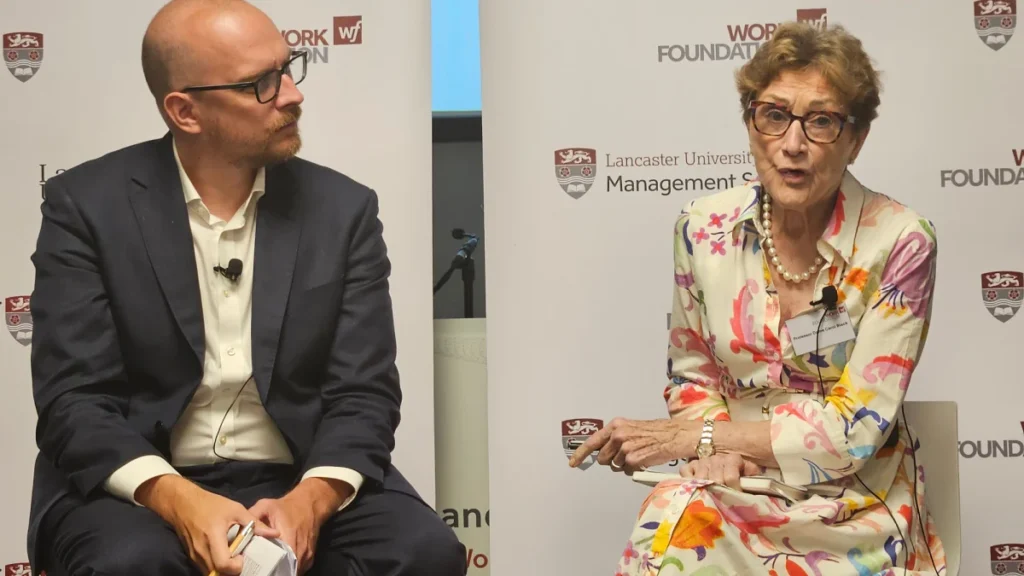
Nearly two decades on from her seminal ‘Working for a Healthier Tomorrow’ review, Professor Dame Carol Black has delivered a sobering assessment: the UK has made little substantive progress in confronting the profound "structural problems" hindering its work and health landscape. Her critique, voiced at a recent health and work summit, underscores a persistent systemic fragmentation and a concerning lack of sustained political determination to enact meaningful reform. This stagnation carries significant implications for the nation’s economic vitality and the wellbeing of its workforce.
The stark pronouncement came during a health and work summit organised by the esteemed think-tank The Work Foundation at Lancaster University, in collaboration with the Centre for Organisational Health and Well-being. Dame Carol Black, whose 2008 review was a landmark moment in UK public policy, articulated her concerns during a candid question-and-answer session with Work Foundation director Ben Harrison. While acknowledging some progress, particularly in fostering employer engagement with health and wellbeing initiatives, she lamented that the fundamental issues identified nearly 16 years ago remain largely unaddressed. "The structural problems have not gone away; the changes that needed to be made to our welfare system even when I did my report are still on the whole with us," she stated, highlighting a deep-seated inertia within policy-making.
The Origins of Reform: "Working for a Healthier Tomorrow" (2008)
To fully grasp the weight of Dame Carol Black’s recent criticisms, it is essential to revisit the context and objectives of her original 2008 review. Commissioned by the Labour government amidst growing concerns about rising rates of long-term sickness absence and economic inactivity, ‘Working for a Healthier Tomorrow’ was a comprehensive examination of the links between health and work. The review sought to identify barriers preventing people from staying in or returning to employment and proposed actionable strategies to improve public health, reduce welfare dependency, and boost national productivity.
At the heart of the 2008 report was a recognition that the prevailing "sick note" system was counterproductive. It often focused on what an individual couldn’t do, rather than exploring what they could achieve, even with a health condition. This led to a key recommendation: the replacement of the traditional sick note with the "fit note." The vision for the fit note was revolutionary for its time, aiming to facilitate constructive conversations between GPs and patients about adjusted duties, phased returns, or alternative roles, thereby promoting a return to work where medically appropriate. The review also championed early intervention, better access to occupational health services, and a more integrated approach across government departments, particularly between health and employment services. It was predicated on the understanding that good work is good for health, and that supporting individuals to remain economically active benefits both the individual and society.
The Fragmented Landscape: Policy Failures and Missed Opportunities
Despite the ambitious proposals of 2008 and subsequent attempts at reform by various administrations, Dame Carol Black’s recent assessment paints a picture of systemic failure. She noted that successive governments have "fiddled at the edges," resulting in "a series of stops and starts" rather than a coherent, sustained strategy. This fragmentation, she argued, has left the UK’s work and health system ill-equipped to tackle persistent challenges.
One of the most prominent examples of this disconnect, according to Black, is the implementation of the fit note itself. While introduced in 2010, its original intent – to empower GPs to engage in rehabilitative discussions – has largely been unmet. "I wanted [the fit note] to be for our general practitioners to be able to have the conversation of what might you be able to do, not what you cannot do, so I am going to sign you off from work," Dame Carol explained. "I think I was naive or perhaps hopeful that we would be able to work with the Royal College of General Practitioners and enable them to find the time and the space." The reality, she suggested, is that GPs often lack the necessary time, training, or resources to engage in the detailed, nuanced conversations required for an effective fit note. This often reduces it to a mere administrative formality, signing individuals off work rather than facilitating their return.
Furthermore, Black highlighted concerns regarding Statutory Sick Pay (SSP). Far from being a supportive mechanism, it is "too often used by employers as a way to ‘manage’ employees out of the workplace and into the benefits system." This indicates a fundamental flaw in how the system interacts with employers, potentially disincentivising retention and rehabilitation efforts. The broader implication is a system that pushes individuals out of the workforce rather than supporting their continued participation, contributing to the nation’s growing economic inactivity challenge.
The lack of early intervention was another critical point. When someone goes off sick, timely support and proactive measures to facilitate their return are still generally absent. This delay often exacerbates conditions, making a return to work more difficult and prolonging periods of absence, thereby increasing the burden on welfare systems and individuals alike.
Economic Imperatives: The Cost of Inactivity and Ill Health
The human cost of these systemic failures is immense, but so too is the economic burden. Sir Charlie Mayfield, author of the ‘Keep Britain Working’ review, echoed this sentiment at the same summit, urging a future Andy Burnham-led government to recognise that "fixing workplace ill health" represents "one of the biggest opportunities we have to drive growth." This perspective underscores the shift in understanding from seeing ill health as merely a welfare issue to recognising it as a significant drag on national productivity and economic potential.
Current data from the Office for National Statistics (ONS) consistently shows a worrying trend of increasing economic inactivity due to long-term sickness. Millions of individuals are out of the workforce, citing long-term health problems. This translates into billions of pounds annually in lost productivity, increased welfare payments, and additional strain on an already stretched National Health Service. For instance, recent figures indicate that over 2.8 million people are economically inactive due to long-term sickness, a record high. Conditions such as mental health issues and musculoskeletal disorders are increasingly cited as primary drivers of these absences. These are often conditions where early intervention, flexible working arrangements, and tailored support can make a significant difference in preventing long-term disengagement from work.
The "Unequal Support" report, published by The Work Foundation at the summit, further reinforced this economic imperative. It argued that while health-related exits from work are slowing, practical provision and support remain alarmingly limited. Crucially, the report found that support is often lowest where health risks are greatest, creating a vicious cycle of disadvantage. This disproportionate impact on vulnerable groups and those in demanding occupations exacerbates existing inequalities and limits the potential for broad-based economic growth.

A Call for Cohesion: Current Reform Efforts and Future Visions
Despite the bleak assessment, there are glimmers of renewed attention to these issues. With fit note reform once again on the government agenda, Dame Carol Black was asked about her hopes for this process. Her response emphasised the critical need for integrated learning and a holistic approach: "What I hope is that the learning, can it be brought together? So that we can start to have a real programme around what is the best way to keep people in work early or get them back to work." This highlights a desire to move beyond piecemeal initiatives towards a cohesive, evidence-based strategy.
Coupled with the anticipated ‘Keep Britain Working’ healthy standard, Black argued that employers need access to a comprehensive "basket" of interventions, backed by robust evidence. "That you know you can use with confidence and get the right result," she clarified. This suggests a need for clear guidance, readily available resources, and perhaps even financial incentives for businesses, especially small and medium-sized enterprises (SMEs), to invest in proactive health and wellbeing strategies. Such a framework would move away from the current ad hoc approach, offering employers certainty and efficacy in their efforts to support employee health.
Challenges for SMEs: The "Unequal Support" Report
The Work Foundation’s "Unequal Support" report provides a crucial deep dive into the practical realities faced by businesses, particularly SMEs. Its findings underscore that while employers recognise the value of supporting employee health, significant gaps exist in provision, especially for smaller businesses which often lack dedicated HR or occupational health resources. The report made several key recommendations to address these disparities:
- Embed Prevention and Healthy Job Design: This calls for a fundamental shift in employer responsibility, moving beyond reactive measures to proactively designing jobs and workplaces that promote health and prevent illness. This includes ergonomic considerations, managing workload, fostering supportive cultures, and providing opportunities for skill development and autonomy.
- Establish Local "Work and Health" Hubs for SMEs: Recognising the resource constraints of smaller businesses, the report advocates for localised support networks. These hubs would act as central points for SMEs to access advice, resources, and potentially subsidised occupational health services, bridging the current gap in provision.
- Pilot "Supported Workdays": This innovative proposal suggests allowing workers to remain in employment during periods of reduced capacity, rather than forcing full absence. This could involve reduced hours, modified tasks, or flexible schedules, enabling a gradual return to full productivity and maintaining a connection to the workplace.
- Consultation on a Statutory Right to Paid Time Off for Medical Appointments: The report strongly argued that timely access to healthcare, without requiring employees to use annual leave or absorb income loss, directly supports earlier intervention and faster recovery. It highlighted that a similar entitlement already exists for pregnant employees, demonstrating a precedent for sustaining workforce participation during critical periods. The report concluded: "Government should consult with employers and employees on the introduction of a new right to paid time-off for medical appointments."
These recommendations collectively point towards a need for both government intervention and employer responsibility, creating an ecosystem where health is actively supported, not just managed reactively.
Political Will and the Road Ahead: A Message to the Next Administration
With the political landscape poised for change, and Andy Burnham’s anticipated arrival in Number 10 next month (who would be the eighth Prime Minister since Black’s 2008 review), Dame Carol Black offered direct counsel for the incoming administration. Her message was clear: the scale of the challenge demands exceptional leadership and unwavering commitment.
"I hope he will appoint a very strong secretary of state in DWP [Department for Work and Pensions] who has got the courage and the vision, and also the resilience, to see that we are not going to be able to get things better in two years; the basic reforms that need to happen," she stated. This reflects a deep understanding that systemic change in work and health is a long-term endeavour, requiring sustained political will beyond electoral cycles. It cannot be addressed through quick fixes or superficial reforms.
Furthermore, she added: "That they could set out a programme that won’t disadvantage people who are in the benefits system at the moment but will allow us, with confidence, to move forward sensibly so we don’t have so many people out of work." This crucial point underscores the need for reforms that are not punitive but supportive, building trust and providing pathways to employment rather than creating further barriers or hardship for those already struggling. It implies a strategic approach that balances fiscal responsibility with social equity, ensuring that the transition to a healthier, more productive workforce is managed with empathy and foresight.
Broader Implications: Towards a Sustainable Work and Health Strategy
The implications of Dame Carol Black’s warnings extend far beyond individual health outcomes. A failure to address the UK’s structural work and health problems has profound societal and economic consequences. Economically, the persistent rise in long-term sickness absence threatens national productivity, dampens economic growth, and places an increasing strain on public finances through welfare payments and healthcare costs. Socially, it exacerbates health inequalities, particularly impacting individuals in lower-paid, physically demanding, or precarious work, who often have less access to employer support and occupational health services. This creates a widening gap in participation and opportunity, undermining social mobility and cohesion.
The call for a "strong secretary of state" with "courage, vision, and resilience" highlights the need for leadership that can navigate complex interdepartmental challenges. A truly effective work and health strategy requires seamless collaboration between the Department for Work and Pensions, the Department of Health and Social Care, and potentially the Department for Education and other ministries. It necessitates a holistic approach that integrates health interventions with employment support, skills training, and welfare reform. This requires overcoming historical silos and fostering a shared understanding across government that investing in the health of the workforce is not just a social good, but an economic imperative.
As the UK stands at a critical juncture, facing persistent economic headwinds and a growing inactive population, Dame Carol Black’s nearly two-decade-old warnings serve as a potent reminder. The time for "fiddling at the edges" is long past. What is needed now is a comprehensive, sustainable, and politically courageous strategy that addresses the root causes of workplace ill health, empowers individuals, supports employers, and ultimately builds a healthier, more productive nation. The challenge is immense, but so too is the opportunity for transformative change.







