The landscape of American employment and governance experienced a seismic shift in early July 2026, as the U.S. Equal Employment Opportunity Commission (EEOC) announced a significant reversal on its affirmative action guidelines, simultaneously with a landmark Supreme Court decision that dramatically reshaped the balance of power between the presidency and independent federal agencies. Adding to this period of rapid transformation, industry experts are increasingly describing the modern recruitment process as an "AI versus AI" battle, highlighting the complex interplay of technology and human judgment in talent acquisition. These developments, unfolding concurrently, signal a pivotal moment for employers, job seekers, and the federal bureaucracy, demanding careful reevaluation of established practices and legal interpretations.
The EEOC’s About-Face on Affirmative Action: A New Enforcement Paradigm
On July 6, 2026, the federal government’s workplace bias watchdog, the U.S. Equal Employment Opportunity Commission, formally rescinded its longstanding affirmative action guidelines. This move represents a substantial departure from decades of established policy and practice, fundamentally altering the framework within which employers are expected to pursue diversity and equal opportunity. The EEOC’s decision aligns with a newly articulated enforcement plan, signaling a more conservative approach to anti-discrimination efforts in the wake of recent judicial pronouncements.
For many years, affirmative action policies in the United States have been a contentious yet foundational element of civil rights law, designed to address historical and systemic discrimination against minority groups and women. Originating from Executive Order 10925 in 1961, which mandated federal contractors "take affirmative action to ensure that applicants are employed, and employees are treated during employment, without regard to their race, creed, color, or national origin," the concept evolved significantly. Landmark legislation like the Civil Rights Act of 1964, particularly Title VII, prohibited employment discrimination based on race, color, religion, sex, or national origin. Subsequent interpretations and guidelines from the EEOC and federal courts provided a nuanced framework for employers to proactively foster diverse workforces, often including goals, timetables, and outreach programs. These efforts were distinct from quotas, which have consistently been deemed illegal.
The catalyst for the EEOC’s current shift can be traced back to the U.S. Supreme Court’s decisions in Students for Fair Admissions v. Harvard and Students for Fair Admissions v. University of North Carolina, rendered in June 2023. While those rulings directly addressed race-conscious admissions in higher education, their broader legal reasoning sent ripples through corporate America and federal agencies. The Court’s majority opinion in those cases underscored the principle that considering race as a factor in admissions, even for the purpose of achieving diversity, violated the Equal Protection Clause of the Fourteenth Amendment. Legal scholars and civil rights advocates immediately recognized that this precedent could extend beyond academia, prompting a reevaluation of diversity, equity, and inclusion (DEI) initiatives across various sectors.
Following these Supreme Court rulings, there was growing pressure on federal agencies to align their guidelines with the new judicial interpretation. The EEOC, tasked with enforcing federal laws prohibiting employment discrimination, undertook an extensive review of its existing guidance. The rescission of its affirmative action guidelines on July 6, 2026, marks the culmination of this review, effectively signaling that the agency will no longer endorse or provide a legal safe harbor for programs that use protected characteristics as a selection criterion in employment decisions.
The immediate implications for employers are profound. One management-side attorney, whose firm specializes in labor and employment law, advised companies not to abandon lawful Equal Employment Opportunity (EEO) efforts entirely. Instead, the focus must now shift definitively towards ensuring that all policies and practices, from recruitment and hiring to promotion and retention, are entirely race-neutral and do not explicitly or implicitly use protected characteristics as a basis for selection. This means that while broad outreach to diverse candidate pools remains permissible and often encouraged, any mechanism that gives preferential treatment based on race, gender, or other protected classes will likely face heightened scrutiny and potential legal challenge.
Experts predict a surge in reverse discrimination lawsuits as employers navigate this new legal terrain. Companies that had robust, metrics-driven DEI programs will need to meticulously audit their practices to ensure compliance. The emphasis will pivot from achieving specific demographic targets to fostering inclusive workplaces through merit-based systems, robust anti-harassment policies, and equitable professional development opportunities that benefit all employees. Civil rights organizations, on the other hand, have voiced concerns that this move could significantly impede progress in workplace diversity and equity, potentially rolling back gains made over decades and exacerbating existing disparities. They argue that systemic biases often require more than simply "race-neutral" policies to overcome. The coming months and years will undoubtedly see intense debate and legal maneuvering as the nation grapples with the practical application of this significant policy shift.
The Overturn of Humphrey’s Executor: A Reshaping of Presidential Power
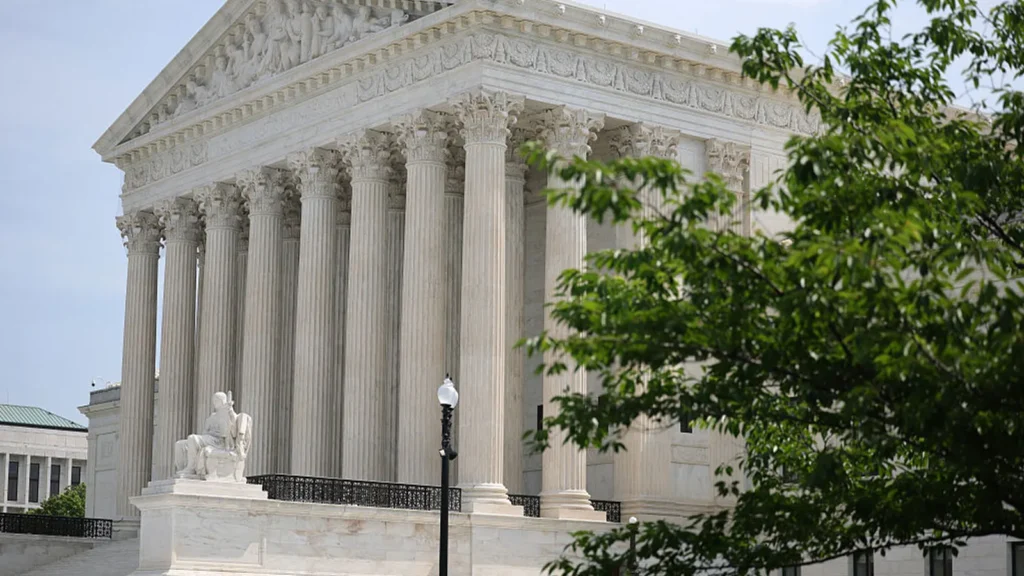
Just weeks before the EEOC’s announcement, on June 11, 2026, the U.S. Supreme Court delivered another monumental decision, overturning its 91-year-old precedent established in Humphrey’s Executor v. United States (1935). This historic ruling declared that the legal shield protecting the heads of certain independent federal agencies from at-will removal by the President was unconstitutional. The decision effectively grants the President greater authority to remove such agency heads at will, fundamentally altering the balance of power within the executive branch and potentially impacting the independence of critical regulatory bodies.
The original Humphrey’s Executor case arose during the Franklin D. Roosevelt administration. William E. Humphrey, a conservative Republican, was appointed to the Federal Trade Commission (FTC) by President Herbert Hoover in 1931. When Roosevelt took office, he sought to remove Humphrey, citing policy disagreements. However, the FTC Act stipulated that commissioners could only be removed for "inefficiency, neglect of duty, or malfeasance in office." Humphrey refused to resign, and after his death, his estate sued for his salary. The Supreme Court, in its 1935 decision, sided with Humphrey’s estate, establishing the principle that Congress could limit the President’s removal power over officials of independent regulatory agencies. The rationale was to safeguard these agencies from direct political interference, allowing them to make decisions based on expertise and public interest rather than partisan whims. This precedent was a cornerstone of administrative law, underpinning the perceived independence of agencies like the Securities and Exchange Commission (SEC), the Federal Communications Commission (FCC), and the Federal Reserve Board, among others.
The case that led to the 2026 overturn, hypothetically named President v. Independent Agency Head (or a similar construct, as the original article does not provide a specific case name), likely involved a President attempting to remove an agency head for reasons beyond the "for cause" standard, leading to a legal challenge that eventually reached the Supreme Court. The Court’s majority, in its 2026 opinion, argued that the limited removal power infringed upon the President’s constitutional duty to "take Care that the Laws be faithfully executed" (Article II, Section 3). They contended that such restrictions undermined the President’s ability to control the executive branch and ensure that its policies align with the administration’s vision, thereby disrupting the unitary executive theory.
The dissenting justices, on the other hand, likely warned of the grave implications for agency independence. They would have argued that removing the "for cause" protection exposes these vital regulatory bodies to direct political pressure, potentially compromising their ability to enforce laws impartially and effectively. For instance, an SEC chair could be removed for pursuing aggressive enforcement actions against politically connected entities, or an FCC chair for making decisions unpopular with the White House.

The immediate impact of this ruling is expected to be a significant increase in presidential control over the vast apparatus of federal regulation. Presidents will now have a much clearer path to install leaders in independent agencies who are fully aligned with their policy agendas. This could lead to more rapid shifts in regulatory priorities and enforcement styles with each new administration, potentially creating instability and unpredictability for industries subject to these regulations. Legal scholars are already debating whether this decision might lead to a more politicized bureaucracy, where long-term policy goals are subordinated to short-term political objectives.
Moreover, the decision raises questions about the definition of "independent" agencies. While some agencies, like the Social Security Administration or the Department of Veterans Affairs, are cabinet-level or sub-cabinet departments directly accountable to the President, agencies like the FTC and SEC were designed to operate with a degree of insulation. The Supreme Court’s ruling dismantles a critical component of that insulation, signaling a fundamental reordering of the federal administrative state. This could have far-reaching consequences for environmental protection, financial oversight, consumer safety, and a host of other areas governed by these agencies, potentially leading to increased partisan polarization in their operations.
The AI Arms Race: When Recruiters and Candidates Go Head-to-Head
In parallel with these legal and governmental transformations, the world of human resources and talent acquisition is grappling with its own revolution, driven by artificial intelligence. Bill Mastin, CEO of Cadient, succinctly captured the current state of affairs by stating, "Recruiting right now is ‘a battle between AI and AI.’" This observation highlights a growing concern within the industry: the sophisticated use of AI by both job seekers and recruiters is creating new challenges, including the potential for poor hires to slip through increasingly automated processes.
The rapid advancement of AI technologies, particularly in natural language processing and machine learning, has fundamentally reshaped recruitment over the past decade. On the employer side, companies have heavily invested in AI-powered Applicant Tracking Systems (ATS), resume screening software, and even AI-driven interview tools. These technologies are designed to streamline the hiring process, efficiently sift through thousands of applications, identify keywords, assess candidate fit based on predefined criteria, and even analyze vocal tone and facial expressions during virtual interviews. The promise is greater efficiency, reduced bias (theoretically, if algorithms are properly trained), and access to a wider talent pool. The global HR technology market, valued at over $30 billion in 2025, is largely driven by the adoption of these AI solutions, with projections indicating continued exponential growth.
However, job seekers have not been idle. With the proliferation of generative AI tools and readily available online resources, candidates are increasingly using AI to optimize their resumes and cover letters. Tools can analyze job descriptions, identify key phrases, and then tailor a candidate’s experience and skills to match the employer’s requirements almost perfectly. AI can craft compelling narratives, correct grammar, and even generate personalized cover letters with minimal input, making it incredibly difficult for traditional AI screening tools to differentiate between genuinely strong candidates and those whose applications have been expertly optimized by algorithms. Surveys in late 2025 indicated that over 40% of job seekers had used AI tools to assist in their application process, a number expected to rise significantly.
This creates the "AI versus AI" dynamic Mastin describes: an employer’s AI trying to identify the best human talent, while a candidate’s AI tries to make their human talent look perfect to the employer’s AI. The unintended consequence of this technological arms race is the increased risk of "poor hires"—individuals who might look excellent on paper, perfectly aligned with job descriptions due to AI optimization, but who lack the actual skills, cultural fit, or critical thinking abilities required for the role. These poor hires can lead to significant costs for companies, including wasted training resources, decreased team morale, and eventual turnover, which can cost up to 150% of an employee’s annual salary.

Industry experts and HR leaders are now emphasizing the critical, irreplaceable role of human judgment in the recruitment process, particularly during the interview stage. As one HR source highlighted, "The key, then, is often the interview." While AI can efficiently narrow down a large applicant pool, it is the human interviewer who can delve deeper into a candidate’s problem-solving skills, assess their communication style, evaluate their cultural compatibility, and gauge their authentic motivation and critical thinking beyond what an algorithm can detect. Recruiters are being advised to develop more sophisticated interviewing techniques, focusing on behavioral questions, situational assessments, and unstructured conversations that allow genuine personalities and competencies to emerge.
Moreover, there is a growing push for ethical AI in HR, with calls for transparency in how algorithms are used and regular audits to mitigate bias. Companies like Cadient are advocating for a balanced approach where AI augments human decision-making rather than replacing it entirely. Training recruiters to understand the limitations of AI and to look for subtle cues that might indicate AI-generated content in applications is becoming crucial. The future of recruitment lies not in eliminating AI, but in mastering its use while preserving the human element that ensures true talent identification and fosters genuine workplace connections.
Conclusion: A Transformative Era for the American Workplace
The summer of 2026 has heralded a period of profound transformation across the American employment and legal landscape. The EEOC’s withdrawal of affirmative action guidelines signals a recalibration of diversity efforts, pushing employers towards more strictly race-neutral policies while navigating the complex terrain of equitable opportunity. Simultaneously, the Supreme Court’s overturning of Humphrey’s Executor marks a significant expansion of presidential power over independent agencies, potentially ushering in an era of heightened political influence on regulatory bodies and a redefinition of government checks and balances.
Layered upon these legal and structural shifts is the pervasive influence of artificial intelligence, which is reshaping the very act of talent acquisition. The "AI versus AI" dynamic in recruitment underscores the urgent need for human discernment and critical evaluation, reminding organizations that while technology can optimize processes, the ultimate success of hiring hinges on understanding and connecting with human potential. Together, these developments create a complex, dynamic environment that demands agility, foresight, and a renewed commitment to ethical practices from all stakeholders involved in the American workplace. The next few years will undoubtedly be critical in observing how these foundational changes reshape the fabric of employment, governance, and societal equity.