As organizations across industries accelerate their adoption of artificial intelligence (AI) and brace for unprecedented disruption, a significant and growing paradox is taking shape. While many companies are channeling substantial resources into future-proofing their operations and strategies, a critical underinvestment is simultaneously occurring in the very talent pool most capable of actualizing this vision. This emerging disconnect, particularly concerning early-career talent, poses a substantial strategic risk, threatening to undermine ambitious plans for innovation and resilience.
The traditional view of early-career hiring as merely a "pipeline issue" is being challenged. In some organizations, these crucial entry-level roles are being deprioritized, viewed as expendable in the face of automation or cost-cutting measures. In others, the approach is being more thoughtfully reimagined, acknowledging the strategic value these individuals can bring. However, this nuanced approach is far from universal. Leaders across the corporate landscape are voicing mounting concerns about workforce readiness, specifically regarding the acquisition of critical skills, the cultivation of adaptability, and the imperative to develop robust AI capabilities. The resulting chasm—a stark disconnect between stated future-readiness goals and the underinvestment in the talent that can deliver them—is a reality few organizations have fully confronted. Yet, compelling evidence suggests that the most effective and sustainable path to becoming truly future-ready is paved with the development and integration of early-career talent.
The Imperative for Future Readiness: Beyond Technology Adoption
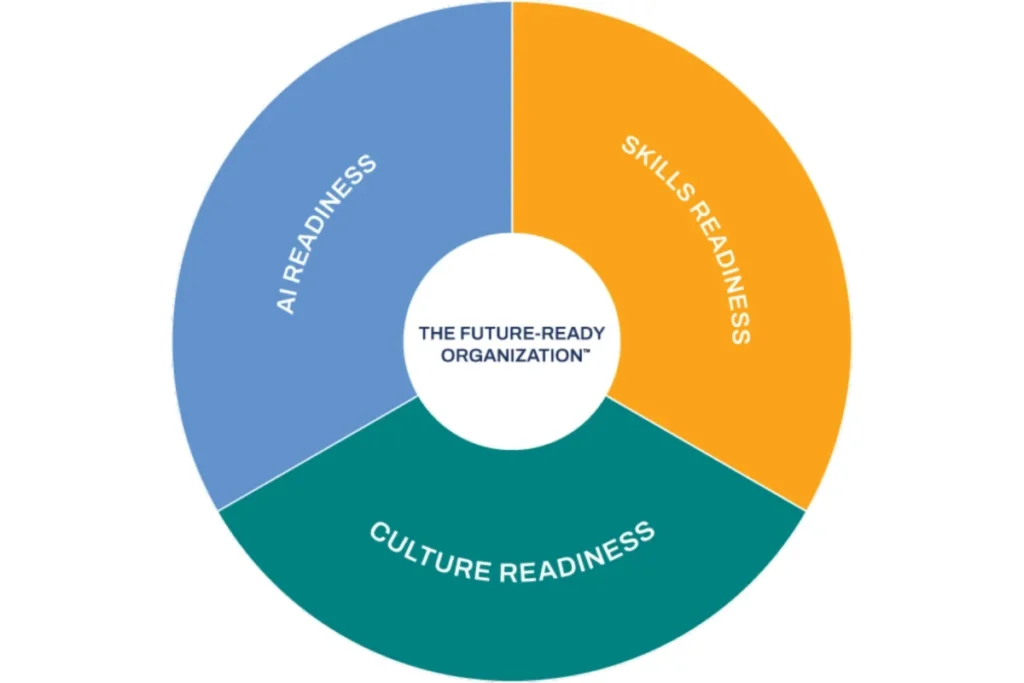
Recent research by the Institute for Corporate Productivity (i4cp) underscores a vital insight: achieving future readiness is not solely a matter of technological advancement. True organizational resilience and adaptability are forged when three core capabilities operate in harmonious alignment: a culture that actively embraces change, a workforce equipped with continuously evolving skills, and the organizational capacity to harness AI at scale.
However, a pervasive tendency exists within many organizations to treat these critical areas as disparate initiatives. Efforts to foster a change-embracing culture are often compartmentalized, separate from workforce development strategies, which in turn remain disconnected from overarching AI strategies. This fragmentation is more than a mere structural inefficiency; it represents a profound strategic risk. Organizations that succeed in aligning their culture, skills development, and AI integration are demonstrably twice as likely to sustain superior performance over the long term compared to those that focus exclusively on technology adoption.
Despite the clear benefits of this integrated approach, confidence in workforce readiness remains alarmingly low. Across the spectrum of CEOs, board directors, and HR leaders, a significant majority express apprehension about their organizations’ preparedness to meet the skill demands of the near future. Furthermore, a notable minority believe their companies are effectively equipping employees to collaborate with AI systems. In many instances, organizations are experiencing what can only be described as an "illusion of readiness"—a potentially dangerous conviction that strategic frameworks and technological solutions are in place, without a corresponding, commensurate investment in the human capabilities required to leverage them.
The Overlooked Leverage Point: Early-Career Talent as a Strategic Accelerator
This is precisely where early-career talent emerges not as a peripheral concern, but as a central, potent lever for achieving the crucial alignment between culture, skills, and AI readiness. Early-career employees occupy a unique nexus, sitting at the intersection of these three fundamental pillars of future readiness:
- Culture: This demographic typically exhibits a remarkable ability to absorb and internalize organizational norms and values more rapidly than any other segment of the workforce. If an organization aspires to embed adaptability, proactive agency, and learning agility into its cultural fabric, early-career talent provides fertile ground for these essential behaviors to take root and flourish. Their formative experiences within the organization shape their long-term engagement and their contribution to the overall organizational ethos.
- Skills: Early-career individuals represent the longest possible runway for capability development. Strategic investments made in hiring and nurturing early-career talent yield compounding returns over time, fundamentally shaping the future skill architecture of the organization. These investments build a deep bench of internally developed expertise, reducing reliance on external recruitment and fostering loyalty.
- AI Readiness: This cohort often demonstrates the highest receptivity to new tools, technologies, and innovative ways of working. Their natural inclination towards digital fluency makes them critical agents in scaling AI adoption beyond pilot programs and into widespread organizational practice. Moreover, as the technological landscape continues to evolve, incoming generations of early-career professionals are increasingly entering the workforce as "AI natives," possessing an intuitive understanding and comfort with these advanced systems.
In essence, early-career talent is not merely a component of the existing workforce; it is the very locus where organizational culture, evolving skill sets, and practical AI integration converge and are actively shaped.
A Growing Contradiction: Declining Investment Amidst Rising Needs
Despite the clear strategic advantages, a significant and counterproductive trend is emerging in many organizations. Early-career hiring has experienced a notable decline in several key sectors. This reduction is often driven by immediate cost pressures, an overestimation of automation’s ability to fully replace human roles, and a pervasive preference for acquiring "ready-made" talent from external markets. Concurrently, these same organizations are actively prioritizing the development of new, in-demand skills, investing heavily in AI technologies, and exploring the fundamental shifts in how work will be performed.

These opposing trends are fundamentally at odds with one another, creating an unsustainable trajectory. Organizations cannot simultaneously reduce their intake of entry-level talent and realistically expect to cultivate a genuinely future-ready workforce. Without a consistent and robust pipeline of early-career professionals, existing skills gaps are destined to widen, internal mobility will stagnate, and reskilling and upskilling initiatives will become reactive and less strategic in nature. Existing research already indicates that organizations that lack foresight in workforce planning tend to address talent shortages only after they have become acute crises, rather than proactively preparing for them.
The long-term implications of this approach are substantial and potentially detrimental. When early-career pathways become weakened or entirely dismantled, organizations forfeit their ability to shape critical capabilities from the ground up. Instead, they become increasingly reliant on external hiring to fill immediate gaps, a strategy that often incurs higher costs, demands more extensive onboarding, and carries a greater risk of misalignment with the organization’s unique culture and strategic objectives.
From Pipeline to Strategic Asset: Rethinking Early-Career Talent Management
Forward-thinking, future-ready organizations are beginning to fundamentally re-evaluate this prevailing approach. They are transitioning from viewing early-career talent as a volume-based hiring category to recognizing and treating it as a vital strategic asset, indispensable for long-term capability building and organizational evolution.
This paradigm shift necessitates several key strategic moves:
- Strategic Workforce Planning Integration: Early-career hiring must be integrated into broader workforce planning processes, aligning recruitment targets with anticipated future skill needs and leadership development pathways. This involves forecasting skill demands, identifying emerging roles, and strategically mapping how early-career hires can fill these future requirements. For instance, companies in the rapidly expanding renewable energy sector, facing a projected deficit of skilled technicians and engineers by 2030 according to industry reports, are increasingly recognizing the need to invest in apprenticeships and university partnerships to build this future workforce.
- Targeted Skill Development Programs: Beyond general onboarding, organizations must implement structured, long-term development programs specifically designed for early-career employees. These programs should focus on cultivating not only technical skills relevant to AI and emerging technologies but also crucial soft skills like critical thinking, problem-solving, collaboration, and adaptability. A timeline for these programs could span from initial 1-2 year rotational assignments to longer-term mentorship and specialized training over 3-5 years, ensuring continuous growth.
- AI Immersion and Experimentation: Early-career talent should be actively involved in AI-driven projects and initiatives. Providing them with opportunities to experiment with AI tools, contribute to AI implementation, and offer fresh perspectives can accelerate AI adoption and foster a culture of innovation. Pilot programs in AI-powered customer service or internal data analysis, for example, can leverage the natural curiosity and tech-savviness of recent graduates.
- Culture Cultivation and Reinforcement: Early-career hires are instrumental in shaping and reinforcing an organization’s culture. By actively involving them in team projects, cross-functional initiatives, and employee resource groups, organizations can ensure that desired cultural attributes, such as agility, inclusivity, and continuous learning, are embedded from the outset. A company aiming to foster a more collaborative culture might introduce early-career cohorts to cross-departmental problem-solving forums.
- Mentorship and Sponsorship: Establishing robust mentorship and sponsorship programs connects early-career employees with experienced leaders. These relationships provide invaluable guidance, career development support, and networking opportunities, fostering loyalty and accelerating individual and collective growth. The establishment of formal mentorship pairings, perhaps lasting for 1-2 years with defined goals, can be a powerful tool.
These practices collectively reflect a fundamental, transformative mindset shift: workforce capability is not a passive, downstream outcome of strategic decisions; rather, it is a dynamic, core input that actively shapes and informs strategy itself.
Closing the Gap: Aligning Systems for a Future-Ready Workforce
Ultimately, the challenge confronting today’s leaders extends beyond merely preparing for an AI-enabled future. It encompasses the critical task of aligning the very systems and processes that will enable this future to materialize and thrive. Culture, skills development, and AI readiness are frequently discussed as distinct domains, but for employees, they are experienced as a unified, interconnected reality. Nowhere is this reality more visible, more malleable, and more potent than among early-career talent.
Organizations that overlook this fundamental connection risk perpetuating and deepening the very gaps they are endeavoring to close. Conversely, those that proactively act upon this insight can transform early-career talent into a powerful and indispensable engine of adaptability, capability enhancement, and sustainable organizational growth.
The pursuit of future readiness is not an endeavor achieved through isolated initiatives or ephemeral, short-term investments. It is a strategic imperative built upon the bedrock of deep, systemic alignment—and that alignment, critically, begins much earlier in an employee’s journey than many organizations currently realize. By strategically investing in and nurturing early-career talent, companies can lay the foundation for a more resilient, innovative, and adaptable future.