
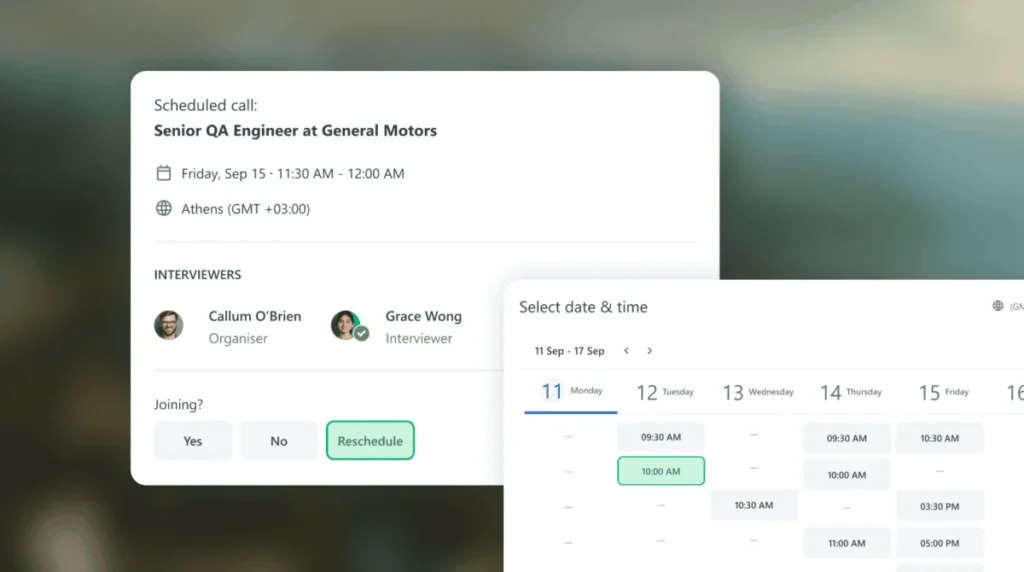
The landscape of talent acquisition is undergoing a profound transformation, driven by an increasingly candidate-centric market and the imperative for efficiency. In a significant move aimed at addressing persistent friction in the interview process, Workable, a leading applicant tracking system, has unveiled a new candidate self-rescheduling feature. This enhancement is designed to empower job seekers with greater autonomy over their interview schedules while simultaneously alleviating substantial administrative burdens for hiring teams, ultimately fostering a more positive and respectful recruitment experience.
The Chronic Challenge of Interview Scheduling: A Persistent Bottleneck
For years, the process of coordinating interviews has been a perennial source of frustration for both candidates and hiring managers alike. The scenario is all too familiar: a carefully arranged interview slot, meticulously aligned with the schedules of multiple team members, is suddenly disrupted by a candidate’s last-minute request to reschedule. What invariably ensues is a time-consuming "dance" of email exchanges, calendar cross-referencing, and internal coordination, often stretching over several days before a new time can be agreed upon. This protracted back-and-forth not only consumes valuable resources but also risks tarnishing a promising candidate’s perception of the organization, potentially leading them to question its efficiency and commitment to a modern, people-first approach.
Industry data consistently highlights the scale of this problem. Research indicates that recruiters often spend a significant portion of their week – estimated by some studies to be up to 20% – on purely administrative tasks, with interview scheduling and rescheduling topping the list. This allocation of time diverts focus from more strategic activities like candidate engagement, pipeline development, and talent strategy. The ripple effect extends to the candidate experience, where delays and rigid processes can create an impression of disorganization or lack of respect for their time, a critical misstep in a competitive talent market.
Quantifying Lost Opportunities: The Staggering 50% Dropout Rate
Perhaps one of the most startling revelations underpinning Workable’s latest innovation is the statistic that, on average, only 50% of initial interview requests successfully convert into booked meetings. This means that for every 200 applications received, and 40 candidates invited for an interview, approximately half—or 20—of those potential conversations are lost before they even begin. This substantial attrition rate represents a significant inefficiency in the hiring funnel, translating into missed opportunities to connect with top talent and a longer time-to-fill for critical roles.
Analysis of over 10,000 candidate interactions revealed that this high dropout rate was not primarily due to recruiter oversight but rather a systemic issue rooted in inflexible scheduling workflows. When a candidate needed to adjust an appointment, the prevailing system often required the generation of an entirely new scheduling link, effectively restarting the coordination process from scratch. This cumbersome procedure created unnecessary friction at a critical juncture, leading to candidate disengagement and, in many cases, the complete abandonment of the interview process. The cumulative impact is clear: promising candidates are lost, recruiters are bogged down in logistical minutiae, and the overall efficiency of the talent acquisition function suffers.
A Paradigm Shift: Embracing Candidate Autonomy with One-Click Rescheduling
Workable’s new self-rescheduling feature represents a fundamental shift in this dynamic. It empowers candidates to reschedule their interviews with a single click, directly from the original invitation. This eliminates the need for email threads, the anxiety of waiting for a response, and the concern of inconveniencing hiring teams. Candidates can now simply select a new time from the same pool of available slots initially provided, mirroring the ease and autonomy they experience with other professional meeting platforms.
This user-centric design is not without robust safeguards. The system incorporates intelligent guardrails to protect both the candidate experience and the operational efficiency of the hiring team. While specific details of these guardrails were not fully disclosed, they typically include parameters such as minimum notice periods for rescheduling, limits on the number of times a candidate can reschedule, and automated notifications to all relevant interviewers upon a change. This ensures that flexibility is balanced with practicality, preventing abuse and maintaining a structured process.
Beyond Convenience: The Strategic Imperative of Candidate Experience
The introduction of self-rescheduling transcends mere convenience; it speaks to a deeper understanding of what constitutes a positive candidate experience in the modern era. Extensive research across diverse industries consistently underscores a core theme: the most effective candidate experiences are built upon principles of respect, transparency, and autonomy. When candidates are granted the ability to manage their own schedules, it conveys a profound message of trust and value. It positions the company as forward-thinking and respectful of individual needs, akin to how professionals manage any other important meeting. Conversely, forcing candidates into rigid, unidirectional communication flows can make them feel like a commodity being "processed" rather than a valued partner being engaged.
In today’s highly competitive talent market, where the best candidates often have multiple opportunities, the candidate experience serves as a critical differentiator and a powerful extension of employer branding. A seamless, respectful, and efficient interview process can significantly influence a candidate’s decision to accept an offer, even over a slightly higher compensation package from a competitor. Conversely, a poor experience can deter top talent, damage a company’s reputation, and incur hidden costs through lost productivity and prolonged vacancies.
Workable’s Holistic Approach: Addressing Pain Points Systematically
While candidate self-rescheduling is undoubtedly the headline feature, Workable’s latest update represents a more comprehensive effort to streamline the interview process. The company indicated that seven other critical pain points, identified through extensive feedback from hiring teams, have also been addressed. While the specifics of these additional improvements were not detailed, they likely encompass enhancements related to calendar synchronization, automated notifications, interviewer collaboration tools, or optimized scheduling algorithms. This holistic approach underscores Workable’s commitment to continuously refining its platform based on real-world user needs, ensuring that the technology genuinely removes obstacles rather than creating new ones. The iterative development process, driven by direct user feedback, is a testament to a product strategy focused on practical, impactful solutions.
Transforming the Recruitment Landscape: Impact on Key Stakeholders
The implications of these improvements are far-reaching, fundamentally shifting the power dynamics in recruiting and delivering tangible benefits across the entire hiring ecosystem:
-
For Candidates: The primary beneficiaries are job seekers, who are treated with the professionalism and respect they deserve. They gain control over their schedules, can communicate changes clearly and efficiently, and experience the company as flexible and considerate from their very first interaction. This positive initial impression can significantly boost their engagement and enthusiasm for the role and the organization. It mitigates the stress and uncertainty often associated with job searching, allowing candidates to present their best selves.
-
For Hiring Teams: Recruiters and hiring managers will experience a dramatic reduction in administrative overhead. The days of email ping-pong, manual calendar updates, and chasing down candidates for availability are effectively over. This liberation from logistical minutiae allows talent acquisition professionals to dedicate more time to high-value activities: building relationships with candidates, conducting meaningful interviews, and focusing on strategic talent planning. It also reduces the frustration and burnout often associated with repetitive administrative tasks, improving job satisfaction for recruiters.
-
For Business Metrics: The impact on key performance indicators (KPIs) in talent acquisition is substantial and measurable. Companies can expect to see:
- Faster Time-to-Fill: Streamlined scheduling reduces delays, accelerating the overall hiring cycle. Every day saved in filling a critical role translates directly into increased productivity and revenue.
- Higher Interview Show Rates: Empowering candidates to reschedule easily reduces no-shows, ensuring that scheduled interviews actually happen. This optimizes the utilization of interviewer time and reduces the need for repeated scheduling efforts.
- Improved Candidate Satisfaction Scores: A more respectful and efficient process leads to higher satisfaction, enhancing employer branding and increasing the likelihood of candidates accepting offers and referring others.
- Cost Savings: Reduced administrative time, fewer missed interviews, and faster hiring cycles all contribute to direct and indirect cost savings for the organization.
The Modern Talent Market: A Candidate-Driven Reality
The traditional recruiting model, where companies held almost all the power, dictating interview times and methods, is increasingly obsolete. The modern talent market is unequivocally candidate-driven. The most sought-after professionals are discerning; they possess a wealth of options and are actively evaluating prospective employers as much as they are being evaluated. Every interaction, from the initial application to the final offer, shapes their perception of the company’s culture, values, and operational efficiency.
When organizations equip candidates with the autonomy to manage their interview schedules, it sends a powerful, unequivocal message: their time is valued, their professionalism is trusted, and they will be treated with respect from the very outset. This isn’t merely a technological upgrade; it’s a strategic embrace of a more equitable and human-centered approach to talent acquisition. It signals a company’s readiness to adapt to evolving expectations and its commitment to fostering positive relationships with potential employees from the earliest touchpoint. This proactive stance is not just "good recruiting"; it is, fundamentally, good business strategy in an environment where talent is the ultimate competitive advantage.
Implementation and Future Outlook
Workable’s candidate self-rescheduling feature is now fully available to all customers utilizing Google or Microsoft Calendar integrations. A key aspect of its rollout strategy is its non-disruptive nature: existing scheduling workflows remain active, allowing teams to adopt the new functionality at their own pace without immediate overhaul. This flexible implementation ensures a smooth transition and encourages organic adoption based on demonstrated value.
The company emphasizes that these updates are a direct result of continuous feedback from hiring teams, underscoring a commitment to agile and user-centric product development. While this latest release addresses significant pain points, Workable acknowledges that the realm of scheduling and recruitment technology is always ripe for further improvement. Small, thoughtful changes in this area can yield disproportionately meaningful differences in efficiency and experience. The overarching philosophy remains that thoughtful hiring technology should serve to remove obstacles, thereby enabling teams to concentrate less on coordination and more on engaging in impactful conversations with the most suitable candidates.
Looking ahead, the trend towards greater automation and candidate empowerment in recruitment is set to continue. As artificial intelligence and machine learning capabilities advance, future iterations of scheduling tools may offer even more sophisticated features, such as predictive scheduling based on candidate preferences and interviewer availability, or dynamic adjustments based on real-time changes. The ultimate goal is to create an interview process that is as seamless, intuitive, and respectful as possible, allowing human connection and genuine evaluation to take center stage. This latest enhancement from Workable marks a significant step towards that future, reinforcing the idea that a positive candidate experience is not a luxury, but a necessity for attracting and securing the best talent.






