In a significant move poised to reshape the enterprise software landscape, SAP SE has unveiled "The Autonomous Enterprise," a comprehensive artificial intelligence architecture designed to embed AI at the core of its operations. This sweeping announcement, made by CEO Christian Klein, signals a profound strategic pivot for the German software giant, aiming to transform how businesses manage their most critical functions. The initiative represents the culmination of over three years of development, building upon earlier efforts with AI assistants like Joule and various data integration layers.
Background: The ERP Powerhouse and the AI Imperative
SAP, a long-standing leader in Enterprise Resource Planning (ERP) software, manages a vast spectrum of business resources, from financial and human capital to intricate supply chains, manufacturing processes, and vendor relationships. Its robust, industry-specific solutions are designed to provide an end-to-end view of business operations. For instance, a pharmaceutical company using SAP can trace a product’s lifecycle from sale back to its constituent parts, suppliers, assembly details, and contractual agreements. This depth of data integration allows for complex analyses, such as identifying the precise reasons behind a decline in profit margins for a specific product line in a particular region, pinpointing factors like supplier price increases or logistical challenges that might otherwise require extensive manual data investigation by analysts.
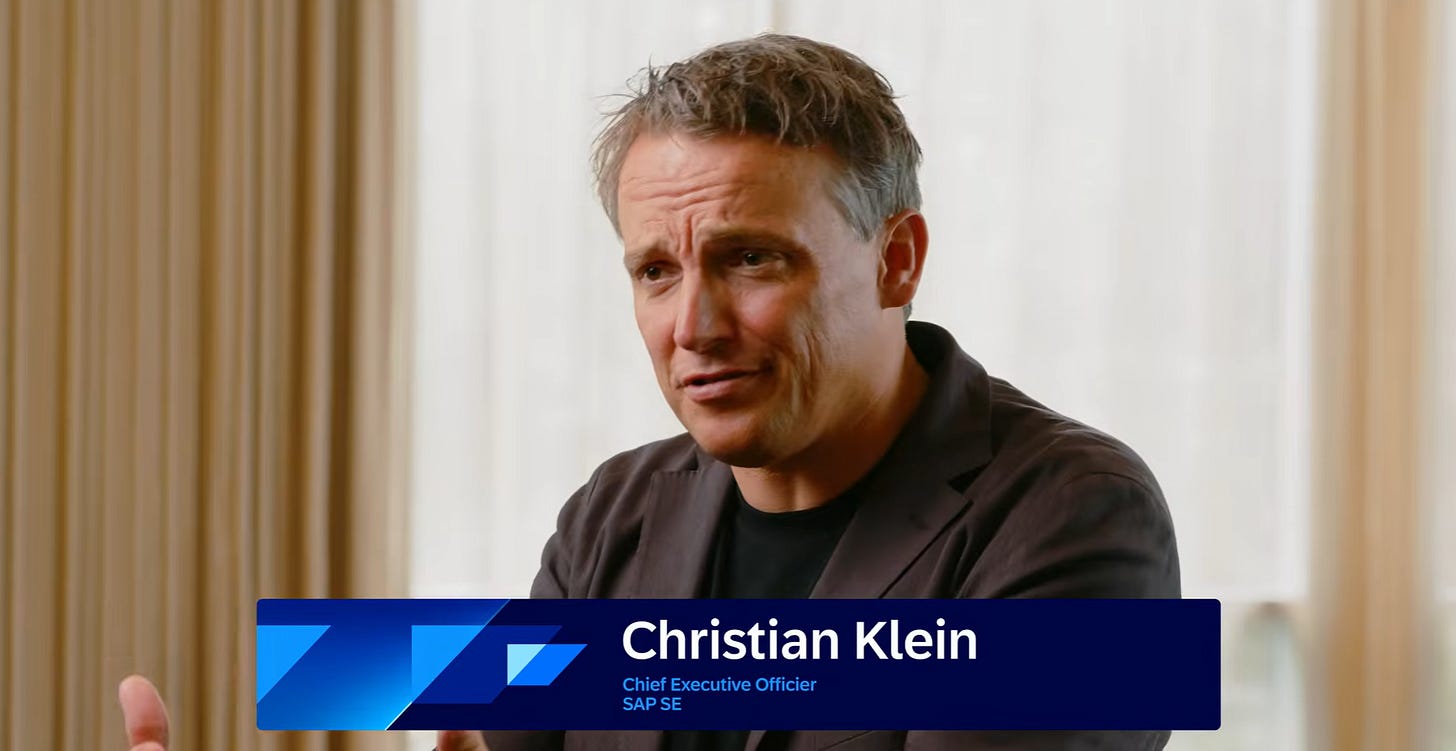
The introduction of "The Autonomous Enterprise" aims to accelerate this analytical capability by leveraging AI. CEO Christian Klein articulated the vision: "The Autonomous Enterprise includes a unified AI platform for building, contextualizing and governing agents, an autonomous suite that executes core business operations and a new user experience that redefines how people work with enterprise software." This announcement positions SAP not merely as a software provider but as an AI-centric organization.
Key Components of "The Autonomous Enterprise"
The core of SAP’s new AI architecture revolves around several key pillars:
- A Unified AI Platform: This platform is designed to facilitate the creation, contextualization, and governance of AI agents. These agents are intended to act as intelligent assistants and automated processes within the SAP ecosystem.
- An Autonomous Suite: This suite comprises a range of AI-powered capabilities that will execute core business operations with increased efficiency and reduced manual intervention.
- A Redefined User Experience: The initiative aims to fundamentally change how users interact with enterprise software, moving towards a more intuitive and conversational interface powered by AI.
The Role of AI Agents and the "Autonomous" Vision
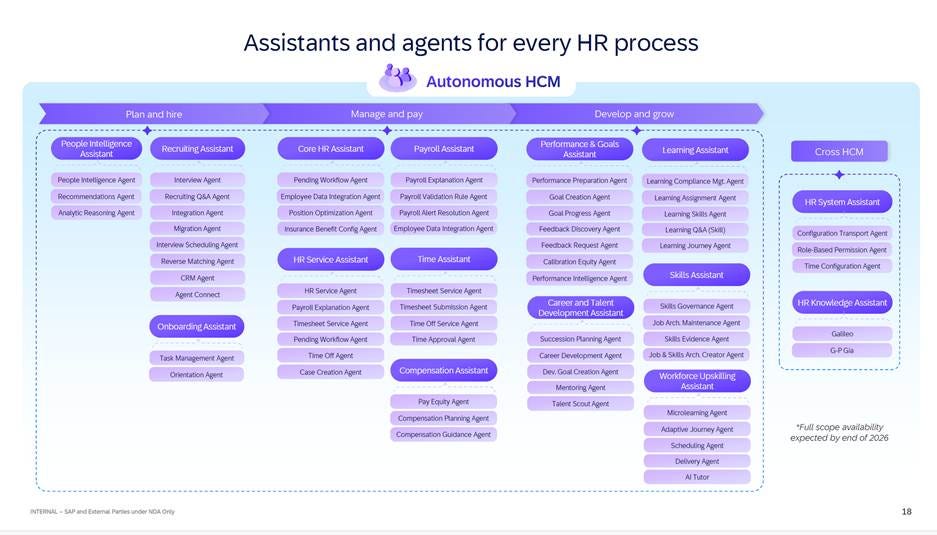
A central theme of "The Autonomous Enterprise" is the concept of "autonomy." While SAP envisions systems that can eventually operate with minimal human oversight, finding and rectifying sub-optimal processes, the current iteration focuses heavily on automation. The company has announced the development of over 224 agents, with a significant portion dedicated to automating existing business processes.
In the Human Capital Management (HCM) domain, for example, SAP has detailed numerous agents designed to streamline specific HR functions. These agents aim to automate tasks, identify and resolve glitches, generate development materials, and personalize upskilling initiatives for employees. While the initial focus appears to be on automating existing workflows, the long-term potential lies in agents that can redesign and optimize HR operations more fundamentally.
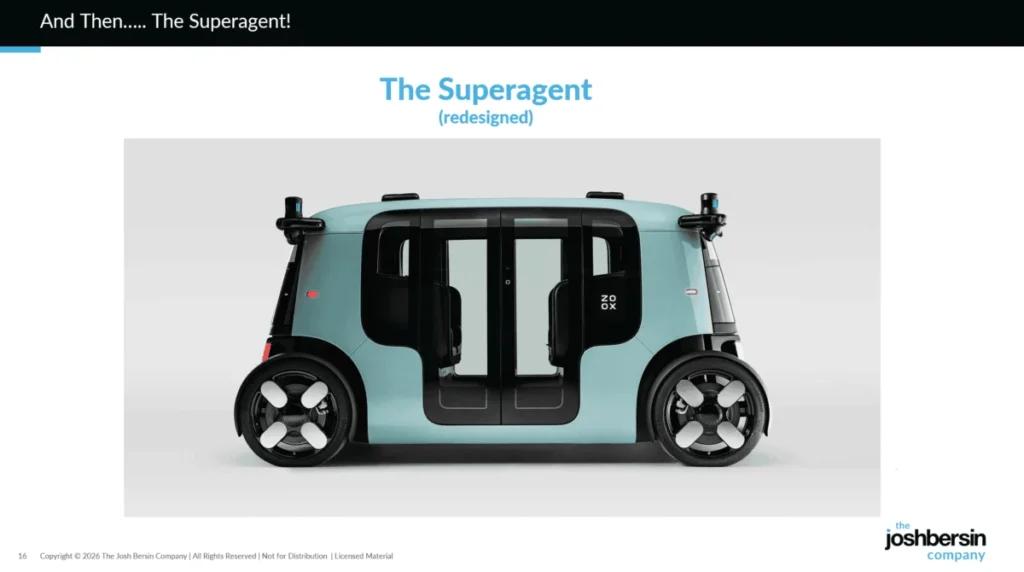
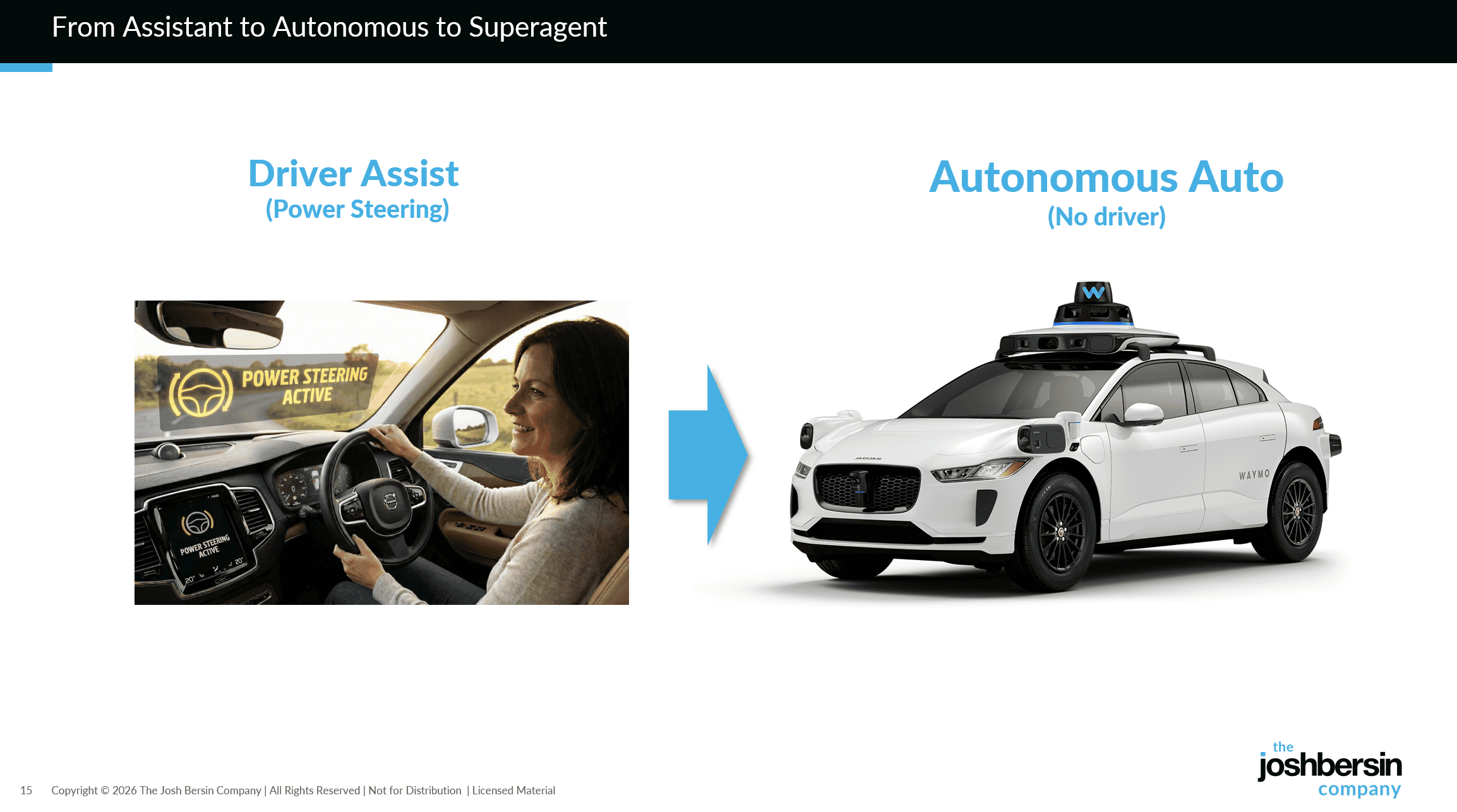
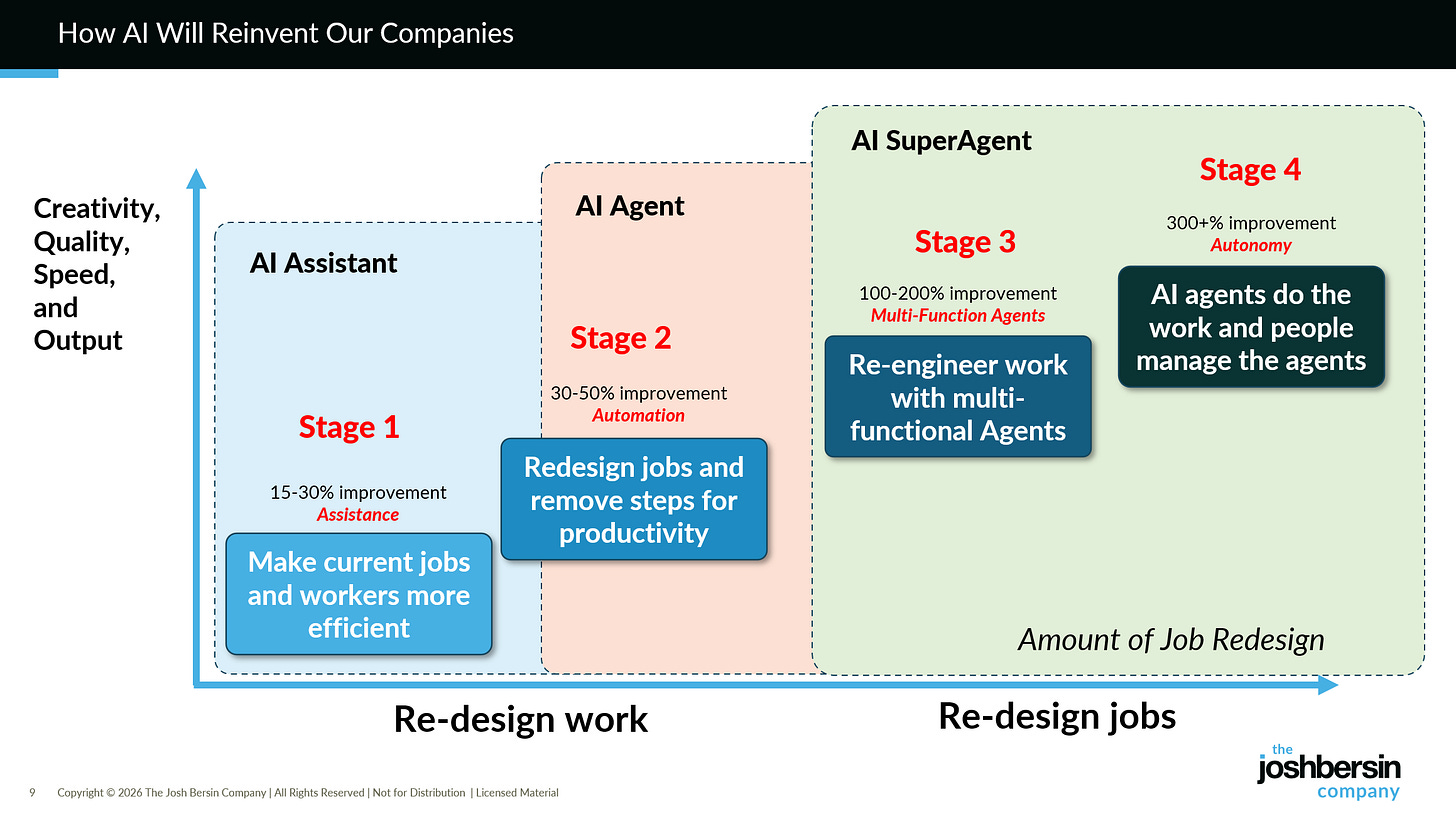
The author likens SAP’s approach to "Waymo" (a self-driving car built on existing automotive principles) rather than a radical redesign like "Zoox" (a vehicle reimagined for the passenger experience). This analogy suggests that SAP’s AI strategy initially aims to enhance the efficiency of its existing, complex systems rather than fundamentally alter the underlying business processes. However, the inherent power of AI lies in its ability to learn and adapt, suggesting that over time, these automated processes could evolve into more transformative "superagents."
Technological Underpinnings: Data, Knowledge, and Interaction
At the heart of "The Autonomous Enterprise" lies a sophisticated technological architecture:
- AI Layer with Data Fabric and Models: A central AI layer integrates a data fabric and numerous AI models. A key innovation is the SAP-proprietary tabular data model, SAP-RPT-1.5. This model is specifically optimized for analyzing and modeling the vast tables of data that form the foundation of business software. Unlike general-purpose Large Language Models (LLMs) that can struggle with structured data, SAP-RPT-1.5 is designed to efficiently process and derive insights from massive datasets, enabling complex "what-if" analyses and real-time business modeling.
- SAP Knowledge Graph: This component acts as the "brain" of the system, mapping the intricate entities, structures, and rules within SAP into a semantic layer. This allows AI agents to understand natural language queries, such as "What is family leave for my new baby?" or the more complex profit margin decline query mentioned earlier, and translate them into specific functional queries to retrieve the necessary data and information. The integration of "Galileo," an intelligence layer now available within SAP, further enhances the Knowledge Graph’s ability to act as an intelligent advisor for HR, human capital, and leadership.
- Joule: The Copilot and Development Platform: Joule, SAP’s AI copilot, serves as both the primary user interface for interacting with AI agents and a robust development tool. The newly introduced "Joule Studio" is presented as an enterprise-grade development environment, enabling IT teams and SAP developers to design, build, test, and manage a wide array of AI agents. This platform is designed to be powerful, allowing for the creation of complex agents that can integrate with various SAP modules and even external systems. The implication is that developers can leverage Joule Studio to build highly personalized and sophisticated business processes, potentially redesigning aspects of SAP from the agent layer upwards.
Evolution of Joule: From Chatbot to Development Hub
Initially launched as a chatbot to facilitate transactions across the SAP suite, Joule has evolved significantly. Its new iteration, Joule Studio, aims to provide a structured and professional development environment, moving beyond the "vibe coding" often associated with some LLM tools. This emphasis on a robust development framework suggests SAP’s commitment to enabling enterprise-scale AI agent creation.
The strategy aligns with competitors like Workday (with its Sana layer) and ServiceNow (with its Otto AI platform), which are also building agent platforms. However, SAP’s advantage lies in its ability to offer developers direct access to its unique data objects and modules across its entire suite through Joule Studio. For end-users, Joule will continue to function as a conversational interface, allowing them to interact with AI agents to perform tasks, ask questions, and receive assistance.
Advanced Capabilities: "Company Memory" and AI Governance
"The Autonomous Enterprise" also incorporates advanced concepts like the creation of massive context windows to store an entire "company memory." This refers to the AI’s ability to retain and leverage a comprehensive dataset of operational knowledge, including customer data, product information, business processes, internal rules, and even unstructured data like documents and emails. This "company corpus" can then be used for continuous analysis, modeling, and improvement.
This capability has profound implications for identifying performance gaps and understanding their root causes. By capturing institutional knowledge, AI can uncover operational best practices that might otherwise remain hidden within specific teams or departments. This could lead to significant improvements across thousands of business activities.
Crucially, SAP recognizes the critical need for AI governance. The introduction of the "AI Agent Hub" provides a management system for AI agents, akin to offerings from Workday and ServiceNow. This hub facilitates the control, security, and operational integrity of AI agents. It supports non-SAP agents, offers tools for managing agent consumption and verification, and enables coordination between different agents. The challenge of inter-agent communication is particularly highlighted, emphasizing the need for agents to seamlessly interact with each other to support complex workflows, such as those in HR where training, development, and performance management agents must be synchronized.

SAP’s Strategic Positioning: An AI Company?
SAP CEO Christian Klein’s assertion that SAP is now an "AI company at its core" reflects a broader industry trend. While the rise of AI startups has fueled speculation about the potential disruption of established enterprise software vendors, SAP, like Workday and Oracle, is pursuing a strategy of re-engineering its existing decades of research and development into AI-powered applications. This approach avoids the need to completely discard deeply integrated and widely adopted ERP and HCM systems.
The goal is not to start anew but to leverage AI to drive innovation across domains, enhance customer and employee experiences, and create smarter business systems. The introduction of specialized assistants for finance, procurement, supply chain, HR, and customer-facing functions underscores this strategy. By embedding execution into AI agents that operate across its suite, SAP aims to make its software less visible, with users interacting more with intelligent agents that decide, recommend, escalate, and act.
This strategic shift has significant financial implications, potentially moving SAP’s business model towards consumption-based pricing and outcome-oriented services, rather than solely relying on traditional seat licenses.
Broader Impact and Future Outlook
The successful execution of "The Autonomous Enterprise" strategy could lead to a reinvention and revitalization of SAP’s growth. While competitors may attempt to build AI-native solutions from the ground up, SAP’s existing deep industry knowledge, customer investment, and the sheer volume of integrated business data within its systems represent a formidable advantage. The ability to build "superagents" within platforms like Joule, or similar offerings from competitors, offers a path to significant business process innovation without the costly disruption of a complete system overhaul.
The enterprise software market is witnessing a fundamental transformation, with AI at the forefront. SAP’s ambitious announcement signifies its commitment to not just participating in this transformation but leading it within its core markets. The success of "The Autonomous Enterprise" will ultimately depend on the efficacy of its AI agents, the robustness of its underlying AI architecture, and its ability to deliver tangible value and efficiency gains to its vast customer base. The journey from automating existing processes to enabling truly autonomous and transformative AI-driven operations will be closely watched by industry observers and SAP’s global clientele.