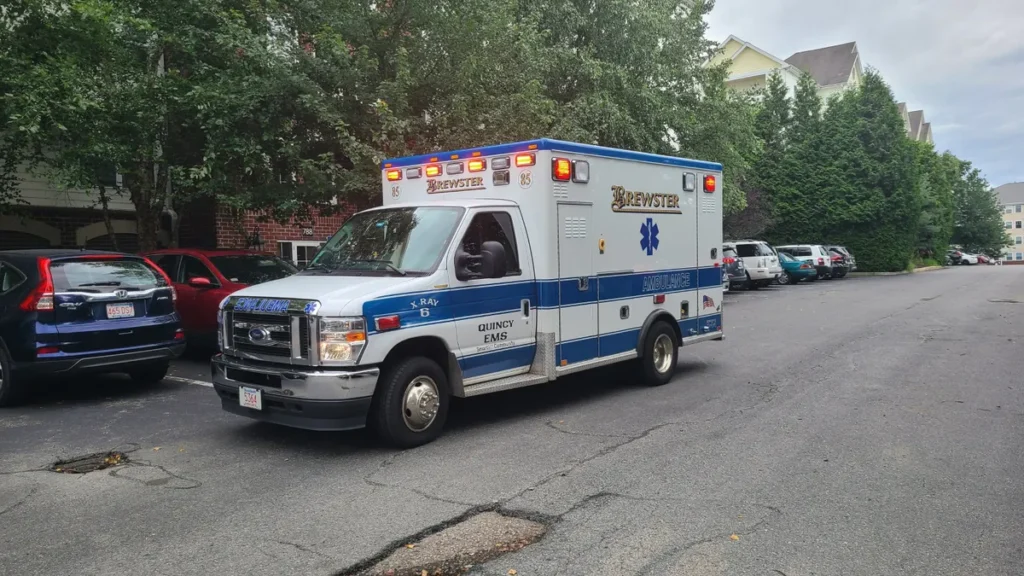
The 1st U.S. Circuit Court of Appeals has affirmed a lower court’s decision in favor of Brewster Ambulance Service, ruling that the proposed technology for connecting a deaf job applicant to an American Sign Language (ASL) interpreter posed significant safety risks for an ambulance driver role. The court determined that the accommodation, which would have required the driver to divert their eyes from the road to view a tablet or cell phone display, presented an unacceptable hazard to the driver and others, a risk that the Americans with Disabilities Act (ADA) did not compel the company to undertake. This landmark ruling, published on July 15, 2026, underscores the complex interplay between disability accommodation requirements and the paramount need for public safety, particularly in high-stakes, safety-sensitive professions like emergency medical services.
Background: The ADA and the Interactive Process
The Americans with Disabilities Act (ADA), enacted in 1990, prohibits discrimination against individuals with disabilities in all areas of public life, including employment. A cornerstone of the ADA is the requirement for employers to provide "reasonable accommodations" to qualified individuals with disabilities unless doing so would cause "undue hardship" to the business or pose a "direct threat" to the health or safety of the individual or others in the workplace. The ADA also mandates an "interactive process" between the employer and the applicant/employee to identify potential accommodations. This process involves open communication to explore various solutions that could enable an individual to perform the essential functions of a job.
In this specific case, the plaintiff, a deaf individual, applied for an ambulance driver position with Brewster Ambulance Service. Ambulance drivers are integral to emergency response systems, requiring constant communication with dispatch, medical staff, and patients, often under high-stress, rapidly evolving conditions. The essential functions of the role include safe vehicle operation, navigation, patient transport, and immediate, effective communication. The plaintiff sought an accommodation through a technology-based ASL interpreter service, likely Video Remote Interpreting (VRI), which typically involves a live interpreter appearing on a screen via a tablet or smartphone.
Chronology of Events: From Application to Appeal
The journey to the 1st Circuit Court of Appeals was protracted, beginning with the plaintiff’s application and culminating in a pivotal legal interpretation.
-
Initial Application and Verbal Offer: The plaintiff applied for an ambulance driver position at Brewster Ambulance Service. Following an initial review, a verbal offer was extended, indicating an initial assessment of the applicant’s qualifications for the role.
-
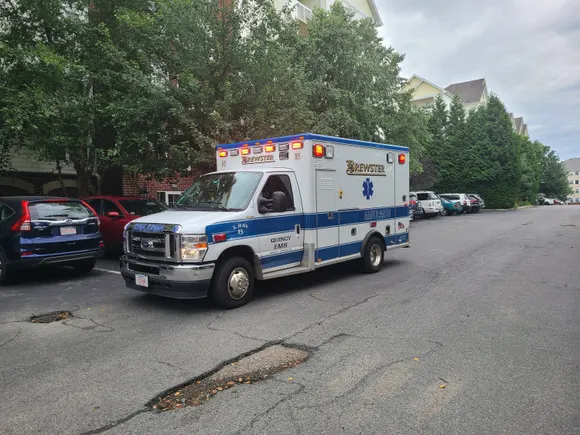
The Ride-Along and Supervisor Concerns: As part of the hiring process, a regional manager arranged for the plaintiff to participate in a ride-along with a Brewster supervisor. This practical assessment was crucial for evaluating how the plaintiff would perform the job’s essential functions in a real-world setting. Following the ride-along, the supervisor expressed significant concerns regarding the plaintiff’s ability to communicate effectively with clients and staff, especially in emergency situations where rapid, unambiguous communication is critical. These concerns were promptly relayed to a Brewster HR manager via email.
-
Internal Deliberations and the Interactive Process: Recognizing their obligations under the ADA, Brewster Ambulance Service initiated an internal review. Hiring managers and executives engaged in an "interactive process," meticulously documented, to explore potential accommodations. This involved discussions about the feasibility of the proposed ASL interpreter technology and its implications for the specific demands of an ambulance driver. Crucially, the company’s internal communications highlighted attempts to understand and mitigate the supervisor’s concerns.
-
Exploration of Alternative Roles: Brewster’s efforts extended beyond the initial driver position. The company actively sought other potential roles within the organization where the plaintiff’s skills could be utilized and where communication challenges might be less acute or more easily accommodated. However, staff determined that similar concerns about performing essential functions, particularly those related to communication and safety, existed across these alternative positions. Attempts to find a suitable job in another department also proved unsuccessful.
-
Communication with the Plaintiff: Brewster formally communicated its concerns to the plaintiff and their career resource specialist. An email was sent outlining the company’s assessment of the plaintiff’s ability to perform the driver role’s essential functions, detailing the attempts to find an alternative position, and reiterating the company’s commitment to the interactive process. The email explicitly invited the plaintiff to ask additional questions and discuss further potential accommodations. However, the plaintiff later admitted that they did not follow up on this invitation.
-
Trial Court Proceedings: The case eventually proceeded to trial. A jury considered the evidence, including the proposed relay service accommodation, and ultimately sided with Brewster. The jury concluded that the proposed accommodation would either cause undue hardship to the company or, more critically, pose a direct threat to the plaintiff or others.
-
Appeal to the 1st Circuit: The plaintiff subsequently appealed the jury’s verdict. The 1st Circuit Court of Appeals reviewed the case, focusing on whether a "reasonable accommodation" existed that would allow the plaintiff to perform the essential functions of the driver role without causing "undue hardship" or posing a "direct threat."
The Heart of the Dispute: Safety vs. Accommodation
The core of the 1st Circuit’s decision hinged on the "direct threat" defense. The court meticulously analyzed the nature of the ambulance driver role and the specific challenges posed by a tablet- or cell phone-based ASL interpreter system in a mobile, high-pressure environment.

Ambulance drivers are responsible for the safe and swift transport of patients, often in critical condition. This requires undivided attention to the road, immediate situational awareness, and the ability to react instantaneously to changing traffic conditions, medical emergencies, and dispatch instructions. The court emphasized that any accommodation that would require the driver to routinely divert their eyes from the road to look at a screen – even for brief moments – could compromise safety. This is a crucial distinction from situations where VRI might be used in a stationary office setting or for non-driving-related tasks.
The court explicitly stated, "The plaintiff presented no evidence to rebut that his proposed tablet-based or any cell-phone-based accommodation for communicating with dispatch, even if it was available at the relevant time, would pose safety risks to all concerned of the driver’s eyes being taken off the road, risks the ADA did not require Brewster to undertake." This statement underscores the court’s view that the proposed accommodation inherently conflicted with the fundamental safety requirements of the job, creating a "direct threat" that superseded the employer’s duty to accommodate. The ruling highlights that while the ADA mandates reasonable accommodations, it does not require employers to eliminate essential job functions or compromise safety standards.
Broader Context: Deaf Individuals in the Workforce and Communication Technologies
The decision comes amidst increasing efforts to integrate deaf and hard-of-hearing individuals into diverse professional roles. According to the U.S. Census Bureau, approximately 11.5 million adults in the U.S. report difficulty hearing, with about 1 million considered functionally deaf. The employment rate for deaf individuals has historically lagged behind that of the general population, although advocacy and technological advancements are steadily improving access.
Video Remote Interpreting (VRI) has emerged as a transformative technology, offering on-demand access to ASL interpreters via video calls. VRI has revolutionized communication accessibility in many settings, from medical appointments and educational institutions to customer service and corporate meetings. Its benefits include cost-effectiveness, rapid availability, and the ability to bridge geographical distances. However, the Brewster case illustrates that even advanced technologies have limitations, particularly in highly dynamic and safety-critical environments. The physical act of looking at a screen, even for interpreting, can be a distraction equivalent to texting while driving, which is widely recognized as a significant hazard.
Navigating ADA Compliance in Safety-Sensitive Roles
This ruling provides critical guidance for employers, particularly those in safety-sensitive industries such as transportation, emergency services, manufacturing, and construction. These sectors often involve roles where a momentary lapse in attention or communication can have catastrophic consequences.
Employers in these fields face a delicate balancing act: upholding their legal obligations under the ADA to provide reasonable accommodations while simultaneously ensuring the safety of their employees, clients, and the public. The "direct threat" defense is a narrow exception under the ADA, requiring employers to demonstrate that an individual’s disability (or the accommodation itself) poses a significant risk of substantial harm that cannot be eliminated or reduced by reasonable accommodation. This determination must be based on objective, individualized evidence, not on stereotypes or generalizations.

The Brewster case reinforces that a robust interactive process, thorough documentation, and a clear articulation of essential job functions and inherent safety risks are paramount. Brewster’s detailed internal communications about their attempts to accommodate the plaintiff and explore alternative roles proved instrumental in their defense. This demonstrates that employers who genuinely engage in the interactive process and provide a factual basis for their decisions are better positioned to defend against ADA claims.
Distinguishing Precedents: Werner and Walmart Cases
The 1st Circuit’s decision in the Brewster case stands in contrast to other recent ADA rulings involving hearing disabilities, highlighting the case-specific nature of such judgments.
For example, in a case involving Werner Enterprises, the 8th U.S. Circuit Court of Appeals upheld a jury verdict in favor of a deaf truck driver applicant. The jury found that Werner failed to propose or investigate any accommodation that could have helped the plaintiff perform essential job functions. The crucial difference here was the lack of effort on the part of the employer to engage in the interactive process or identify accommodations. In contrast, Brewster extensively documented its interactive process and efforts to find solutions. Furthermore, the specific safety concerns regarding in-motion communication via VRI were central to the Brewster case, a nuance that may not have been as pronounced or deemed a "direct threat" in the Werner context, depending on the nature of the truck driving role and communication requirements.
Similarly, in May, Walmart agreed to settle a U.S. Equal Employment Opportunity Commission (EEOC) lawsuit alleging that it refused to accommodate and failed to hire a deaf applicant who requested an ASL interpreter for his interview. Walmart’s alleged failure to respond to the request for an interpreter for an interview — a typically stationary, non-safety-sensitive interaction — represents a different scenario. An interview setting allows for VRI without the inherent safety risks associated with operating a moving vehicle. The Walmart settlement reinforces the general principle that accommodations for communication are expected in appropriate settings, but the Brewster ruling delineates a clear boundary when public safety in a dynamic environment is at stake.
Implications for HR and Workplace Accessibility
This ruling sends a clear message to HR professionals and employers:
- Prioritize the Interactive Process and Documentation: The importance of meticulously documenting all steps taken during the interactive process cannot be overstated. This includes internal discussions, communication with the applicant, exploration of accommodations, and the rationale behind any decisions.
- Define Essential Job Functions Clearly: Employers must have a precise understanding and clear documentation of the essential functions of each job, especially those with inherent safety risks. This clarity is crucial when assessing whether a proposed accommodation enables an individual to perform these functions without undue hardship or direct threat.
- Conduct Individualized Assessments: Each accommodation request must be assessed on an individualized basis, considering the specific job, the nature of the disability, and the proposed accommodation. Generalizations or assumptions about disabilities are not permissible.
- Balance Accommodation with Safety: For safety-sensitive roles, the "direct threat" defense remains a viable, albeit narrow, option. Employers must be prepared to present objective, data-driven evidence to demonstrate that a proposed accommodation would pose a significant risk that cannot be mitigated.
- Technology as an Enabler, Not a Panacea: While technology like VRI greatly enhances accessibility, its application must be carefully evaluated against the specific demands and safety requirements of the job. There are contexts where technology, due to its operational requirements, can introduce new risks.
The 1st Circuit’s decision underscores that while the ADA is a powerful tool for promoting inclusivity, it acknowledges practical limitations, particularly when fundamental safety is at stake. It necessitates a nuanced approach, where employers are proactive in exploring accommodations but also realistic about the inherent demands of certain high-risk professions. As technology continues to evolve, the legal landscape surrounding disability accommodation will undoubtedly continue to adapt, perpetually seeking the optimal balance between accessibility and safety.