
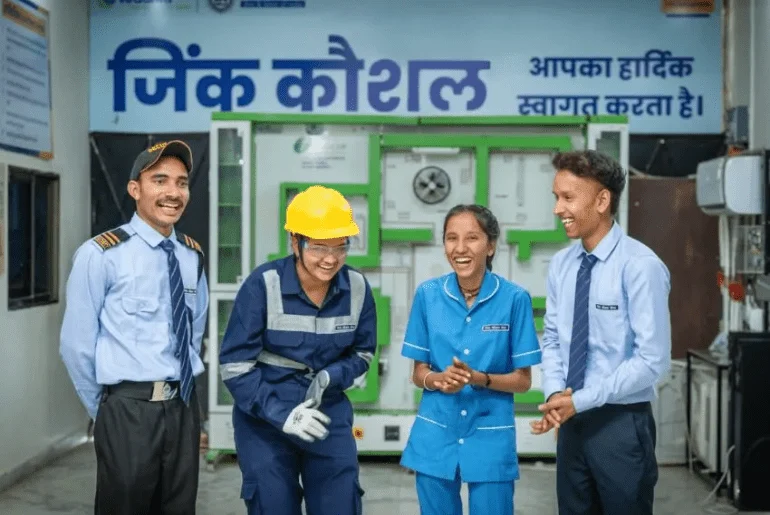
Udaipur, Rajasthan – In a significant stride towards fostering skill development and economic empowerment across India’s heartland, Hindustan Zinc has announced that its flagship skilling initiative, Zinc Kaushal, has successfully trained over 10,000 rural and tribal youth since its inception in 2019. This remarkable achievement, unveiled ahead of World Youth Skills Day, underscores the company’s commitment to strengthening the national talent pipeline for diverse industries, from advanced manufacturing to thriving hospitality sectors. With an investment of Rs 26 crore, the program boasts an impressive 83 percent placement rate, translating into gainful employment for more than 8,000 participants and an average 16 percent increase in their salaries, significantly improving livelihoods in underserved communities. Notably, 45 percent of the beneficiaries have been women, highlighting the initiative’s focus on gender inclusivity and empowerment.
The Urgency of Skill Development: A National Imperative
World Youth Skills Day, observed annually on July 15th, serves as a global platform to raise awareness about the strategic importance of equipping young people with skills for employment, decent work, and entrepreneurship. Proclaimed by the United Nations General Assembly in 2014, the day highlights the critical role of skilled youth in addressing global challenges and achieving the Sustainable Development Goals (SDGs), particularly SDG 4 (Quality Education) and SDG 8 (Decent Work and Economic Growth). For a nation like India, with its burgeoning youth population, skill development is not merely an economic strategy but a societal imperative to harness its demographic dividend. Despite rapid economic growth, India faces the dual challenge of a large workforce lacking industry-relevant skills and a significant portion of its youth remaining unemployed or underemployed. Government initiatives like the ‘Skill India Mission,’ launched in 2015, aim to bridge this gap by creating an ecosystem for skill development across various sectors. However, the sheer scale of the challenge necessitates robust participation from the private sector through corporate social responsibility (CSR) initiatives. Hindustan Zinc’s Zinc Kaushal program stands as a prime example of how corporate efforts can complement national goals, providing tangible solutions to enhance employability and foster inclusive growth.
Zinc Kaushal: A Comprehensive Skilling Ecosystem
Launched in 2019, the Zinc Kaushal initiative was conceptualized by Hindustan Zinc with a clear vision: to transform the socio-economic landscape of rural and tribal areas in Rajasthan and Uttarakhand by providing market-driven vocational training. The program’s design is rooted in a deep understanding of industry demands and the specific needs of the local communities it serves. Implemented in partnership with leading non-profit organizations such as the Ambuja Foundation and Tata STRIVE, Zinc Kaushal operates through a network of six dedicated training centres strategically located across Rajasthan. These centres are more than just training facilities; they are hubs of empowerment, offering a diverse array of industry-aligned courses designed to improve employability and create sustainable livelihoods. The curriculum is meticulously crafted to cover both technical proficiencies and essential soft skills, ensuring that trainees are not only technically competent but also workplace-ready, possessing communication, problem-solving, and teamwork abilities crucial for success in modern workplaces.
The investment of Rs 26 crore underscores Hindustan Zinc’s long-term commitment to this initiative. This substantial funding has enabled the development of state-of-the-art infrastructure, procurement of modern training equipment, engagement of experienced trainers, and establishment of robust placement support mechanisms. The program’s holistic approach ensures that beneficiaries receive comprehensive support from enrolment through to job placement and even post-placement mentorship, maximizing their chances of sustained employment and career progression.
Chronology of Impact and Milestones
Since its launch in 2019, Zinc Kaushal has demonstrated a consistent trajectory of growth and impact, steadily expanding its reach and refining its methodology.
- 2019 – Inception and Initial Rollout: The program was formally launched with a vision to address the skill gap among rural and tribal youth in Rajasthan and Uttarakhand. Initial training centres were established, focusing on foundational vocational courses.
- 2020-2021 – Navigating Challenges and Expansion: Despite the unprecedented challenges posed by the global pandemic, Zinc Kaushal adapted its operations, leveraging digital tools where possible and ensuring safety protocols. The program continued its expansion, reaching more communities and diversifying its course offerings based on emerging industry demands.
- FY26 – Accelerated Growth and Strategic Partnerships: The fiscal year 2026 marked a period of significant acceleration for the initiative. During this period alone, Zinc Kaushal trained over 2,600 youth, showcasing a rapid scaling of its operations. A key factor in this accelerated growth was the forging of strategic partnerships with renowned organizations. Through collaborations with entities like NABARD (National Bank for Agriculture and Rural Development), JK Cement, YES Foundation, and Bajaj Finserv, the program extended its reach and specialized training to an additional 420 participants, tapping into new demographics and industry sectors. These partnerships signify a collaborative ecosystem where corporate, financial, and non-profit entities converge to amplify social impact.
- Ongoing – Sustained Impact and Recognition: The continuous success of the program has not gone unnoticed. Hindustan Zinc proudly reported that Zinc Kaushal has received four district-level awards from the Government of Rajasthan, acknowledging its profound contribution to youth skilling and employability within the state. These accolades serve as a testament to the program’s effectiveness and its alignment with governmental priorities for skill development.
Transformative Outcomes: Beyond Numbers
The success of Zinc Kaushal is not merely measured in the number of individuals trained but in the transformative impact it has had on their lives and the communities they belong to. The 83 percent placement rate, translating to over 8,000 individuals securing employment, speaks volumes about the program’s efficacy in connecting skilled youth with meaningful job opportunities. The diversity of employers, ranging from multinational corporations like Tata Consultancy Services and Foxconn to automotive giants like Honda, cruise line operators such as Marella Cruises, and infrastructure conglomerates like GMR Group, reflects the breadth of skills imparted and the program’s ability to cater to varied industry requirements.
The average 16 percent increase in salary for trainees is a critical indicator of economic empowerment. For many rural and tribal families, this translates into a significant improvement in living standards, enabling them to access better healthcare, education, and housing. It also fosters financial stability, reducing vulnerability and contributing to local economic development. The empowerment of women, with 45 percent of beneficiaries being female, is particularly noteworthy. In many traditional rural and tribal settings, women often face systemic barriers to education and employment. Zinc Kaushal’s deliberate focus on enrolling and supporting women not only provides them with financial independence but also challenges gender stereotypes, promoting greater equality and participation in the workforce.
Pioneering Inclusivity: The Special Batch Initiative
One of the most heartwarming and impactful achievements of the Zinc Kaushal program is its commitment to inclusive skilling. The initiative achieved a remarkable 100 percent placement rate for a special batch of hearing and speech-impaired trainees. This specialized training, tailored to their unique needs, demonstrates a deep understanding of inclusive development principles. These trainees were successfully recruited by prestigious hospitality brands, including Taj Fateh Prakash, Radisson Blu, and The Fern Residency. This success story not only provides dignity and economic independence to individuals who often face significant barriers to employment but also sets a powerful precedent for corporate responsibility in integrating persons with disabilities into the mainstream workforce. It highlights the potential for industries to tap into a diverse talent pool when provided with the right support and training.
Strategic Partnerships and Collaborative Ecosystem
The sustained success and expansion of Zinc Kaushal are deeply rooted in its robust partnership model. The implementation partners, Ambuja Foundation and Tata STRIVE, bring extensive experience in community development and vocational training, respectively. The Ambuja Foundation, known for its grassroots presence and community engagement, ensures that the program is culturally sensitive and responsive to local needs. Tata STRIVE, with its expertise in curriculum design, trainer development, and industry linkages, brings a professional edge to the skilling modules. These collaborations ensure a high standard of training quality and relevance.
Beyond these core implementation partners, the initiative has strategically collaborated with various organizations to enhance its reach and impact. Partnerships with NABARD, JK Cement, YES Foundation, and Bajaj Finserv in FY26 illustrate a diversified approach to resource mobilization and specialized training delivery. These collaborations not only expand the program’s capacity but also bring in sector-specific expertise and placement opportunities.
Furthermore, Zinc Kaushal has ventured into unique social collaborations. Its partnership with the Udaipur Police under the ‘Smart Policing’ initiative is a testament to its holistic approach to community development. This collaboration aims to skill vulnerable youth, providing them with an alternative pathway to formal employment and deterring them from potential involvement in illicit activities. By offering constructive opportunities, the program contributes to social harmony and crime prevention, demonstrating its broader societal impact beyond mere economic upliftment.
Broader Impact and Future Outlook
Hindustan Zinc’s Zinc Kaushal initiative serves as a powerful model for corporate social responsibility in India. It aligns seamlessly with national development priorities, contributing directly to the ‘Skill India’ mission and the broader agenda of inclusive economic growth. By focusing on rural and tribal youth, the program addresses critical regional disparities in skill development and access to opportunities. The sustained commitment, significant investment, and impressive outcomes position Zinc Kaushal as a benchmark for other corporations looking to make a meaningful difference in the skilling ecosystem.
The implications of such an initiative extend far beyond individual beneficiaries. A skilled workforce leads to increased productivity, innovation, and competitiveness across industries. It fosters local entrepreneurship and reduces migration to urban centers by creating opportunities within rural areas. Moreover, by empowering women and including persons with disabilities, the program strengthens the social fabric, promoting equity and resilience.
Looking ahead, the success of Zinc Kaushal suggests a potential for further expansion, both in terms of geographic reach and diversification of course offerings. As industries evolve with technological advancements, there will be a continuous need to adapt and introduce new, future-ready skills. Hindustan Zinc’s proactive approach, demonstrated by its existing partnerships and commitment, positions it well to continue playing a pivotal role in shaping India’s skilled workforce. The company’s ongoing dedication to empowering youth through vocational training exemplifies how responsible corporate citizenship can drive sustainable development and contribute significantly to building a brighter, more inclusive future for the nation.








