In today’s dynamic global economy, organizations are increasingly recognizing that effective employee reward strategies extend far beyond traditional perks and generic recognition. The modern workforce demands a deeper, more personalized approach to appreciation that resonates with individual values and aspirations, fostering a profound sense of connection and belonging. A seminal report by the Achievers Workforce Institute, the State of Recognition Report, underscores this shift, revealing that employees with access to diverse reward options – encompassing everything from gift cards and travel to enriching personal experiences – report feeling 61% more connected and 60% more recognized in their professional roles. This data highlights a critical evolution in human resources: the move from a transactional view of compensation and benefits to a strategic investment in personalized recognition that drives sustained motivation and retention.
The Evolving Landscape of Employee Engagement
The past few years have dramatically reshaped the world of work. The rise of hybrid and remote work models, coupled with phenomena like the "Great Resignation" or "Great Rethink," has placed unprecedented pressure on companies to redefine their employee value proposition. Employees are no longer solely motivated by salary; they seek purpose, flexibility, well-being, and genuine appreciation. In this environment, a "one-size-fits-all" approach to rewards, such as a company-branded mug or a generic year-end bonus, often falls flat. These gestures, while well-intentioned, frequently fail to acknowledge the unique contributions and personal preferences of individuals, leading to a disconnect between the company’s effort and the employee’s perceived value. The challenge for contemporary organizations, therefore, is to design reward systems that are adaptable, meaningful, and capable of scaling human connection across diverse, often geographically dispersed, teams.
Beyond Generic Perks – The Psychology and Business Case for Personalization
The efficacy of personalized rewards stems from a deep understanding of human psychology and motivation. When recognition is tailored to an individual, it transcends mere acknowledgment of a task completed; it becomes a powerful affirmation of their identity, values, and importance within the organization. This creates an emotional resonance that generic perks simply cannot achieve.
Firstly, personalized rewards make recognition emotionally meaningful. General perks might acknowledge participation, but personalized gestures acknowledge the person. By reflecting what an individual genuinely values, a reward triggers a stronger emotional response, which in turn anchors motivation and memory far more effectively than a standard, impersonal item. This emotional connection is vital for fostering loyalty and intrinsic motivation.
Secondly, they reinforce belonging, not just productivity. Employees want to feel seen and valued for who they are, not just for their output. Personalized rewards signal that an employee matters beyond their immediate contributions, strengthening their sense of belonging to the organization and their team. This sense of belonging is a cornerstone of high-performing, connected cultures and is directly linked to reduced turnover and increased engagement. Research consistently shows that a strong sense of belonging correlates with higher job satisfaction and a greater willingness to go above and beyond.
Thirdly, personalized rewards respect individual motivation styles. Not all individuals are driven by the same incentives. Some may value professional development, others flexible work arrangements, and still others, experiential rewards. Choice-based and personalized reward systems acknowledge this fundamental reality, granting employees autonomy over how they are rewarded. This autonomy builds trust, and trust is a powerful driver of engagement and commitment. When employees feel their preferences are understood and respected, their motivation naturally increases.

Fourthly, they feel intentional instead of transactional. A standardized perk can often feel automatic or, at worst, obligatory. Personalized rewards, by contrast, feel deliberate. They communicate that someone took the time to understand the ‘how’ and ‘why’ behind an employee’s work, not just the ‘what’ of the result. This intentionality elevates the reward from a mere transaction to a genuine act of appreciation.
Finally, personalized recognition scales human connection in modern workplaces. In an era of global, hybrid, and distributed teams, maintaining a consistent yet individualized approach to recognition is paramount. Technology now enables organizations to deliver personalized recognition at scale, ensuring that geographical distance or different work arrangements do not dilute the impact of appreciation. This ensures that every employee, regardless of their location, feels seen and valued. Moreover, when recognition aligns with what employees truly value, it reinforces desired behaviors, allowing culture to evolve by design rather than by accident, ultimately leading to better business outcomes.
A Comprehensive Spectrum of Impactful Employee Rewards
The best employee reward ideas are a blend of flexible, personalized, and meaningful options that cater to diverse needs, preferences, and life stages. Here’s a categorized exploration of impactful reward ideas that transcend the basic and create genuine resonance:
1. Financial & Tangible Incentives: These rewards offer direct monetary value or highly desired material goods, providing employees with choice and immediate gratification.
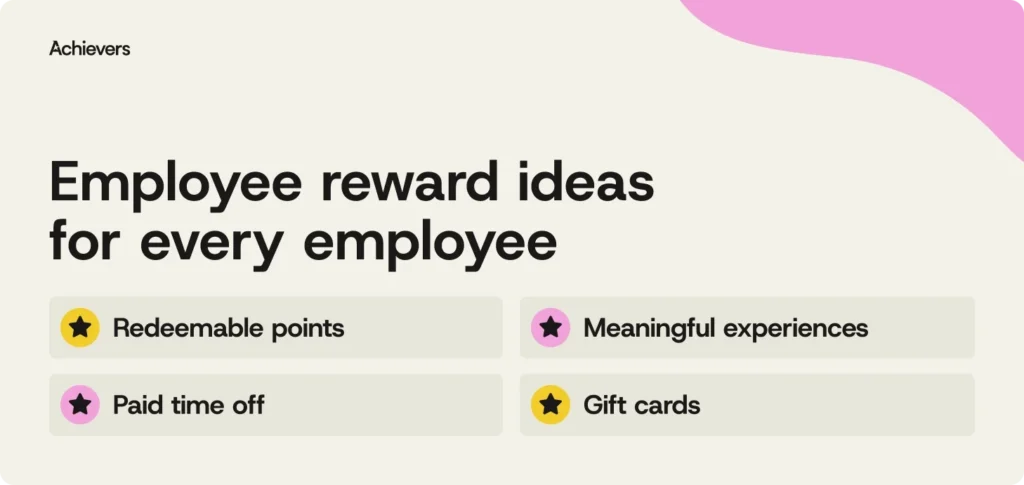
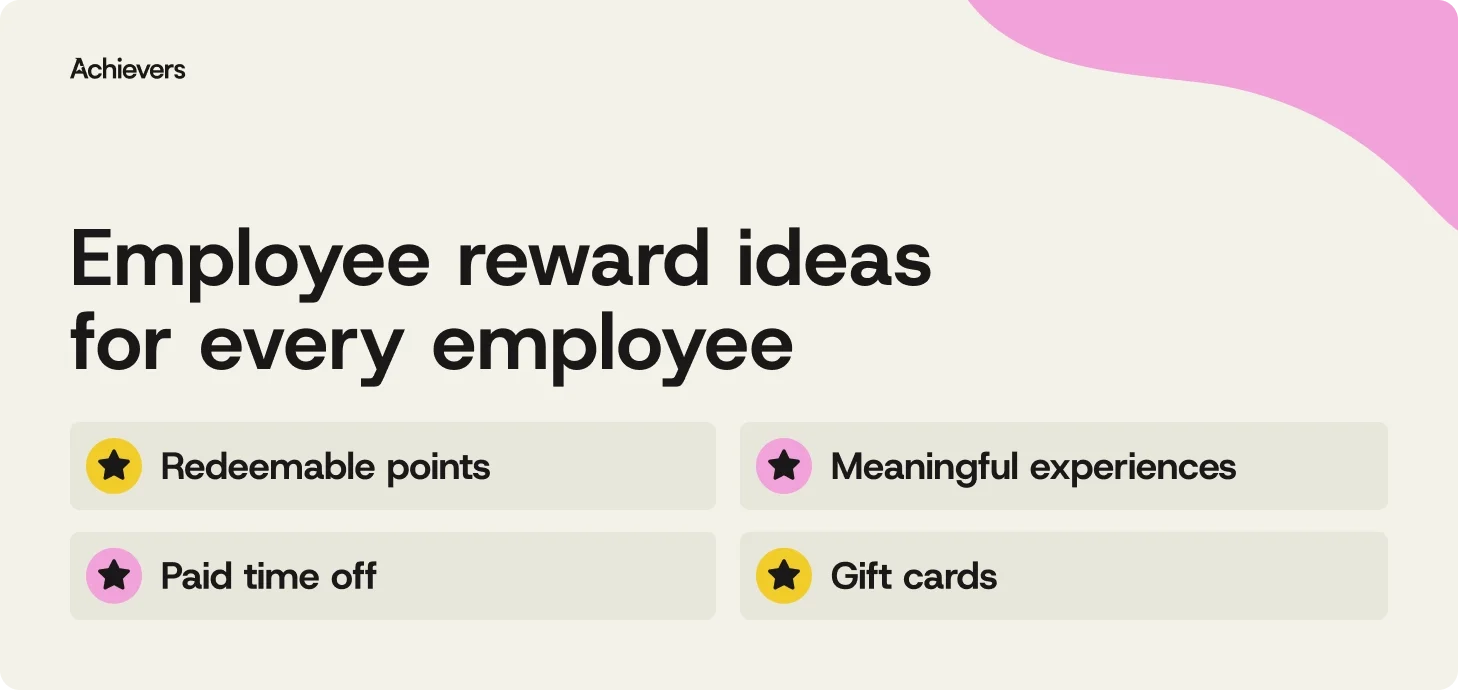
- Redeemable Points Systems: Flexible and endlessly motivating, points-based rewards allow employees to choose from a global catalog of items, experiences, or gift cards. When tied to recognition platforms, every ‘shout-out’ carries additional weight, reinforcing positive behaviors.
- Cash Bonuses: Simple, direct, and universally appreciated, cash offers employees complete autonomy to use funds as they see fit, whether for bills, savings, or a personal splurge. Particularly impactful during economic uncertainty.
- Gift Cards: Striking a balance between flexibility and thoughtfulness, gift cards to preferred retailers, restaurants, or services allow employees to treat themselves without the funds disappearing into everyday expenses.
- Tech Gadgets: High-impact and long-lasting, popular tech items like tablets, smartwatches, or noise-canceling headphones are highly valued. For remote staff, home office upgrades like ergonomic chairs or portable monitors demonstrate practical care.
- Shopping Sprees: Offering a curated online experience or a substantial gift card specifically for a shopping spree provides a fun, flexible, and personal way for employees to indulge.
2. Work-Life Balance & Wellness: Recognizing the increasing importance of personal time and well-being, these rewards offer flexibility and support for a healthier life.
- Paid Time Off (PTO): A highly coveted reward, extra PTO allows employees to reset, recharge, and return to work with renewed vigor. Studies, such as those published in Harvard Business Review, indicate that even a few days of vacation can significantly boost performance.
- Flexible Scheduling: Granting employees control over their work hours, through flextime, compressed weeks, or alternate hours, signals trust and significantly eases daily life.
- Wellness Reimbursement: Investing in employee health through fitness memberships, meditation app subscriptions, activity trackers, or even healthy office snacks demonstrates a commitment to holistic well-being.
- Surprise Days Off: An unexpected day off, earned through performance or a milestone, feels like a genuine reward rather than a standard entitlement, sending a clear message that rest is valued.
- Work-From-Anywhere Pass: A quarterly or occasional pass to work from a location of choice offers a refreshing change of scenery and reinforces trust in employee autonomy and productivity.
- Pet-Friendly Initiatives: Pet day or "bring-a-pet-to-work" days create a relaxed, friendly atmosphere, boosting morale and sparking connection among colleagues.
3. Professional Growth & Development: These rewards invest in an employee’s future, demonstrating a commitment to their long-term career trajectory within the organization.
- Coaching and Professional Development: Offering access to executive coaching, industry conferences, or certifications for high performers is a strategic way to say thanks and invest in their capabilities.
- Learning Stipends: Providing funds for employees to pursue personal or professional learning, from language lessons to design workshops, fuels curiosity and keeps engagement high, fostering a culture of continuous learning.
- Mentorship Opportunities: One-on-one time with senior leaders or structured mentorship programs offer invaluable guidance and demonstrate investment in an employee’s future growth.
4. Experiential & Social Rewards: Creating memorable moments and strengthening team bonds are the hallmarks of these rewards.
- Meaningful Experiences: Beyond material goods, rewards like weekend getaways, cooking classes, concert tickets, or a spa day create lasting memories. The key is knowing individual preferences.
- Catered Meals: Surprise team lunches, holiday spreads, or even delivery stipends for remote teams can significantly boost morale and foster camaraderie.
- Team Activities (Employee Choice): Empowering teams to choose their own outing – be it an escape room, a dinner, or a volunteer day – increases buy-in, strengthens relationships, and ensures the activity is genuinely enjoyed.
5. Recognition & Belonging: These focus on intrinsic motivation, public acknowledgment, and creating a supportive, appreciative environment.
- Peer Recognition: Praise from colleagues often feels more authentic and meaningful than top-down accolades, strengthening team bonds and fostering a culture of mutual support.
- Handwritten Notes: In a digital age, a thoughtful, handwritten thank-you note leaves a lasting impression, demonstrating intentionality and personal effort.
- Digital Recognition: Utilizing online platforms, chat channels, or video calls for shout-outs ensures timely and scalable recognition, reinforcing positive behaviors across all locations.
- Company Newsletter/Social Media Spotlight: Publicly featuring employees and their contributions in company communications boosts pride, builds belonging, and highlights exemplary work.
- Desk Plants: A simple, low-cost way to brighten workspaces and signal care, promoting a healthier and more personalized environment.
- Prime Parking Spots: A small but highly appreciated perk, a reserved parking spot offers daily convenience and acknowledges consistent contributions.
6. Purpose-Driven & Community Impact: Aligning rewards with social responsibility and charitable giving can deepen an employee’s connection to organizational values.
- Charitable Donations (Employee-Directed): Allowing employees to direct reward points or company funds to causes they care about deepens meaning and purpose.
- Charitable Donation Matching: When a company matches employee donations, it transforms individual recognition into collective impact, aligning values and fostering a sense of shared responsibility.
- Volunteer Opportunities (Paid): Rewarding employees with paid time off to volunteer for causes they believe in combines appreciation with purpose, demonstrating the company’s commitment to community.
Crafting an Effective Reward Strategy
Implementing a truly impactful employee reward program requires more than just selecting ideas; it demands strategic planning and consistent execution. To drive real engagement and yield tangible benefits, an employee rewards program should be:
- Timely: Recognition loses its impact if it’s delayed. Rewards should be delivered promptly, ideally in close proximity to the achievement or behavior being celebrated.
- Personalized: As extensively discussed, tailoring rewards to individual preferences and values is paramount. This requires understanding employees through surveys, feedback, and active listening.
- Visible and Transparent: Public recognition, where appropriate, amplifies the impact of the reward, reinforcing desired behaviors across the team and showcasing role models.
- Integrated with Culture: Rewards should not be isolated events but rather an intrinsic part of the company’s culture, reinforcing core values and strategic objectives.
- Supported by Technology: Modern recognition and rewards platforms are crucial for scaling personalized appreciation across diverse workforces, enabling seamless delivery, tracking, and management of various reward options. These platforms can facilitate peer-to-peer recognition, automate milestone awards, and provide a wide array of redemption choices.
- Fair and Equitable: While personalized, the underlying system must be perceived as fair, with clear criteria for earning rewards and equal access to opportunities.
- Continuously Evaluated: Programs should be regularly reviewed and updated based on employee feedback and evolving organizational goals to ensure their continued relevance and effectiveness.
The Far-Reaching Benefits for Organizational Success
The implications of a well-executed, personalized employee rewards program extend far beyond individual morale. Such programs are critical drivers of organizational success, directly impacting talent acquisition, retention, productivity, and overall business outcomes. Companies that prioritize meaningful recognition often experience:
- Improved Employee Retention: When employees feel genuinely appreciated and valued, they are significantly more likely to stay with their organization, reducing turnover costs and preserving institutional knowledge.
- Enhanced Talent Attraction: A strong culture of recognition and personalized rewards becomes a powerful magnet for top talent, bolstering the company’s employer brand and competitive edge in the job market.
- Increased Productivity and Performance: Motivated and engaged employees are more productive. By reinforcing desired behaviors and outcomes through meaningful rewards, companies can cultivate a high-performance culture.
- Stronger Company Culture: Personalized recognition fosters a positive, supportive, and connected work environment, strengthening team bonds and aligning individual efforts with collective goals.
- Greater Innovation: When employees feel valued and secure, they are more likely to take calculated risks, share ideas, and contribute to innovation.
- Better Business Outcomes: Ultimately, these combined benefits translate into tangible business advantages, including higher profitability, customer satisfaction, and market share.
Integrating Appreciation into the Organizational Fabric
While gift cards and extra PTO are valuable components, they cannot solely carry a company’s culture. Employees crave genuine appreciation that is consistent, well-timed, and deeply integrated into their daily work experience. When rewards are meaningful, thoughtfully delivered, and woven into the very fabric of an organization’s culture, their impact transcends mere morale boosts. They become powerful catalysts, fueling sustained performance, strengthening vital connections, and significantly enhancing an employee’s desire to contribute and remain with the company long-term.
Specialized platforms, such as Achievers, play a pivotal role in operationalizing this vision. By providing robust recognition and rewards platforms, they empower organizations to celebrate their people in ways that truly matter—personalized, scalable, and seamlessly integrated into the flow of work. From spontaneous peer-to-peer shout-outs to significant milestone celebrations, these tools transform appreciation from an occasional event into a consistent, impactful habit. In a competitive landscape where talent is a premium, investing in genuine, personalized recognition is not merely a perk; it is a strategic imperative that shapes culture, drives results, and ultimately defines organizational success.