Executives across Europe, the Middle East, and Asia are sounding a clear alarm: the leadership competencies that propelled organizations to their current positions will be insufficient to navigate the complex and rapidly evolving landscape of the future. This growing disparity between existing leadership capabilities and the demands of tomorrow is the central concern addressed in a new global leadership trends report released by the Center for Creative Leadership (CCL) on May 12, 2026. The comprehensive white paper aims to equip organizations with a clear understanding of the skills that need cultivation and actionable strategies to initiate development.

The report, developed in partnership with the International Leadership Association, stems from extensive conversations with 63 C-suite executives grappling with multifaceted challenges. These include declining institutional trust, the accelerating integration of artificial intelligence, escalating geopolitical instability, and a leadership pipeline many describe as critically underprepared for the present moment. The findings are not speculative predictions but rather consistent signals, observed across diverse regions, industries, and hierarchical levels, indicating a fundamental shift in organizational priorities for leadership development.
At the heart of the report is a forward-looking question posed to these global leaders: "If 2050 turns out better than expected, what did we get right starting now?" Their collective responses highlight five key trends that are fundamentally reshaping the requirements for effective global leadership and necessitating new approaches to developing leaders ready for these challenges. These identified trends underscore a critical need for a proactive and strategic approach to leadership cultivation, moving beyond traditional models to embrace agility, adaptability, and a deep understanding of emerging technological and societal forces.
The implications of this growing leadership gap are significant. Organizations that fail to adapt their leadership development strategies risk falling behind competitors, struggling to innovate, and ultimately failing to meet the expectations of stakeholders, employees, and customers in an increasingly volatile world. The report emphasizes that the skills honed in previous eras, often characterized by more predictable environments, are no longer sufficient. Leaders today and in the future will need to exhibit a different set of capabilities to thrive.
The Evolving Landscape of Global Leadership
The research conducted by CCL and the International Leadership Association paints a vivid picture of the transformative forces at play. The report details how factors such as the pervasive influence of artificial intelligence are not merely technological advancements but also profound drivers of organizational change that require new leadership paradigms. The ability to integrate AI ethically and effectively, understanding its potential to augment human capabilities while mitigating risks, is becoming paramount. This necessitates a leadership mindset that embraces collaboration between humans and AI, rather than viewing them as separate entities.

Geopolitical volatility presents another significant challenge. Leaders must possess the acumen to navigate complex international relations, understand diverse cultural nuances, and make strategic decisions in environments marked by unpredictability. This requires a sophisticated understanding of global markets, political landscapes, and the interconnectedness of nations. The erosion of institutional trust further complicates the leadership agenda, demanding greater transparency, ethical conduct, and a renewed focus on building and maintaining credibility with all stakeholders.
The report underscores that these are not isolated issues but rather interconnected elements of a complex global ecosystem. Leaders who can effectively address these multifaceted challenges will be instrumental in guiding their organizations toward sustainable success. The research directly addresses the need for leaders who can foster resilience, drive innovation, and build trust in an era of constant flux.

Key Trends Shaping Future Leadership
The five key trends identified in the report offer a roadmap for organizations seeking to future-proof their leadership pipelines. While the specific details of these trends are elaborated within the full report, the underlying themes revolve around enhanced human-AI collaboration, a greater emphasis on ethical and responsible leadership, the cultivation of adaptive and resilient organizational cultures, and the development of leaders who can champion diversity, equity, and inclusion on a global scale.
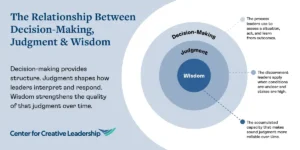
One of the most impactful contributions of the report is its practical framework for human-AI collaboration. This framework is designed to foster a mindset, judgment, and human skill set that enables leaders to work effectively alongside AI. The research suggests that many organizations are currently approaching this integration as a purely technical challenge, overlooking the crucial leadership dimension. The CCL’s approach emphasizes the development of leaders who can strategically leverage AI tools while maintaining a focus on human-centric decision-making and ethical considerations. This requires a fundamental shift in how leadership development programs are designed and implemented.

Actionable Insights for Organizations
The report goes beyond identifying trends to providing concrete, actionable steps that organizations can take to develop leaders prepared for the future. It offers in-depth analysis of each trend, incorporating direct perspectives from global C-suite leaders, showcasing real-world company examples, and outlining practical strategies. This multi-pronged approach ensures that the insights are not only theoretical but also grounded in practical application.
For leaders responsible for shaping development strategies, making investment cases, or understanding the future needs of their organizations, this research offers a grounded, global perspective. The report aims to bridge the gap between knowing what is required and taking action, a common hurdle for many organizations. By providing a clear understanding of the necessary shifts in leadership capabilities and offering practical guidance, the report empowers organizations to move forward with confidence.

The research highlights that the most effective leaders of the future will likely possess a blend of technical acumen, emotional intelligence, strategic foresight, and an unwavering commitment to ethical principles. They will be adept at fostering collaborative environments, driving innovation, and navigating complex organizational and global challenges. The report serves as a critical resource for identifying and nurturing these essential qualities.
The Role of the Center for Creative Leadership and Partners
The Center for Creative Leadership (CCL), a global non-profit organization, has been at the forefront of leadership development for over 50 years. Consistently ranked among the top providers of executive education worldwide, CCL’s research-based programs and solutions are designed to inspire remarkable transformations in individuals and organizations. The partnership with the International Leadership Association, a global community of scholars and practitioners dedicated to advancing leadership knowledge and practice, further strengthens the credibility and reach of this report.

The research team behind this report includes distinguished experts such as Lynn Collins, Director of Strategic Partnerships at CCL, who focuses on innovation and expanding the organization’s impact; Sol Bukin, MS, an Applied Research Associate with extensive experience in data analysis for workforce challenges; Anand Chandrasekar, PhD, Senior Research Faculty for APAC, who leads leadership development research in Asia; Mike Hardy, CMG OBE FRSA, Board Director & Chair of the International Leadership Association, a renowned expert in intercultural relations; Gihan Abuelela, DBA, Sr. Leadership Solutions Partner & Applied Research Scientist, specializing in leadership solutions for the GCC region; and Elisa Mallis, MA, MEd, Global VP of Research, Innovation & New Content Creation at CCL, who oversees the organization’s global research and innovation efforts. Their collective expertise ensures a comprehensive and globally informed perspective on the future of leadership.
Broader Impact and Future Implications
The implications of this report extend beyond individual organizations to shape the future of global business and societal progress. As leaders are better equipped to navigate complex challenges, organizations will be more resilient, innovative, and ethically grounded. This, in turn, can contribute to greater economic stability, social progress, and a more sustainable future.

The emphasis on human-AI collaboration, for instance, has the potential to redefine the nature of work, leading to increased productivity and new forms of human ingenuity. The focus on ethical leadership can foster greater trust and accountability, vital components for addressing global challenges like climate change and social inequality. By proactively addressing the evolving needs of leadership, organizations can position themselves not only for commercial success but also as positive forces for change in the world.
The report serves as a critical call to action for leaders, HR professionals, and policymakers alike. Investing in the development of future-ready leaders is not merely a strategic imperative but a fundamental necessity for navigating the complexities of the 21st century and building a better future. The insights provided offer a clear and actionable path forward for organizations committed to fostering effective and impactful leadership in an ever-changing world.

The Center for Creative Leadership’s commitment to creating a ripple effect of positive change is evident in this latest research. By providing a comprehensive understanding of the evolving leadership landscape and offering practical strategies for development, CCL continues to empower organizations worldwide to inspire remarkable transformations and address the critical challenges of our time. The report is a testament to the organization’s dedication to research-backed insights and its ongoing mission to foster leadership that can positively impact the world.
Organizations interested in delving deeper into these trends and accessing practical tools for development are encouraged to download the full report from the Center for Creative Leadership’s website. The detailed analysis and case studies within the report offer invaluable guidance for shaping leadership strategies for the future. As the global landscape continues to shift, the ability to adapt and evolve leadership capabilities will be the ultimate determinant of success.