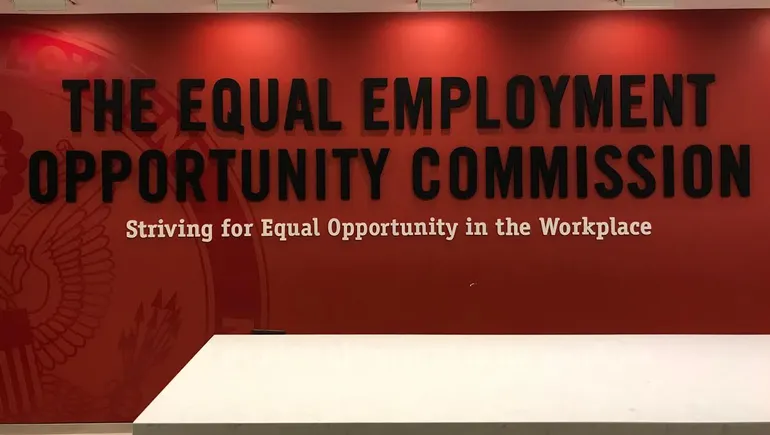
A recent opinion by a magistrate judge has allowed the U.S. Equal Employment Opportunity Commission (EEOC) to proceed with a critical claim against Osmose Utilities Services, alleging the company failed to reasonably accommodate an employee who requested to work remotely after suffering a stroke. The ruling underscores the intricate legal landscape surrounding the Americans with Disabilities Act (ADA), particularly concerning the interactive process between employers and employees, and the evolving role of remote work as a potential accommodation. While dismissing several other claims, including disparate treatment and retaliation, the court found sufficient grounds for the EEOC to advance its argument that Osmose neglected its duty when the employee’s second request for remote work, specifically citing vision issues and driving fears, was denied without further engagement.
The legal battle stems from a complaint filed by the EEOC in September 2024, which detailed Osmose Utilities Services’ alleged failure to accommodate an employee by denying her request to work remotely following a stroke. The stroke, which occurred in July 2019, significantly impacted the employee’s eyesight and her ability to drive safely. Furthermore, the complaint noted that the bright office lights exacerbated her headaches, presenting additional challenges to her return to the workplace. The employee, a one-call locator responsible for responding to customer inquiries and electronically entering tickets for pole reinforcing and inspection, had been with Osmose for several months before her medical emergency. Her role, primarily involving computer-based tasks and customer interaction, seemingly presented a viable candidate for remote work, yet her requests were met with denial, leading to her eventual termination and the subsequent legal action.
A Detailed Chronology of Events and Legal Proceedings
The timeline of events leading to the EEOC’s lawsuit and the recent judicial opinion paints a clear picture of the employee’s struggle to return to work and Osmose’s response:
- July 2019: The employee experiences a debilitating stroke, leading to significant health challenges, particularly affecting her vision and driving capabilities.
- August 2019: Following her stroke, the employee takes 12 weeks of leave under the Family and Medical Leave Act (FMLA). During this period, she contacts Osmose to request working remotely upon her anticipated return in September. This initial request, according to court documents, was denied.
- September 2019: The employee returns to the office. However, she faces significant difficulties. Her vision issues make driving a hazardous activity, and the office lighting aggravates her headaches. Throughout this month and into October, she frequently leaves the office for physical therapy appointments, indicating an ongoing need for medical attention and recovery. In September, she makes a second request to work remotely, this time explicitly linking her need to her vision problems and fear of driving. This request was also denied.
- October 24, 2019: Approximately six weeks after her return from FMLA leave, Osmose Utilities Services terminates the employee’s employment.
- Post-Termination: The EEOC becomes involved, initiating conciliation efforts with Osmose Utilities Services to resolve the dispute outside of court. When these efforts fail to reach a satisfactory resolution, the EEOC proceeds with filing a lawsuit.
- September 2024: The EEOC formally files its complaint against Osmose Utilities Services, alleging violations of the ADA for failure to provide reasonable accommodation, disparate treatment, and retaliation. Both parties subsequently file motions for summary judgment, asking the court to rule in their favor without a full trial.
- Recent Magistrate Judge’s Opinion: A magistrate judge issues a 100-page analysis, providing a detailed assessment of each claim. The judge grants summary judgment in favor of the EEOC on one specific charge: the second failure-to-accommodate claim, where the employee had clearly articulated her disability-related need for remote work due to vision issues and driving concerns. All other claims, including the first failure-to-accommodate request, disparate treatment, and retaliation, are dismissed. The case will now proceed to further litigation or potential settlement on the surviving claim, pending a final ruling from a district court judge after allowing for objections from both parties.
The Legal Landscape: ADA, FMLA, and the Interactive Process
This case unfolds against the backdrop of critical federal employment laws designed to protect workers: the Americans with Disabilities Act (ADA) and the Family and Medical Leave Act (FMLA).
The Americans with Disabilities Act (ADA), a landmark civil rights law enacted in 1990, prohibits discrimination against individuals with disabilities in all areas of public life, including employment. A cornerstone of the ADA is the requirement for employers to provide "reasonable accommodations" to qualified individuals with disabilities unless doing so would cause "undue hardship" to the employer’s business operations. A "reasonable accommodation" is any modification or adjustment to a job or work environment that enables a qualified individual with a disability to enjoy equal employment opportunities. This obligation is not merely passive; it mandates an "interactive process" between the employer and the employee to identify effective accommodations. The employee typically has the responsibility to inform the employer of their disability and request an accommodation, though they do not need to use specific "magic words" like "ADA" or "reasonable accommodation." However, they must provide enough information for the employer to understand that a medical condition is causing a limitation that requires an adjustment.
The Family and Medical Leave Act (FMLA), passed in 1993, allows eligible employees of covered employers to take unpaid, job-protected leave for specified family and medical reasons with continuation of group health insurance coverage under the same terms and conditions as if the employee had not taken leave. In this case, the employee utilized 12 weeks of FMLA leave following her stroke. While FMLA ensures job protection during leave, the ADA then governs the employee’s return to work if they have an ongoing disability requiring accommodation. The interplay between FMLA and ADA can be complex, as an employee returning from FMLA leave may also be entitled to ADA accommodations if their medical condition constitutes a disability.
The EEOC’s role is crucial in enforcing these federal laws. It investigates charges of discrimination, conciliates disputes, and, when necessary, files lawsuits against employers who violate these protections. The agency also provides guidance and technical assistance to employers and employees on their rights and responsibilities.
The Nuances of "Reasonable Accommodation" and Remote Work
The Osmose case highlights the complexities surrounding what constitutes a "reasonable accommodation," particularly concerning remote work. While the rise of remote work, significantly accelerated by the COVID-19 pandemic, has brought increased scrutiny to its role as a potential reasonable accommodation, it is not inherently a mandated solution in all circumstances.
The EEOC and courts generally acknowledge that remote work can be a reasonable accommodation if an employee can perform the essential functions of their job from home without causing undue hardship to the employer. However, its viability depends heavily on the specific nature of the job, the essential functions that must be performed, and the precise limitations imposed by an employee’s disability. Employers must conduct an individualized assessment, engaging in the interactive process to determine if remote work, or any other alternative accommodation, would be effective.
In this instance, the employee’s role as a one-call locator, involving customer inquiries and electronic data entry, suggests a job that might be adaptable to a remote setting. Her disability-related limitations—impaired eyesight making driving difficult and office lights exacerbating headaches—directly impacted her ability to perform her job on-site. The critical distinction made by the judge between her two remote-work requests underscores the importance of specificity in such requests:
- First Request (Denied by Judge): The employee merely "asked [her supervisor] if she could work remotely" without providing any basis for her request, such as identifying her disability or explaining how remote work would help overcome her limitations. The judge found that without this crucial information, the employee did not meet her burden in requesting a reasonable accommodation, as the employer was not sufficiently put on notice of a disability-related need. This illustrates a key takeaway for employees: clarity and context are vital.
- Second Request (Allowed to Proceed): In contrast, the second request was made after her return to work when she was actively experiencing difficulties. She explicitly explained her fear of driving due to vision issues resulting from her stroke. This direct link between her disability, its limitations, and the requested accommodation (remote work) was deemed sufficient by the judge to trigger the employer’s duty to engage in the interactive process. The judge’s opinion suggests that Osmose’s failure to "further engage [the worker] about accommodating her vision and driving problems" after this specific request created a material issue of fact regarding whether the company failed to accommodate her disability or was responsible for a breakdown in the interactive process.
Magistrate Judge’s Rationale and Key Findings
Magistrate Judge Larkins’ 100-page analysis meticulously examined each of the EEOC’s claims, leading to a partial victory for the agency.
- Successful Failure-to-Accommodate Claim: The judge’s decision to allow the second failure-to-accommodate claim to proceed rests on the clear communication by the employee regarding her disability-related need. The employee’s explicit statement about her vision issues, driving fears, and the need for remote work shifted the burden to the employer to engage in the interactive process. The judge noted that both parties agreed this second request was denied, and Osmose’s superior "did not further engage [the worker] about accommodating her vision and driving problems." This lack of engagement, or breakdown in the interactive process, is a critical element in ADA compliance.
- Dismissal of Other Claims:
- First Failure-to-Accommodate Claim: This was dismissed because the employee did not adequately inform Osmose of her disability or how remote work would address her limitations at the time of the initial request. An employer cannot be expected to accommodate a condition they are not reasonably aware of, nor can they divine the specific needs without sufficient information.
- Disparate Treatment Claim: The judge dismissed this, finding insufficient evidence that the supervisor who ultimately fired the employee knew of her disability. While another superior was aware, the judge stated that "a plaintiff cannot withstand summary judgment through conjecture about what the decisionmaker might have been told." This emphasizes the legal requirement for direct evidence or reasonable inference of discriminatory intent, not mere speculation.
- Retaliation Claim: This claim also failed. The judge found it unclear that the supervisor knew the employee had engaged in "protected activity" under the ADA. The first remote-work request was not clearly identifiable as an accommodation request. Furthermore, there was no concrete evidence that the firing supervisor knew about the second remote-work request or an email the employee sent requesting a daily checklist (due to memory issues) that did not explicitly reference her disability. To prove retaliation, an employee must demonstrate they engaged in protected activity (e.g., requesting accommodation), the employer took adverse action, and there was a causal link between the two. The lack of demonstrated knowledge by the decision-maker proved fatal to this claim at the summary judgment stage.
The magistrate judge’s opinion is a recommendation to the district court judge, who will review it and make a final ruling on the motions for summary judgment after considering any objections filed by the parties.
Broader Implications for Employers and Employees
This case offers several crucial lessons for both employers and employees navigating disability accommodation in the workplace.
For Employers:
- Training is Paramount: Supervisors and managers must receive comprehensive training on the ADA, FMLA, reasonable accommodation, and the interactive process. They need to understand how to recognize an accommodation request (even if not explicitly labeled as such), how to initiate and maintain the interactive dialogue, and when to escalate issues to HR or legal counsel.
- Document Everything: Meticulous documentation of all accommodation requests, discussions, assessments, decisions, and reasons for those decisions is essential. This record serves as critical evidence if a dispute arises.
- Engage in the Interactive Process Diligently: This is not a passive obligation. When an employee indicates a disability-related need, employers must engage in a good-faith, individualized discussion to explore potential accommodations. Failure to do so can itself be a violation of the ADA.
- Remote Work as an Accommodation: Employers must assess remote work requests carefully and individually. The blanket denial of remote work, especially when the job functions might allow for it, carries significant legal risk if it’s tied to a disability. Policies should be flexible enough to consider remote work as a potential accommodation, even if the general company policy is against it.
- Knowledge of Disability: Ensure that decision-makers, particularly those involved in disciplinary actions or terminations, are fully informed about an employee’s disability and any ongoing accommodation requests. A lack of awareness can undermine defenses against disparate treatment or retaliation claims.
- Consult Legal Counsel: Before denying any accommodation request or taking adverse employment action against an employee with a known disability, employers should consult with experienced legal counsel. The complexities of ADA compliance often require expert guidance to mitigate legal risks.
For Employees:
- Be Clear and Specific: When requesting an accommodation, employees should clearly state that they have a medical condition or disability that is causing limitations, and explain how the requested accommodation would help them perform their job duties or enjoy equal employment opportunities. While "magic words" aren’t required, providing sufficient information is critical.
- Document Communications: Keep records of all requests, emails, and conversations related to disability and accommodation. This documentation can be invaluable if a dispute arises.
- Understand Your Rights: Employees should familiarize themselves with their rights under the ADA and FMLA to effectively advocate for themselves. Resources from the EEOC and disability rights organizations can be very helpful.
Future Proceedings and Outlook
With the magistrate judge’s opinion, the case of EEOC v. Osmose now enters a new phase. The district court judge will review the magistrate’s recommendations. Both parties will have the opportunity to file objections to the opinion, which the district judge will consider before issuing a final order on the summary judgment motions. If the district judge adopts the magistrate’s recommendation, the remaining failure-to-accommodate claim will proceed to either a settlement negotiation or a trial.
This case serves as a poignant reminder of the ongoing challenges in ensuring equitable treatment for employees with disabilities. It reinforces the importance of clear communication, good-faith interactive processes, and meticulous adherence to federal anti-discrimination laws. As workplaces continue to evolve, especially concerning flexible work arrangements, the legal precedents set in cases like this will continue to shape employer obligations and employee rights. The ultimate outcome for Osmose Utilities Services will undoubtedly contribute to the broader understanding of ADA compliance in a modern work environment.